
Eurhopalothrix guadeloupensis
- Sci. Name
- Eurhopalothrix guadeloupensis
- Tribe
- Attini
- Subfamily
- Myrmicinae
- Author
- Longino, 2013
- Distribution
- Found in 1 countries
Introduction
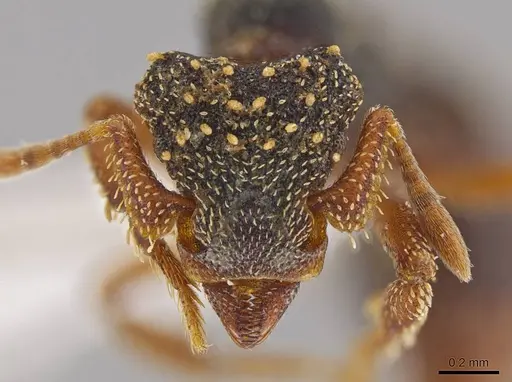
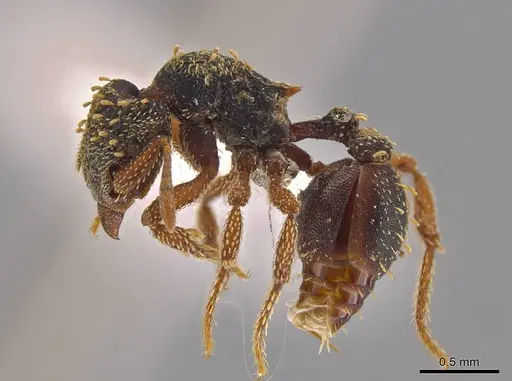
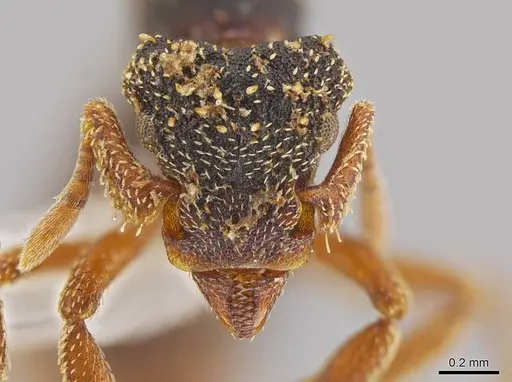
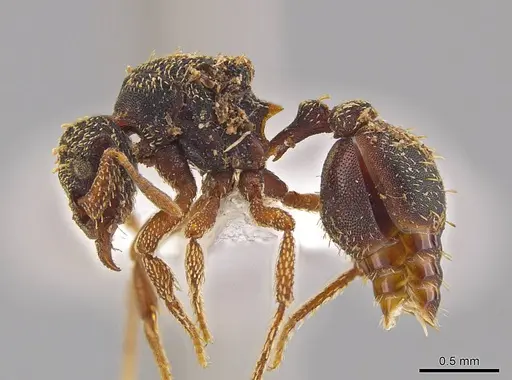
Eurhopalothrix guadeloupensis is a tiny predatory ant native to the Caribbean islands of Guadeloupe and Dominica. Workers measure approximately 2-3mm in total length, making them among the smallest ants you can keep . They are dark brown with distinctive paddle-shaped (spatulate) setae covering their body, which they use to collect and hold a layer of clay for camouflage - a remarkable adaptation that makes them nearly invisible in their forest floor habitat . Queens are slightly larger than workers and look similar to them . This species belongs to the tribe Attini and has 7-segmented antennae with triangular mandibles featuring a double row of teeth . What makes this species special is its sit-and-wait hunting strategy. Unlike ants that actively chase prey, E. guadeloupensis relies on stealth and patience, ambushing tiny soil micro-arthropods in the leaf litter . They occur in wet cloud forest, montane forest, and old coffee plantation forest at elevations between 100-1100m . This is a true island endemic found only on Guadeloupe and Dominica .
Quick Summary
- Difficulty: Expert
- Origin & Habitat: Guadeloupe and Dominica in the Caribbean. Found in wet cloud forest, montane forest, old coffee forest, and deciduous forest from 100-1100m elevation [1].
- Colony Type: Colony structure is unconfirmed.
- Size & Growth:
- Queen: ~2-3mm, inferred from Eurhopalothrix genus
- Worker: ~2-3mm, inferred from Eurhopalothrix genus
- Colony: Likely small, likely under 100 workers based on typical leaf litter ant patterns
- Growth: Unknown, likely slow to moderate
- Development: Unknown (No direct development data exists for this species.)
- Antkeeping:
- Temperature: Keep around 22-26°C. They inhabit warm tropical forests, but avoid overheating.
- Humidity: High humidity is essential, keep substrate consistently moist but not waterlogged. These ants live in leaf litter where humidity stays naturally high.
- Diapause: No, being a tropical Caribbean species, they do not require hibernation
- Nesting: Use small, tight chambers scaled to their tiny size. A Y-tong (AAC) nest or small formicarium with narrow passages works well. They prefer dark, humid nesting areas close to their foraging zone.
- Behavior: These ants are extremely small and cryptic. Workers are slow-moving and secretive, relying on their camouflage rather than aggression. They are predators that use sit-and-wait techniques to capture tiny prey [2]. Escape prevention is critical, their tiny size means they can squeeze through gaps invisible to the naked eye. They are not aggressive toward keepers and cannot sting effectively due to their small size. Expect low activity levels and careful, deliberate movement.
- Common Issues: escape prevention is critical, their tiny size means they can squeeze through standard barrier setups, predatory diet requires live micro-prey which can be difficult to source and maintain, slow growth and small colony sizes mean progress is hard to observe, high humidity requirements can lead to mold problems if ventilation is poor, wild-caught colonies may be stressed from collection and transport
Housing and Escape Prevention
Housing E. guadeloupensis requires attention to scale. Workers are smaller than a grain of rice, meaning they can slip through gaps that seem sealed. Use fine mesh barriers (nylon stocking mesh or tight-fitting fluon-coated lids). Test tube setups work well for founding colonies, but ensure the cotton plug is packed tightly. When moving to a formicarium, choose one with chambers no wider than necessary, these ants feel safer in tight spaces. A small Y-tong (AAC) nest with narrow tunnels is ideal. Keep the outworld simple and easy to barrier. Never assume a gap is too small, if you can see light through it, they can probably squeeze through. [1][2]
Feeding and Diet
Eurhopalothrix guadeloupensis is a predator that feeds on tiny soil micro-arthropods [2]. In captivity, you must provide live prey small enough for them to tackle. Ideal foods include springtails (collembola), tiny soil mites, and newly hatched isopods. Fruit flies are often too large, aim for prey under 1mm. Some keepers report success with small pieces of mealworm or bloodworm, but these ants are specialized predators and may not accept killed prey. Offer food 2-3 times per week, removing uneaten prey after 48 hours to prevent mold. Sugar sources are unlikely to be accepted, this is a strict predator species. Do not expect them to form trails to honey or sugar water.
Temperature and Humidity
These ants come from Caribbean forests where temperatures are warm year-round. Keep them between 22-26°C, avoiding temperatures below 20°C or above 30°C. A heating cable on one side of the nest creates a temperature gradient they can choose from. Humidity is more critical, they need consistently damp conditions similar to forest floor leaf litter. The substrate should feel moist to the touch but not have standing water. Mist the outworld occasionally and ensure the water reservoir in test tube setups is adequate. However, balance humidity with ventilation to prevent mold, which can quickly kill small colonies. A small ventilation hole or mesh top on the outworld helps. [1]
Colony Establishment
Establishing a colony of this species requires patience. Queens are only slightly larger than workers. If you obtain a founding queen, expect slow progress, small predatory species often take longer to produce their first workers. Do not disturb the founding chamber for at least 4-6 weeks. Once workers emerge, they will be tiny nanitics. Growth will be slow, these ants naturally form small colonies. Avoid the temptation to overfeed or expand housing too quickly. Let the colony build naturally at its own pace. [1]
Understanding Their Behavior
E. guadeloupensis has evolved a unique hunting strategy that affects how you should observe and interact with them. Rather than actively foraging, they use sit-and-wait tactics, remaining motionless until prey comes within striking range [2]. This explains why you may not see dramatic foraging behavior, they're patient predators. Their remarkable clay-camouflage coating makes them incredibly difficult to spot on soil surfaces [2]. Don't be alarmed if workers seem inactive or hidden, this is normal behavior. They're not aggressive and won't defend resources aggressively. The spatulate setae that help them hold clay also make them look like tiny dirt particles, so look closely to spot them at all!
Frequently Asked Questions
How long does it take for Eurhopalothrix guadeloupensis to produce first workers?
The exact timeline is unknown. Small predatory ant species often develop slowly. Be patient with founding colonies.
Can I keep multiple queens together?
This has not been documented. Single-queen colonies are likely. Combining unrelated queens is not recommended without evidence they can coexist.
What do Eurhopalothrix guadeloupensis eat?
They are predators that need live micro-prey. Feed springtails, tiny soil mites, or very small fruit fly offspring. They are unlikely to accept sugar or dead protein.
Are Eurhopalothrix guadeloupensis good for beginners?
No. This is an expert-level species due to their tiny size (escape risk), specialized predatory diet (live prey required), and high humidity needs. They are not recommended for beginners.
How big do colonies get?
Colony size is unknown but likely remains small, probably under 100 workers. Leaf litter ants typically form small, cryptic colonies rather than large supercolonies.
Do they need hibernation?
Being a tropical Caribbean species, they do not require hibernation.
Why are my ants disappearing?
They are likely escaping due to their tiny size. Review your barrier setup with fine mesh, ensure all lid seals are tight, and check for gaps around tubing connections.
What temperature should I keep them at?
Keep them warm but not hot, aim for 22-26°C. Avoid temperatures below 20°C or above 30°C.
When should I move them to a formicarium?
Wait until the colony has at least 20-30 workers and the test tube is becoming cramped. For this small species, a small formicarium with tight chambers is better than a large one.
Report an Issue
The current care sheet is based fully on literature. See inconsistencies, or something that's incorrect? Please , it will be resolved after review from an admin. Contributing to the blogs tab also helps providing information, to make us be able to further improve the caresheets. Thank you for your support!
References

This caresheet is licensed under CC BY-SA 4.0 .
Community Blogs
CASENT0627438
View on AntWeb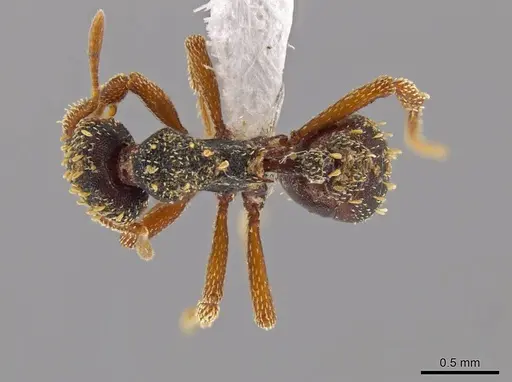
CASENT0630318
View on AntWeb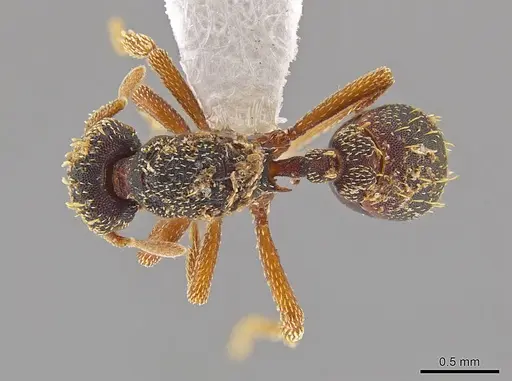
Literature
Loading distribution map...Loading products...