
Ectomomyrmex leeuwenhoeki
- Sci. Name
- Ectomomyrmex leeuwenhoeki
- Tribe
- Ponerini
- Subfamily
- Ponerinae
- Author
- Forel, 1886
- Distribution
- Found in 5 countries
Introduction
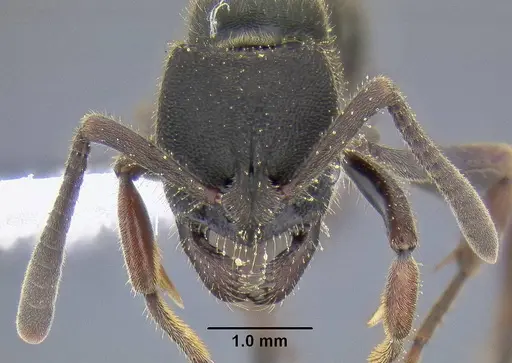
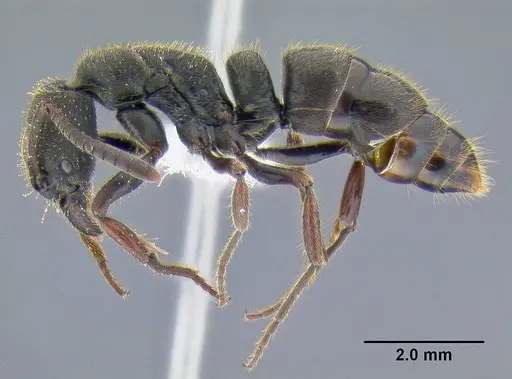
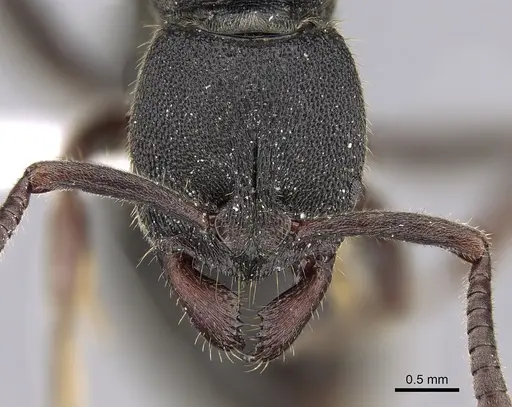
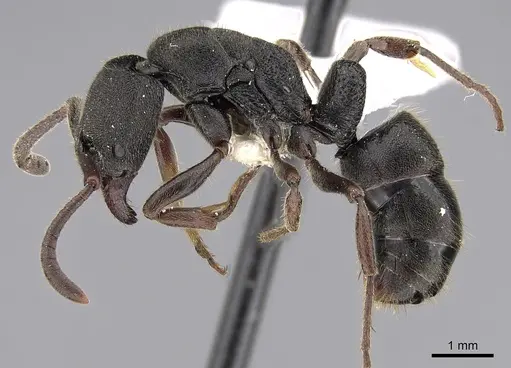
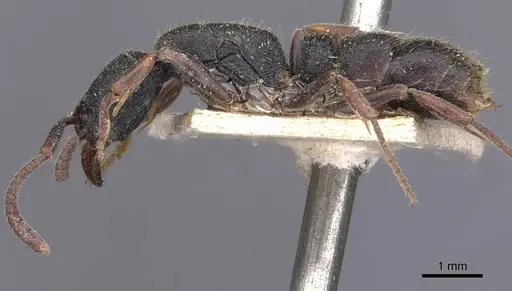
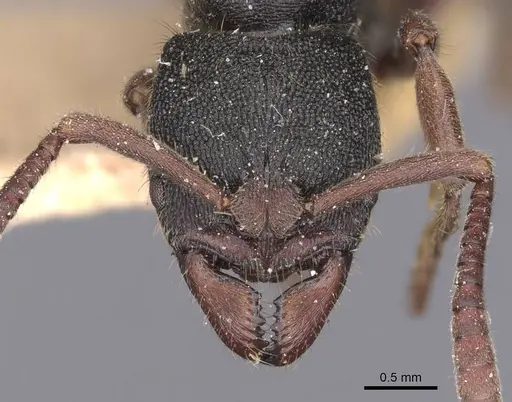
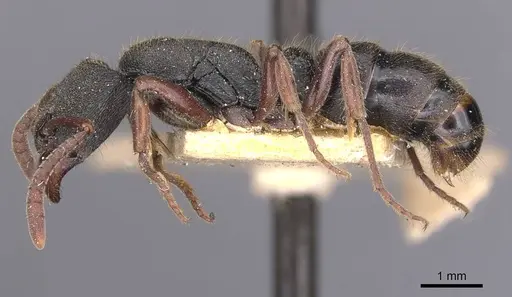
Ectomomyrmex leeuwenhoeki is a medium-sized ponerine ant native to South and Southeast Asia. Workers measure 7-8mm and have a distinctive black body with reddish-brown mandibles, antennae, and leg tips. Their head and thorax are coarsely striated, and the petiole is notably thick and rugose. This species is found across a wide range from India through mainland Southeast Asia to Borneo and the Philippines, with isolated populations in southern China . What makes E. leeuwenhoeki particularly interesting is its unusual reproductive system. Studies show colonies can reproduce either through a dealated queen (wingless reproductive female) or through a mated worker called a gamergate. All colonies observed were monogynous with just one egg-laying female, but colony size is remarkably small, typically fewer than 10 workers .
Quick Summary
- Difficulty: Medium
- Origin & Habitat: Native to the Indomalaya region, found in India, Bangladesh, Thailand, Laos, Vietnam, Malaysia, Singapore, Indonesia, Borneo, Brunei, and the Philippines. Also recorded in southern China (Yunnan, Guizhou, Hainan). This is a forest-dwelling species that prefers lowland dipterocarp forests and primary forest habitats. It avoids disturbed areas like rubber plantations and is considered rare in many parts of its range [2][5][6].
- Colony Type: Monogyne, colonies have a single mated queen. However, this species has an unusual reproductive system where reproduction can be handled by either a dealated queen OR by a mated worker (gamergate). Colonies are very small, typically with fewer than 10 workers [4].
- Size & Growth:
- Queen: size data unavailable, inferred from worker size (~7-8mm)
- Worker: 7-8mm [1][7][8]
- Colony: fewer than 10 workers [4]
- Growth: Unknown, likely slow to moderate based on small colony size
- Development: Unconfirmed, no direct development data available (Development timeline has not been directly studied.)
- Antkeeping:
- Temperature: Keep at 24-28°C. This is a tropical species from lowland forests, so warmth is important. Use a heating cable on one side of the nest to create a gradient if room temperature is below this range.
- Humidity: Keep the nest substrate moderately moist. These forest-floor ants prefer humid conditions but not waterlogged substrate. Aim for damp soil that doesn't drip.
- Diapause: No, being a tropical species, they do not require hibernation [2].
- Nesting: In the wild, they nest in soil and under stones in forest habitats. In captivity, a naturalistic setup with moist substrate or a Y-tong/plaster nest works well. They prefer tight, enclosed chambers.
- Behavior: These ants are predatory like other Ponerines and will hunt small invertebrates. They have a potent sting, this is a Ponerine ant and they are known for their painful stings. Workers are relatively slow-moving compared to some ants. Colonies are small and docile, with little aggression between colony members. However, orphaned colonies show frequent aggression as workers compete for dominance. Escape risk is moderate, they are medium-sized ants but can climb smooth surfaces. Use standard barrier methods.
- Common Issues: small colony size means any losses have big impact, these colonies stay tiny, tropical species needs warmth, cold temperatures will slow or stop brood development, potent sting, handle with care, these ants can deliver painful stings, rare species in the hobby, may be difficult to acquire, limited documented care information makes husbandry more challenging
Housing and Nest Setup
Ectomomyrmex leeuwenhoeki is a forest-floor species that naturally nests in soil and under stones. For captivity, a naturalistic setup with moist substrate works well, use a mix of soil and sand that holds moisture without becoming waterlogged. A Y-tong nest with plaster or a dirt-based formicarium are both suitable options. These ants prefer tight, enclosed chambers rather than open spaces. The nest should have a water reservoir or be connected to a test tube water source to maintain humidity. Since colonies stay small (under 10 workers), you do not need a large setup, a small nest with an outworld area for feeding is sufficient. Ensure the outworld has smooth walls and use a barrier like fluon to prevent escapes. [2]
Feeding and Diet
As a Ponerine ant, E. leeuwenhoeki is predatory and will hunt small invertebrates. In captivity, offer small live prey such as fruit flies, pinhead crickets, mealworms, and other small insects. They accept protein-rich foods as their primary diet. Sugar sources may be accepted but are not a primary food source for this species, Ponerines are typically more carnivorous than sugar-loving ants like Formica or Camponotus. Feed small prey items 2-3 times per week, adjusting based on how quickly the colony consumes them. Remove any uneaten prey after 24-48 hours to prevent mold. Since colonies are tiny, offer very small portions, a single small insect may be enough for a colony of 5-10 workers.
Temperature and Seasonal Care
Being a tropical lowland forest species from South and Southeast Asia, E. leeuwenhoeki requires warm conditions. Keep the nest area at 24-28°C. A heating cable placed on one side of the nest can help maintain optimal temperatures, especially in cooler climates. Room temperature may be sufficient if your home stays in this range. These ants do not require a hibernation period, they come from regions where temperatures remain warm year-round. However, activity may slow during cooler months. Monitor your colony's behavior: if workers become sluggish and cluster together, the temperature may be too low. Maintain humidity by keeping the substrate moist but not soggy. [2]
Behavior and Colony Dynamics
This species has a fascinating and unusual colony structure. Research shows colonies can reproduce in two ways: either through a dealated queen (a wingless reproductive female) or through a gamergate, a mated worker that takes on reproduction duties. All observed colonies had just one reproductive female (monogyne), but the system is flexible. In colonies with a queen, dominance interactions between workers are rare. However, in orphaned colonies (queenless), aggression between workers becomes frequent as they compete for dominance. The most dominant worker in an orphaned colony may mate with a male and become the new reproductive. This means your colony could potentially continue even if the queen dies, if a worker takes over reproduction, though this is rare in captivity. Workers are relatively docile and slow-moving compared to many ant species. [4]
Safety and Handling
Ectomomyrmex leeuwenhoeki is a Ponerine ant, and Ponerines are known for their potent stings. These ants can deliver a painful sting if provoked or handled carelessly. When working with them, use caution, avoid handling directly with your hands. Use gentle tapping or blowing to encourage ants to move rather than picking them up. If you need to move the colony or clean the nest, do so carefully. The sting is not medically dangerous for healthy humans, but it can be quite painful. Keep this in mind when designing your setup, ensure lids are secure but that you can open them without ants escaping onto your hands. This is not a species for beginners who want to handle their ants frequently.
Frequently Asked Questions
How long does it take for Ectomomyrmex leeuwenhoeki to produce first workers?
The exact development timeline is unconfirmed. Colonies are very small even when established, so do not expect rapid growth.
Can I keep multiple queens together?
No. This species is monogyne, colonies have only one queen. Multiple unrelated queens will fight. However, if your queen dies, a worker may become a gamergate (mated worker) and take over reproduction duties.
How big do Ectomomyrmex leeuwenhoeki colonies get?
Very small. Wild colonies typically have fewer than 10 workers. In captivity, do not expect colonies to grow large, this is one of the smallest colony types in antkeeping.
What do Ectomomyrmex leeuwenhoeki eat?
They are predatory ants that hunt small invertebrates. Feed small live prey like fruit flies, pinhead crickets, and small mealworms. They are more carnivorous than sugar-loving ants.
Are Ectomomyrmex leeuwenhoeki good for beginners?
Not ideal for beginners. They are a rare species with limited documented care information, require warm tropical conditions, have potent stings, and colonies stay very small. However, their small colony size means they are low-maintenance once established.
Do they need hibernation?
No. Being a tropical species from lowland forests in South and Southeast Asia, they do not require a hibernation period. Keep them warm year-round.
What temperature should I keep them at?
Keep them warm at 24-28°C. Use a heating cable if needed to maintain these temperatures, especially in cooler climates.
When should I move them to a formicarium?
Since colonies stay very small (under 10 workers), you can keep them in a test tube setup long-term or move to a small naturalistic setup once the colony reaches 5+ workers. They do not need much space.
Why is my colony not growing?
This species naturally has very small colonies. Do not expect rapid growth, they may max out at under 20 workers even in good conditions. Ensure temperatures are warm (24-28°C) and offer appropriate prey.
Report an Issue
The current care sheet is based fully on literature. See inconsistencies, or something that's incorrect? Please , it will be resolved after review from an admin. Contributing to the blogs tab also helps providing information, to make us be able to further improve the caresheets. Thank you for your support!
References

This caresheet is licensed under CC BY-SA 4.0 .
Community Blogs
CASENT0106306
View on AntWeb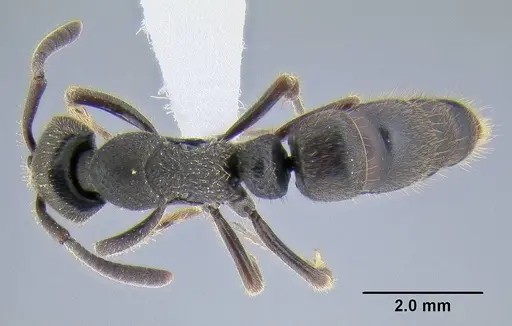
CASENT0281893
View on AntWeb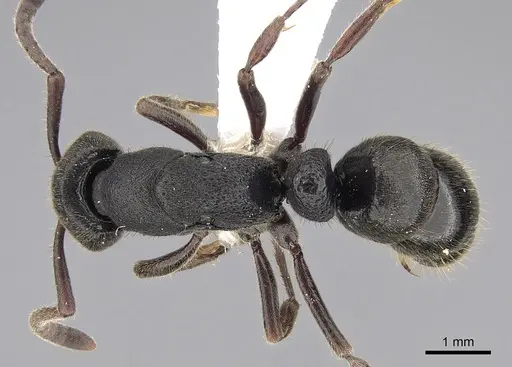
CASENT0907272
View on AntWeb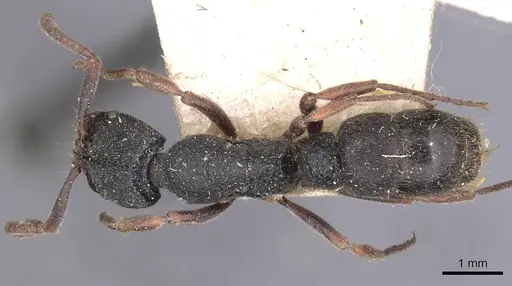
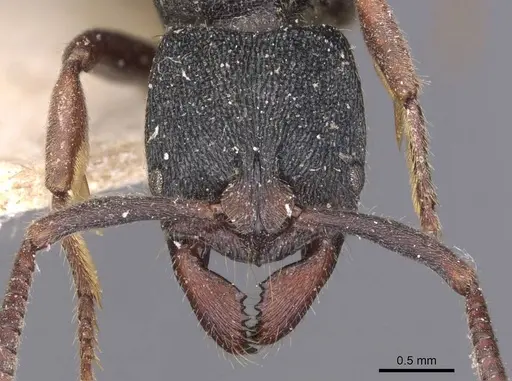
CASENT0907273
View on AntWeb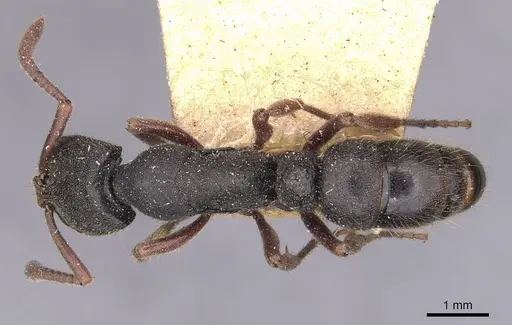
Literature
Loading distribution map...Loading products...