
Echinopla turneri
- Sci. Name
- Echinopla turneri
- Tribe
- Camponotini
- Subfamily
- Formicinae
- Author
- Forel, 1901
- Distribution
- Found in 1 countries
Introduction
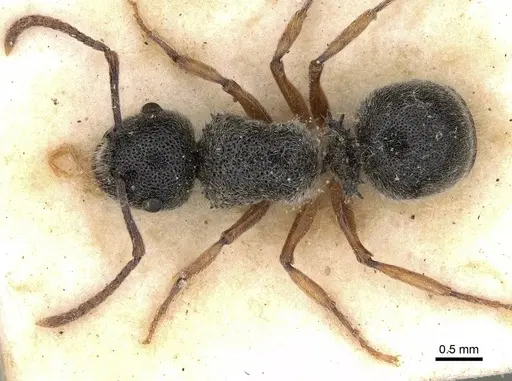
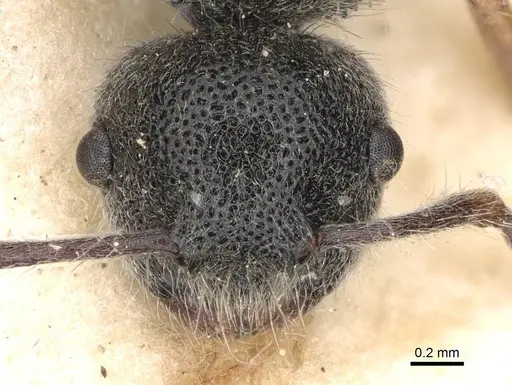
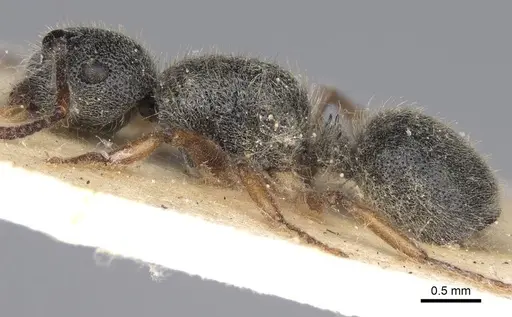
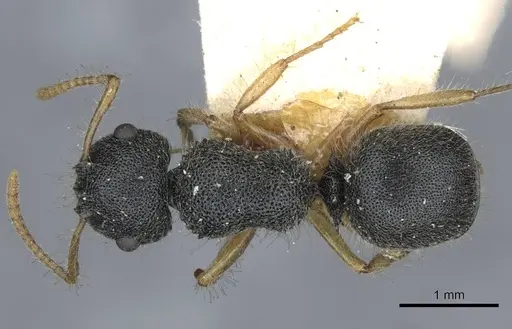
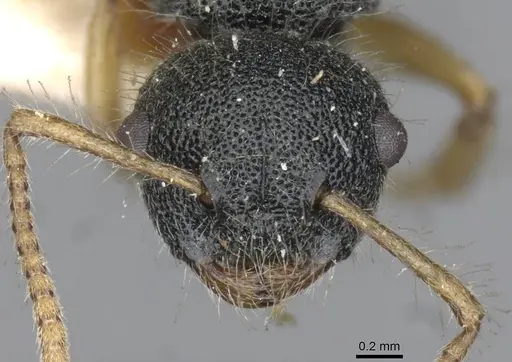
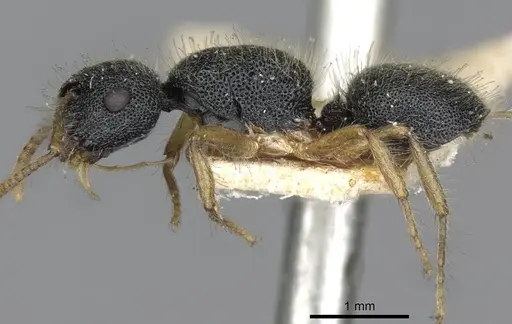
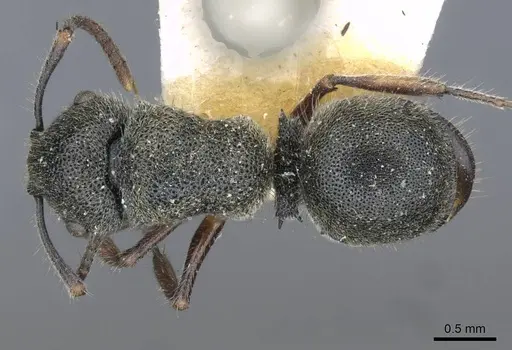
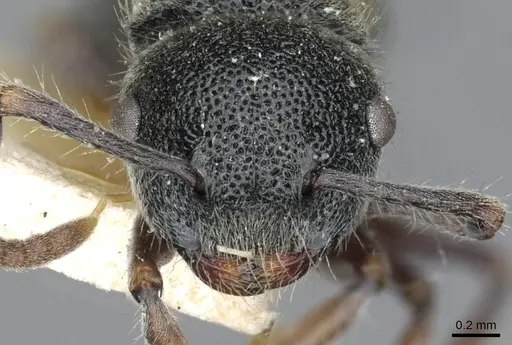
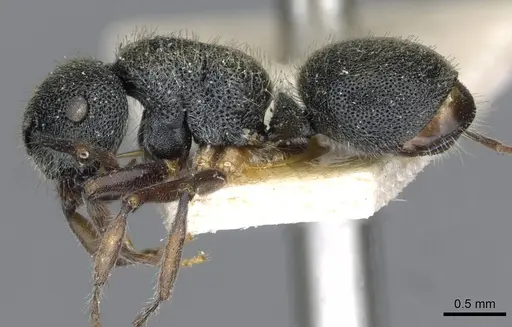
Echinopla turneri is a small to medium-sized ant species native to Queensland, Australia. Workers are black with distinctive yellowish-red mandibles and yellowish-brown antennae and legs. They belong to the serrata species group and have a unique texture characterized by densely cribrate (pitted) surfaces on the head and gaster, with abundant standing hairs on the mesosoma. The genus Echinopla is known for their spiny appearance and distinctive surface sculpturing. This species is found in rainforest habitats at elevations around 200m in the Eungella region [AntWiki].
Quick Summary
- Difficulty: Medium
- Origin & Habitat: Queensland, Australia, found in rainforest habitats at elevations around 200m [1][2]
- Colony Type: Unconfirmed, based on typical Formicinae patterns, likely single-queen colonies
- Size & Growth:
- Queen: Size data unavailable, inferred from Echinopla genus (~8-10mm)
- Worker: Size data unavailable, inferred from Echinopla genus (~5-7mm)
- Colony: Unknown, likely moderate colony size based on typical Australian rainforest ants
- Growth: Unknown, estimated based on related Formicinae
- Development: Unknown, estimated 6-10 weeks based on typical Formicinae development (Development timeline is estimated. Temperature around 24-28°C would likely support optimal development.)
- Antkeeping:
- Temperature: Keep at 24-28°C, Australian rainforest species requiring warm, stable conditions. A heating cable on one side of the nest creates a suitable gradient.
- Humidity: Keep substrate moderately moist, rainforest species requiring higher humidity. Provide a water tube and maintain damp but not waterlogged nest conditions.
- Diapause: Likely mild winter slowdown, Australian species from Queensland may not require full hibernation but can tolerate cooler temperatures during winter months.
- Nesting: In nature they likely nest in rotting wood or under bark in rainforest habitats. In captivity, a Y-tong (AAC) nest or plaster nest with good humidity retention works well.
- Behavior: Workers are moderately active and foragers. They likely defend their nest territory but are not excessively aggressive. Escape prevention should be standard, these ants are not extremely small but use standard barrier methods.
- Common Issues: limited availability, this species is rarely available in the antkeeping hobby, humidity requirements are higher than typical desert ants, monitor for drying out, colony growth may be slow, patience is required, specific dietary needs are not well documented, may require experimentation, wild-caught colonies may have parasites or adaptation issues
Housing and Nest Preferences
Echinopla turneri is a rainforest species from Queensland, Australia. In the wild, they likely nest in rotting wood, under bark, or in similar humid microhabitats within the rainforest ecosystem. For captive care, a Y-tong (AAC) nest or plaster formicarium works well because these materials retain humidity better than acrylic nests. The nest should have chambers sized appropriately for a medium-sized ant. Provide a water tube connected to the nest to maintain humidity. Since they're from a humid environment, ensure the nest substrate stays damp but never waterlogged. A small outworld for foraging allows you to observe their hunting and feeding behaviors. [1][2]
Feeding and Diet
As a member of the Formicinae subfamily, Echinopla turneri likely has an omnivorous diet similar to related genera like Camponotus. They probably consume honeydew or nectar from aphids and scale insects, along with small insects for protein. In captivity, offer a mix of sugar water or honey as an energy source, and protein-rich foods like small crickets, mealworms, or other insects. Since this is a relatively unstudied species in captivity, you may need to experiment to determine their preferences. Feed protein 2-3 times per week and keep a sugar source available at all times. Remove uneaten prey after 24-48 hours to prevent mold.
Temperature and Seasonal Care
Being an Australian rainforest species, Echinopla turneri prefers warm and humid conditions. Maintain temperatures between 24-28°C in the nest area. You can use a heating cable placed on top of the nest to create a temperature gradient. During Australian winter months (June-August), Queensland experiences mild temperatures, so your colony may show reduced activity but likely doesn't need full hibernation. You can reduce temperatures to around 18-22°C during winter months to simulate their natural seasonal cycle. Avoid temperatures below 15°C for extended periods. [1]
Behavior and Colony Dynamics
Echinopla workers are moderately sized with distinctive spiny appearance due to their cribrate surface texture. They likely exhibit typical Formicinae behavior with workers foraging for food and defending the nest. Colonies probably grow at a moderate rate, with the queen laying eggs that develop through larval stages before emerging as workers. The first workers will be smaller but should quickly begin helping with colony tasks. These ants are not known for extreme aggression but will defend their nest if threatened. Observe your colony's activity patterns to fine-tune their care, active workers usually indicate good conditions. [1]
Acquiring and Establishing Colonies
Echinopla turneri is rarely available in the antkeeping hobby, making it a collector's species. If you obtain a colony, it will likely be through specialized Australian ant dealers or hobbyists. When establishing a new colony, use a test tube setup for the founding queen with a water tube attached for humidity. Once the colony reaches 15-20 workers, you can consider moving them to a proper nest. Always use escape prevention, while not extremely small, they can still escape through small gaps. Monitor founding colonies closely for the first few months as stress from transportation can sometimes cause issues.
Frequently Asked Questions
How long does it take for Echinopla turneri to produce first workers?
The exact timeline is unknown, but based on typical Formicinae development, expect first workers to emerge in approximately 6-10 weeks after the queen lays eggs, assuming optimal temperatures around 24-28°C.
What do Echinopla turneri ants eat?
They likely have an omnivorous diet. Offer sugar water or honey for energy, and protein sources like small insects (crickets, mealworms) 2-3 times per week. Remove uneaten food promptly.
Are Echinopla turneri good for beginners?
This species is considered intermediate to advanced difficulty. They're not ideal for complete beginners due to their specific humidity requirements and rarity in the hobby. If you're experienced with Australian species, they can be rewarding.
What temperature do Echinopla turneri need?
Keep them at 24-28°C. A heating cable on top of the nest can help maintain warmth. They can tolerate brief drops but avoid cold temperatures below 15°C.
Do Echinopla turneri need hibernation?
Probably not a full hibernation. As a Queensland species, they may only need a mild winter slowdown during June-August to simulate their natural seasonal cycle.
Can I keep multiple Echinopla turneri queens together?
The colony structure is unconfirmed. Based on typical Formicinae, they likely form single-queen colonies. Combining unrelated queens is not recommended without specific evidence they can coexist.
What type of nest is best for Echinopla turneri?
A Y-tong (AAC) or plaster nest works best because they retain humidity well. Avoid dry acrylic nests. Keep the substrate damp but not waterlogged.
How big do Echinopla turneri colonies get?
Exact maximum size is unknown. Based on related Australian Formicinae, colonies likely reach several hundred workers at maturity.
Where is Echinopla turneri found in the wild?
They are native to Queensland, Australia, specifically found in rainforest habitats at elevations around 200m in the Eungella region.
Report an Issue
The current care sheet is based fully on literature. See inconsistencies, or something that's incorrect? Please , it will be resolved after review from an admin. Contributing to the blogs tab also helps providing information, to make us be able to further improve the caresheets. Thank you for your support!
References

This caresheet is licensed under CC BY-SA 4.0 .
Community Blogs
Literature
Loading distribution map...Loading products...