
Echinopla silvestrii
- Sci. Name
- Echinopla silvestrii
- Tribe
- Camponotini
- Subfamily
- Formicinae
- Author
- Donisthorpe, 1936
- Distribution
- Found in 1 countries
Introduction
Echinopla silvestrii is a tropical ant species from New Guinea belonging to the serrata species group. Workers are black with reddish-brown mandibles and yellowish-brown legs and ocelli. The species has distinctive morphological features including oblong, irregular cribrate holes on the mesosoma and blunt lateral teeth on the mesonotum. This is a poorly documented species with limited available research on its biology and colony structure. The genus Echinopla consists of arboreal or semi-arboreal ants found in tropical forests of the Asia-Pacific region .
Quick Summary
- Difficulty: Unknown, limited documentation
- Origin & Habitat: New Guinea (Australasian Region), tropical forest habitat [1][2]
- Colony Type: Unknown colony structure, no specific data available
- Size & Growth:
- Queen: Size data unavailable, queen caste described but no measurements provided [1]
- Worker: Size data unavailable, no worker measurements in available research
- Colony: Unknown, no colony size data available
- Growth: Unknown, no development data available
- Development: Unknown, no direct measurements available (Development timeline is unconfirmed for this species.)
- Antkeeping:
- Temperature: Keep at tropical room temperature, aim for 24-28°C. This species is from New Guinea, a tropical region, so warmth is important.
- Humidity: Moderate to high humidity, think tropical forest conditions. Keep nest substrate slightly moist but not waterlogged.
- Diapause: Unknown, tropical species from New Guinea may not require hibernation, but seasonal rest periods may occur.
- Nesting: In nature, Echinopla species are typically arboreal or semi-arboreal, nesting in hollow twigs, branches, or under bark. In captivity, a naturalistic setup with wood pieces or a Y-tong/plaster nest with narrow chambers works well.
- Behavior: Temperament is unconfirmed. Echinopla species are generally not aggressive toward keepers. They are arboreal and likely more active on vertical surfaces. This species belongs to Formicinae, which lack a functional sting but can bite and spray formic acid as defense. Escape prevention should be moderate, use standard barriers.
- Common Issues: limited species-specific care information makes proper husbandry challenging, tropical humidity requirements may be difficult to maintain in dry climates, arboreal nesting needs may be difficult to replicate in standard formicariums, colony founding success is unknown, queens may be difficult to establish, escape risk is moderate, use standard barriers
Appearance and Identification
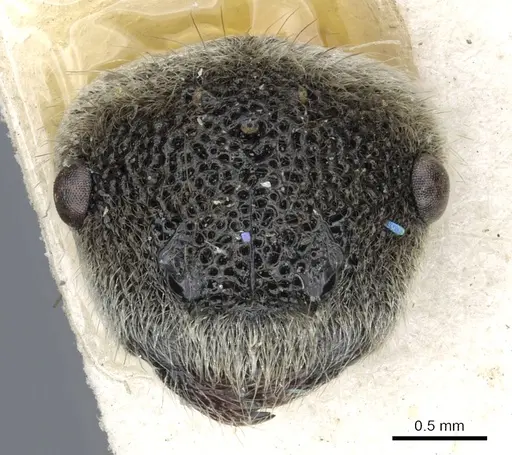
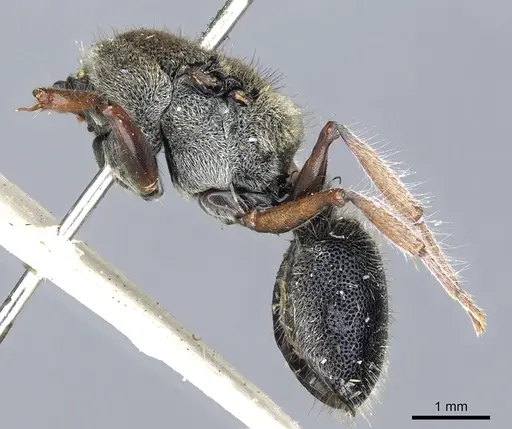
Echinopla silvestrii workers are black overall with distinctive reddish-brown mandibles. Their legs and ocelli are yellowish brown, while their eyes are blackish brown. The species belongs to the serrata-group, characterized by specific morphological features including oblong, irregular cribrate (sieve-like) holes on the mesosoma, and blunt lateral teeth on the mesonotum located at the sides of the scutellum. In lateral view, the dorsum of the mesonotum is straight, and the posterodorsal corner of the propodeum is broadly rounded. These identification features are useful if you are examining specimens or comparing with related species [1].
Natural Distribution and Habitat
This species is known only from New Guinea, which is a massive island in the Australasian region shared between Indonesia and Papua New Guinea. New Guinea has a tropical climate with high humidity year-round. As an Echinopla species, these ants are likely arboreal or semi-arboreal, found in forest canopies or forest edges rather than on the ground. The original description was published by Donisthorpe in 1936, with additional taxonomic work done in subsequent decades [1][2].
Nest Preferences and Housing
In captivity, you should replicate their natural arboreal habitat as closely as possible. Echinopla species typically nest in hollow twigs, dead branches, or under bark in trees. A naturalistic setup with vertical wood pieces, cork, or a Y-tong/plaster nest with narrow chambers scaled to their size works well. They prefer vertical orientation. Keep the nest humid but ensure some ventilation to prevent mold.
Feeding and Diet
Like other Formicinae ants, Echinopla silvestrii likely has an omnivorous diet. They probably consume honeydew from sap-sucking insects in addition to small insects and arthropods. In captivity, offer sugar water or honey regularly, along with small protein sources like fruit flies, small crickets, or other tiny insects. Since they are arboreal, they may prefer foraging on vertical surfaces. Feed protein regularly and provide a constant sugar source. Remove uneaten prey after 24-48 hours to prevent mold.
Temperature and Seasonal Care
As a tropical species from New Guinea, keep these ants warm. Aim for 24-28°C in the nest area. A slight temperature gradient allows the colony to self-regulate. Room temperature in most homes may be sufficient if kept in a warm room, otherwise use a gentle heating method like a heating cable on one side of the nest. Do not let temperatures drop below 20°C for extended periods. Tropical ants typically do not require hibernation, but they may have reduced activity during cooler seasons.
Colony Establishment and Growth
Queen founding behavior is unconfirmed for this species. Expect a wait of several months before first workers appear. Growth rate is unknown. Be patient during the founding stage, disturbing the queen can cause her to abandon or eat her brood. Once established, colonies probably grow steadily. Maximum colony size is unknown.
Frequently Asked Questions
How long does it take for Echinopla silvestrii to produce first workers?
The exact timeline is unknown for this species. Development data is not available in the research literature. Be patient, founding colonies can take several months to establish.
What do Echinopla silvestrii ants eat?
They likely have an omnivorous diet similar to other Formicinae. Offer sugar water or honey as a constant energy source, and small protein sources like fruit flies, small crickets, or other tiny insects regularly.
Can I keep Echinopla silvestrii in a test tube?
While test tubes work for many species, Echinopla are arboreal ants that prefer vertical nesting. A Y-tong, plaster, or naturalistic nest with vertical orientation is more appropriate.
Are Echinopla silvestrii good for beginners?
This species is not recommended for beginners due to the lack of species-specific care information. The limited documentation makes proper husbandry challenging.
What temperature should I keep Echinopla silvestrii at?
Keep them at tropical room temperature, ideally 24-28°C. This species comes from New Guinea's warm, humid climate.
Do Echinopla silvestrii need hibernation?
Probably not, they are tropical ants from New Guinea where temperatures remain warm year-round. However, they may have reduced activity during cooler periods.
How big do Echinopla silvestrii colonies get?
The maximum colony size is unknown, no research data is available for this species.
Can I keep multiple Echinopla silvestrii queens together?
The colony structure is unconfirmed for this species. Combining unrelated queens is not recommended without specific documentation.
Why is so little known about Echinopla silvestrii care?
This is a rarely collected species with a limited distribution in New Guinea. There has been minimal research on its biology, behavior, or captive care.
Report an Issue
The current care sheet is based fully on literature. See inconsistencies, or something that's incorrect? Please , it will be resolved after review from an admin. Contributing to the blogs tab also helps providing information, to make us be able to further improve the caresheets. Thank you for your support!
References

This caresheet is licensed under CC BY-SA 4.0 .
Community Blogs
CASENT0903469
View on AntWeb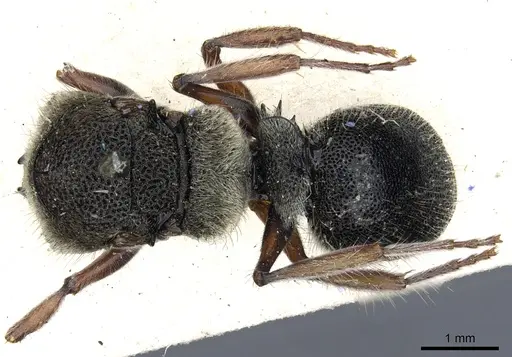
Literature
Loading distribution map...Loading products...