
Dorymyrmex lipan
- Sci. Name
- Dorymyrmex lipan
- Tribe
- Leptomyrmecini
- Subfamily
- Dolichoderinae
- Author
- Snelling, 1995
- Distribution
- Found in 1 countries
Introduction
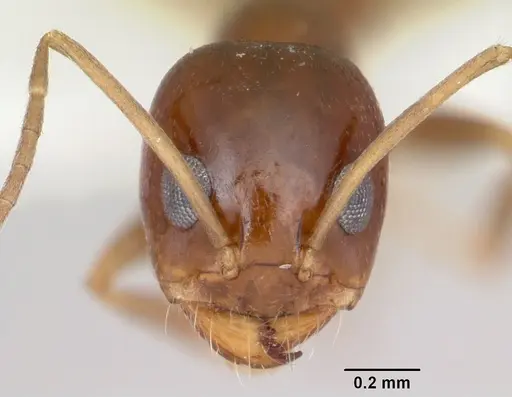
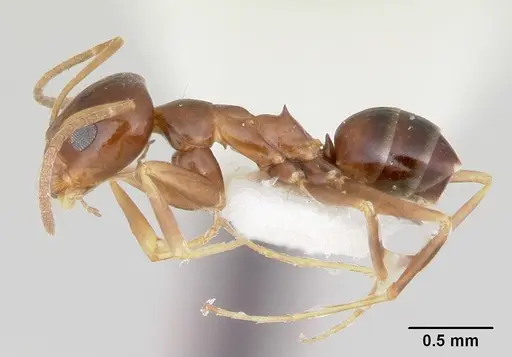
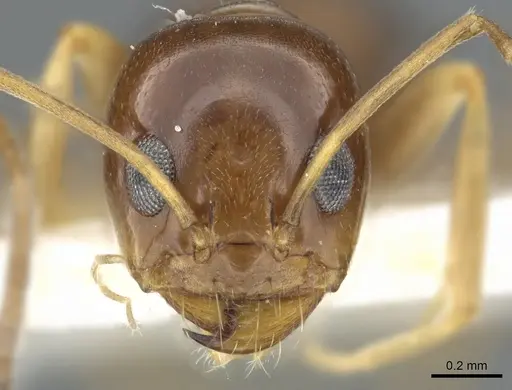
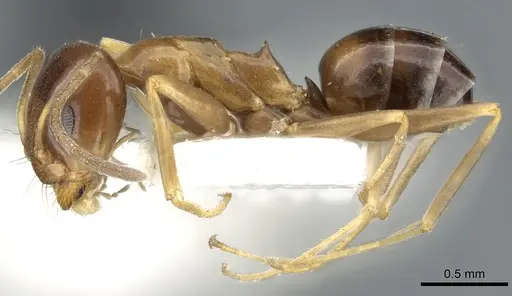
Dorymyrmex lipan is a small ant native to the southwestern United States and northern Mexico. Workers measure approximately 2.7mm in total length, with a medium reddish-brown body and darker gaster, while antennae and legs are yellowish [AntWiki]. The species was described by Snelling in 1995 and named after the Lipan Apache people of western Texas [AntWiki]. These ants are found in the Chisos Mountains of Big Bend National Park, Texas, and across northern Mexico in states including Baja California, Coahuila, and Tamaulipas, typically inhabiting pine-oak-juniper forests, pine forests, gallery forests, and xerophilous shrubland areas . The biology of this species remains completely unstudied in scientific literature. As with most Dorymyrmex species, they are ground-nesting ants that likely build colonies in soil or under stones in open, sunny areas. Their smooth, shiny appearance distinguishes them from related species with more pubescent surfaces. This species represents one of the less common North American ants in the hobby.
Quick Summary
- Difficulty: Medium
- Origin & Habitat: Southwestern United States (Texas) and northern Mexico (Baja California, Coahuila, Tamaulipas). Found in pine-oak-juniper forest, pine forest, gallery forest, tropical deciduous forest, and xerophilous shrubland at elevations around 4800 feet [2].
- Colony Type: Unconfirmed, no species-specific data on colony structure
- Size & Growth:
- Queen: size data unavailable
- Worker: approximately 2.7mm total length [1]
- Colony: unknown, no data available
- Growth: unknown
- Development: unknown, no species-specific data (No development data exists for this species.)
- Antkeeping:
- Temperature: Provide warmth around 24-27°C with a gradient. They inhabit warm southwestern habitats.
- Humidity: Low to moderate, these ants inhabit arid to semi-arid regions. Keep nest substrate moderately dry.
- Diapause: Likely required, Dorymyrmex species in temperate regions typically need winter dormancy. Provide 3-4 months at 10-15°C during winter.
- Nesting: Naturalistic setups with dry to moderately moist substrate work well. In nature they likely nest in soil under stones in sunny, open areas. A Y-tong or plaster nest with a dry to slightly damp section is appropriate.
- Behavior: Dorymyrmex ants are generally non-aggressive and fast-moving, typical of Dolichoderinae. Workers are active foragers that likely scavenge and collect honeydew. They lack a functional sting but can secrete defensive compounds from a slit-like opening at the tip of the abdomen as their defense mechanism. Their small size means escape prevention should be taken seriously, use fine mesh and tight-fitting lids.
- Common Issues: no biological data means all care is based on genus-level inference rather than species-specific research, limited availability in the antkeeping hobby makes this species difficult to acquire, escape risk due to small size requires excellent barrier systems, winter diapause requirements are inferred, not confirmed for this species, queen size and colony development data are completely unavailable
Natural History and Distribution
Dorymyrmex lipan occupies a range spanning the southwestern United States and northern Mexico. The type locality is the Chisos Mountains in Big Bend National Park, Texas, at an elevation of approximately 4800 feet [1]. In Mexico, specimens have been recorded from Baja California, Coahuila, and Tamaulipas, with the largest collection numbers coming from Ensenada in Baja California (54 specimens) and Tamaulipas (53 specimens from Miquihuana and Ciudad Victoria) [2].
These ants inhabit diverse environments including pine-oak-juniper forest, pine forest, gallery forest, tropical deciduous forest, xerophilous shrubland, and secondary vegetation [2]. This suggests adaptability to different conditions within warm, often dry habitats. The elevation range and habitat diversity indicate this species can tolerate various microclimates.
Nothing specific is known about their nesting biology. Dorymyrmex species typically nest in soil, often under stones or in open ground. Workers are generalist foragers that likely scavenge for sugary substances and protein sources.
Identification and Distinguishing Features
Dorymyrmex lipan workers are small ants measuring approximately 2.7mm in total length. The head is nearly smooth and shiny with very sparse appressed pubescence, which distinguishes this species from many related Dorymyrmex that have more hairy heads. The body is medium reddish-brown with the gaster being the darkest part. Antennae and legs are yellowish [1].
In the antkeeping hobby, proper identification can be challenging without comparison material. The smooth, shiny appearance combined with the small size and reddish-yellow coloration should help distinguish them from more common ants.
Housing and Nest Setup
Since specific nesting biology is unknown, housing recommendations must be based on genus-level patterns and natural habitat. Dorymyrmex lipan likely nests in soil in warm, sunny, relatively dry areas. In captivity, provide a naturalistic setup with a dry to moderately moist substrate, or use a Y-tong nest with a small water reservoir.
Avoid overly humid conditions, these ants come from arid to semi-arid regions. A gradient from slightly damp to dry works well. The nest should have chambers scaled to their tiny size, with narrow passages. Test tube setups can work for founding colonies, but monitor humidity carefully as these ants prefer drier conditions than many common species.
For the outworld, provide standard setup with a sugar water feeder and protein food dish. Escape prevention is important due to their small size, use fine mesh barriers and ensure all openings are sealed.
Feeding and Diet
The specific diet of Dorymyrmex lipan has not been documented. As a Dorymyrmex species, they are likely generalist foragers similar to other Dolichoderinae ants. They probably scavenge for honeydew from aphids and scale insects, collect nectar, and hunt small insects for protein.
In captivity, offer a standard ant diet: constant access to sugar water or honey, and protein sources such as small insects (fruit flies, small mealworms, crickets). Feed protein 2-3 times per week, removing uneaten food after 24-48 hours. Sugar water should always be available.
Since their specific preferences are unknown, start with basic offerings and observe what the colony accepts readily. The small worker size suggests they may prefer very small prey items.
Temperature and Seasonal Care
Dorymyrmex lipan inhabits warm regions of Texas and northern Mexico, suggesting they prefer temperatures in the low-to-mid 20s°C range or higher. Provide a temperature gradient around 24-27°C in the nest area, with the foraging area potentially warmer. A heating cable on one side of the nest can create this gradient.
Like most temperate ants in their range, they likely require a winter dormancy period. During winter, reduce temperatures to 10-15°C to simulate natural seasonal changes. This rest period is important for colony health and may trigger reproductive behavior in spring.
Monitor colony activity, if workers become sluggish and cluster together, temperatures may be too low. If they avoid the heated areas, reduce temperature.
Colony Development and Growth
No specific data exists for Dorymyrmex lipan colony development. Without species-specific information, it is impossible to provide accurate development timelines. First workers will likely be smaller than normal workers (nanitics), which is typical in ant species. The colony will grow gradually as more workers emerge.
Patience is essential with this species, the complete lack of documented biological data means growth patterns are unpredictable. There is no reliable information on maximum colony size, development duration, or colony growth rate for this species.
Frequently Asked Questions
How long does it take for Dorymyrmex lipan to produce first workers?
Unknown, no species-specific data exists. Without documented development timelines, it is impossible to provide estimates for this species.
What do Dorymyrmex lipan ants eat?
Their specific diet is unstudied. Based on genus patterns, they likely accept sugar sources (honey water, sugar water) and small protein prey (fruit flies, small insects). Offer standard ant foods and observe preferences.
Are Dorymyrmex lipan good for beginners?
This species is not recommended for beginners due to completely lacking biological data. All care recommendations are based on genus-level inference rather than species-specific research. More common species with established care guides are better for beginners.
Do Dorymyrmex lipan need hibernation?
Likely yes, they inhabit temperate regions of Texas and northern Mexico where winters are cool. Based on related species, provide 3-4 months at 10-15°C during winter. This is inferred, not confirmed for this specific species.
How big do Dorymyrmex lipan colonies get?
Unknown, no colony size data exists for this species. There is no information on maximum colony size.
Can I keep multiple Dorymyrmex lipan queens together?
Not recommended, colony structure data does not exist for this species. Most Dorymyrmex are thought to be single-queen species. Start with one queen for best success.
What temperature should I keep Dorymyrmex lipan at?
Provide warmth around 24-27°C with a gradient. They inhabit warm southwestern habitats and likely prefer these temperatures. A slight drop during winter months is probably necessary.
Why is my Dorymyrmex lipan colony dying?
Without specific data, common issues likely include: incorrect humidity (too wet), temperatures outside their preferred range, lack of proper winter dormancy, or stress from limited information. Start with dry-to-moderately-humid conditions and temperatures in the mid-20s°C.
Where can I get Dorymyrmex lipan ants?
This species is rarely available in the antkeeping hobby. Check specialty ant vendors or consider catching a dealate queen during nuptial flights if you live within their range (Texas, northern Mexico).
Report an Issue
The current care sheet is based fully on literature. See inconsistencies, or something that's incorrect? Please , it will be resolved after review from an admin. Contributing to the blogs tab also helps providing information, to make us be able to further improve the caresheets. Thank you for your support!
References

This caresheet is licensed under CC BY-SA 4.0 .
Community Blogs
CASENT0103440
View on AntWeb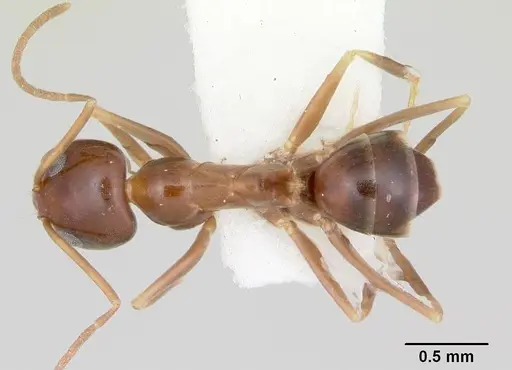
CASENT0902984
View on AntWeb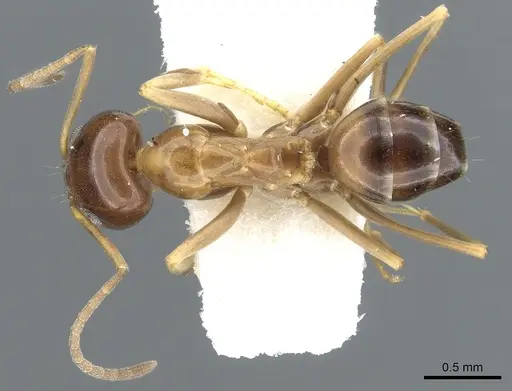
Literature
Loading distribution map...Loading products...