
Dorymyrmex carettei
- Sci. Name
- Dorymyrmex carettei
- Tribe
- Leptomyrmecini
- Subfamily
- Dolichoderinae
- Author
- Forel, 1913
- Distribution
- Found in 1 countries
Introduction
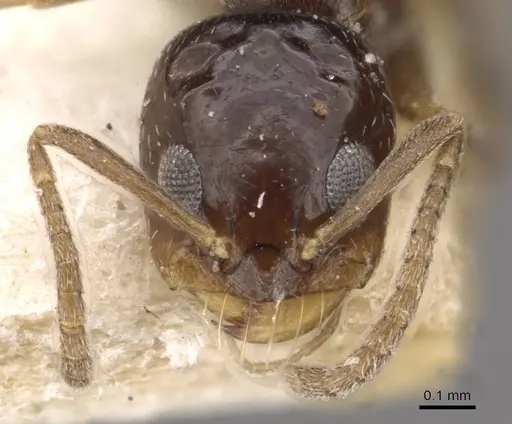
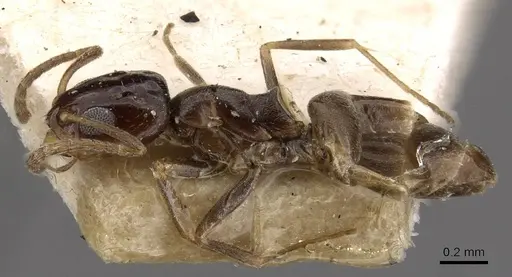
Dorymyrmex carettei is a small ant species native to Argentina, belonging to the Dolichoderinae subfamily. Workers are approximately 3-5 mm in length (inferred from Dorymyrmex genus) , with dark brown to black coloration and a smooth gaster. This species is found in central Argentina, particularly in the Caldenal district and Santiago del Estero regions, inhabiting grassland and forest edge habitats . A notable characteristic is their defense mechanism: they lack a functional sting and instead secrete defensive chemicals from the abdomen tip, typical of Dolichoderinae ants .
Quick Summary
- Difficulty: Easy
- Origin & Habitat: Central Argentina, including the Caldenal district and Santiago del Estero regions, in grassland and forest edge habitats [2][3].
- Colony Type: Unconfirmed, no specific data on queen number or social structure.
- Size & Growth:
- Queen: ~6-8 mm (inferred from Dorymyrmex genus) [1]
- Worker: ~3-5 mm (inferred from Dorymyrmex genus) [1]
- Colony: Up to several hundred workers (inferred from Dorymyrmex patterns) [1]
- Growth: Moderate
- Development: Estimated 6-8 weeks at optimal temperature (inferred from related Dolichoderinae species) [1] (Development time may vary with temperature, specific timing for this species unconfirmed.)
- Antkeeping:
- Temperature: Keep at 22-26°C, inferred from temperate Argentine distribution [1].
- Humidity: Keep substrate consistently moist but not waterlogged, inferred from ground-nesting habits [1].
- Diapause: Yes, likely required for 2-3 months at 10-15°C in winter, based on genus patterns [1].
- Nesting: Ground-nesting, use soil or plaster nests in captivity, mimicking natural habits [1].
- Behavior: Workers are active foragers, not aggressive, and typically flee when disturbed. They use chemical defense secretion from the abdomen. Escape risk is moderate due to small worker size, ensure barriers are secure.
- Common Issues: colonies may be slow to establish during founding, patience is needed, escape prevention is important due to small worker size, winter dormancy is often required but timing can vary by colony origin, wild-caught colonies may harbor parasites affecting survival, overheating can be more dangerous than slight underheating
Housing and Nest Setup
Dorymyrmex carettei does well in standard ant housing. For founding colonies, a test tube setup works fine, fill one end with water reservoir and use cotton to create a humid chamber. Once the colony reaches 20-30 workers, you can move them to a formicarium. A naturalistic setup with a soil chamber works well since these are ground-nesting ants [1]. Use a nesting area of at least 10x10cm with small chambers scaled to their 3-5mm worker size. The outworld should have a small foraging area for food placement. Ensure the nest maintains moderate humidity, allow partial drying between waterings [1].
Feeding and Diet
Dorymyrmex carettei is omnivorous. Offer sugar sources like sugar water or honey constantly, and protein prey such as fruit flies or small crickets 2-3 times per week [1]. In the wild, they forage for honeydew and small arthropods. Remove uneaten prey after 24-48 hours to prevent mold. Workers share food through trophallaxis.
Temperature and Seasonal Care
Keep your colony at 22-26°C for optimal development. During winter, allow a natural slowdown by moving the colony to a cooler location (10-15°C) for 2-3 months to mimic diapause [1]. Adjust based on colony response if origin is from warmer regions.
Colony Development
A newly mated queen may seal herself in a chamber for founding, but this behavior is unconfirmed for this species. The first workers (nanitics) will begin foraging to support growth. Expect 6-8 weeks from egg to first worker at warm temperatures, though this is estimated [1]. Growth is moderate, with colonies reaching up to several hundred workers over time.
Behavior and Observation
Workers are active foragers, patrolling the outworld for food. They are relatively docile and flee when disturbed, using chemical defense secretion from the abdomen [1]. Escape prevention is important due to small size, use barriers on nest rims. They are diurnal and most active during warmer hours.
Frequently Asked Questions
How long does it take for Dorymyrmex carettei to produce first workers?
Expect 6-8 weeks from egg to first worker at optimal temperatures (22-26°C), estimated from related Dolichoderinae species [1]. Specific timing for this species is unconfirmed.
What temperature do Dorymyrmex carettei ants need?
Keep them at 22-26°C, inferred from their temperate Argentine distribution [1]. Room temperature is usually adequate.
Can I keep multiple Dorymyrmex carettei queens together?
Colony structure is unconfirmed, but based on typical ant patterns, it is not recommended to combine unrelated queens as they may fight. A single queen per colony is standard.
Do Dorymyrmex carettei need hibernation?
Yes, they likely require a winter rest period of 2-3 months at 10-15°C, based on genus patterns [1].
What do Dorymyrmex carettei ants eat?
They are omnivorous. Offer sugar water or honey constantly, and protein insects like fruit flies 2-3 times per week [1].
Are Dorymyrmex carettei good for beginners?
Yes, they are considered easy due to adaptable care and non-aggressive behavior. Main needs are warm temperatures, moderate humidity, and a winter rest period.
How big do Dorymyrmex carettei colonies get?
Colony size is estimated up to several hundred workers, inferred from Dorymyrmex patterns [1].
When should I move Dorymyrmex carettei to a formicarium?
Move them once the colony reaches 20-30 workers. Before that, a test tube setup is fine for founding colonies.
Why are my Dorymyrmex carettei dying?
Common causes include overwatering (they prefer drier conditions), temperatures outside 22-26°C, lack of winter dormancy, or parasites from wild-caught colonies. Check humidity and temperature settings.
Report an Issue
The current care sheet is based fully on literature. See inconsistencies, or something that's incorrect? Please , it will be resolved after review from an admin. Contributing to the blogs tab also helps providing information, to make us be able to further improve the caresheets. Thank you for your support!
References

This caresheet is licensed under CC BY-SA 4.0 .
Community Blogs
CASENT0909734
View on AntWeb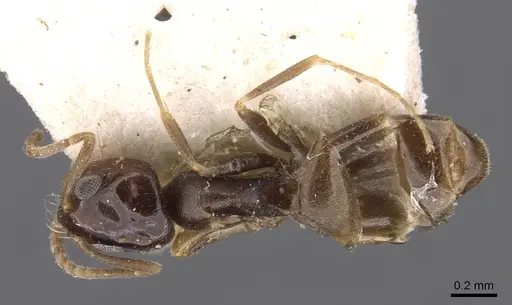
Literature
Loading distribution map...Loading products...