
Dilobocondyla fouqueti
- Sci. Name
- Dilobocondyla fouqueti
- Tribe
- Crematogastrini
- Subfamily
- Myrmicinae
- Author
- Santschi, 1910
- Distribution
- Found in 2 countries
Introduction
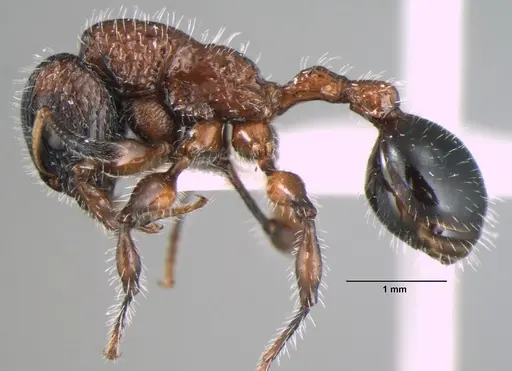
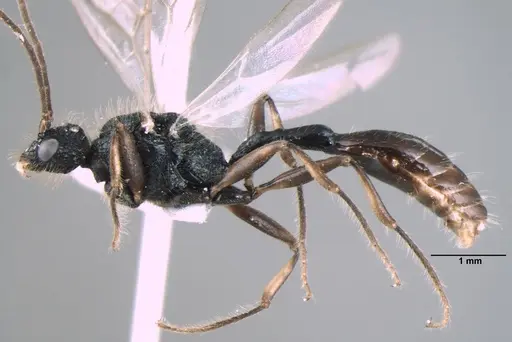
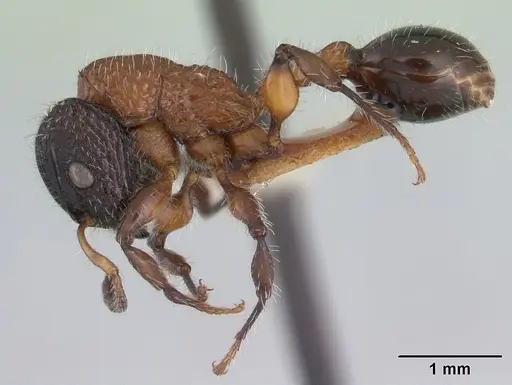
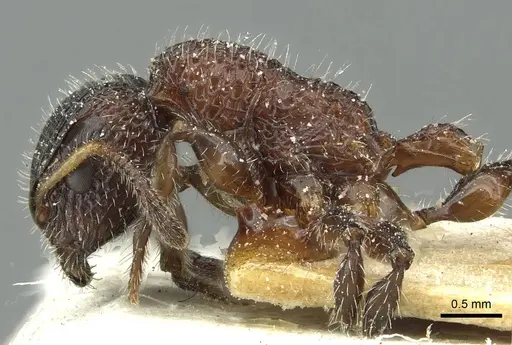
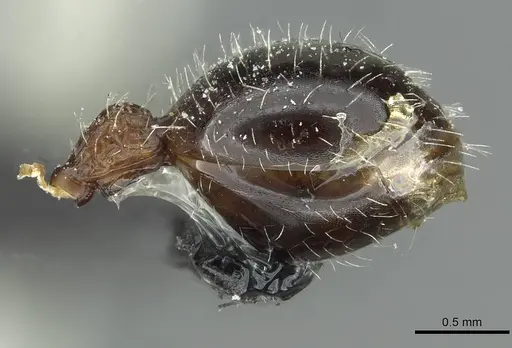
Dilobocondyla fouqueti is a medium-sized ant native to Vietnam and southern China (Fujian, Guangxi, Hainan, Yunnan). Workers measure 5.5-7mm with notable size variation. They have a striking color pattern: head and gaster are dark brown to black, while the mesosoma and waist segments are reddish-brown to yellowish-brown. The body is covered with abundant long whitish hairs. This species is uncommon and appears to be at least partly arboreal, living in mature lowland forest patches. It is a habitat specialist restricted to primary forest and is not found in secondary growth or rubber plantations . The species was originally described from Hanoi, Vietnam.
Quick Summary
- Difficulty: Medium
- Origin & Habitat: Vietnam and southern China (Fujian, Guangxi, Hainan, Yunnan), in mature lowland forest patches. A habitat specialist restricted to primary forest [1].
- Colony Type: Colony structure is unconfirmed. No published data on whether they are single-queen (monogyne) or multi-queen (polygyne) colonies.
- Size & Growth:
- Queen: 7.28-8.20 mm [2]
- Worker: 5.5-7.04 mm [2][3]
- Colony: Unknown, no colony size data published
- Growth: Unknown, no development data available
- Development: Unconfirmed, no direct development data exists for this species (Development time is unknown. Similar Southeast Asian forest Myrmicinae typically take 6-10 weeks at warm temperatures, but this is not confirmed for D. fouqueti.)
- Antkeeping:
- Temperature: Based on their native range in southern China and Vietnam, they likely prefer warm conditions. Start around 22-26°C and observe colony activity.
- Humidity: Native to humid lowland forest, keep nest substrate moderately moist but not waterlogged. Provide a moisture gradient so ants can self-regulate.
- Diapause: Unknown, no published data on overwintering requirements.
- Nesting: At least partly arboreal in the wild, they likely nest in elevated locations, possibly in rotting wood or under bark in trees. In captivity, a Y-tong (AAC) nest or plaster formicarium with some vertical space works well.
- Behavior: Workers are moderately active foragers. Their large eyes and arboreal habits suggest they may forage on vegetation as well as the ground. As Myrmicinae, they have a modified stinger used to smear venom rather than pierce. Escape risk is moderate given their 5-7mm size, standard barrier methods should suffice.
- Common Issues: this species is rarely kept and may have specific requirements not yet understood by hobbyists, wild-caught colonies may struggle to adapt to captive conditions if collected from specialized primary forest habitat, their arboreal nature means they may not thrive in fully ground-based setups, lack of published captive care information means keepers are essentially pioneering husbandry methods, their rarity in the wild makes obtaining colonies difficult
Natural History and Distribution
Dilobocondyla fouqueti is native to Vietnam and southern China, with confirmed records from Fujian, Guangxi, Hainan, and Yunnan provinces in China [3][2][4]. The species is uncommon in the wild, with only a handful of records from well-surveyed areas. It is a habitat specialist restricted to primary (old-growth) forest and has not been found in secondary forest or rubber plantations [1]. All recent Hong Kong records come from mature patches of lowland forest. The species appears to be at least partly arboreal, meaning it nests in or near trees rather than solely on the ground.
Identification and Morphology
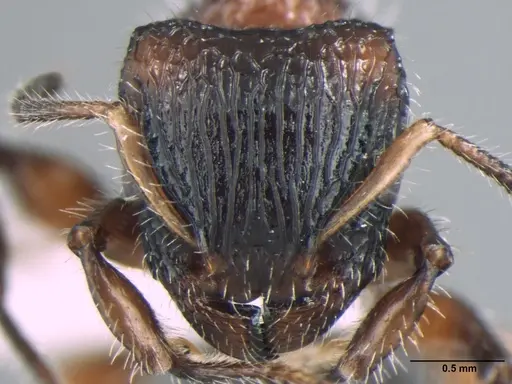
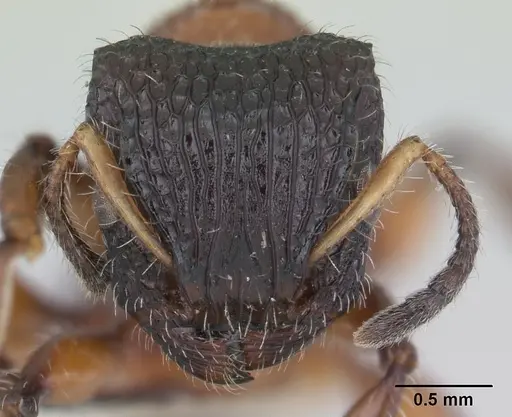
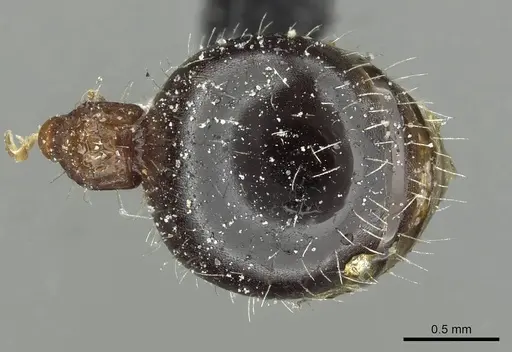
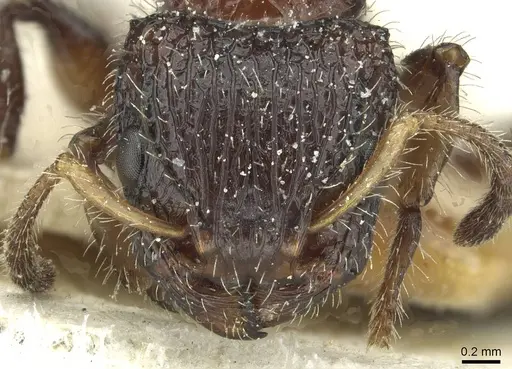
Workers of D. fouqueti are medium-sized ants measuring 5.5-7mm in length, with notable size variation across specimens [2][3]. They can be identified by their distinctive color pattern: head and gaster are dark brown to black, while the mesosoma, petiole, and postpetiole are reddish-brown to yellowish-brown. The scapes and legs are yellowish-brown. Their body is covered with abundant long whitish hairs. The head is nearly quadrate with a concave posterior margin, and the mandibles have 6 teeth. The antennae are 12-segmented with a distinct 3-segmented club. The sculpture is characteristically rugose-reticulate on the head and mesosoma, while the gaster is smoother and shinier with fine micro-reticulations. Queens are larger at 7.28-8.20mm and possess three ocelli [2].
Housing and Nest Preferences
Based on their arboreal habits in the wild, D. fouqueti likely prefers nests in elevated locations within rotting wood or under bark. In captivity, a Y-tong (AAC) nest or plaster formicarium works well. Because they are partly arboreal, providing some vertical space in the nest setup is beneficial. Keep the nest moderately humid. A moisture gradient allows ants to self-regulate their preferred humidity. Since this species is rarely kept in captivity, there is no established husbandry wisdom yet. The outworld should include some climbing structures since they may forage at various heights.
Feeding and Diet
The specific diet of D. fouqueti has not been documented in scientific literature. As a Myrmicinae ant, they likely have a varied diet similar to other forest-dwelling ants in this subfamily, probably omnivorous with a preference for protein sources. In captivity, offer a balanced diet: protein sources like fruit flies, small crickets, or mealworms, along with sugar sources like honey water or sugar water. Given their arboreal habits, they may also accept honeydew or nectar substitutes. Always provide fresh water.
Temperature and Seasonal Care
Dilobocondyla fouqueti originates from southern China and Vietnam, regions with warm, humid climates. Based on their native range, they likely prefer temperatures in the low-to-mid 20s Celsius (around 22-26°C). A gentle temperature gradient in the nest allows workers to regulate their own conditions. For seasonal care, there is no published data on whether they require a dormancy period. Observe your colony's activity patterns and adjust accordingly.
Frequently Asked Questions
How long does it take for Dilobocondyla fouqueti to produce first workers?
The egg-to-worker development time is unconfirmed for this species. No specific development data has been published.
What size colony does Dilobocondyla fouqueti reach?
Colony size is unknown, no published data exists on maximum colony sizes for this species.
Is Dilobocondyla fouqueti good for beginners?
This species is not recommended for beginners. It is rarely kept in captivity, has specific habitat requirements (primary forest, arboreal tendencies), and there is almost no published captive care information.
Do Dilobocondyla fouqueti ants sting?
Stinging behavior has not been documented for this species. As Myrmicinae, they have a modified stinger used to smear venom onto enemies rather than pierce flesh. It may be too small to penetrate human skin effectively.
Can I keep multiple queens together?
Colony structure (monogyne vs polygyne) is unconfirmed for this species. There is no data on whether multiple queens can be kept together or whether they naturally form multi-queen colonies.
What do Dilobocondyla fouqueti eat?
Specific diet is unconfirmed, but as Myrmicinae they are likely omnivorous. Offer protein sources (small insects like fruit flies, pinhead crickets, mealworms) and sugar sources (honey water, sugar water).
What temperature do Dilobocondyla fouqueti need?
Based on their native range in southern China and Vietnam, aim for warm conditions around 22-26°C. A temperature gradient allows workers to self-regulate.
Do Dilobocondyla fouqueti need hibernation?
Diapause or hibernation requirements are unknown for this species.
Where does Dilobocondyla fouqueti live in the wild?
They are found in Vietnam and southern China (Fujian, Guangxi, Hainan, Yunnan), living in mature primary lowland forest. They are at least partly arboreal, meaning they nest in trees or elevated locations. This species is a habitat specialist not found in secondary forest or rubber plantations [1][2].
How big are Dilobocondyla fouqueti workers?
Workers measure 5.5-7.04mm in length, with notable variation between specimens. Queens are larger at 7.28-8.20mm [2][3].
Report an Issue
The current care sheet is based fully on literature. See inconsistencies, or something that's incorrect? Please , it will be resolved after review from an admin. Contributing to the blogs tab also helps providing information, to make us be able to further improve the caresheets. Thank you for your support!
References

This caresheet is licensed under CC BY-SA 4.0 .
Community Blogs
ANTWEB1008031
View on AntWeb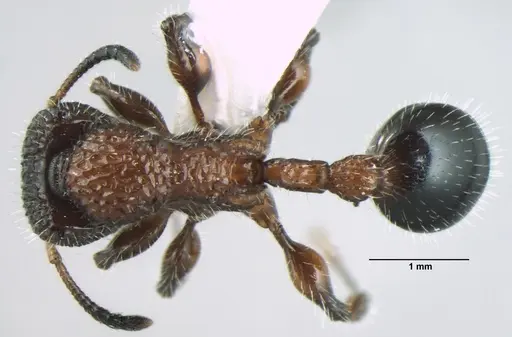
ANTWEB1008032
View on AntWeb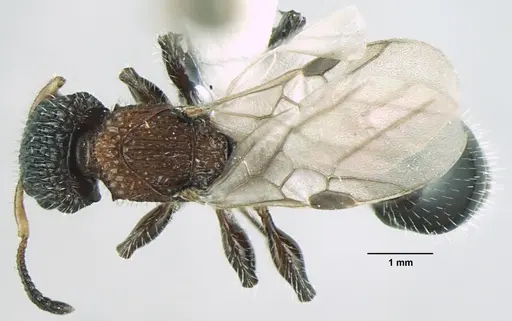
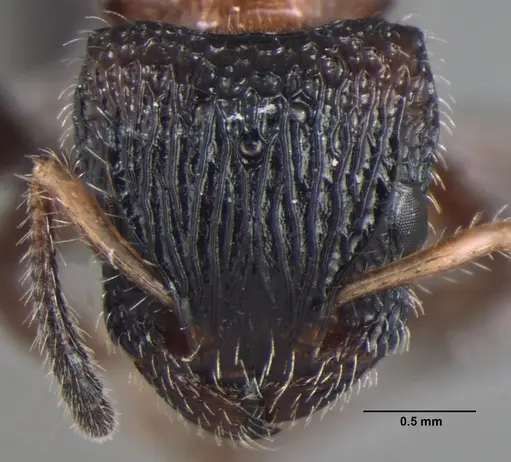
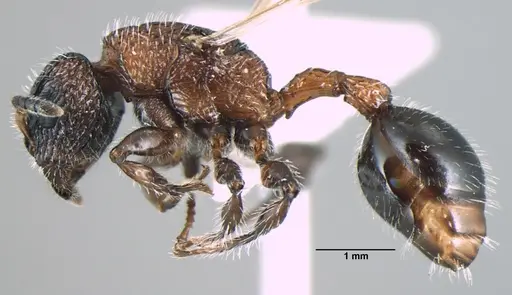
ANTWEB1008033
View on AntWeb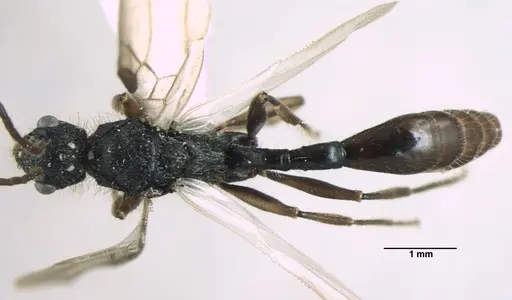
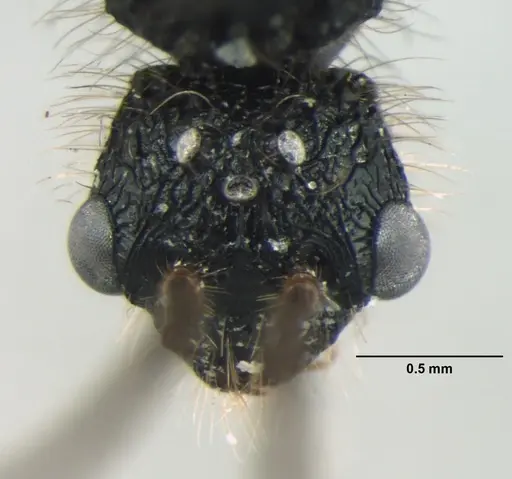
CASENT0178565
View on AntWeb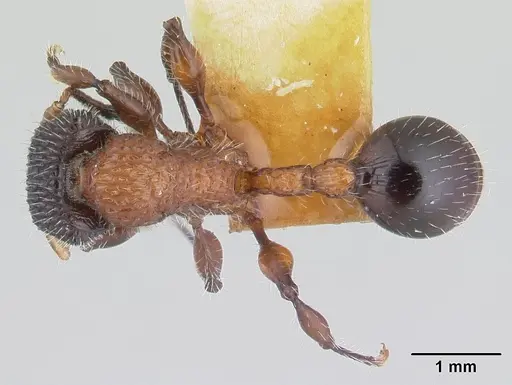
CASENT0912885
View on AntWeb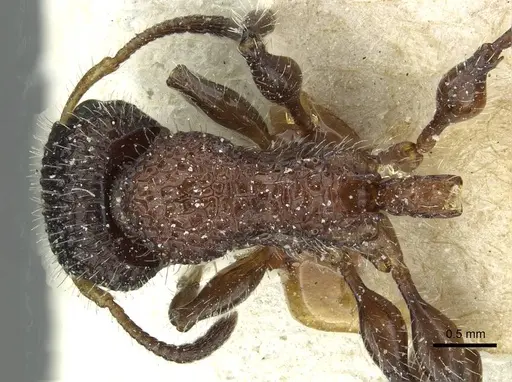
Literature
Loading distribution map...Loading products...