
Colobopsis vitiensis
- Sci. Name
- Colobopsis vitiensis
- Tribe
- Camponotini
- Subfamily
- Formicinae
- Author
- Mann, 1921
- Distribution
- Found in 2 countries
Introduction
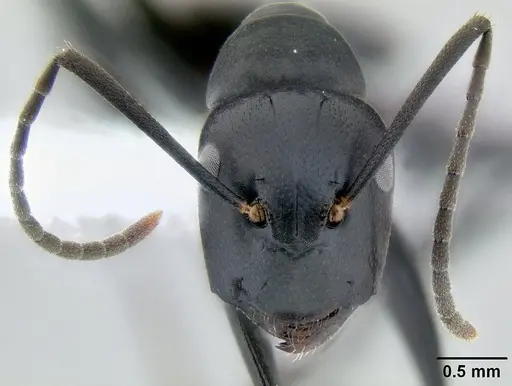
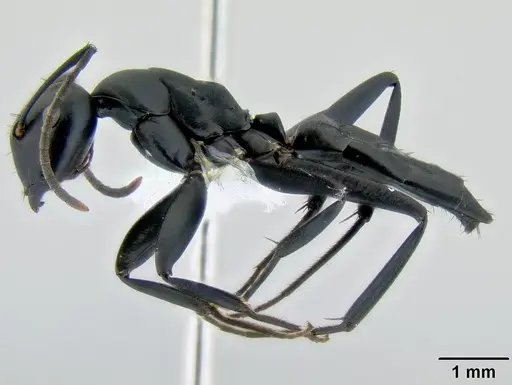
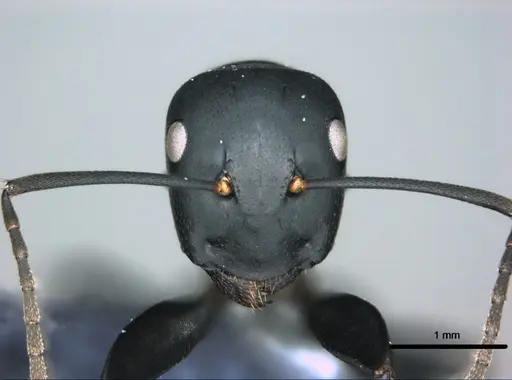
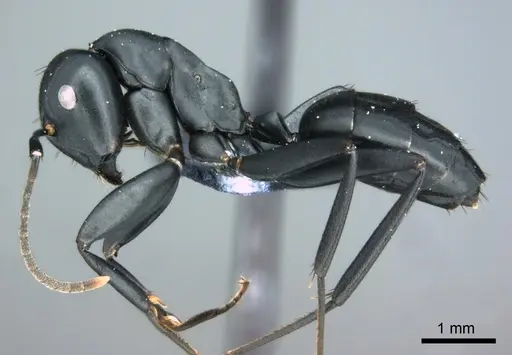
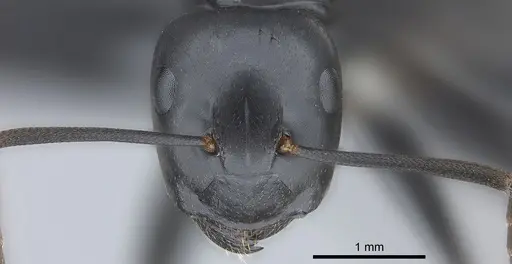
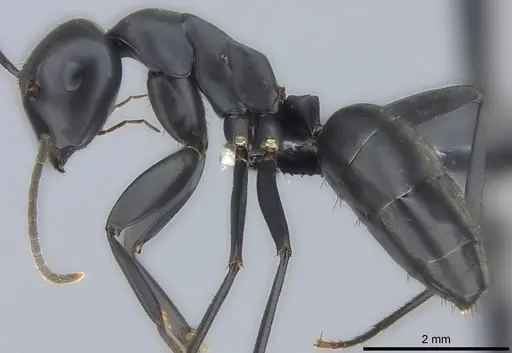
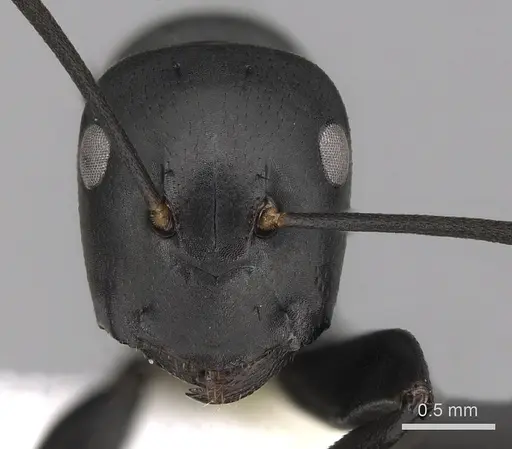
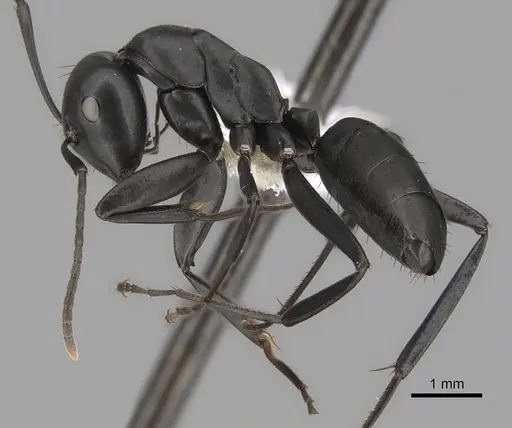
Colobopsis vitiensis is a large, uniformly dull black ant endemic to the Fiji Islands. Its matte appearance comes from a fine coriaceous microsculpture covering the head, thorax, petiole, and legs, with neat transverse lines on the gaster. It has slender, compressed legs and a robust build. This species is one of the most recognizable ants in Fijian forests and is found on all major islands: Viti Levu, Vanua Levu, Taveuni, Kadavu, Gau, and Koro . It nests high in trees, making it rarely encountered despite being widespread. The colony is polymorphic: minor workers and major soldiers (with distinctively flattened heads) are known, along with queens and males described by Donisthorpe . The soldier's flattened head is a key trait linking it to the Colobopsis lineage, used to plug nest entrances for defense.
Quick Summary
- Difficulty: Medium
- Origin & Habitat: Endemic to the Fiji Islands, recorded from Viti Levu, Vanua Levu, Taveuni, Kadavu, Gau, and Koro. Nests high in trees in forested areas [1][2].
- Colony Type: Polymorphic – includes minor workers and major soldiers. Queen number is not documented, assumed single queen (monogyne) based on typical Colobopsis patterns, but not confirmed.
- Size & Growth:
- Queen: size data unavailable
- Worker: size data unavailable
- Colony: unknown – not documented in literature
- Growth: Unknown – no data available
- Development: Estimated 6–8 weeks at 24–28°C based on related Formicinae (Development timeline not directly studied, estimate based on related Formicinae. Be patient during founding.)
- Antkeeping:
- Temperature: Warm conditions around 24–28°C year-round. Use a small heating cable on one side of the nest to create a gradient. Do not let temperatures drop below 20°C for extended periods.
- Humidity: Moderate to high – keep the nest substrate slightly moist but not waterlogged. Mist the outworld occasionally to maintain humidity around 60–80%. Being arboreal nesters, they may prefer slightly drier nest chambers with a gradient.
- Diapause: No – this tropical species does not require hibernation. Keep stable warm temperatures year-round.
- Nesting: Arboreal – nests in dead wood, tree hollows, and under bark in the wild. In captivity, provide Y-tong (AAC), plaster, or natural wood nests with vertical elements. Avoid fully artificial acrylic nests unless they have wood chambers. Position the nest elevated to mimic their tree-dwelling habits.
- Behavior: Colobopsis vitiensis is not aggressive toward keepers but will defend its nest. The soldier caste uses its flattened head to plug nest entrances like a living cork [1]. Like other Formicinae, they bite and spray formic acid when threatened (general defense). Foragers are moderate and likely search for honeydew and small prey on trees. Escape risk is low due to large size, standard barriers like oil or talc are sufficient.
- Common Issues: arboreal nesting may cause rejection of ground-level formicariums – provide elevated wood-based nests, tropical species sensitive to temperatures below 20°C – maintain stable warmth, colony establishment is unstudied – be patient with founding queens and minimize disturbances, no documented information on feeding or humidity preferences – observe colony and adjust based on behavior
Housing and Nest Preferences
Colobopsis vitiensis is an arboreal species that naturally nests in dead wood, tree hollows, and under bark in the forest canopy [1]. In captivity, provide nesting options that mimic these conditions: Y-tong (AAC), plaster, or natural wood nests work well. The nest should be positioned at an elevated height if possible – these ants seem to prefer being off the ground. Avoid fully acrylic nests unless they have wood chambers, as the ants may reject them. The outworld should include branches or vertical surfaces for foragers to explore, reflecting their tree-dwelling nature.
Feeding and Diet
Like most Formicinae, Colobopsis vitiensis is likely omnivorous. They probably feed on honeydew collected from tree-dwelling insects and small arthropods. In captivity, offer a constant sugar source (honey water or sugar water) and protein foods like small crickets, mealworms, or fruit flies 2–3 times per week. Being a tropical species, they may have higher energy needs – observe colony activity and adjust accordingly. No specific dietary studies exist for this species.
Temperature and Seasonal Care
As a species endemic to the tropical Fiji Islands, Colobopsis vitiensis requires warm temperatures year-round. Keep the nest area at 24–28°C (75–82°F). A small heating cable on one side of the nest can create a temperature gradient, allowing ants to move between warmer and cooler areas. Do not let temperatures drop below 20°C for extended periods – this species is not cold-tolerant. No hibernation or winter diapause is required. Room temperature in most homes is sufficient if kept in a warm room, but use a thermometer to monitor. [1]
Unique Defense Behaviors
Colobopsis vitiensis has a notable defensive adaptation: the soldier caste has a uniquely flattened, disk-like head that can plug nest entrances like a living cork [1]. This allows the colony to seal themselves inside their nest cavity when threatened. In your colony, you may observe major workers positioning themselves at nest entrances – this is normal defense behavior. Like all Formicinae, they also bite and spray formic acid from the acidopore when threatened (general trait). They are not aggressive toward keepers but will protect their nest.
Colony Establishment
Founding behavior has not been documented for this species. If you obtain a queen, provide a dark, secure chamber with moderate humidity and minimal disturbance. Development time from egg to first workers is unknown, estimates based on related Formicinae suggest 6–8 weeks at optimal temperatures (24–28°C), but this is speculative. Be patient and avoid disturbing the queen. Once the first nanitic workers appear, begin offering small amounts of sugar water and tiny protein sources. Because natural data is lacking, careful observation is key.
Frequently Asked Questions
How long does it take for Colobopsis vitiensis to have first workers?
Not directly documented. Based on related Formicinae, an estimate is 6–8 weeks at warm temperatures (24–28°C). Be patient and avoid disturbing the queen during founding.
What do Colobopsis vitiensis ants eat?
They are likely omnivorous. Offer a constant sugar source (honey water or sugar water) and protein foods like small crickets, mealworms, or fruit flies 2–3 times per week. No specific dietary studies are available.
Do Colobopsis vitiensis ants need hibernation?
No. Being a tropical species from Fiji, they do not require hibernation. Keep temperatures stable at 24–28°C year-round. Temperatures below 20°C can be harmful.
What type of nest is best for Colobopsis vitiensis?
Provide an arboreal setup: Y-tong (AAC), plaster, or natural wood nests. Position the nest elevated if possible. Avoid fully acrylic nests unless they have wood chambers. The outworld should include vertical surfaces.
Are Colobopsis vitiensis ants aggressive?
They are not particularly aggressive toward keepers but will defend the nest. The soldier caste plugs nest entrances with its flattened head, and they can spray formic acid. Standard escape prevention works well.
How big do Colobopsis vitiensis colonies get?
Colony size is not documented in literature. Other arboreal Colobopsis species may reach several hundred workers, but no data exists for this species.
Can I keep multiple Colobopsis vitiensis queens together?
Not recommended – queen number is unknown. If it is monogyne, queens will fight. Keep only one queen per colony.
Why is my Colobopsis vitiensis colony not growing?
Check temperature (should be 24–28°C), feeding frequency, and queen health. Since natural data is lacking, establishment may be slow. Ensure proper humidity and provide a suitable wood-based nest elevated off the ground.
Where is Colobopsis vitiensis found in the wild?
Endemic to Fiji, recorded from Viti Levu, Vanua Levu, Taveuni, Kadavu, Gau, and Koro. They nest high in trees in forest habitats [1][2].
Report an Issue
The current care sheet is based fully on literature. See inconsistencies, or something that's incorrect? Please , it will be resolved after review from an admin. Contributing to the blogs tab also helps providing information, to make us be able to further improve the caresheets. Thank you for your support!
References

This caresheet is licensed under CC BY-SA 4.0 .
Community Blogs
CASENT0106151
View on AntWeb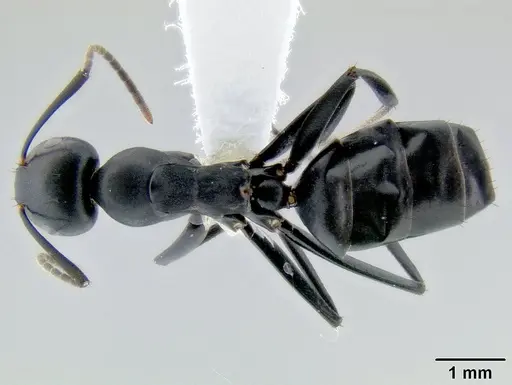
CASENT0181531
View on AntWeb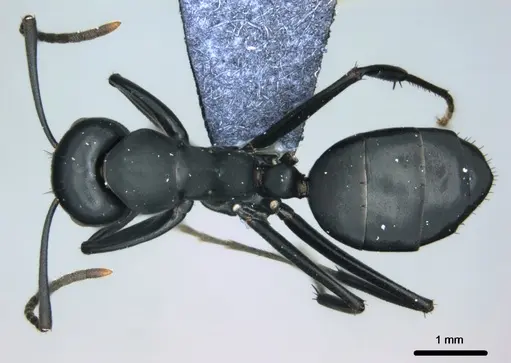
CASENT0186859
View on AntWeb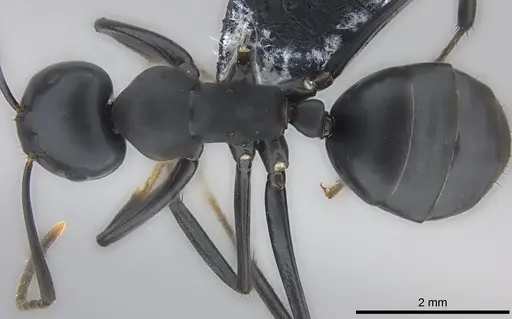
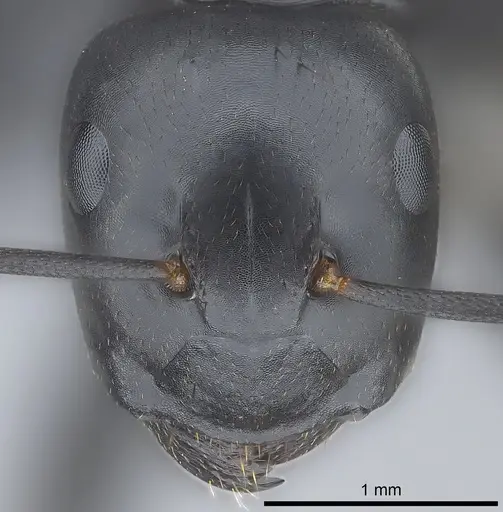
CASENT0280250
View on AntWeb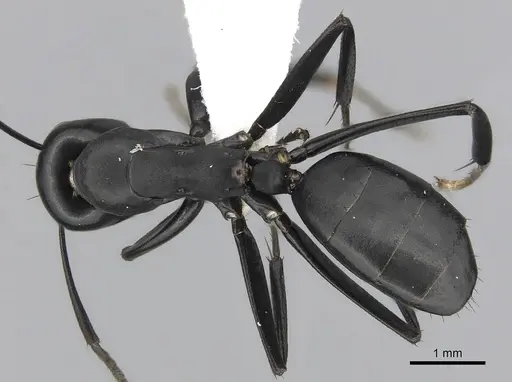
Literature
Loading distribution map...Loading products...