
Chelaner nigriceps
- Sci. Name
- Chelaner nigriceps
- Tribe
- Solenopsidini
- Subfamily
- Myrmicinae
- Author
- Heterick, 2001
- Distribution
- Found in 1 countries
Introduction
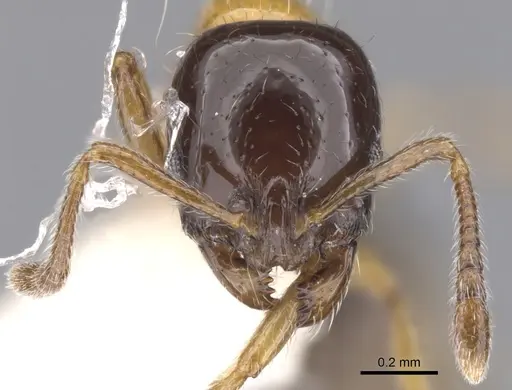
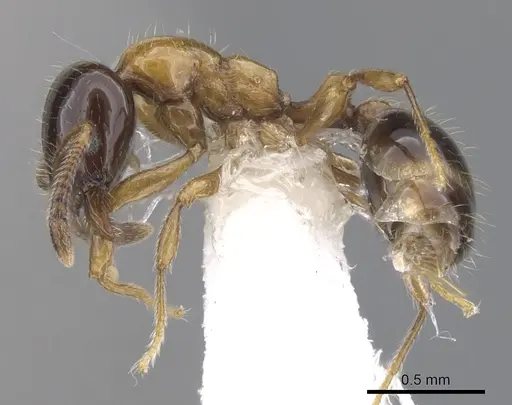
Chelaner nigriceps is a small ant species native to the rainforests of Northeast Queensland, Australia. Workers are easily identified by their distinctive two-tone coloration: a dark chocolate to black head and gaster contrasting with an orange alitrunk, petiole, postpetiole, and legs. This species belongs to the rubriceps group and was originally described as Monomorium nigriceps before being transferred to the genus Chelaner in 2019 . The species name comes from the Latin 'nigriceps' meaning 'black-headed.' These ants are very small, creating unique challenges for housing and escape prevention.
Quick Summary
- Difficulty: Medium
- Origin & Habitat: Restricted to rainforests in Northeast Queensland, Australia, particularly Windsor Tableland, Thornton Peak, and Eungella National Park. Found at elevations from 200-1200m, typically in moss on rocks and trees [2].
- Colony Type: Unconfirmed, colony structure has not been documented for this species.
- Size & Growth:
- Queen: Size data unavailable, queens have not been described
- Worker: Approximately 2mm, inferred from genus patterns (worker measurements given as head+alitrunk 1.69-1.78mm in original description) [2]
- Colony: Unknown, likely small colonies based on related species
- Growth: Unknown
- Development: Unconfirmed (Development timeline has not been studied for this species)
- Antkeeping:
- Temperature: Keep around 22-26°C. As a rainforest species from Northeast Queensland, they prefer warm, stable conditions. A gentle heating gradient on one side of the nest allows workers to regulate their temperature.
- Humidity: High humidity is essential, these ants live in moss in rainforest environments. Keep the nest substrate consistently moist but not waterlogged. Provide a water tube for drinking access.
- Diapause: Unlikely, as a tropical rainforest species from Queensland, they probably do not require true hibernation.
- Nesting: Small chambers work best for these tiny ants. Y-tong (AAC) nests with tight passages, small test tube setups, or plaster nests with appropriately scaled chambers are suitable.
- Behavior: Behavior is poorly documented for this species. Based on related Monomorium, they are likely relatively docile and non-aggressive. Workers are small and likely forage individually or in small groups. Their tiny size means they can easily escape through small gaps, excellent escape prevention is critical.
- Common Issues: escape prevention is critical due to their very small size, use fine mesh and tight-fitting lids, high humidity requirements can lead to mold if ventilation is poor, small colony size means they are vulnerable to stress, limited natural history data means keepers must be prepared to experiment with care conditions, wild-caught colonies may have parasites or disease that cause captive failures
Housing and Escape Prevention
Chelaner nigriceps is an extremely small ant species, creating specific housing challenges. Workers are only about 2mm in length, meaning they can squeeze through gaps that would hold back much larger ants. You must use excellent escape prevention: fine mesh on any ventilation, tight-fitting lids on outworlds, and barrier tape or fluon on edges. Test tube setups work well for founding colonies, use a small diameter tube with a tight cotton plug. For established colonies, Y-tong (AAC) nests with chambers scaled to their tiny size work better than larger formicarium designs. Avoid tall, open spaces that can make them feel exposed. [2]
Feeding and Diet
Like most small Myrmicinae, Chelaner nigriceps likely accepts a varied diet of small insects and sugar sources. Offer small prey items like fruit flies, pinhead crickets, small mealworms, and other appropriately-sized insects. Since they're small, prey should be no larger than their own body size. Sugar water, honey, or diluted honey water can be offered as an energy source. In the wild, they probably forage for small arthropods and may tend aphids for honeydew. Feed protein-rich foods several times per week and keep a sugar source available at all times. Remove uneaten prey after a day or two to prevent mold.
Temperature and Humidity
As a rainforest species from Northeast Queensland, these ants need warm and humid conditions. Keep temperatures in the range of 22-26°C, with a slight gradient allowing workers to choose their preferred zone. A heating cable or mat on one side of the nest can create this gradient, place it on top of the nest rather than underneath to avoid excessive drying. Humidity should be maintained at 70-80%, the nest substrate should feel consistently moist but not waterlogged. A water tube attached to the nest provides drinking access. Good ventilation is important to prevent mold, but avoid excessive airflow that dries out the nest. [2]
Colony Establishment
Founding colonies should be given peace and stability. Do not disturb the setup during founding, vibrations and light stress queens and can cause them to abandon or eat their brood. Once workers emerge, you can begin offering tiny food items. Growth will be slow initially, be patient. Colonies likely remain small. Avoid combining unrelated queens as fighting will likely result.
Seasonal Care
As a tropical rainforest species from Queensland, Chelaner nigriceps does not require true hibernation. The key is to maintain stable conditions year-round, avoid cold drafts and sudden temperature changes. Ensure the colony has sufficient food reserves and monitor for unusual behavior.
Frequently Asked Questions
How long does it take for Chelaner nigriceps to produce first workers?
This is unconfirmed, the development timeline has not been studied for this species.
Do Chelaner nigriceps ants sting?
This species belongs to the Myrmicinae subfamily which includes ants with stingers. However, given their tiny size, the sting is likely too small to penetrate human skin effectively.
Can I keep multiple queens together?
This has not been documented for this species. Combining unrelated foundress queens is not recommended as fighting will likely occur.
What is the best nest type for Chelaner nigriceps?
Small chambers scaled to their tiny size work best. Y-tong (AAC) nests with narrow passages, small test tubes for founding colonies, or plaster nests with appropriately-sized chambers are all suitable.
Are Chelaner nigriceps good for beginners?
This species is rated as Medium difficulty. Their very small size requires excellent escape prevention and attention to humidity. Beginners should be prepared for the specific challenges of keeping tiny ants.
How big do Chelaner nigriceps colonies get?
Colony size is not well documented. Based on related species, they likely remain small.
What do Chelaner nigriceps eat?
They likely accept small insects (fruit flies, tiny crickets, small mealworms) and sugar sources (honey water, sugar water). Prey should be appropriately sized.
Do they need hibernation?
Probably not, as a tropical rainforest species, they likely do not require a true hibernation period.
Why are my ants escaping?
Their tiny size means they can squeeze through extremely small gaps. Check all connections, use fine mesh for ventilation, apply barrier tape or fluon to edges, and ensure all lids fit tightly.
Where is Chelaner nigriceps found in the wild?
This species has a restricted distribution in Northeast Queensland, Australia, particularly in rainforests at Windsor Tableland, Thornton Peak, and Eungella National Park. They are found at elevations from 200-1200m.
Report an Issue
The current care sheet is based fully on literature. See inconsistencies, or something that's incorrect? Please , it will be resolved after review from an admin. Contributing to the blogs tab also helps providing information, to make us be able to further improve the caresheets. Thank you for your support!
References

This caresheet is licensed under CC BY-SA 4.0 .
Community Blogs
CASENT0902318
View on AntWeb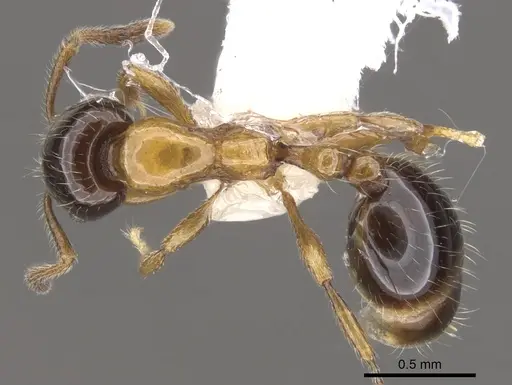
Literature
Loading distribution map...Loading products...