
Chelaner insolescens
- Sci. Name
- Chelaner insolescens
- Tribe
- Solenopsidini
- Subfamily
- Myrmicinae
- Author
- Wheeler, 1934
- Distribution
- Found in 1 countries
Introduction
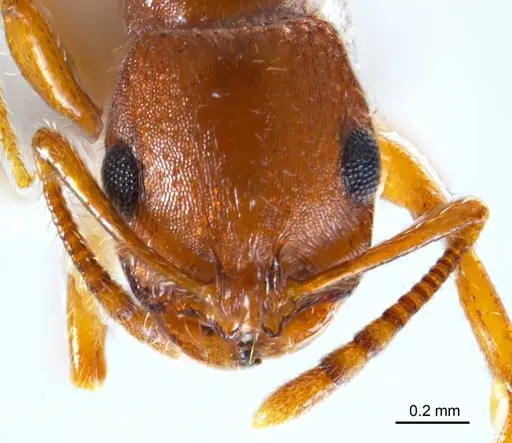
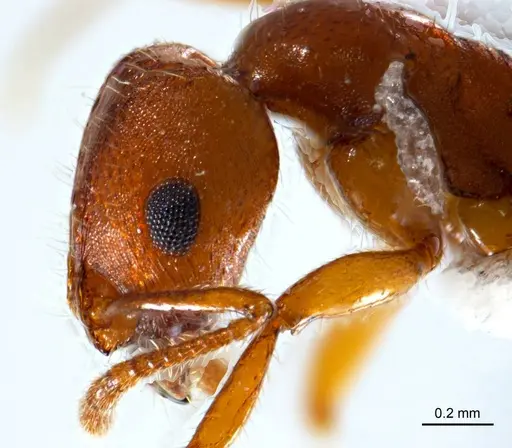
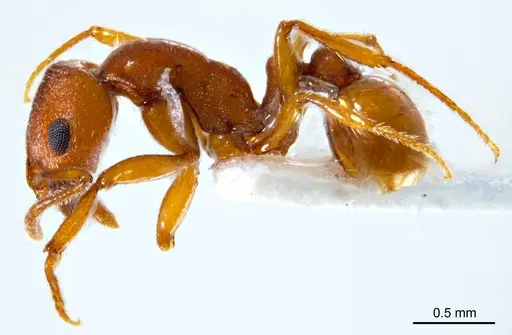
Chelaner insolescens is a small, variably colored ant native to the monsoonal regions of northern and western Australia. Workers measure 2.5–3 mm, with a dark orange to russet head and body, and amber legs and gaster . It is notable for being almost exclusively graminivorous (feeding on grass), which is rare among ants . The species is the only member of the insolescens-group within the genus Chelaner . Its morphology is highly variable, and it likely represents a complex of several similar species .
Quick Summary
- Difficulty: Hard
- Origin & Habitat: Chelaner insolescens is restricted to the monsoonal zone of northern Australia, particularly the Kimberley region in Western Australia [3][4]. It inhabits arid to semi-arid environments with distinct wet and dry seasons.
- Colony Type: Colony structure is unconfirmed – no research has documented queen number or organization.
- Size & Growth:
- Antkeeping:
- Temperature: Keep at 24–30°C. Provide a gradient so ants can self-regulate. As a species from the monsoonal tropics, they need stable warmth.
- Humidity: Moderate humidity, allow some drying between waterings. Their natural habitat has distinct wet and dry seasons, so avoid constant saturation. Provide a water source but don't waterlog the nest.
- Diapause: Unknown – may have a dry-season dormancy period. If activity drops, reduce feeding and lower temperature slightly (18–22°C) for a few months, but this is speculative
Report an Issue
The current care sheet is based fully on literature. See inconsistencies, or something that's incorrect? Please , it will be resolved after review from an admin. Contributing to the blogs tab also helps providing information, to make us be able to further improve the caresheets. Thank you for your support!
References

This caresheet is licensed under CC BY-SA 4.0 .
Community Blogs
ANTWEB1008205
View on AntWeb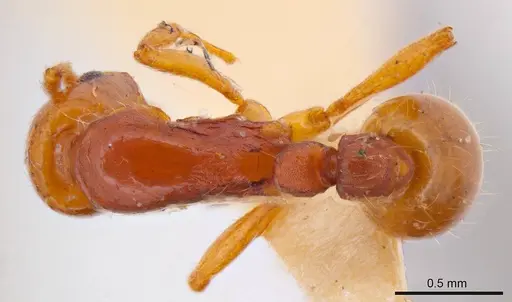
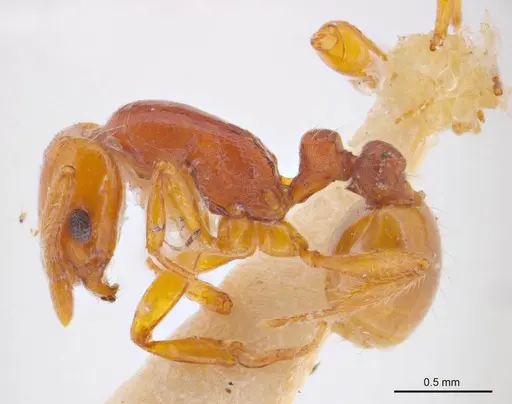
ANTWEB1008678
View on AntWeb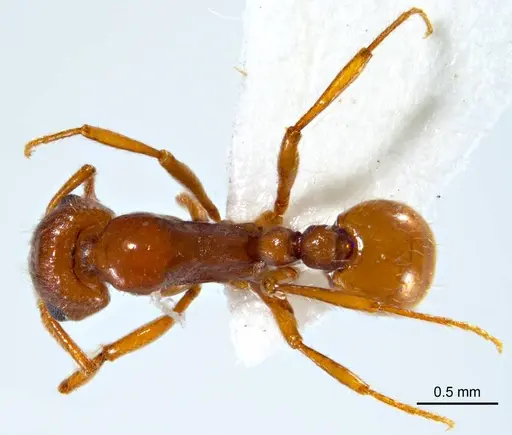
Literature
Loading distribution map...Loading products...