
Chelaner draculai
- Sci. Name
- Chelaner draculai
- Tribe
- Solenopsidini
- Subfamily
- Myrmicinae
- Author
- Heterick, 2001
- Distribution
- Found in 1 countries
Introduction
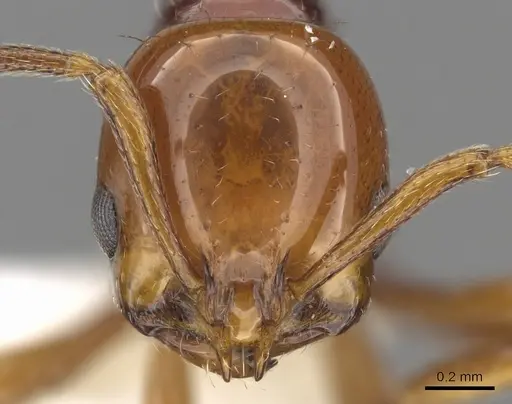
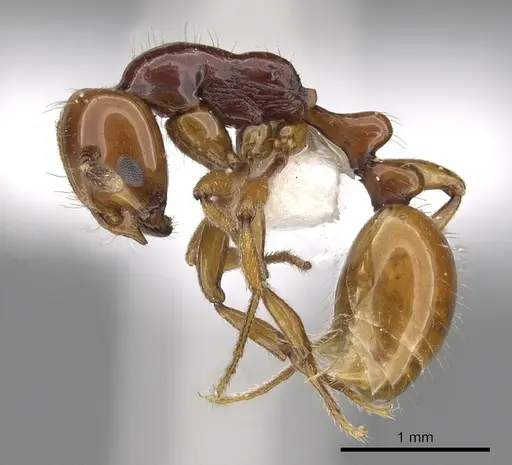
Chelaner draculai is a small Australian ant species originally described as Monomorium draculai in 2001 before being reclassified to the genus Chelaner in 2019 based on genetic evidence . The species name 'draculai' references Dracula, reflecting a notable characteristic of the ant . This species belongs to the subfamily Myrmicinae and tribe Solenopsidini, meaning workers possess a sting that injects venom composed of piperidine alkaloids. Workers are small and typical of the genus, with dark coloration common among Australian Monomorium-group ants. This species is endemic to Australia.
Quick Summary
- Difficulty: Unknown, this species has no established captive care history
- Origin & Habitat: Australia, specific habitat preferences are unconfirmed
- Colony Type: Unconfirmed, colony structure has not been studied
- Size & Growth:
- Queen: Size data unavailable, no specific measurements exist for this species
- Worker: Size data unavailable, inferred from related Monomorium species as approximately 2-4mm
- Colony: Unconfirmed, likely small to moderate based on genus patterns
- Growth: Unknown
- Development: Unknown, no development data available for this species (Development timeline cannot be estimated without species-specific data)
- Antkeeping:
- Temperature: Unconfirmed, Australian Monomorium-group ants typically prefer warm conditions, roughly 22-28°C, but specific requirements for C. draculai are unknown
- Humidity: Unconfirmed, Australian species generally tolerate drier conditions, but specific needs are unknown
- Diapause: Unknown, overwintering requirements have not been studied
- Nesting: Unconfirmed, likely nests in soil or under stones like related Australian Monomorium species
- Behavior: Behavior is unstudied. Related Australian Monomorium species are typically generalist foragers and non-aggressive. Specific temperament, foraging style, and escape prevention requirements for C. draculai are unknown. Workers possess a functional sting.
- Common Issues: this species has no established captive care history, keeping it would be entirely experimental, no specific dietary requirements are known, temperature and humidity tolerances are unconfirmed, founding behavior and colony development timeline are unknown
Taxonomy and Classification
Chelaner draculai was originally described as Chelaner draculai by Heterick in 2001 [2]. In 2019, a comprehensive phylogenetic study of Australian Monomorium species resulted in the resurrection of the genus Chelaner, with this species being transferred and now known as Chelaner draculai [1]. The genus Chelaner had originally been described by Emery in 1914 but was later synonymized with Monomorium before being resurrected based on genetic evidence. The species name 'draculai' is a noun in apposition related to Dracula and cannot be changed under zoological nomenclature rules [2].
Defense Mechanism
Chelaner draculai belongs to the subfamily Myrmicinae and tribe Solenopsidini. Workers possess a functional sting that injects a potent venom composed mostly of piperidine alkaloids. This venom is used for hunting prey and defending the colony. While the sting effectiveness on human skin depends on the individual and sting location, this species is capable of stinging if threatened.
Current Knowledge Status
Chelaner draculai is one of many Australian ant species that remain poorly studied in terms of their biology and captive care requirements. The available scientific literature focuses primarily on taxonomy and phylogeny, not on behavioral ecology, colony development, or husbandry. This means there is no established care protocol for keeping this species in captivity. Any attempt to keep C. draculai would be entirely experimental and would require careful observation and documentation to build husbandry knowledge for this species.
Related Species as Reference
While specific data for C. draculai is lacking, the genus Chelaner is closely related to Monomorium, and Australian Monomorium-group ants are generally small, ground-dwelling species that nest in soil, under stones, or in rotting wood. They are typically generalist feeders that forage for nectar, honeydew, and small insects. Most Australian Monomorium species are monogyne and have claustral founding, where the queen seals herself in a chamber and lives off stored fat until her first workers emerge. However, these are general patterns and may not apply to C. draculai specifically without direct observation.
Recommendations for Interested Antkeepers
If you encounter C. draculai or a colony believed to be this species, approach captive keeping with experimental protocols. Start with standard setups used for small Australian ants: a test tube setup for founding colonies, with a small outworld for foraging. Offer a varied diet including sugar water, honey, and small protein sources like fruit flies or small mealworms. Maintain moderate warmth around 24-26°C and provide a hydration source. Document everything, colony behavior, growth rate, food preferences, and any issues. Sharing this observations with the antkeeping community would help build husbandry knowledge for this poorly understood species.
Frequently Asked Questions
How do I keep Chelaner draculai ants?
There is no established care protocol for this species. Keeping it would be entirely experimental. Start with standard small ant setups, test tube for founding, small outworld, moderate warmth around 24-26°C, and varied diet. Document your observations carefully.
What do Chelaner draculai ants eat?
Unknown for this specific species. Related Australian Monomorium species are generalist feeders that accept sugar sources and small insects. Offer sugar water, honey, and small protein sources like fruit flies or pinhead crickets.
How big do Chelaner draculai colonies get?
Colony size is unconfirmed. Related Monomorium species typically form small to moderate colonies. More specific data is not available.
Are Chelaner draculai good for beginners?
This species is not recommended for beginners due to complete lack of captive care information. Starting with well-documented species like Lasius, Camponotus, or Myrmica is strongly recommended.
What temperature do Chelaner draculai need?
Specific requirements are unknown. Based on related Australian Monomorium species, aim for roughly 22-28°C. Start around 24-26°C and observe colony activity for guidance.
How long does it take for Chelaner draculai to produce first workers?
Development timeline is completely unknown for this species. No egg-to-worker data exists. Experimental keeping would be needed to establish this information.
Where is Chelaner draculai found?
This is an Australian endemic species, originally described from Australia. The exact distribution within Australia and specific habitat preferences are not well-documented.
Can I keep multiple Chelaner draculai queens together?
Unknown, colony structure has not been studied. Related Australian Monomorium are typically monogyne, but this may not apply to C. draculai. Do not attempt combining unrelated queens without observation.
Do Chelaner draculai need hibernation?
Diapause requirements are unknown. Australian ants from temperate regions may require a cool period, while tropical species may not. Observe your colony's seasonal behavior for guidance.
Report an Issue
The current care sheet is based fully on literature. See inconsistencies, or something that's incorrect? Please , it will be resolved after review from an admin. Contributing to the blogs tab also helps providing information, to make us be able to further improve the caresheets. Thank you for your support!
References

This caresheet is licensed under CC BY-SA 4.0 .
Community Blogs
CASENT0902299
View on AntWeb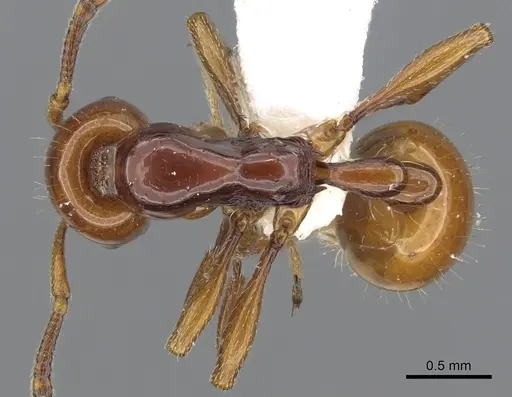
Literature
Loading distribution map...Loading products...