
Cephalotes serraticeps
- Sci. Name
- Cephalotes serraticeps
- Tribe
- Attini
- Subfamily
- Myrmicinae
- Author
- Smith, 1858
- Distribution
- Found in 2 countries
Introduction
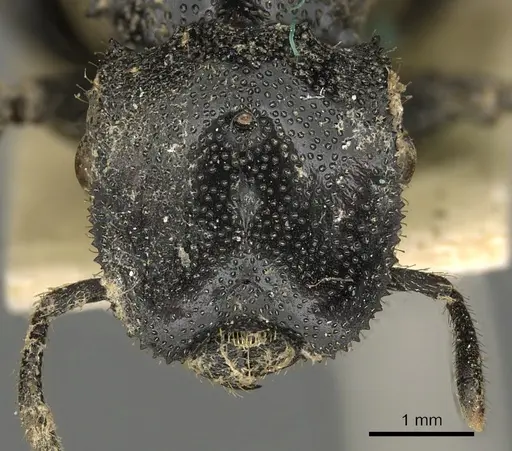
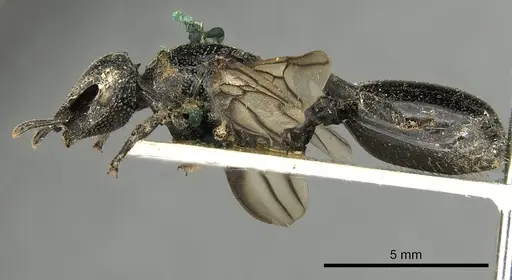
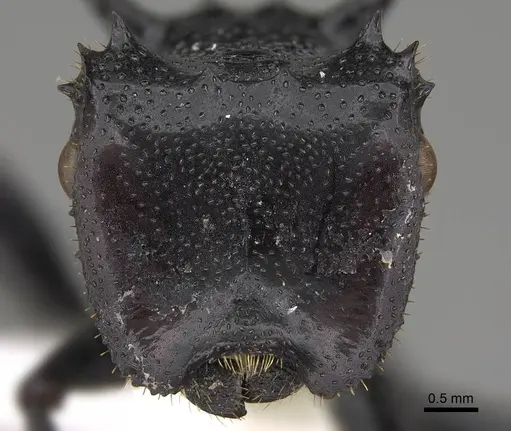
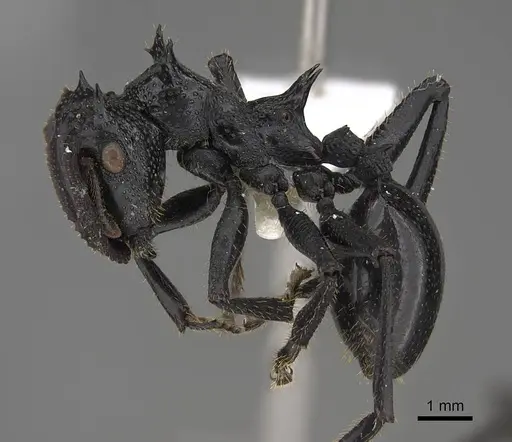
Cephalotes serraticeps is a large, striking turtle ant found throughout the Amazon basin in Brazil, Colombia, Ecuador, and Peru, with records also from Maranhão, Brazil . Workers are substantial at 7.56–8.92 mm with a jet-black body and reddish-brown frontal carinae and tarsomeres . This species belongs to the atratus clade and is identified by its strongly crenulate (ridged) frontal carinae and distinctive, laterally compressed basitarsi on the mid and hind legs that narrow toward the tips . They inhabit wet lowland Amazonian forests at elevations between 60–460 m, including temporarily flooded areas, and have been collected via canopy fogging at the start of the rainy season .
Quick Summary
- Difficulty: Medium
- Origin & Habitat: Amazon basin – Brazil, Colombia, Ecuador, Peru, and Maranhão, Brazil. Wet lowland tropical forests at 60–460 m elevation, including temporarily flooded Amazonian areas [4][3][1].
- Colony Type: Colony structure is unconfirmed. Turtle ants (Cephalotes) typically form single-queen colonies, but this has not been specifically documented for C. serraticeps.
- Size & Growth:
- Queen: 15.50–16.00 mm [5]
- Worker: 7.56–8.92 mm [2]
- Colony: Unknown – related Cephalotes species typically reach several hundred workers (estimated from genus patterns).
- Growth: Moderate (estimated based on tropical Myrmicinae patterns)
- Development: Estimated 6–10 weeks at tropical temperatures (25–28°C) (Development time is inferred from related Cephalotes species and typical Myrmicinae development at warm temperatures.)
- Antkeeping:
- Temperature: Keep at 24–28°C – these lowland tropical ants require warm, stable conditions. A heating cable on one side of the nest creates a suitable gradient [4][3].
- Humidity: High humidity is essential – maintain the nest substrate consistently moist but not waterlogged. Their natural habitat in wet Amazonian forests is constantly humid [3].
- Diapause: No – as a tropical species from the Amazon basin, they do not require hibernation. Keep temperatures stable year-round [3].
- Nesting: These ants prefer humid nest conditions. Y-tong (AAC) nests or plaster nests with moisture reservoirs work well. They need good humidity control. Avoid dry setups.
- Behavior: Turtle ants are generally calm and non-aggressive. Workers are large but docile, making them interesting to observe. They possess a functional stinger (as typical for Myrmicinae), but it is not medically significant to humans. Their large size (nearly 9 mm workers) makes escape prevention straightforward compared to tiny ants, but they can still climb smooth surfaces. They are primarily arboreal – collected via canopy fogging – and likely nest in pre‑existing cavities in wood, so provide vertical climbing space [3].
- Common Issues: tropical humidity requirements – dry housing quickly leads to colony loss, maintain substrate moisture and use a humidity reservoir [3]., temperature below 22°C can stress or kill colonies, avoid cold drafts and sudden drops [4]., wild‑caught colonies may harbour parasites or diseases that are difficult to treat., slow founding – colonies need patience to establish, avoid disturbing the queen during early brood development.
Housing and Nest Setup
Cephalotes serraticeps requires humid nest conditions that mimic their wet Amazonian forest habitat [3]. Y-tong (AAC) nests or plaster nests with built‑in water reservoirs work best because they allow you to maintain consistent humidity levels. The nest should have chambers large enough for the queen and brood, with some extra space for colony growth. Because they come from humid tropical forests, the nest material should retain moisture well – avoid setups that dry out quickly. An outworld (foraging area) can be a simple plastic container connected to the nest via tubing. Ensure all connections are secure – while these ants are large, they can still squeeze through small gaps. Provide vertical climbing surfaces to accommodate their arboreal tendencies [3].
Feeding and Diet
No specific dietary studies exist for Cephalotes serraticeps. Based on observations of related turtle ants (Cephalotes spp.), they are likely omnivorous, feeding on honeydew from sap‑sucking insects and small arthropods. In captivity, offer sugar water or honey water as a constant energy source. For protein, provide small insects like fruit flies, small crickets, or mealworms 2–3 times per week, removing any uneaten prey after 24 hours. Fresh fruit slices can be offered occasionally. A varied diet helps support colony growth and brood development.
Temperature and Humidity Management
These are lowland tropical ants requiring warm, humid conditions year‑round. Maintain temperatures between 24–28°C – this is warmer than most temperate ant species need. A small heating cable placed on part of the nest can help maintain warmth, but always provide a temperature gradient so ants can choose their preferred spot [4][3]. Humidity should stay high – the nest substrate should feel consistently moist but never waterlogged. Using a moisture reservoir in plaster nests or a water source in Y-tong nests helps maintain humidity. Monitor conditions regularly, as dry air or cold drafts can quickly stress or kill tropical colonies [3].
Colony Founding and Growth
Founding behavior has not been documented for this species. Based on related Cephalotes, queens are likely claustral – sealing themselves in a chamber and raising the first workers alone using stored body fat. If this is the case, you can start with a single queen in a test‑tube setup. The founding chamber should be humid but not wet. First workers (nanitics) will be smaller than normal workers but still substantial at around 6–7 mm. Colony growth is moderate – expect several months before the first workers emerge, then gradual expansion over 1–2 years to a mature colony. Be patient during founding, as disturbing the queen during this critical period can cause colony failure [5][2].
Behavior and Observation
Cephalotes serraticeps is a docile species to observe. Workers are large and distinctive with their crenulate frontal carinae and laterally compressed leg segments that give them their 'turtle ant' appearance. They move at a moderate pace and are not aggressive toward keepers. As members of Myrmicinae, they possess a functional stinger, but it is not medically significant – stings are unlikely to cause more than minor irritation. These ants are primarily arboreal in the wild (collected by canopy fogging), so they appreciate vertical surfaces to climb [3]. Their calm temperament and interesting appearance make them an excellent species for antkeepers who can provide the warm, humid conditions they require [2][3].
Seasonal Care
As a tropical Amazonian species, Cephalotes serraticeps does not require hibernation or diapause. Keep conditions stable throughout the year with no significant temperature drops. In the wild, they experience wet and dry seasons rather than cold winters, so your main consideration is maintaining humidity during dry seasons or in air‑conditioned environments [3]. Room temperature around 24–26°C is ideal for most of the year. If your home is cooler, use a heating cable or mat to maintain warmth. Consistency is key – avoid placing the colony near windows, doors, or air vents that create temperature fluctuations [4].
Frequently Asked Questions
How long does it take for Cephalotes serraticeps to have first workers?
First workers typically appear within 6–10 weeks after the queen lays eggs, assuming temperatures around 25–28°C. This is an estimate based on related Cephalotes species, as specific development data for C. serraticeps is not available.
What temperature do Cephalotes serraticeps need?
Keep them warm at 24–28°C. These are lowland tropical ants from the Amazon basin, so they need consistently warm conditions. A heating cable on part of the nest can help maintain proper temperatures [4][3].
How big do Cephalotes serraticeps colonies get?
Colony size is not specifically documented, but related Cephalotes species typically reach several hundred workers. Expect moderate growth over 1–2 years to reach a substantial colony.
Can I keep multiple Cephalotes serraticeps queens together?
This has not been documented for this species. Cephalotes typically form single‑queen colonies, so keeping multiple unrelated queens together is not recommended.
What do Cephalotes serraticeps eat?
No specific dietary studies exist for this species. Based on related turtle ants, they are likely omnivorous. Offer sugar water or honey constantly for energy, and protein sources like small insects (fruit flies, small crickets, mealworms) 2–3 times per week.
Do Cephalotes serraticeps need hibernation?
No. As a tropical Amazonian species, they do not require hibernation. Keep temperatures stable year‑round at 24–28°C [3].
Are Cephalotes serraticeps good for beginners?
They are rated as medium difficulty. While fascinating and docile, their requirement for warm, humid tropical conditions makes them less forgiving than temperate species. Experience with antkeeping basics is recommended.
What size are Cephalotes serraticeps workers?
Workers are large at 7.56–8.92 mm, making them one of the larger Cephalotes species. Queens are even larger at 15.50–16.00 mm [2][5].
Where is Cephalotes serraticeps found in the wild?
They live in the Amazon basin across Brazil, Colombia, Ecuador, and Peru, with records also from Maranhão, Brazil. They inhabit wet lowland tropical forests at elevations from 60–460 m, including temporarily flooded areas [4][3][1].
When should I move Cephalotes serraticeps to a formicarium?
Wait until the colony has established workers and the test‑tube setup becomes crowded. This is typically when you have 20+ workers and the water reservoir is running low. Make sure the formicarium can maintain the high humidity they need.
Why is my Cephalotes serraticeps colony dying?
The most common causes are low humidity (substrate too dry), temperatures below 22°C, or dry nest conditions. These tropical ants are sensitive to drying out. Check your humidity levels and ensure the nest substrate is moist. Also check for stress from temperature fluctuations or poor ventilation [3][4].
Report an Issue
The current care sheet is based fully on literature. See inconsistencies, or something that's incorrect? Please , it will be resolved after review from an admin. Contributing to the blogs tab also helps providing information, to make us be able to further improve the caresheets. Thank you for your support!
References

This caresheet is licensed under CC BY-SA 4.0 .
Community Blogs
CASENT0900230
View on AntWeb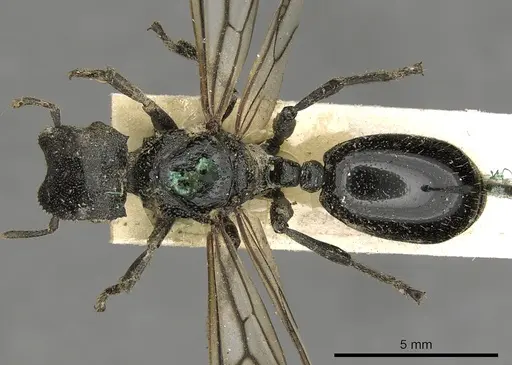
CASENT0922509
View on AntWeb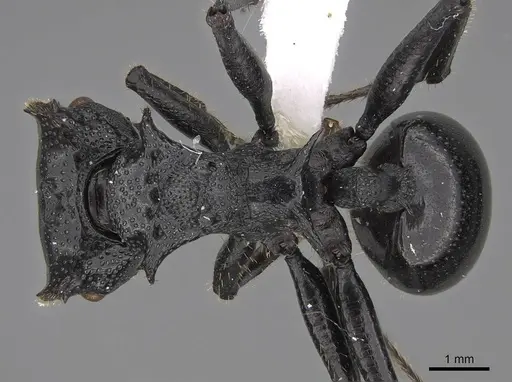
Literature
Loading distribution map...Loading products...