
Cephalotes curvistriatus
- Sci. Name
- Cephalotes curvistriatus
- Tribe
- Attini
- Subfamily
- Myrmicinae
- Author
- Forel, 1899
- Distribution
- Found in 3 countries
Introduction
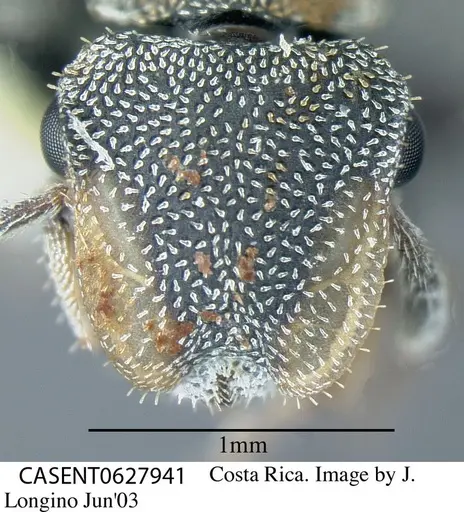
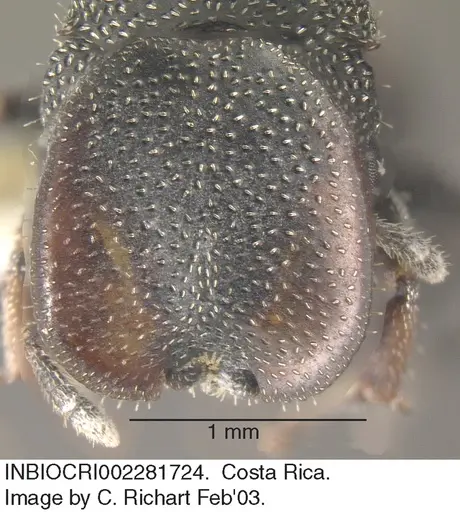
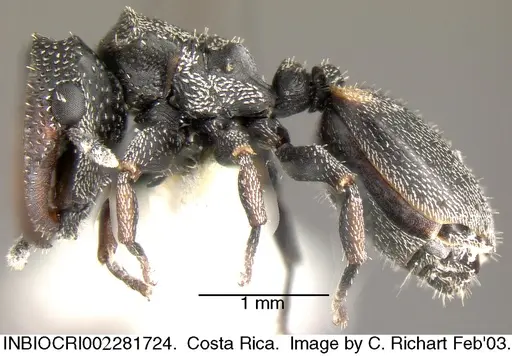
Cephalotes curvistriatus is a small turtle ant native to the Neotropical region, found in Costa Rica and southern Mexico. Workers are 4.2-4.8 mm long with a flattened, broad body that resembles a turtle shell. The body is predominantly black with white scales giving a silvery-grey appearance . This species belongs to the texanus clade and is part of a mimicry complex . They are arboreal ants, nesting in wet forest canopies . Cephalotes curvistriatus is known for its cryptic appearance and role in mimicry complexes, where it resembles other species for protection .
Quick Summary
- Difficulty: Medium
- Origin & Habitat: Neotropical region, Costa Rica and southern Mexico, in wet/moist lowland tropical forests [4][5]. Collected in multiple locations in Tabasco, Mexico [5].
- Colony Type: Colony structure is unconfirmed, no specific research data on queen number or social structure.
- Size & Growth:
- Queen: ~7.2-7.5 mm [2]
- Worker: ~4.2-4.8 mm [2]
- Colony: Unknown, no specific data available
- Growth: Moderate, inferred from tropical Myrmicinae patterns
- Development: Unknown for this species. Based on related Cephalotes species, likely 6-10 weeks at warm temperatures (Development time estimated from genus patterns, direct data not available)
- Antkeeping:
- Temperature: Keep warm, roughly 24-28°C, based on tropical habitat
- Humidity: Keep nest substrate consistently moist but not waterlogged, based on wet forest habitat
- Diapause: No, as tropical species from Costa Rica and Mexico, they do not require hibernation
- Nesting: Arboreal nesting species, use Y-tong or plaster nests with small chambers scaled to their size
- Behavior: Generally peaceful and slow-moving. Escape risk is moderate due to small size, ensure good barrier prevention
- Common Issues: high humidity requirements can lead to mold problems if ventilation is poor, limited available information means care is largely based on genus patterns rather than species-specific research, tropical warmth requirements may need heating in cooler climates, arboreal nesting means they may not readily accept ground-level test tube setups, wild-caught colonies may carry parasites that can cause problems in captivity
Housing and Nest Setup
Cephalotes curvistriatus is an arboreal species [3], meaning they naturally nest in hollow twigs and branches in forest canopies. In captivity, they adapt well to Y-tong or plaster nests with small, tight chambers scaled to their tiny size. The chambers should be narrow, these ants feel secure in snug spaces. Avoid large, open formicarium areas. Connect the nest to a foraging area with small-diameter tubing. Ensure escape prevention is adequate with smooth barriers like fluon.
Feeding and Diet
In the wild, Cephalotes ants are omnivorous foragers [4]. They collect honeydew from aphids and scale insects, and hunt small invertebrates. In captivity, offer a varied diet: sugar water or honey as a constant energy source, and protein sources like small live or frozen insects. Feed protein 2-3 times per week, and keep sugar water available at all times.
Temperature and Humidity
As tropical ants from Costa Rica and Mexico [5], Cephalotes curvistriatus requires warm, humid conditions. Maintain temperatures between 24-28°C. Humidity should be high, keep the nest substrate consistently damp but not waterlogged.
Behavior and Colony Life
Cephalotes curvistriatus workers are slow-moving and deliberate. Based on their subfamily (Myrmicinae), they likely possess a sting, but it may not be medically significant to humans. The genus name 'Cephalotes' means 'head-bearing' [4], and these ants are easily recognized by their flattened, broad body [1].
Frequently Asked Questions
How long does it take for Cephalotes curvistriatus to develop from egg to worker?
The exact development time is not documented for this specific species. Based on related Cephalotes species and typical tropical ant development, expect approximately 6-10 weeks from egg to first worker at optimal warm temperatures (24-28°C).
What do Cephalotes curvistriatus ants eat?
They are omnivorous [4]. Offer sugar water or honey constantly as an energy source, and protein (small insects like fruit flies, pinhead crickets, or small mealworms) 2-3 times per week. Remove uneaten prey after a day or two.
What temperature do they need?
Keep them warm at 24-28°C.
Are they good for beginners?
They are considered medium difficulty. While not aggressive, they have specific humidity and temperature requirements typical of tropical arboreal ants.
How big do colonies get?
Colony size is not specifically documented for this species. Based on genus patterns, they may reach several hundred workers.
What type of nest should I use?
Y-tong or plaster nests with small, tight chambers work well. Their arboreal nature means they prefer snug spaces, avoid large open chambers.
Do they need hibernation?
No, as tropical ants, they require warm conditions year-round.
Why are my ants dying?
Common causes include temperatures too low, humidity issues, improper feeding, or stress. Check that your setup matches their arboreal, humid, warm habitat requirements.
Can I keep multiple queens together?
This is not recommended, as colony structure is unconfirmed for this species. Combining unrelated queens has not been studied and risks aggression.
Report an Issue
The current care sheet is based fully on literature. See inconsistencies, or something that's incorrect? Please , it will be resolved after review from an admin. Contributing to the blogs tab also helps providing information, to make us be able to further improve the caresheets. Thank you for your support!
References

This caresheet is licensed under CC BY-SA 4.0 .
Community Blogs
CASENT0627941
View on AntWeb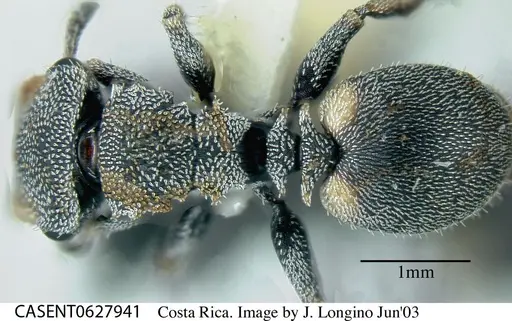
INBIOCRI002281724
View on AntWeb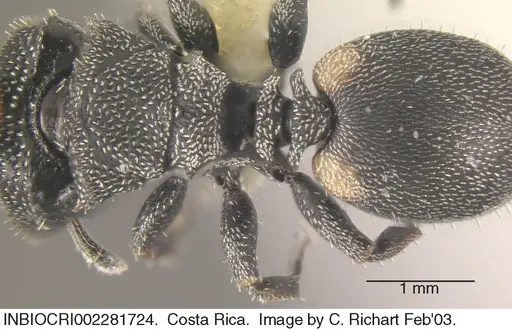
Literature
Loading distribution map...Loading products...