
Cephalotes conspersus
- Sci. Name
- Cephalotes conspersus
- Tribe
- Attini
- Subfamily
- Myrmicinae
- Author
- Smith, 1867
- Distribution
- Found in 3 countries
Introduction
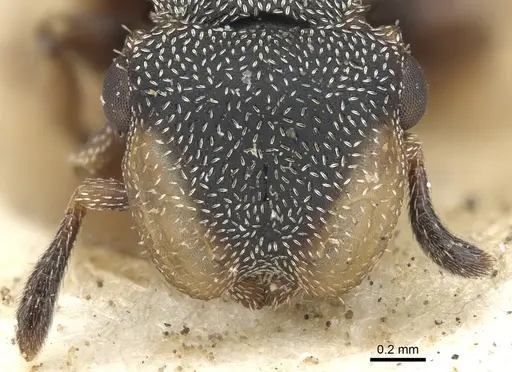
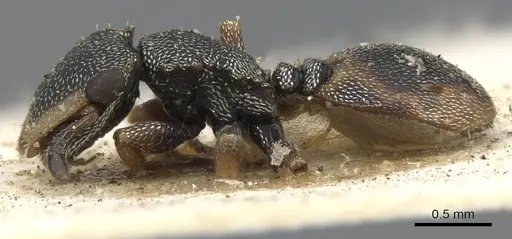
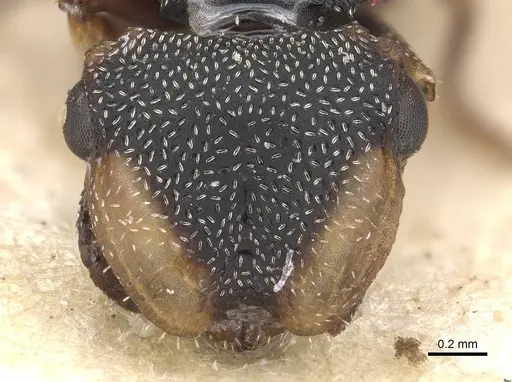
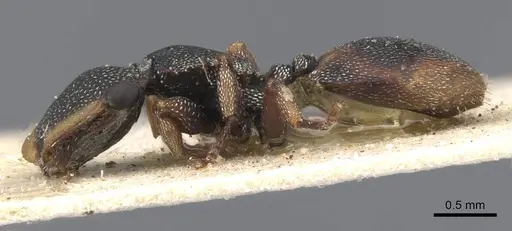
Cephalotes conspersus is a small turtle ant found in the Amazon basin of South America. Workers measure approximately 3.5-4.0 mm and have a bicolored gaster with a black rhombus spot on the first tergite . Soldiers are larger at about 5 mm with armored appearance . This species belongs to the angustus group and is distinguished by its gaster pattern . Its range includes Brazil, Colombia, Ecuador, Venezuela, Bolivia, and Trinidad at elevations of 60-330 m in humid tropical forests . The biology of Cephalotes conspersus is largely unstudied, making care challenging. Like other turtle ants, it likely nests in hollow twigs or dead wood in forest canopies .
Quick Summary
- Difficulty: Expert
- Origin & Habitat: Amazon basin regions including Brazil, Colombia, Ecuador, Venezuela, Bolivia, and Trinidad at 60-330 m elevation in humid tropical forests [2][3][4].
- Colony Type: Colony structure is unconfirmed. No specific data on queen number or social structure.
- Size & Growth:
- Antkeeping:
- Temperature: Keep warm, roughly 24-28°C, based on tropical distribution.
- Humidity: Keep nest substrate consistently moist but not waterlogged, as this species inhabits humid forests [2][3].
- Diapause: No diapause required, as a tropical species.
- Nesting: Provide tight, enclosed nests such as Y-tong or plaster nests, mimicking natural hollow twig sites [1].
- Behavior: Workers are slow-moving and generally calm. They possess a sting, but it is not medically significant to humans. Escape risk is high due to small size (under 4 mm).
- Common Issues: complete lack of biological data means care is based on inference, expect experimentation, high humidity requirements make them prone to mold in poorly ventilated setups, small size requires fine mesh barriers to prevent escapes, slow growth may lead to keeper impatience and overfeeding, wild-caught colonies may carry undocumented parasites or diseases
Housing and Nest Setup
You should provide a humid, enclosed nest for Cephalotes conspersus. Use Y-tong or plaster nests to maintain moisture [1]. Natural setups with hollow twigs or cork bark work well, as these ants prefer tight spaces that mimic their natural nesting sites [1]. Ensure all connections have fine barriers, as workers under 4 mm can escape through small gaps.
Feeding and Diet
Offer sugar water or honey regularly for carbohydrates. Provide small live insects like fruit flies for protein. Feed every 2-3 days and remove uneaten prey to prevent mold. Fresh water should always be available.
Temperature and Humidity Management
Maintain temperatures around 24-28°C using a gentle heat source if needed. Humidity should be kept high by ensuring the nest substrate is moist but not waterlogged [2][3]. Monitor with a hygrometer to avoid mold.
Colony Establishment and Growth
Founding behavior is unconfirmed. Colonies likely grow slowly, with no specific data on development timelines. Be patient and avoid overfeeding to prevent mold.
Observations and Behavior
Workers are slow-moving and non-aggressive. They have a sting but it is not dangerous to humans. The bicolored gaster makes them visually distinct [2][3].
Frequently Asked Questions
How long does it take for Cephalotes conspersus to produce first workers?
Estimated 8-12 weeks at warm temperatures, but no specific data exists.
What do Cephalotes conspersus ants eat?
They likely accept sugar water and small insects like fruit flies.
What temperature do Cephalotes conspersus need?
Keep them warm at 24-28°C, based on their tropical habitat.
Are Cephalotes conspersus good for beginners?
No, this species is recommended only for expert antkeepers due to unstudied biology and high humidity needs.
How big do Cephalotes conspersus colonies get?
Colony size is unknown, as no data exists on maximum worker count.
Can I keep multiple Cephalotes conspersus queens together?
Not recommended, as colony structure is unconfirmed and most Cephalotes are monogyne.
Do Cephalotes conspersus need hibernation?
No, as a tropical species, they do not require diapause.
Why are my Cephalotes conspersus dying?
Common causes include low humidity, temperatures below 24°C, or mold from overfeeding. Ensure proper conditions and clean feeding practices.
What type of nest is best for Cephalotes conspersus?
Y-tong or plaster nests work best to maintain humidity and provide tight spaces [1].
Report an Issue
The current care sheet is based fully on literature. See inconsistencies, or something that's incorrect? Please , it will be resolved after review from an admin. Contributing to the blogs tab also helps providing information, to make us be able to further improve the caresheets. Thank you for your support!
References

This caresheet is licensed under CC BY-SA 4.0 .
Community Blogs
CASENT0901462
View on AntWeb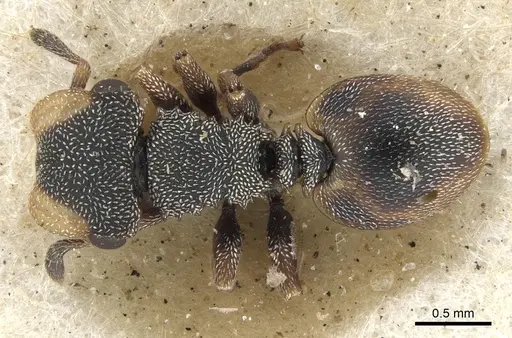
CASENT0909283
View on AntWeb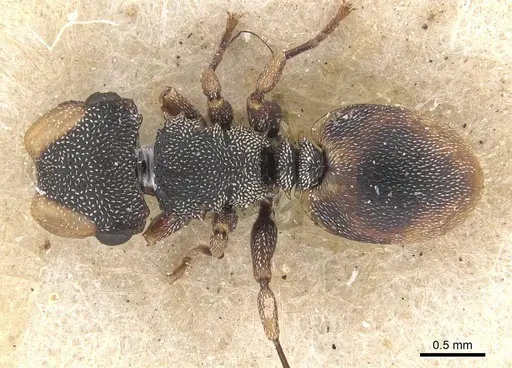
Literature
Loading distribution map...Loading products...