
Cephalotes bruchi
- Sci. Name
- Cephalotes bruchi
- Tribe
- Attini
- Subfamily
- Myrmicinae
- Author
- Forel, 1912
- Distribution
- Found in 3 countries
Introduction
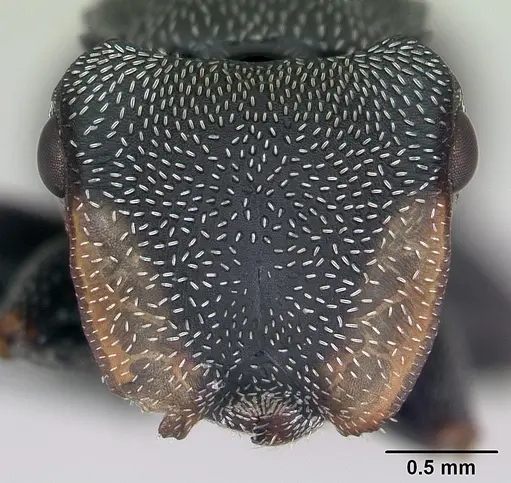
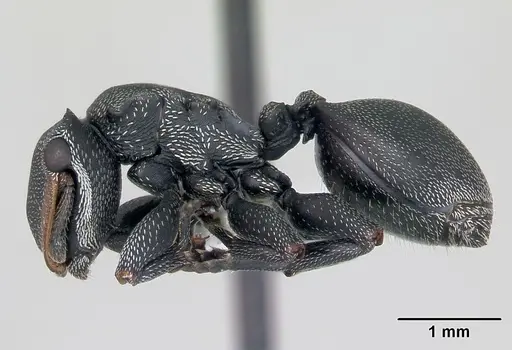
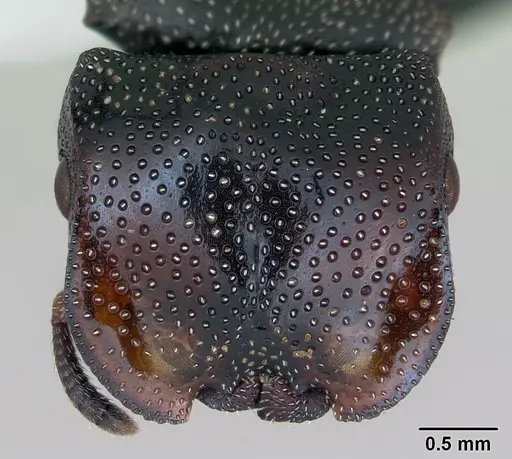
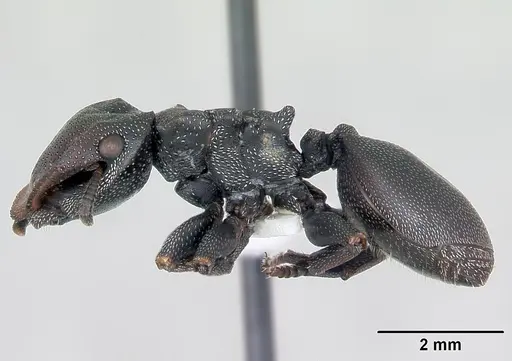
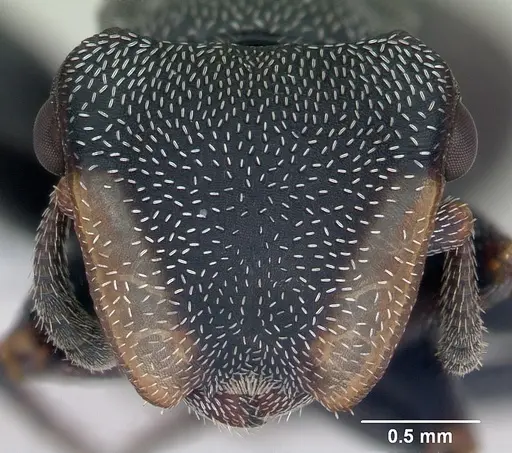
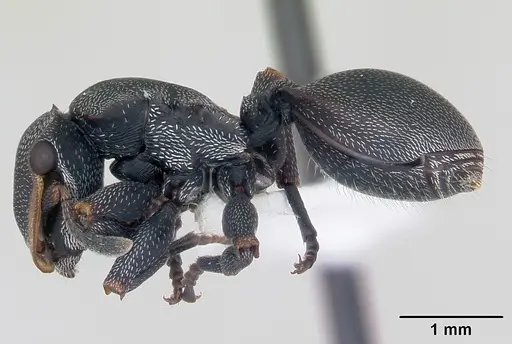
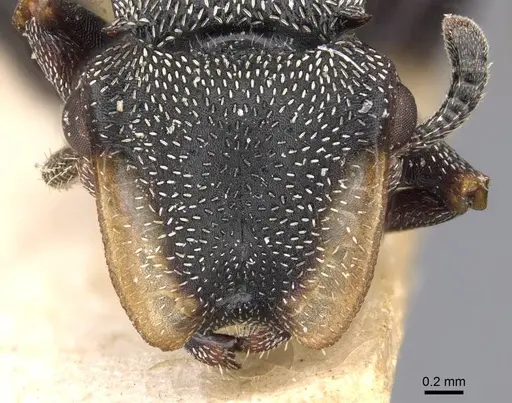
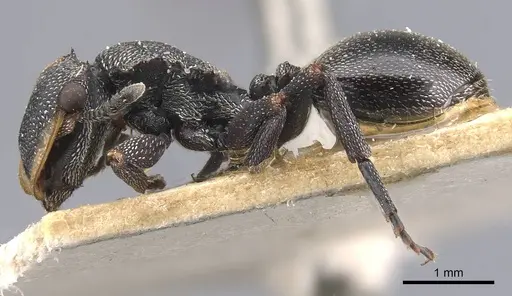
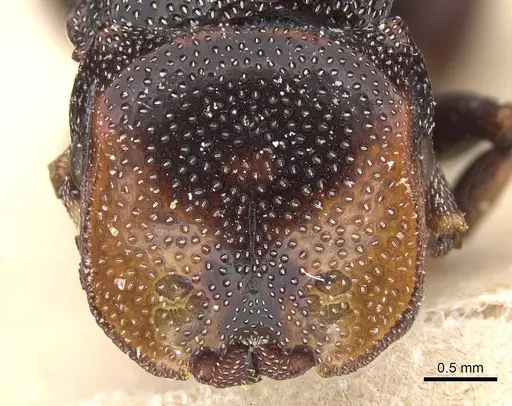
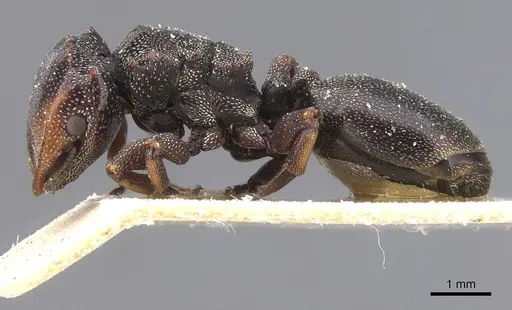
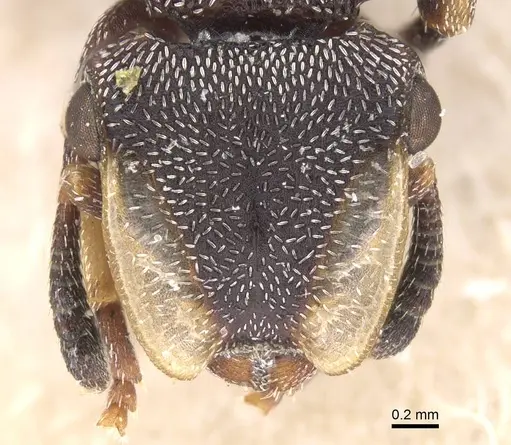
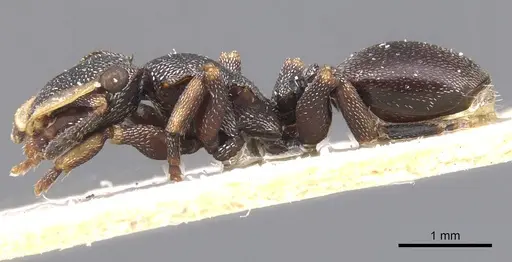
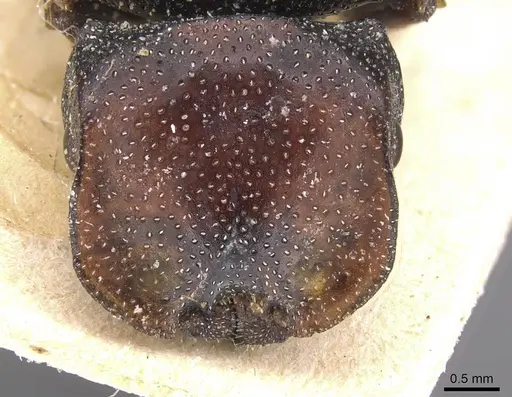
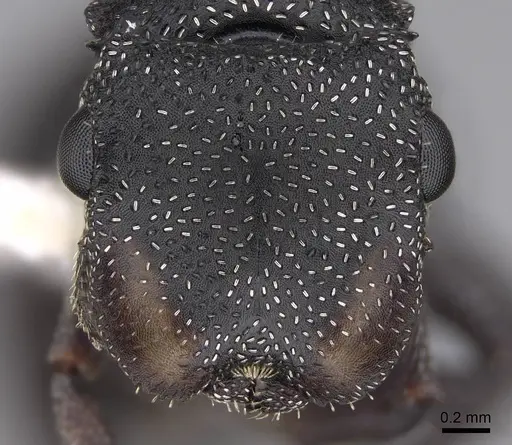
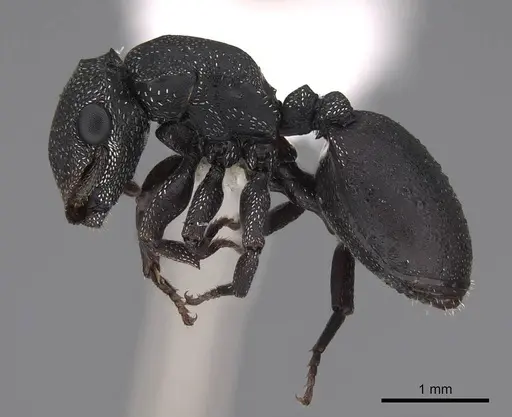
Cephalotes bruchi is a Neotropical turtle ant known as a member of the exclusive Chacoan clade, found in Argentina, Brazil, Paraguay, and Ecuador . Workers are 5.1–6.0 mm and soldiers reach 8.4–10.6 mm, while queens can be 12.2–12.6 mm in total length . Like other turtle ants, soldiers have a broad, flattened head that can be used to block nest entrances. Little else is known about the biology of this species, as it has rarely been studied in detail .
Quick Summary
- Difficulty: Expert
- Origin & Habitat: Chacoan region of South America: Argentina, Brazil, Paraguay, and Ecuador [3][2][1]. Specimens have been collected from a fallen mature Parapiptadenia rigida tree in Paraguay [1]. Also recorded sporadically in forest fragments and transition areas in Mato Grosso, Brazil [4].
- Colony Type: Colony structure is unconfirmed. Based on general Cephalotes patterns, likely monogyne with a soldier caste that uses its head to block entrances.
- Size & Growth:
- Antkeeping:
- Temperature: No documented requirements. As a tropical Chacoan species, likely warm (24–28 °C). Maintain stable warmth around 25 °C until more is known.
- Humidity: No documented requirements. Provide a moisture gradient with one moist area and good ventilation, as typical for arboreal ants.
- Diapause: Not required – tropical origin suggests year‑round activity.
- Nesting: Arboreal – specimens found in a fallen tree [1]. Use Y‑tong (AAC) or plaster nests with narrow chambers. Provide dead wood or cork bark as nest material.
- Behavior: Peaceful temperament. Primary defense is the soldier caste, which physically blocks nest entrances with its shield‑like head (phragmosis). They possess a functional sting (subfamily Myrmicinae) but it is not medically significant to humans. Escape risk: moderate – workers are small (5–6 mm) and can climb smooth surfaces.
- Common Issues: very limited knowledge of optimal captive conditions – most advice is speculative, colonies may fail if humidity and temperature are not appropriate – no tested protocols exist, slow or stagnant growth likely due to poor environmental matching, patience needed
Nest Preferences and Housing
Very little is known about the natural nesting habits of Cephalotes bruchi. The only published record mentions specimens collected from a fallen mature Parapiptadenia rigida tree in a botanical garden [1]. It is therefore inferred to be arboreal, nesting in wood or tree cavities. In captivity, provide narrow chambers in a Y‑tong (AAC) or plaster nest, and include pieces of dead wood or cork bark. The soldier caste will likely use small entry holes to block with their heads, so design entrances that fit their head size.
Feeding and Diet
No specific dietary data is available for Cephalotes bruchi. By comparison with other Cephalotes species, it probably forages for honeydew and scavenges small arthropods. Offer a constant sugar source (e.g., diluted honey or sugar water) and small protein items (fruit flies, small crickets) once or twice a week. Remove any uneaten food to prevent mold. This diet is purely tentative.
Temperature and Seasonal Care
As a Chacoan species, Cephalotes bruchi likely experiences hot summers and mild winters with no true cold season. No specific temperature requirements are documented. Keep the colony at 24–28 °C year‑round, with a gradient from a heating cable. Avoid dropping below 20 °C, as this may stress the colony. Do not attempt hibernation.
Soldier Defense Behavior
The soldier caste of Cephalotes bruchi is morphologically adapted for phragmosis: the head is broad, with a flat disc and strong lateral expansions that can block nest entrances [1]. This behavior is common in turtle ants, though it has not been directly observed in this species. Soldiers are larger than workers and likely stay near nest entrances to defend the colony. Do not remove or disturb them from these positions.
Colony Growth and Development
No information exists on colony growth or development for Cephalotes bruchi. The founding method, brood development time, and colony cycle are unknown. Keepers should expect slow progress and be prepared for setbacks. Regular observation and careful husbandry are essential until more is learned.
Frequently Asked Questions
Is Cephalotes bruchi a good ant for beginners?
No. Cephalotes bruchi is considered expert‑level because very little is known about its biology. It should only be attempted by experienced keepers willing to experiment with care conditions.
How long does it take for Cephalotes bruchi to produce first workers?
Unknown. No published data exists for this species. Anything you hear is speculation.
Can I keep multiple Cephalotes bruchi queens together?
Unknown. The social structure is not documented. It is safest to assume single‑queen colonies and avoid combining unrelated queens.
What do Cephalotes bruchi eat?
Not specifically documented. Based on related turtle ants, offer sugar water and small insects. This is a guess and may need adjustment.
Do Cephalotes bruchi need hibernation?
No. As a tropical species, they do not require a cold period. Keep temperatures stable year‑round.
When should I move Cephalotes bruchi to a formicarium?
Since founding behavior is unknown, keep a queen in a standard test tube until the first workers appear. Once you have at least 20–30 workers, you can offer a nest with narrow chambers. Watch for stress and be patient.
Why are my Cephalotes bruchi dying?
Without reliable care data, common causes could be wrong temperature or humidity, poor ventilation, or stress. Both too dry and too wet can be fatal. Observe carefully and adjust gradually.
How big do Cephalotes bruchi colonies get?
Unknown. No colony size estimates are available from the literature. Genus patterns suggest up to a few thousand workers, but this is uncertain.
What makes Cephalotes bruchi special?
It is a rare, poorly known member of the endemic Chacoan turtle ant clade, with a soldier caste that uses its head as a living door. Its natural history is almost a blank slate, making it a fascinating but challenging species to study [1][2][5].
Report an Issue
The current care sheet is based fully on literature. See inconsistencies, or something that's incorrect? Please , it will be resolved after review from an admin. Contributing to the blogs tab also helps providing information, to make us be able to further improve the caresheets. Thank you for your support!
References

This caresheet is licensed under CC BY-SA 4.0 .
Community Blogs
CASENT0173666
View on AntWeb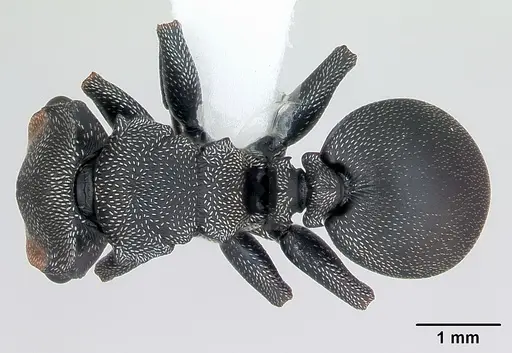
CASENT0173667
View on AntWeb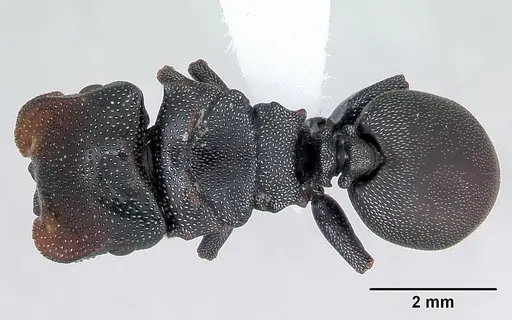
CASENT0173668
View on AntWeb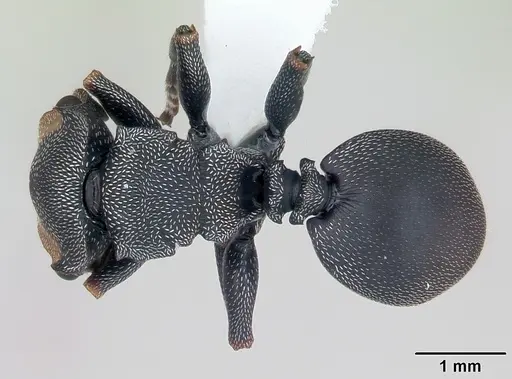
CASENT0909281
View on AntWeb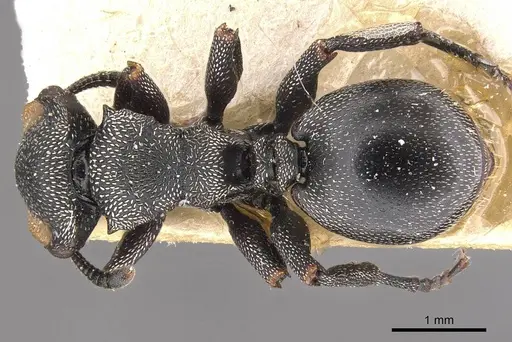
CASENT0912591
View on AntWeb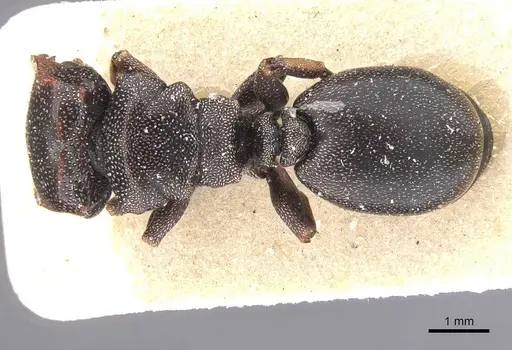
CASENT0912592
View on AntWeb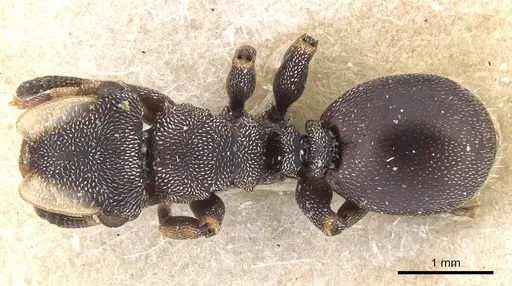
CASENT0912593
View on AntWeb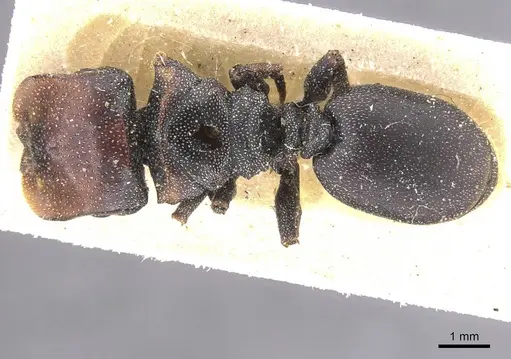
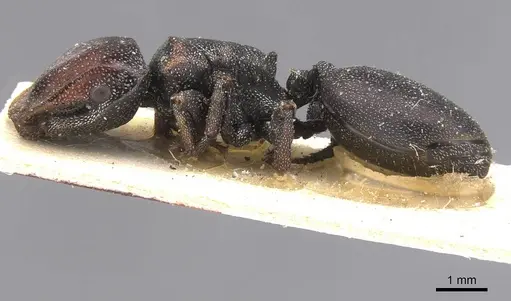
CASENT0922533
View on AntWeb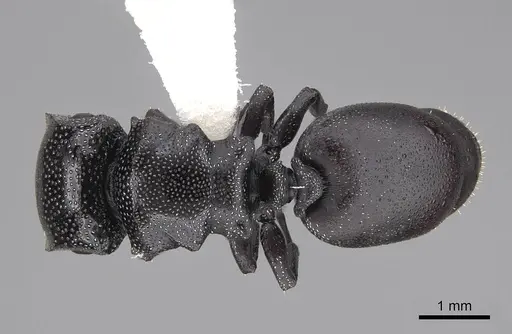
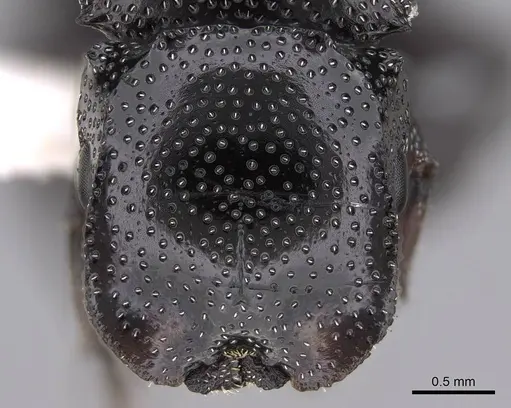
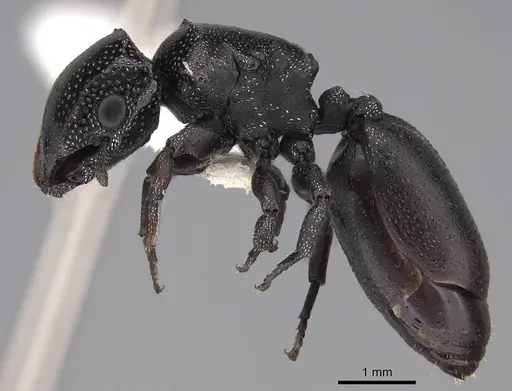
CASENT0922534
View on AntWeb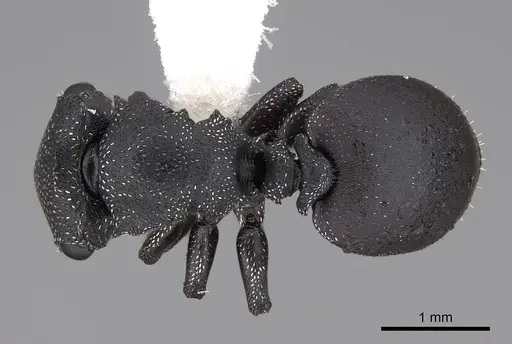
Literature
Loading distribution map...Loading products...