
Centromyrmex raptor
- Sci. Name
- Centromyrmex raptor
- Tribe
- Ponerini
- Subfamily
- Ponerinae
- Author
- Bolton & Fisher, 2008
- Distribution
- Found in 2 countries
Introduction
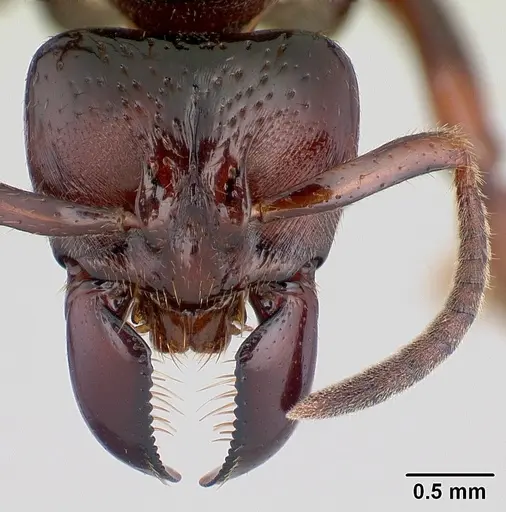
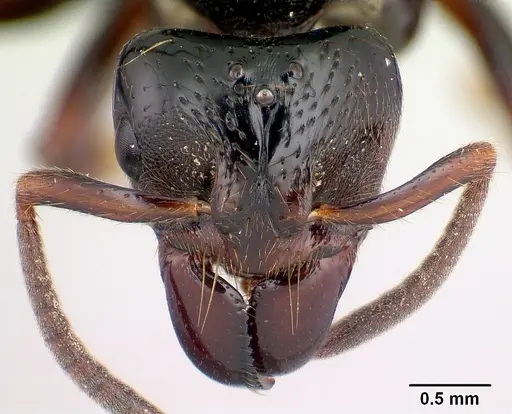
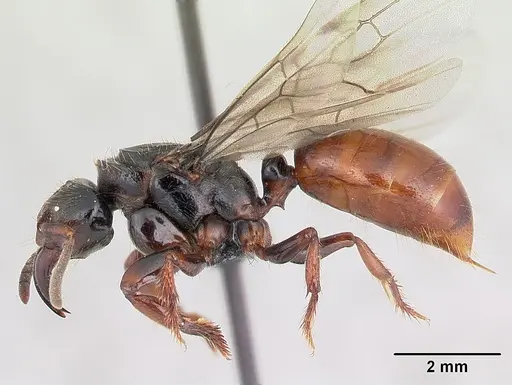
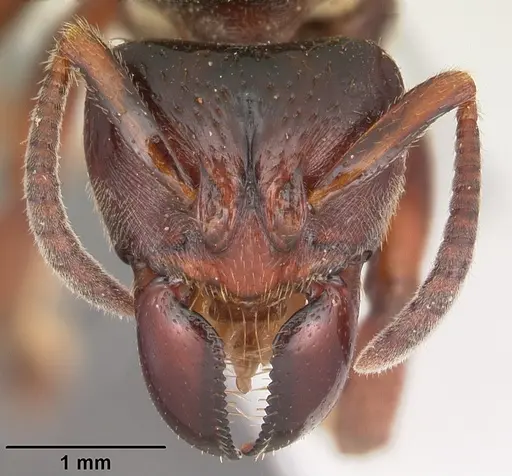
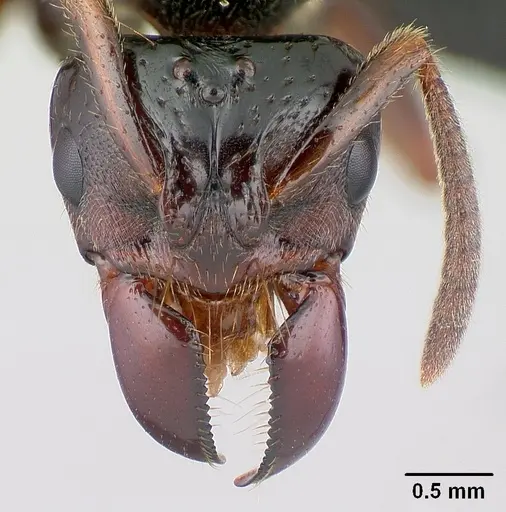
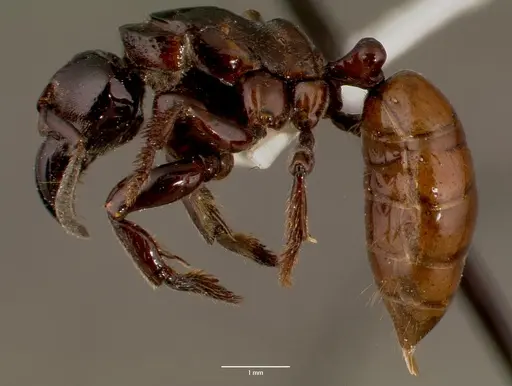
Centromyrmex raptor is a large predatory ant species from the Ponerinae subfamily, native to the Miombo woodlands of Zambia and Zimbabwe in southern Africa. Workers measure 9.6-10.0mm in total length, making them the largest Afrotropical member of the genus . They have a distinctive broad head and powerful mandibles equipped with 11-12 blunt teeth . The species name 'raptor' means 'seizer' or 'plunderer', referring to their predatory nature and specialized hunting abilities. Queens reach 10.2mm and are notably darker than workers, with nearly black mesosomas . This species was described in 2008 by Bolton and Fisher and remains one of the more recently described ants available in the hobby .
Quick Summary
- Difficulty: Expert
- Origin & Habitat: Miombo woodland in Zambia (Lusaka, Leopard Hill at 1300m elevation) and Zimbabwe (Urungwe Matsikite). Miombo woodland is a dry, deciduous woodland ecosystem dominated by Brachystegia trees with seasonal rainfall patterns [1][2].
- Colony Type: Colony structure is unconfirmed. Males have never been collected, suggesting unusual or undocumented nuptial flight behavior [1].
- Size & Growth:
- Queen: 10.2mm [1]
- Worker: 9.6-10.0mm [1]
- Colony: Unknown, no colony size data available
- Growth: Unknown, no development studies exist
- Development: Unknown, no published development data exists for this species. (Related Ponerines typically take 2-4 months from egg to first worker at warm temperatures, but this is an estimate for C. raptor.)
- Antkeeping:
- Temperature: Keep nest at 24-28°C with a slight gradient. Miombo woodland experiences warm temperatures year-round. Observe colony activity and adjust if needed.
- Humidity: Miombo woodland has distinct wet and dry seasons. Provide moderate humidity around 50-70% with a moist nest substrate but some drier areas for the ants to choose between.
- Diapause: Unknown, no studies on overwintering requirements. As a species from southern Africa, they likely do not require true hibernation but may reduce activity during cooler periods.
- Nesting: Natural nesting occurs in soil or rotting wood within Miombo woodland. In captivity, provide a naturalistic setup with moist soil or a Y-tong/plaster nest with a deep chamber for these large ants to move and hunt in.
- Behavior: Centromyrmex raptor is a specialized predator with powerful mandibles. Workers hunt individually or in small groups rather than forming large raiding parties. As Ponerines, they have a functional sting. Their large size and powerful jaws make them capable defenders. Escape risk is moderate, these are large ants but active hunters that may explore. Ensure secure barriers.
- Common Issues: no captive husbandry data exists, this is an expert-level species with no established care protocols, predatory nature means they need live prey, feeding may be more challenging than typical ants, male unknown suggests unusual reproductive behavior, colony founding may be difficult, limited distribution data makes it hard to replicate exact natural conditions, wild-caught colonies may have parasites or diseases not yet understood
Natural History and Distribution
Centromyrmex raptor is endemic to the Miombo woodland ecosystem of southern Africa, specifically found in Zambia and Zimbabwe. The type locality is Leopard Hill in Lusaka, Zambia, at approximately 1300 meters elevation [1]. Miombo woodland is characterized by a canopy of Brachystegia trees, seasonal rainfall, and distinct wet and dry seasons. This habitat experiences warm temperatures year-round with mild winters. The species was described in 2008 and remains poorly studied in the wild. Males have never been collected, which is unusual and suggests either very brief nuptial flight periods or alternative mating behaviors [1]. The ants are predatory, using their powerful mandibles to capture and subdue prey. Their large size makes them formidable hunters within their ecosystem.
Identification and Morphology
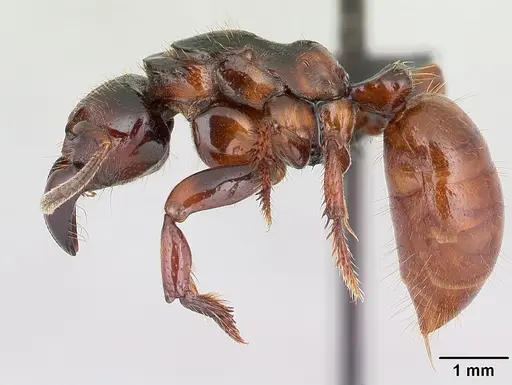
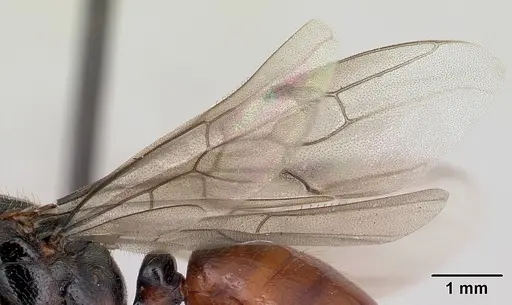
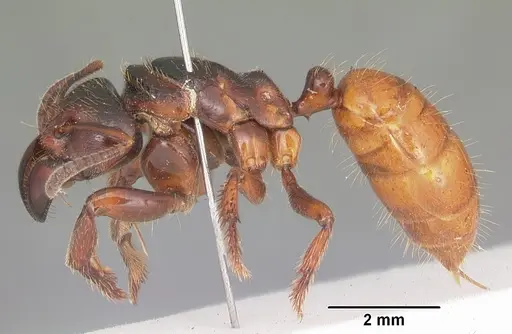
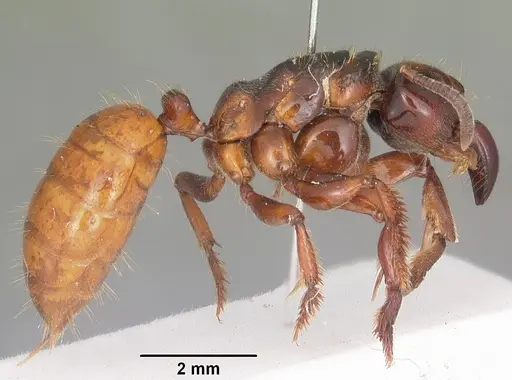
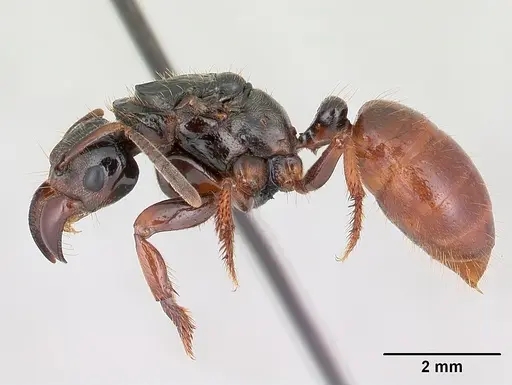
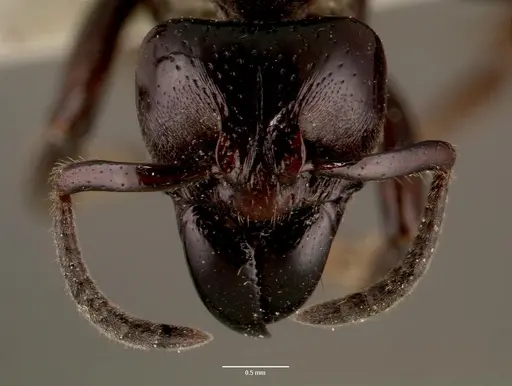
Centromyrmex raptor is the largest Afrotropical member of the genus Centromyrmex. Workers measure 9.6-10.0mm in total length, with a distinctive broad head that is noticeably wider than long [1]. The mandibles are heavily constructed and large, with 11-12 blunt triangular teeth along the masticatory margin. The mesosoma is notably dark, more so than any other Afrotropical species outside the bequaerti group, with a mottled brownish-red coloration that can appear blackish on the dorsal surface [1]. Queens are slightly larger at 10.2mm and significantly darker, with an almost entirely black mesosoma. One unusual morphological note: one of the described queens had only a single compound eye, demonstrating natural variation in eye development [1]. The metatibiae have distinctive dark spiniform setae on the apical third of both anterior and dorsal surfaces.
Housing and Nesting
In the wild, Centromyrmex raptor nests in soil or rotting wood within Miombo woodland. For captive care, provide a naturalistic setup with a deep soil chamber to allow these large ants to move and hunt freely. A Y-tong or plaster nest with spacious chambers works well. The nest should have a water reservoir to maintain humidity without flooding. Provide an outworld area for hunting and foraging that is appropriately scaled to their large size. Because they are predatory, consider adding substrate or a hunting area where they can pursue live prey. Ensure the setup has secure barriers, while not tiny, these ants are strong and determined.
Feeding and Diet
As a Ponerine ant, Centromyrmex raptor is predatory and should be fed a diet based on live invertebrates. Offer appropriately sized prey such as small crickets, mealworms, fruit flies, and other small insects. The powerful mandibles suggest they can tackle prey comparable to their own size or larger. Feed prey items that are roughly 1/3 to 1/2 the ant's body size. Remove uneaten prey after 24-48 hours to prevent mold. Unlike some ants, they are unlikely to accept sugar water or honey as primary food sources, their diet appears to be entirely predatory. Feed every 2-3 days for established colonies, adjusting based on consumption rates. A constant water source should be available.
Temperature and Seasonal Care
Centromyrmex raptor comes from a warm African habitat with temperatures that rarely drop below 15°C even in winter. Keep the nest at 24-28°C, with a slight gradient allowing the ants to self-regulate. A heating cable on one side of the nest can create this gradient. Monitor colony activity, if workers cluster near the warm side, increase temperature slightly, if they avoid it, reduce heat. Unlike temperate species, they likely do not require a true diapause period. However, they may naturally reduce activity during what would be the dry/cool season in their natural habitat. Do not cool them dramatically, maintain room temperature above 20°C year-round. Sudden temperature drops can be harmful.
Behavior and Temperament
Centromyrmex raptor is a solitary or small-group predator, not a mass-raiding species. Workers hunt individually or in small groups rather than forming large raiding parties. They possess powerful mandibles capable of delivering a painful bite, and as Ponerines, they have a functional sting. When threatened, they may bite defensively. They are not typically aggressive toward humans but will defend their nest. In the outworld, they are active foragers that will explore and hunt. Their large size makes them relatively easy to observe. Colonies are likely to be modest in size compared to some other ant genera. Handle with care due to their defensive capabilities.
Frequently Asked Questions
How long does it take for Centromyrmex raptor to produce first workers?
The egg-to-worker timeline is unknown as no development studies exist for this species. Based on typical Ponerine ant development, expect 2-4 months at optimal warm temperatures (around 26°C). However, this is an estimate, actual development time may vary.
Can I keep Centromyrmex raptor in a test tube?
A test tube is not ideal for this species due to their large size and predatory nature. They need space to hunt and move. A naturalistic setup with soil or a spacious Y-tong/plaster nest is more appropriate.
What do Centromyrmex raptor ants eat?
They are predatory ants that hunt live prey. Feed them appropriately sized live invertebrates such as small crickets, mealworms, fruit flies, and other small insects. They are unlikely to accept sugar sources.
Are Centromyrmex raptor ants good for beginners?
No. This is an expert-level species with no established captive husbandry protocols. There is no care information from experienced keepers, and their predatory nature makes feeding more challenging than typical ants.
How big do Centromyrmex raptor colonies get?
Colony size is unknown. No scientific data exists on maximum colony size for this species. Based on related Ponerines, colonies are likely modest, probably under a few hundred workers.
Do Centromyrmex raptor queens need to hibernate?
Diapause requirements are unknown. As a species from southern Africa, they likely do not require true hibernation but may reduce activity during cooler periods. Maintain warm temperatures year-round.
Can I keep multiple Centromyrmex raptor queens together?
Colony structure is unconfirmed. Combining unrelated queens has not been documented and is not recommended. Without data on whether they are monogyne or polygyne, keeping multiple queens together risks fighting.
Where does Centromyrmex raptor live in the wild?
They are found only in Miombo woodland in Zambia and Zimbabwe at elevations around 1300m. This is a dry deciduous woodland ecosystem with distinct wet and dry seasons.
Why are male Centromyrmex raptor ants never collected?
The absence of collected males is unexplained in the scientific literature. It may indicate very brief or unusual nuptial flight timing, or perhaps mating occurs within the nest. This makes captive breeding more challenging since we don't understand their reproductive behavior.
Report an Issue
The current care sheet is based fully on literature. See inconsistencies, or something that's incorrect? Please , it will be resolved after review from an admin. Contributing to the blogs tab also helps providing information, to make us be able to further improve the caresheets. Thank you for your support!
References

This caresheet is licensed under CC BY-SA 4.0 .
Community Blogs
CASENT0066716
View on AntWeb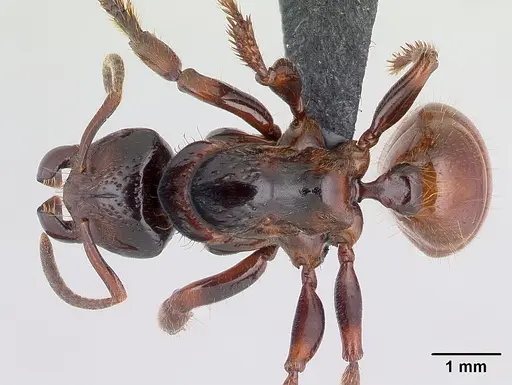
CASENT0066882
View on AntWeb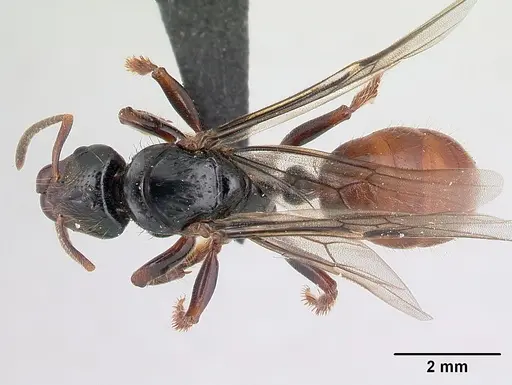
CASENT0102927
View on AntWeb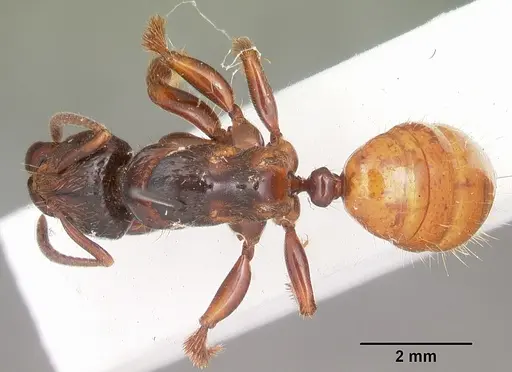
CASENT0178746
View on AntWeb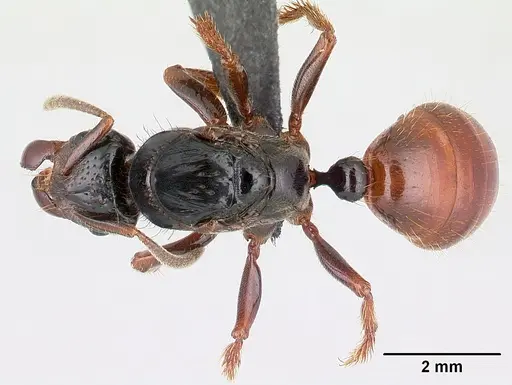
SAM-HYM-C007416A
View on AntWeb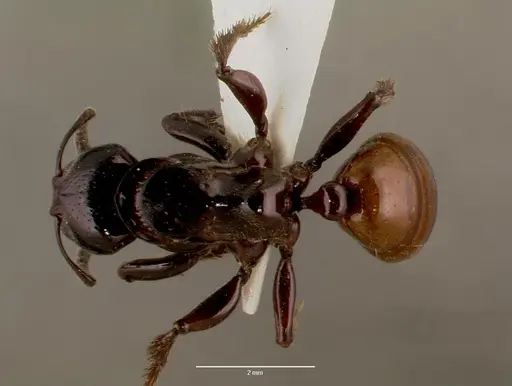
Literature
Loading distribution map...Loading products...