
Cataulacus taprobanae
- Sci. Name
- Cataulacus taprobanae
- Tribe
- Crematogastrini
- Subfamily
- Myrmicinae
- Author
- Smith, 1853
- Distribution
- Found in 3 countries
Introduction
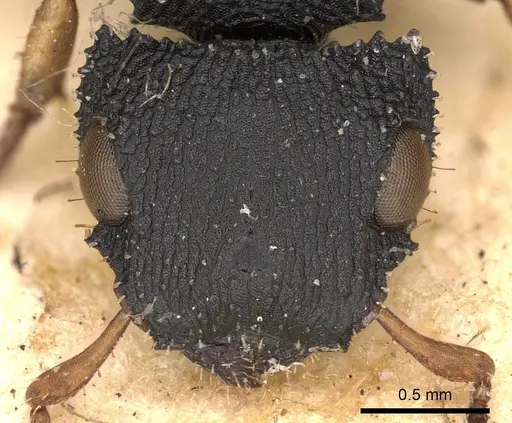
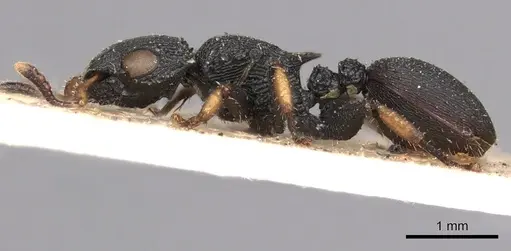
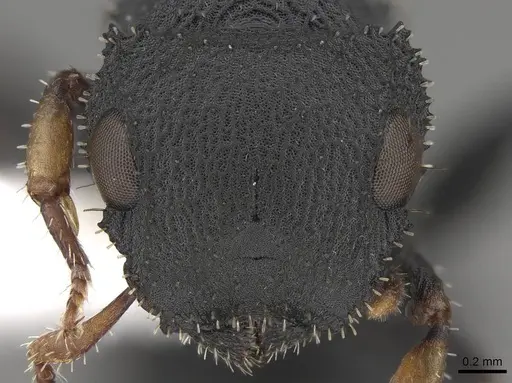
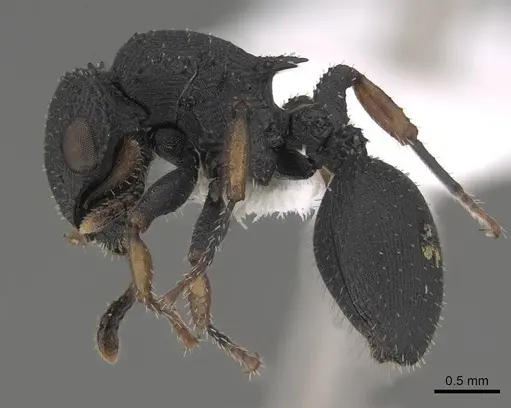
Cataulacus taprobanae is a distinctive arboreal ant from South and Southeast Asia. You'll find it across Sri Lanka, India, Nepal, and southern China . Workers are 4.1–5.4 mm , black with yellowish-red legs and antennae . They have long, divergent propodeal spines and a rough, sculptured body covered in fine punctures and short, erect hairs . Queens are bigger at 6.8–7.0 mm . This species belongs to the taprobane group within Cataulacus and is one of the few Cataulacus species living on the Indian subcontinent. What makes Cataulacus taprobanae interesting is its close tie to trees. These ants are tropical climate specialists that nest in hollow branches and tree cavities . They've been found living inside the myrmecophyte Humboldtia laurifolia in Sri Lanka . Workers forage during the day on bark and leaves, and feed on extrafloral nectaries of plants like Humboldtia brunonis . This tree‑dwelling lifestyle shapes how you should care for them.
Quick Summary
- Difficulty: Medium
- Origin & Habitat: Native to Sri Lanka, India, Nepal, and southern China. Recorded from many Indian states (Andaman & Nicobar Islands, Arunachal Pradesh, Assam, Goa, Haryana, Himachal Pradesh, Jammu & Kashmir, Karnataka, Kerala, Maharashtra, Meghalaya, Nagaland, Sikkim, Tamil Nadu, Uttarakhand, West Bengal) [1]. Found in wet, dry, and intermediate climate zones of Sri Lanka [5]. Inhabits humid tropical forests and urban gardens [4].
- Colony Type: Colony structure isn't well documented. Based on typical Cataulacus patterns, colonies likely have a single queen. They are arboreal and probably form smaller colonies than ground‑nesting species.
- Size & Growth:
- Queen: 6.8–7.0 mm [2]
- Worker: 4.1–5.4 mm [2]
- Colony: Unknown – likely several hundred workers, based on similar arboreal Myrmicinae
- Growth: Moderate – inferred from tropical arboreal ant patterns
- Development: 6–8 weeks (estimated from typical Myrmicinae development in warm conditions) (No specific studies exist for this species. Warmer temperatures within the acceptable range may speed things up a bit.)
- Antkeeping:
- Temperature: This tropical climate specialist [6] needs steady warmth. Keep the nest at 24–28°C year‑round. Room temperature in many homes may be too low – use a small heating cable on one side of the nest to create a warm zone.
- Humidity: High humidity – these ants come from humid forests and nest in tree cavities where moisture is consistent. Keep the nest substrate moderately moist but not waterlogged. Provide a water tube for drinking. Balance moisture with good ventilation to prevent mold.
- Diapause: No – this is a tropical species. Keep them warm all year without a cooling period.
- Nesting: Arboreal nesters – they naturally use hollow branches and tree holes. In captivity, give them Y‑tong, plaster, or 3D‑printed nests with narrow, closed chambers. Avoid large open spaces, they prefer tight, dark cavities. Test tubes work for founding, but cover them with a dark sleeve.
- Behavior: Diurnal foragers – workers actively search for food during daylight hours on tree surfaces [2]. They aren't particularly aggressive but will defend their nest if disturbed. At 4–5 mm, they are a moderate escape risk, use fluon or similar barriers on rims. They tend extrafloral nectaries, so they accept sugar sources readily.
- Common Issues: tropical temperature requirements mean colonies may struggle in cool rooms or air‑conditioned spaces., arboreal nature calls for properly scaled nests – too‑large chambers can stress the colony., wild‑caught colonies may carry parasites that affect survival in captivity., humidity needs must be balanced with ventilation to prevent mold., limited availability in the hobby – established colonies are uncommon.
Housing and Nest Setup
Cataulacus taprobanae needs an arboreal setup that copies their natural tree‑dwelling home. In the wild, they nest in hollow branches and tree cavities [2][4]. Give them a formicarium with tight, enclosed chambers rather than big open spaces. Y‑tong (AAC), plaster, or 3D‑printed nests all work – just pick chambers sized for their 4–5 mm workers. A test tube is fine for starting a colony, but wrap it in dark material to mimic the dark inside of a tree hole. Because they are tropical specialists, keep temperatures steady – avoid placing the nest near drafty windows or in air‑conditioned rooms.
Feeding and Diet
Field observations show Cataulacus taprobanae feeds on extrafloral nectaries from plants like Humboldtia brunonis [2]. In captivity, give them sugar water or honey water as a regular carbohydrate source. They also hunt small insects, so offer protein 2–3 times a week – small crickets, mealworms, or fruit flies work well. Remove any uneaten prey after 24 hours to stop mold. The mix of nectar‑feeding and predation means you need to provide both sugar and protein for a healthy colony.
Temperature and Humidity
This ant is a tropical climate specialist [6] that thrives in warm, humid conditions [2]. Keep temperatures at 24–28°C all year. A heating cable on one side of the nest helps maintain warmth, but always leave a cooler zone so the ants can move around if needed. For humidity, aim for a moist nest substrate – not soaking, but consistently damp. Provide a water tube for drinking. Watch for mold and keep the nest ventilated.
Behavior and Activity
Cataulacus taprobanae is active during the day – you'll see workers foraging on bark and leaves [2]. They are common in urban gardens and are present all year in tropical regions (premonsoon, monsoon, and postmonsoon) [4]. They are not aggressive toward keepers but will defend their nest. Their 4–5 mm size makes them a moderate escape risk – use fluon or similar barriers on test tube rims and formicarium edges.
Frequently Asked Questions
Can I keep Cataulacus taprobanae in a test tube?
Yes – test tubes work for founding colonies. Use a standard setup with a water reservoir and a tight cotton plug. Cover the tube with dark material to mimic the dark cavities they nest in naturally [2].
What temperature do Cataulacus taprobanae ants need?
Keep them at 24–28°C. This tropical specialist [6] cannot handle cool conditions. Room temperature in many homes may be too cold – use a small heating cable or mat on one side of the nest. Never let the temperature drop below 20°C [2].
How long does it take for Cataulacus taprobanae to produce first workers?
The exact time is unconfirmed for this species, but based on typical Myrmicinae development in warm conditions, you can expect the first workers (nanitics) about 6–8 weeks after the queen lays eggs. Warmer temperatures within the acceptable range may speed things up slightly.
Do Cataulacus taprobanae ants need hibernation?
No – they are a tropical species and stay active year‑round when kept warm. Maintain temperatures of 24–28°C without any cooling period [2].
What do Cataulacus taprobanae ants eat?
They eat both sugar and protein. Offer sugar water or honey water regularly for carbohydrates. Provide small insects like fruit flies, small crickets, or mealworms as protein a few times a week. Their natural diet includes extrafloral nectar, so sugar sources are important [2].
Are Cataulacus taprobanae ants good for beginners?
This species is rated medium difficulty. They are fairly adaptable and common in their native range, but their specific temperature and humidity needs as tropical arboreal ants make them a bit more challenging than common temperate species. They are a good choice if you have some experience with other Myrmicinae and can keep warm, humid conditions.
How big do Cataulacus taprobanae colonies get?
Maximum colony size isn't well documented, but based on similar arboreal Myrmicinae, they probably reach several hundred workers. They are not known to form supercolonies.
Do Cataulacus taprobanae ants sting?
Cataulacus species have a modified stinger used to smear venom rather than sting. They are not aggressive and the venom is not medically significant. They will defend their nest if threatened, but for keepers this is generally not a concern.
When should I move Cataulacus taprobanae to a formicarium?
Move them from a test tube to a proper formicarium when the colony reaches 30–50 workers or the tube becomes crowded. Arboreal ants prefer nests with chambers that match their size – avoid formicaria with very large chambers or passages.
Can I keep multiple Cataulacus taprobanae queens together?
Colony structure is not well studied for this species. Combining unrelated queens is not recommended since it hasn't been documented. If you get a wild colony, watch how many queens it has and set up housing accordingly.
Report an Issue
The current care sheet is based fully on literature. See inconsistencies, or something that's incorrect? Please , it will be resolved after review from an admin. Contributing to the blogs tab also helps providing information, to make us be able to further improve the caresheets. Thank you for your support!
References

This caresheet is licensed under CC BY-SA 4.0 .
Community Blogs
CASENT0900254
View on AntWeb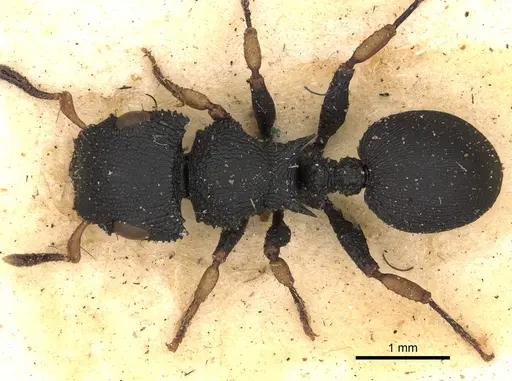
CASENT0922506
View on AntWeb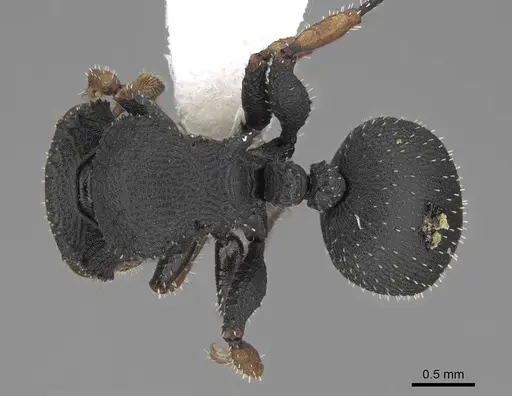
Literature
Loading distribution map...Loading products...