Cataulacus granulatus shows a February to April flight window. Peak activity occurs in March and April, with nuptial flights distributed across 3 months.

Asian Turtle Ant
Cataulacus granulatus
- Sci. Name
- Cataulacus granulatus
- Tribe
- Crematogastrini
- Subfamily
- Myrmicinae
- Author
- Latreille, 1802
- Common Name
- Asian Turtle Ant
- Distribution
- Found in 8 countries
- Nuptial Flight
- From February to April
- Peak flight Time
- 12:00
AI Identifiable
try →
Introduction
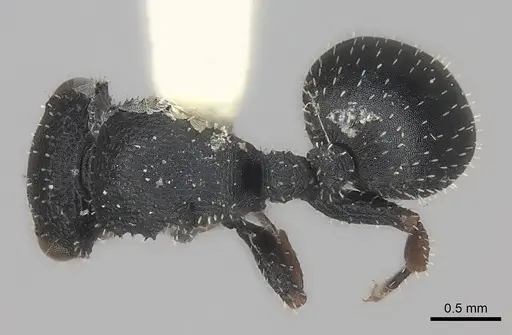
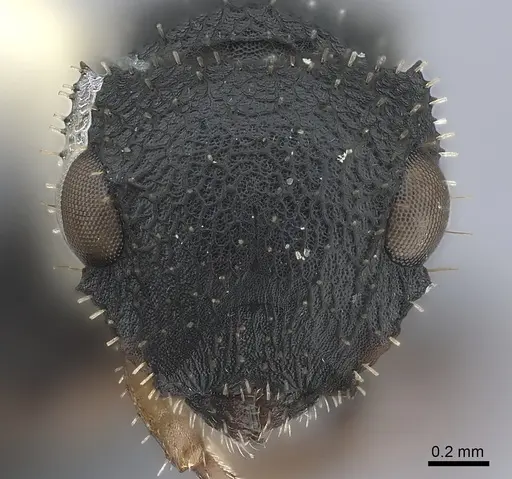
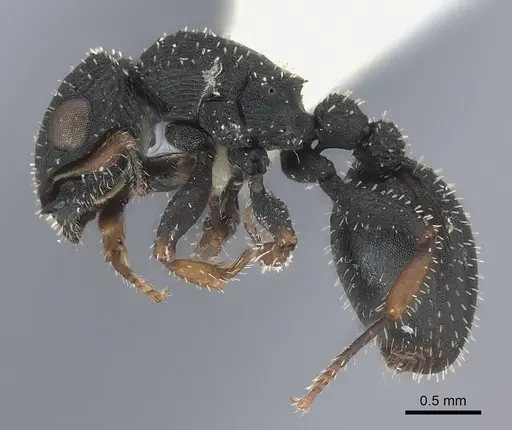
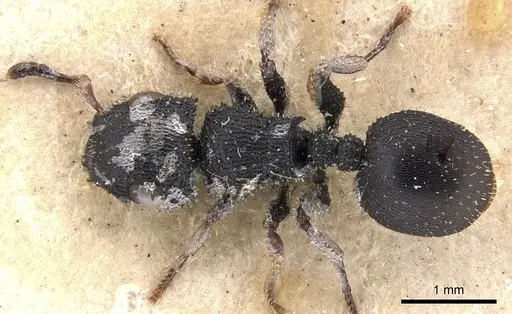
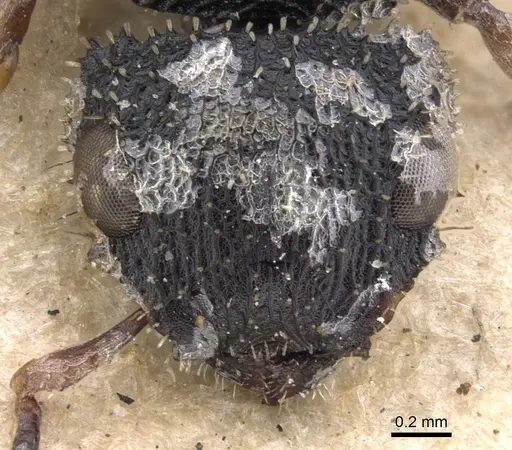
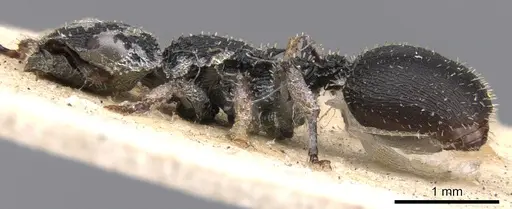
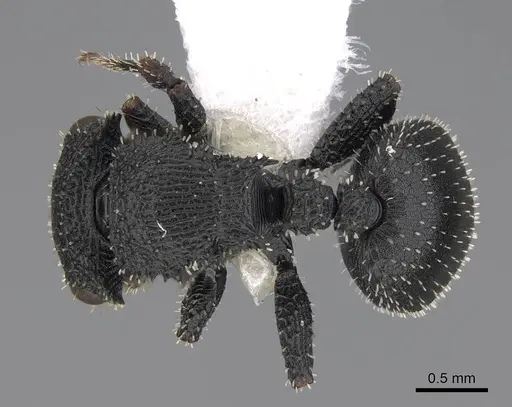
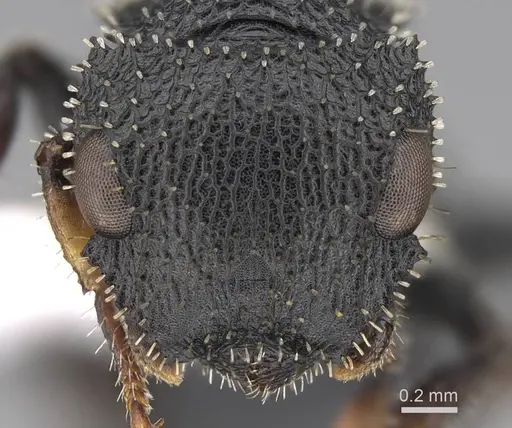
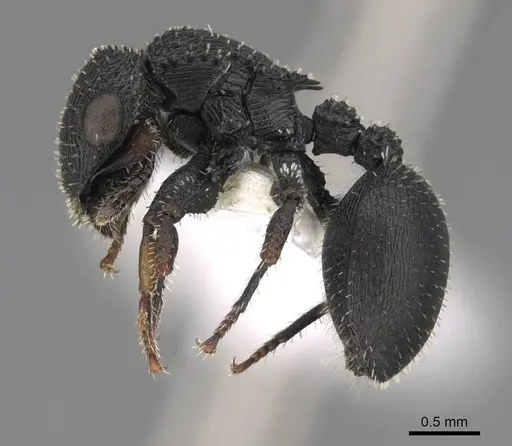
Cataulacus granulatus is a small, heavily armored arboreal ant found across tropical Asia, from Nepal and India through Southeast Asia to Borneo, Sumatra, and Java . Workers are 4.2–5.6 mm, queens 6.4–7.2 mm . They are easy to spot: the body is black with reddish-brown antennae and leg tips, covered in coarse wrinkles and granules, with a broad triangular head and sharp propodeal spines . These ants live in hollow twigs and branches of trees and bamboo, foraging on vegetation rather than the ground . Despite being the most widespread species in the genus, surprisingly little is known about their colony life in the wild . They defend themselves by smearing venom onto enemies using a flattened, spatulate stinger – a classic trick of the Crematogastrini tribe.
Quick Summary
- Difficulty: Medium
- Origin & Habitat: Tropical and subtropical Asia: Nepal, India, China (Yunnan, Guangxi, Hainan), Thailand, Myanmar, Laos, Malaysia, Indonesia (Java, Sumatra), Borneo, Singapore, Philippines [1][5][6]. Found in forests and grasslands, but absent from human-modified areas [7][8]. Nests in living and dead twigs of trees, including bamboo stems [4][9], and has been found inside shoots of Saraca dives [10].
- Colony Type: Colony structure is not well documented. Based on typical *Cataulacus* patterns, they are likely single-queen (monogyne), but this is unconfirmed. Ergatoid replacement queens have not been recorded.
- Size & Growth:
- Queen: 6.4–7.2 mm (total length) [1]
- Worker: 4.2–5.6 mm (total length) [1]
- Colony: Unknown – probably moderate, up to a few hundred workers, but no reliable data.
- Growth: Moderate
- Development: Estimated 6–8 weeks at 24–28°C (based on typical tropical Myrmicinae). (Direct data not available, this is an estimate. Warmer temperatures speed up development.)
- Antkeeping:
- Temperature: Tropical – keep at 24–28°C. A gentle heat gradient helps workers self-regulate [3]. Avoid dropping below 22°C.
- Humidity: Moderate. The nest substrate (e.g., twig cavities, Y‑tong chambers) should feel slightly moist, but not wet. Provide a water tube for drinking. Good ventilation is important.
- Diapause: No diapause required. Maintain warmth year-round.
- Nesting: Arboreal setup is essential. Use a naturalistic formicarium with small twigs, bamboo stems, or a Y‑tong (AAC) nest with narrow chambers. Avoid deep soil setups. Provide climbing structures for foraging.
- Behavior: Shy and non‑aggressive – they usually flee rather than fight. When threatened, they smear venom onto attackers using a modified stinger (Crematogastrini trait). Workers forage actively on vegetation, climbing branches and leaves. Escape risk is low to moderate for a 4–5 mm ant, standard barriers (fluon, oil) suffice. They may be slow to establish in a new setup.
- Common Issues: arboreal setup is critical – they will not survive in a soil formicarium., cold temperatures (below 22°C) can kill the colony quickly., wild colonies are hidden inside twigs – extracting them safely is tricky., limited published care data means some aspects require trial and error., foraging occurs on vegetation – ensure the outworld has branches or mesh to climb.
Nuptial Flight Activity Analysis 56 observations
Flight Activity by Hour 56 observations
Cataulacus granulatus nuptial flight activity peaks around 12:00 during the late morning to early afternoon. Activity is spread across a 16-hour window (03:00–18:00). A secondary activity peak occurs around 15:00. Times may be influenced by human observation patterns.
Housing and Nest Setup
This is the most important part of keeping Cataulacus granulatus. In the wild they nest in hollow twigs and bamboo stems [3][4][11], so you need to mimic that. A naturalistic setup with small dead twigs (stick them into a piece of foam or clay) works well. Alternatively, a Y‑tong (AAC) nest with narrow chambers scaled to their small size is fine – just make sure the nest offers vertical and horizontal climbing surfaces. Avoid acrylic nests (they don’t hold moisture properly). Never use a deep soil formicarium, these ants are completely arboreal. Attach a water tube for humidity and provide climbing structures (branches, mesh) in the outworld so they can forage as they would in the trees. Standard barriers (fluon or oil) will keep them contained.
Temperature and Heating
Being a tropical species from Southeast Asia and southern China, Cataulacus granulatus needs warmth year‑round. Keep the nest at 24–28°C [3]. Room temperature can work if your home doesn't drop below 22°C, but a small heating cable or mat on one side creates a useful gradient – place it on the side or top of the nest to avoid drying out the whole nest. If you see workers becoming sluggish, increase the temperature slightly. Do not let the nest fall below 22°C for extended periods.
Feeding and Diet
Foraging on vegetation, Cataulacus granulatus likely feeds on honeydew from aphids and scale insects, plus small arthropods they catch while hunting on leaves [3]. In captivity, offer a constant source of sugar water or honey (change every 2–3 days to avoid fermentation), and provide protein 2–3 times per week. Good protein options: freshly killed fruit flies, small crickets, or tiny roach nymphs. Remove uneaten prey after 24 hours to prevent mold. They are not big hunters, so keep prey very small.
Humidity and Water
These ants live in tree twigs, which maintain a moderately humid microclimate. In the nest, the substrate (Y‑tong or twig cavity) should feel slightly moist when you press it, but never waterlogged. Provide a gravity water tube or a small glass tube with a cotton plug for drinking – refill as needed. Good ventilation (small mesh openings) prevents condensation and mold. Do not let the nest dry out completely, but also avoid constant wetness, which can harm the brood. [3]
Colony Establishment
Getting a colony started is the hardest part. Wild colonies are hard to find because they live inside twigs and bamboo. If you obtain a queenright colony (e.g., from a seller), house them in a small tube or twig cavity with gentle heat. The founding process has not been directly observed in the literature, so details are unknown – be prepared to experiment. Once the first workers appear, growth seems to be moderate (estimated 6–8 weeks from egg to worker at 24–28°C). Be patient, established colonies are hardy if their arboreal needs are met. [1]
Behavior and Temperament
Cataulacus granulatus is a shy species. Workers rarely attack and prefer to flee or play dead when disturbed. Their heavy, sculptured exoskeleton makes them tough to crush, and as members of the Crematogastrini tribe, they can smear venom onto attackers using a modified flattened stinger – this is a defense, not an offense, and won't bother humans unless you handle them roughly. In the outworld, they spend most of their time climbing twigs and leaves, almost never walking on the ground. They are not territorial and can be kept in a shared enclosure only with great care (not recommended for beginners). [3][1]
Frequently Asked Questions
Can I keep Cataulacus granulatus in a test tube setup?
A test tube works for a founding queen or a small young colony, but these ants prefer a cavity that mimics a twig. For larger colonies, switch to a naturalistic arboreal setup with small hollow twigs or a Y‑tong nest [3].
What is the best nest type for Cataulacus granulatus?
An arboreal setup is essential – hollow twigs, bamboo stems, or a Y‑tong (AAC) nest with narrow, twig‑like chambers. Never use a soil formicarium. The nest should allow climbing on vertical surfaces [3][4].
How long does it take for the first workers to emerge?
Direct data is missing, but based on other tropical Myrmicinae, expect 6–8 weeks from egg to worker at 24–28°C. The exact time depends on temperature and food.
Do Cataulacus granulatus ants need hibernation?
No. They are tropical and require warmth year‑round (24–28°C). Do not cool them down [1].
Are Cataulacus granulatus good for beginners?
This species is rated Medium difficulty. Their arboreal needs and warmth requirements make them more challenging than a typical soil‑nesting ant. Some experience ant‑keeping is recommended.
What do Cataulacus granulatus eat?
Sugar water or honey (constant) and small insects (fruit flies, tiny crickets) 2–3 times per week [3].
Do Cataulacus granulatus ants sting?
They do not have a typical piercing sting. Instead, they belong to the Crematogastrini tribe and use a modified spatulate stinger to smear venom onto threats. This is harmless to humans unless you get venom in a cut or eye [1].
How big do Cataulacus granulatus colonies get?
Colony size is not documented in the literature. Based on related Cataulacus species, they likely reach a few dozen to a few hundred workers at most.
Can I keep multiple queens together?
Colony structure is not well studied. Based on typical Cataulacus patterns, they are probably monogyne (single queen). Do not combine multiple queens unless you have evidence of polygyny in this species.
Why are my Cataulacus granulatus dying?
Most likely causes: temperatures below 22°C, a soil‑based setup (they need a twig nest), low humidity, or lack of protein. Check that you are providing an arboreal nest with stable warmth and moderate moisture [3].
When is the nuptial flight of Cataulacus granulatus?
The nuptial flight of Cataulacus granulatus typically occurs From February to April.
What time of day does Cataulacus granulatus fly?
The nuptial flight of Cataulacus granulatus peaks around 12:00 during the late morning to early afternoon, with most activity between 03:00 and 18:00. Times may be influenced by human observation patterns.
Report an Issue
The current care sheet is based fully on literature. See inconsistencies, or something that's incorrect? Please , it will be resolved after review from an admin. Contributing to the blogs tab also helps providing information, to make us be able to further improve the caresheets. Thank you for your support!
References

This caresheet is licensed under CC BY-SA 4.0 .
Community Blogs
Literature
Loading distribution map...Loading products...