
Cataglyphis zakharovi
- Sci. Name
- Cataglyphis zakharovi
- Tribe
- Formicini
- Subfamily
- Formicinae
- Author
- Radchenko, 1997
- Distribution
- Found in 1 countries
Introduction
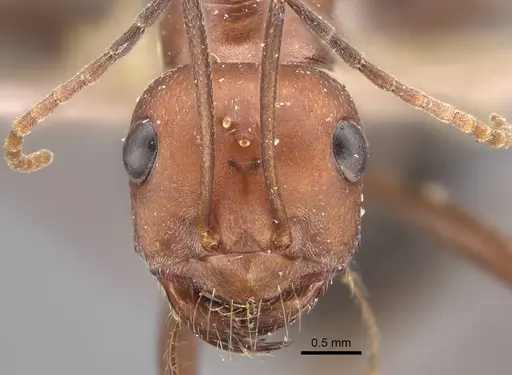
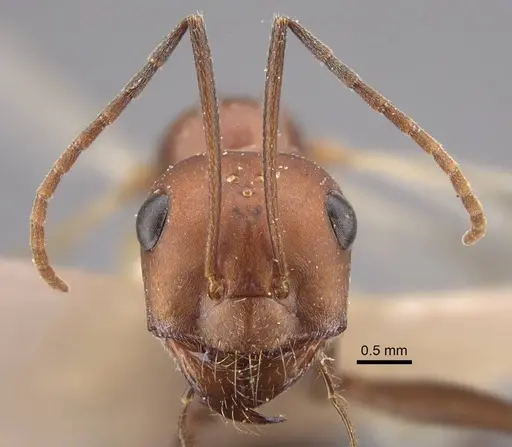
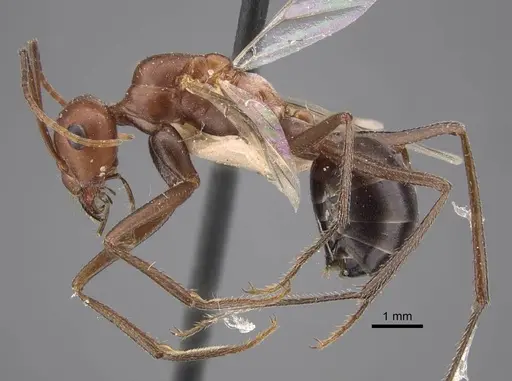
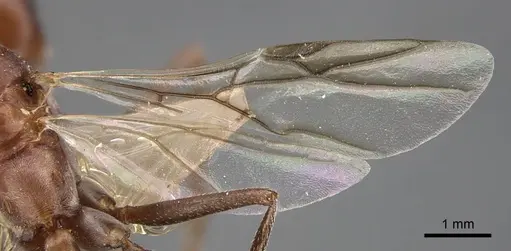
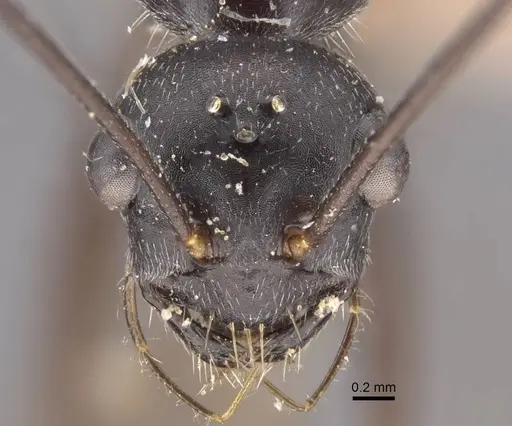
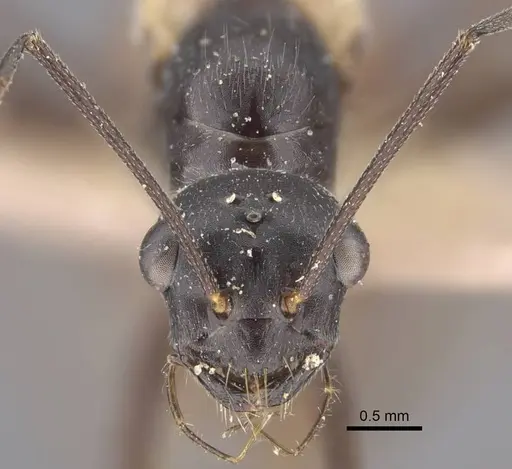
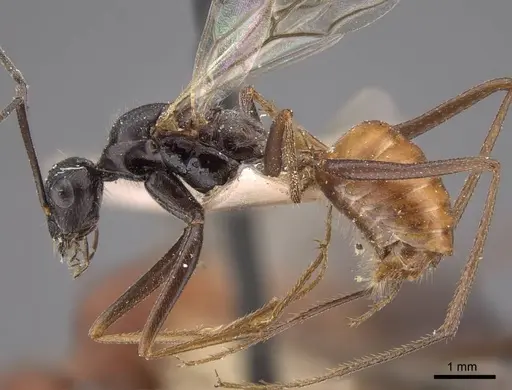
Cataglyphis zakharovi is a tiny desert ant and one of the rarest species in the genus Cataglyphis. It was only described in 1997 based on just four specimens (two males and two queens) collected from a nest of Cataglyphis setipes in Turkmenistan . This species is a permanent social parasite - it lives exclusively in the nests of C. setipes rather than founding its own colonies. The distribution covers the Palaearctic region including Turkmenistan, Afghanistan, Iran, Kazakhstan, Pakistan, and southern Russia [AntWiki]. Queens have an orange-red head and alitrunk with a dark brown gaster, while males are dark brown to black with ochraceous legs.
Quick Summary
- Difficulty: Expert
- Origin & Habitat: Desert and semi-desert regions of Central Asia, particularly Turkmenistan and surrounding areas. Found nesting exclusively in the nests of its host species Cataglyphis setipes [1][2].
- Colony Type: Permanent social parasite (inquiline), lives entirely within host colonies of Cataglyphis setipes. The colony structure is entirely dependent on the host queen and workers. This species cannot form independent colonies.
- Size & Growth:
- Queen: Size data unavailable, the original description provides head and alitrunk measurements but not total body length. Queens are noted as small, similar to Cataglyphis hannae [3].
- Worker: Workers have never been described for this species [1][2].
- Colony: Unknown, this species lives within host colonies so its numbers are tied to the host colony.
- Growth: Unknown, this species cannot be kept independently from the host.
- Development: Unknown, cannot be kept separately from host. (This species cannot be kept as an independent colony.)
- Antkeeping:
- Temperature: Likely similar to host species C. setipes, desert ants prefer warm conditions. No specific data available.
- Humidity: Desert species, prefers dry conditions. Keep nest relatively dry.
- Diapause: Likely similar to host species, may require a cool period in winter based on temperate desert range.
- Nesting: This is a parasitic species that lives within the nests of Cataglyphis setipes. It cannot be kept independently. In captivity, you would need an established C. setipes colony and would need to introduce the parasite queen to it, this is extremely advanced and not recommended [1][2].
- Behavior: This is a permanent social parasite that lives entirely within host colonies. It cannot survive independently. The behavior is entirely dependent on host workers. Nothing is known about its temperament, foraging, or defense since it has never been kept in captivity [1][2]. As a Formicine ant, it likely sprays formic acid as a defense mechanism.
- Common Issues: This species cannot be kept independently, it requires a host colony to survive., No workers of this species have ever been described, making captive maintenance impossible., Even if you obtain a queen, introducing her to a host colony requires expert-level knowledge and has a very low success rate., The species is extremely rare in the wild and virtually unavailable in the antkeeping hobby., Nothing is known about what this species eats or how it interacts with host workers.
Why This Species Is Not Suitable for Most Antkeepers
Cataglyphis zakharovi is one of the most difficult ants to keep in captivity, if it is even possible at all. This species is a permanent social parasite, meaning it cannot form its own colony. Instead, it lives exclusively in the nests of another species, Cataglyphis setipes, and depends entirely on host workers for survival [1][2]. The queen cannot found a colony alone, cannot forage for herself, and cannot raise her own brood. She must be accepted into an established C. setipes colony to survive. This makes keeping C. zakharovi essentially impossible for hobbyist antkeepers. Even professional myrmecologists have never maintained this species in captivity, it is known only from four museum specimens collected in the 1970s [1]. There is no documented case of this species being successfully kept by anyone.
What We Know About This Species
C. zakharovi was described in 1997 by Radchenko based on two males and two queens collected from a nest of C. setipes in Turkmenistan [1][2]. The species is morphologically similar to Cataglyphis hannae but much smaller. Queens have a distinctive orange-red head and alitrunk, with a dark brown gaster. Males are dark brown to black with ochraceous legs. The species has been recorded across Central Asia including Turkmenistan, Afghanistan, Iran, Kazakhstan, Pakistan, and southern Russia [3]. However, absolutely nothing is known about its biology, behavior, or chemistry, the original description only covers physical measurements and morphology [1][2]. Workers of this species have never been described.
The Host Species: Cataglyphis setipes
If you are determined to attempt keeping this species, you would need to maintain a healthy colony of Cataglyphis setipes first. C. setipes is a larger desert ant common across Central Asia. Like other Cataglyphis species, they are fast-moving, diurnal foragers that hunt insects and scavenge in hot desert conditions. They prefer warm, dry nesting conditions and are relatively aggressive when defending their nest. However, even if you successfully kept C. setipes, introducing a C. zakharovi queen would be extremely difficult, host colonies typically reject foreign queens, and the success rate for such introductions is extremely low even for experienced researchers.
Legal and Ethical Considerations
This species is extremely rare in the wild and has never been found in large numbers. Collecting it would require permits for the Central Asian countries where it lives (Turkmenistan, Afghanistan, Iran, etc.). Additionally, keeping a social parasite successfully would likely require removing a queen from a wild C. setipes colony, which could harm the host population. For these reasons, C. zakharovi should be considered a species to appreciate in scientific literature rather than a target for antkeeping. If you are interested in desert ants, consider the more commonly available Cataglyphis species like Cataglyphis niger or Cataglyphis albicans, which are not parasites and can be kept successfully by intermediate antkeepers.
Frequently Asked Questions
Can I keep Cataglyphis zakharovi in a formicarium?
No. This is a social parasite that cannot survive without a host colony of Cataglyphis setipes. It cannot be kept independently under any known conditions. Even if you could obtain a queen, there is no documented method for introducing her to a host colony successfully.
Where can I get Cataglyphis zakharovi?
This species is virtually unavailable in the antkeeping hobby. It is only known from four museum specimens collected decades ago in Turkmenistan. No live colonies exist in captivity. Even professional ant researchers have never kept this species.
Do Cataglyphis zakharovi workers exist?
No. Workers of this species have never been described or observed. As a social parasite, it likely relies entirely on host workers (C. setipes) for all colony functions including foraging, nursing, and defense.
What does Cataglyphis zakharovi eat?
Unknown. This species has never been observed feeding. As a social parasite, it likely receives food through trophallaxis (mouth-to-mouth sharing) from host workers, but this has never been documented.
Are there easier Cataglyphis species to keep?
Yes. If you are interested in the Cataglyphis genus, consider Cataglyphis niger or Cataglyphis albicans. These are independent, non-parasitic desert ants that can be kept successfully. They are faster-growing and more readily available in the antkeeping hobby.
How do I identify Cataglyphis zakharovi?
This species is identified by its very small size compared to other Cataglyphis, and by being found only in nests of C. setipes. Queens have an orange-red head and alitrunk with a dark brown gaster. Males are dark brown to black. Identification requires microscopic examination of morphological features including the head shape, funicular joint proportions, and petiolar node structure [3].
What temperature do desert Cataglyphis need?
For the host species C. setipes, maintain temperatures around 25-30°C during the active season with a thermal gradient. Desert ants thrive in warm conditions. However, C. zakharovi itself cannot be kept independently regardless of temperature.
Does Cataglyphis zakharovi need hibernation?
Likely yes, based on the temperate desert habitat of its host species. However, since this species cannot be kept independently, hibernation requirements are purely academic.
Why is Cataglyphis zakharovi a parasite?
This species has evolved to live permanently in the nests of Cataglyphis setipes rather than founding its own colonies. The queen enters the host nest and is accepted by host workers, who then care for her and her brood. This is a rare strategy in ants, only a handful of Cataglyphis species are known to be social parasites.
Is Cataglyphis zakharovi dangerous?
Unknown. This species has never been observed in the wild or handled by humans. Even if it could be kept, its small size and parasitic lifestyle would make it harmless. The host species C. setipes can bite but is not considered dangerous to humans.
Report an Issue
The current care sheet is based fully on literature. See inconsistencies, or something that's incorrect? Please , it will be resolved after review from an admin. Contributing to the blogs tab also helps providing information, to make us be able to further improve the caresheets. Thank you for your support!
References

This caresheet is licensed under CC BY-SA 4.0 .
Community Blogs
CASENT0917489
View on AntWeb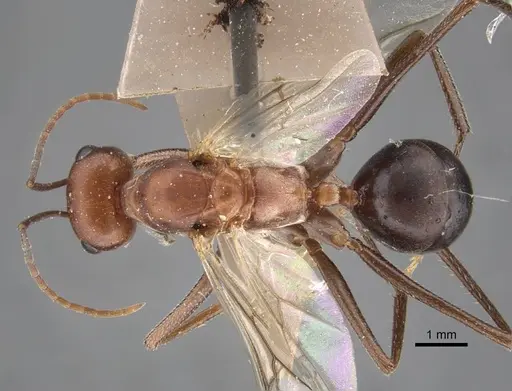
CASENT0917490
View on AntWeb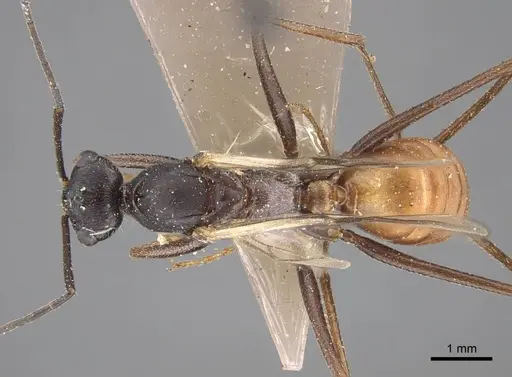
Literature
Loading distribution map...Loading products...