
Carebara sauteri
- Sci. Name
- Carebara sauteri
- Tribe
- Crematogastrini
- Subfamily
- Myrmicinae
- Author
- Forel, 1912
- Distribution
- Found in 1 countries
Introduction
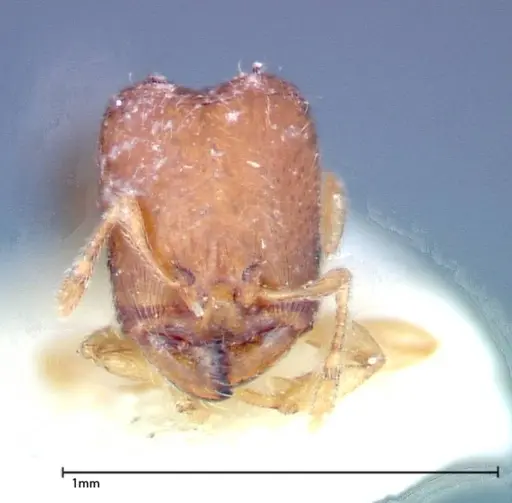
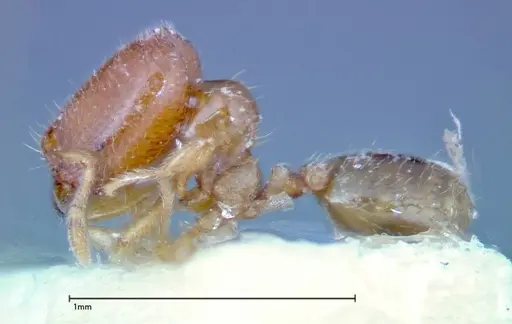
Carebara sauteri is a minute, strongly dimorphic Myrmicinae ant native to Taiwan, the Senkaku Islands, and southern China. Workers measure just 1mm while soldiers (majors) reach around 2mm, making them one of the smaller ant species kept in captivity. They have a distinctive appearance with a 9-segmented antennae, very small eyes, and small pointed teeth on the back of the head. Their body is light reddish-brown with the soldier's head being darker . This species was originally described as Oligomyrmex sauteri in 1912 and was later reclassified to Carebara. True C. sauteri is quite rare in collections, as most Japanese specimens previously identified as this species are actually the related Carebara yamatonis [AntWiki]. These ants are stenochoric, meaning they have very specific habitat requirements and are found only in forest environments. They form monogynous colonies (single queen) and are considered a cryptic forest species that nests in small cavities in decaying wood or soil . Their tiny size and specialized nature make them a challenging species for antkeepers interested in less common Asian ants.
Quick Summary
- Difficulty: Expert
- Origin & Habitat: Taiwan, Senkaku Islands (Japan), and southern China. Found in both secondary and primary forest environments [5][4].
- Colony Type: Monogynous, single queen colonies. Strongly dimorphic with major soldiers (2mm) and minor workers (1mm) [5][2].
- Size & Growth:
- Queen: Size data unavailable, queen measurements not documented in available research
- Worker: Minor workers: 1mm, Major soldiers: 2mm [2][6]
- Colony: Colony size data unavailable for this species
- Growth: Growth rate unconfirmed
- Development: Development timeline unconfirmed for this species (No specific development data available.)
- Antkeeping:
- Temperature: Temperature requirements unconfirmed for this species. Based on subtropical origin (Taiwan, Ryukyu Islands), room temperature (20-26°C) is likely suitable.
- Humidity: Humidity requirements unconfirmed. Forest-dwelling species typically prefer humid conditions.
- Diapause: Diapause requirements unconfirmed. As a subtropical species, they likely do not require hibernation.
- Nesting: In captivity, they do well in small test tubes or Y-tong nests with tight chambers scaled to their tiny size. Natural nesting occurs in small cavities in rotting wood or soil [4].
- Behavior: These ants are cryptic and not particularly aggressive. As a dimorphic species, major soldiers serve as defenders and may help process larger prey. They are stenochoric, meaning they are specialized to specific microhabitats and may be sensitive to environmental changes. Workers are small but can deliver a mild sting if threatened. Escape prevention is critical due to their minute size, they can squeeze through remarkably small gaps [5].
- Common Issues: escape prevention is critical, their tiny 1mm size means they can slip through standard barrier setups, sensitive to drying out, forest habitat species prefer humid conditions, rare species in the hobby with limited available care information, stenochoric nature means they may be sensitive to environmental changes that other ants tolerate, colony growth data unavailable making progress tracking difficult
Nest Preferences and Housing
Carebara sauteri requires carefully scaled housing due to their minute size. Test tubes work well for founding colonies, use a small water reservoir and ensure the cotton is packed tightly to prevent escapes. For established colonies, Y-tong nests with narrow chambers are ideal. These ants prefer dark, humid environments and will typically nest in the most humid section of their setup. Avoid large, open spaces, they feel secure in tight chambers that match their tiny body size. Natural nesting occurs in small cavities within rotting wood or in soil [4]. Always use fine mesh for ventilation as standard mesh will not contain them.
Feeding and Diet
Like most Carebara species, C. sauteri is likely omnivorous with a preference for small protein sources. In captivity, offer small live prey such as springtails, fruit flies, and other micro-arthropods. They may also accept honey or sugar water, though acceptance varies. Due to their tiny size, prey items must be appropriately sized, even a single fruit fly is a substantial meal for these ants. Feed small amounts of protein 2-3 times per week, and keep a sugar source available at all times. Remove uneaten prey after 24-48 hours to prevent mold.
Temperature and Seasonal Care
As a species from subtropical Taiwan and the Ryukyu Islands, Carebara sauteri likely requires warm conditions. Maintain temperatures in the range of 20-26°C for optimal colony health. A heating cable on one side of the nest creates a temperature gradient allowing the ants to self-regulate. Avoid sudden temperature fluctuations, their stenochoric nature suggests they prefer stable conditions.
Behavior and Colony Dynamics
This species exhibits strong dimorphism with distinct minor workers (1mm) and major soldiers (2mm). The larger soldiers serve as colony defenders and may assist with processing larger prey items. Colonies are monogynous with a single queen. Workers are not particularly aggressive and will typically flee rather than engage threats. Their cryptic nature means they spend most of their time within the nest, emerging briefly to forage. They are not known for any unusual behaviors like slave-making or tandem running [5][2][6].
Handling and Escape Prevention
Escape prevention is absolutely critical for Carebara sauteri. Their minute 1mm size allows them to squeeze through gaps that would hold back larger ants. Use fluon or similar barriers on test tube rims, and ensure all connections between outworld and nest are sealed. Even standard ant keeping setups may have gaps too large for these tiny ants. When observing or feeding, work carefully and quickly, they move surprisingly fast for their size. They can deliver a mild sting, but given their tiny size and non-aggressive nature, they pose minimal danger to keepers. Always check for escapes after feeding and maintenance.
Frequently Asked Questions
How long does it take for Carebara sauteri to produce first workers?
The exact timeline is unconfirmed for this species. Development time varies among Myrmicinae ants, but expect several months from founding to first workers emerging. Patience is essential as their small colony size means slower growth than larger ant species.
Can I keep Carebara sauteri in a test tube?
Yes, test tubes work well for founding colonies. Use a small water reservoir and ensure the cotton is packed very tightly, these tiny ants can squeeze through surprisingly small gaps. Transfer to a proper nest (Y-tong) once the colony reaches 20-30 workers.
What do Carebara sauteri ants eat?
They are omnivorous but prefer small live prey. Offer springtails, fruit flies, and other micro-arthropods. They will likely accept sugar water or honey. All prey must be appropriately sized for their 1mm workers.
Do Carebara sauteri ants sting?
Yes, they can sting, but the sting is very mild due to their tiny size. They are not aggressive and rarely sting unless directly threatened.
Are Carebara sauteri good for beginners?
No, this species is recommended for experienced antkeepers only. Their minute size, escape risk, specific humidity requirements, and rarity make them challenging. They are sensitive to environmental changes and require more specialized care than larger, more adaptable species.
How big do Carebara sauteri colonies get?
Colony size data is unavailable for this specific species. Growth is likely slow due to their small size. A mature colony may take several years to develop.
Do Carebara sauteri need hibernation?
Probably not. As a subtropical species from Taiwan and the Ryukyu Islands, they likely do not require a true diapause. They may show reduced activity in cooler months but should be kept warm year-round.
Why are my Carebara sauteri escaping?
Their tiny 1mm size allows them to slip through standard barriers. Apply fluon to all rim edges, use fine mesh for ventilation, and check all connections between nest and outworld. Even tiny gaps that larger ants cannot pass will allow these minute ants to escape.
Can I keep multiple queens together?
No. Carebara sauteri is monogynous with single queen colonies confirmed. Combining unrelated queens is not recommended and would likely result in fighting. Only keep one queen per colony [5].
When should I move my colony to a formicarium?
Wait until the colony has 20-30 workers and the test tube is becoming crowded. For this tiny species, a Y-tong nest with small chambers works best. Ensure the new nest maintains similar humidity levels.
Report an Issue
The current care sheet is based fully on literature. See inconsistencies, or something that's incorrect? Please , it will be resolved after review from an admin. Contributing to the blogs tab also helps providing information, to make us be able to further improve the caresheets. Thank you for your support!
References

This caresheet is licensed under CC BY-SA 4.0 .
Community Blogs
FOCOL0276
View on AntWeb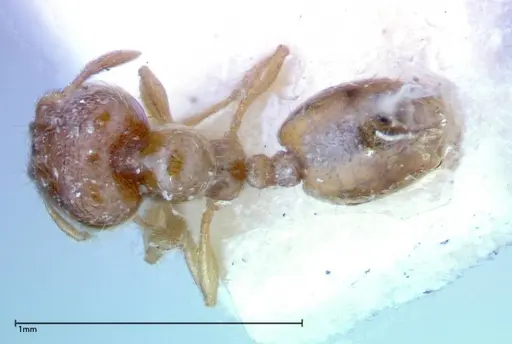
Literature
Loading distribution map...Loading products...