
Carebara salegi
- Sci. Name
- Carebara salegi
- Tribe
- Crematogastrini
- Subfamily
- Myrmicinae
- Author
- Azorsa & Fisher, 2018
- Distribution
- Found in 1 countries
Introduction
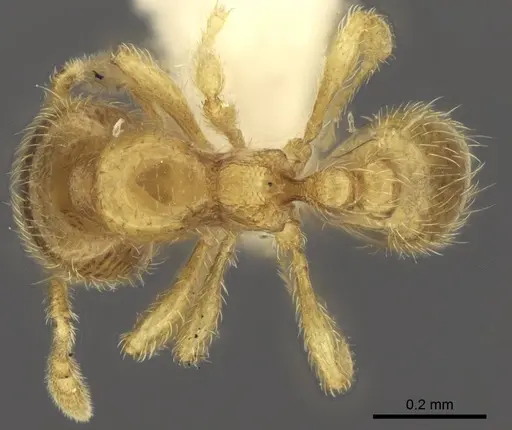
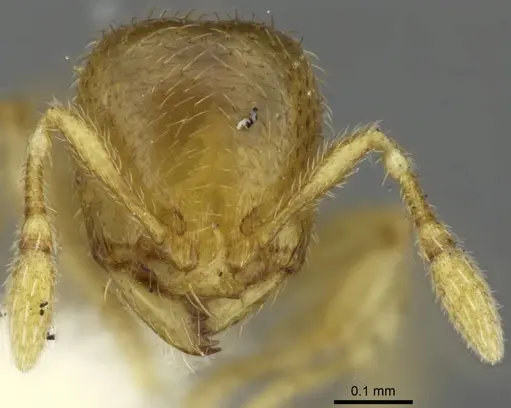
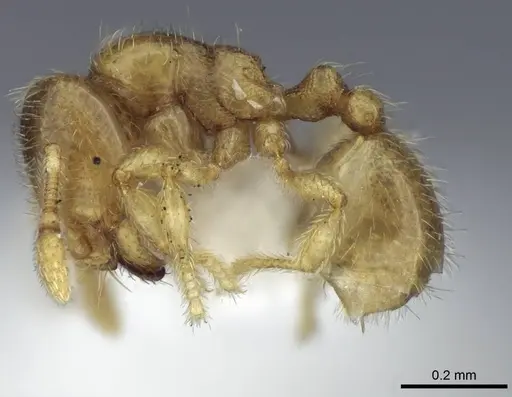
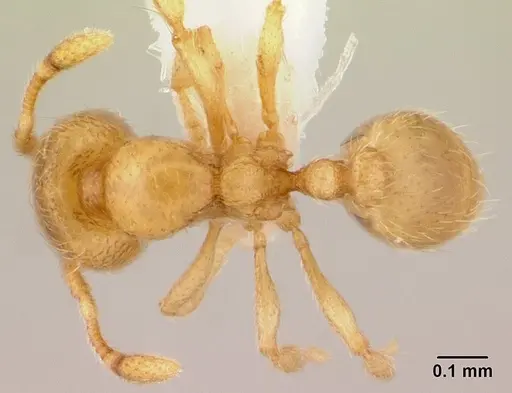
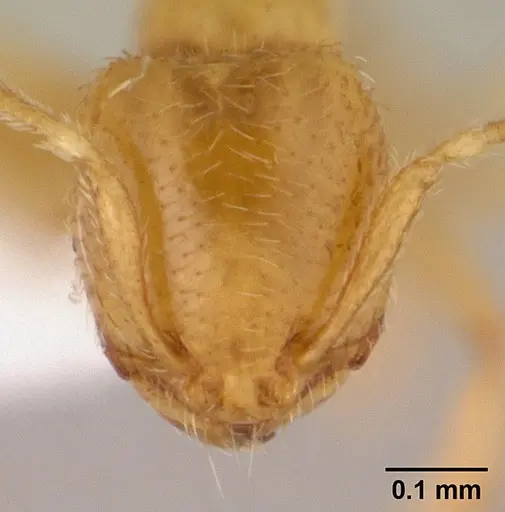
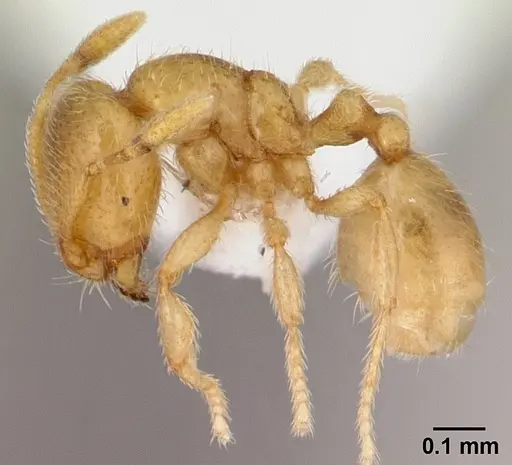
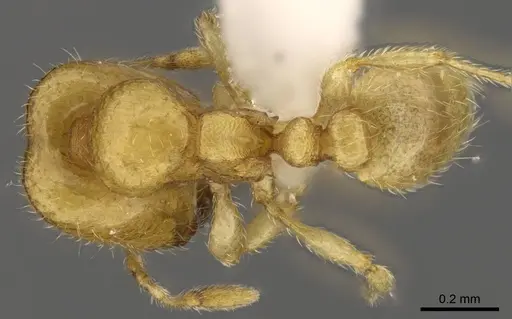
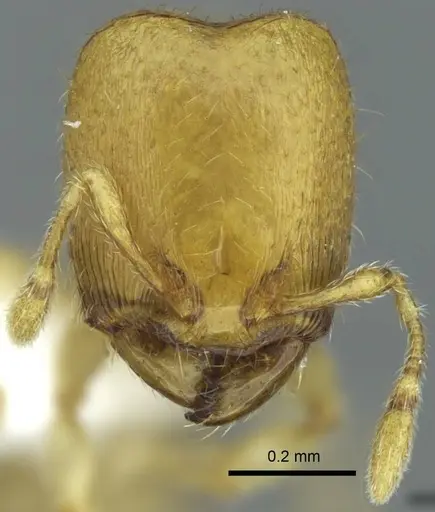
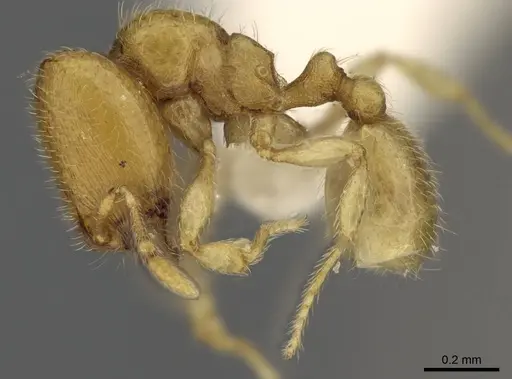
Carebara salegi is an extremely tiny ant species endemic to northern Madagascar. Major workers have a head length of 0.55mm while minor workers measure 0.34-0.38mm in head length . They have distinctive ten-segmented antennae and a yellowish ferruginous coloration. This species was described in 2018 and is known from a single location in littoral rainforest at 90 meters elevation . The species can be distinguished from the similar Carebara mahafaly by differences in head shape, propodeum structure, and hair patterns on the gaster. These ants live in leaf litter, leaf mold, and rotting wood . What makes C. salegi unusual is its complete separation between major and minor worker castes with no intermediate forms . This is relatively rare among Carebara species and suggests specialized roles within the colony. However, being a recently described species with very limited collection data, there is almost no information about their captive care requirements, colony structure, or behavior in captivity.
Quick Summary
- Difficulty: Expert
- Origin & Habitat: Northern Madagascar, specifically the littoral rainforest at Forêt d'Orangea, 90m elevation [1]. They were collected from leaf litter, leaf mold, and rotten wood using maxi-Winkler traps [1]. This is a coastal rainforest habitat in the far north of Madagascar.
- Colony Type: Unconfirmed, the colony structure has not been documented for this species.
- Size & Growth:
- Queen: Unknown, no queen has been described in the scientific literature [1]
- Worker: ~1-2mm total length, inferred from Carebara genus patterns. The context provides head measurements (HL 0.55mm for majors, 0.34-0.38mm for minors) but not full body length.
- Colony: Unknown, only 23 workers have ever been collected [1]
- Growth: Unknown
- Development: Unknown, no development data exists for this species (This is a recently described species with virtually no biological data available.)
- Antkeeping:
- Temperature: Temperature needs are unclear, based on their Madagascar littoral rainforest habitat, they likely prefer warm conditions. Start around 24-26°C and observe colony activity.
- Humidity: Keep substrate consistently moist like a forest floor, these ants live in leaf litter and rotting wood in a humid environment.
- Diapause: Unknown, as a tropical species from low elevation Madagascar, they likely do not require hibernation.
- Nesting: Naturalistic setup with fine substrate works best. They are litter-dwelling ants that naturally nest in leaf litter, leaf mold, and rotting wood. Chambers should be tiny and scaled to their minute size.
- Behavior: Behavior in captivity is unobserved. In the wild, they are collected from leaf litter using extraction methods, indicating they are surface-active and forage in the top layers of decomposing material. Given their extremely small size, they are likely preyed upon easily and may show skittish behavior. Escape prevention is critical, these are among the smallest ants in the world and can squeeze through gaps invisible to the human eye. They have a stinger typical of Myrmicinae but are too small to penetrate human skin.
- Common Issues: escape prevention is critical, these minute ants can slip through the tiniest gaps including standard mesh, no captive husbandry information exists, this is one of the least-studied ant species in the hobby, humidity control is challenging, too dry causes desiccation, too wet causes mold, virtually no colony size data makes it impossible to predict growth patterns, no confirmed food acceptance, diet in captivity is entirely unknown
Why Carebara salegi Is an Expert-Only Species
This species is not recommended for beginners. Carebara salegi was described in 2018 and represents one of the least-studied ant species available. The entire scientific knowledge base consists of 23 workers collected from a single location in northern Madagascar. There is no published information on colony structure, founding behavior, diet preferences, temperature tolerance, or any of the basic biological parameters that antkeepers rely on. You will essentially be pioneering captive husbandry with no prior guidance. This makes it an expert-level project suitable only for experienced antkeepers who have the skills to maintain very small ants under precise conditions and who can document their findings for the benefit of the hobby. [1]
Housing and Escape Prevention
Because minor workers are extremely small, standard ant keeping equipment presents serious escape risks. You must use fluon or another barrier coating on all enclosure edges, and any ventilation holes must be covered with fine mesh. Even standard test tube cotton can be too loose a barrier for these tiny ants. A small nest with tiny chambers works better than traditional setups. The foraging area should also be carefully sealed. The nest should be kept humid with a water reservoir, connected to a small foraging space. Given their natural habitat in leaf litter and rotting wood, a naturalistic setup with a fine soil substrate that can hold moisture is appropriate. [1]
Temperature and Humidity
Carebara salegi comes from the littoral rainforest of northern Madagascar at just 90m elevation, a warm, humid tropical environment. Temperature needs are unclear, based on their habitat, aim for warm conditions in the 24-26°C range. Humidity should be high, with substrate remaining consistently moist like a forest floor. Avoid both drying out the substrate and creating standing water. The key is stability, sudden temperature or humidity swings are likely stressful for these sensitive ants. [1]
Feeding and Diet
Diet in captivity is entirely unknown and must be determined through experimentation. In the wild, they have been collected from leaf litter using extraction methods, which suggests they forage for small organic particles, possibly including micro-arthropods, honeydew, or decaying material. Given their tiny size, they likely cannot take large prey items. Start by offering tiny amounts of sugar water or honey diluted with water, and observe if workers accept it. For protein, consider very small live prey such as springtails, fruit fly larvae, or other micro-arthropods of appropriate size. Remove any uneaten food within 24-48 hours to prevent mold. [1]
Understanding the Major/Minor Caste System
One interesting feature of Carebara salegi is the complete separation between major and minor worker castes, there are no intermediate forms [1]. Major workers have distinctive features including a nearly subrectangular head, six-toothed mandibles, and propodeum with small triangular teeth. Minor workers are smaller with five-toothed mandibles and their propodeum is usually unarmed or has only a small tooth. This suggests the colony has specialized castes with different roles.
Frequently Asked Questions
How long does it take for Carebara salegi to develop from egg to worker?
This is unknown. No development data exists for this species. You will need to document this yourself if you establish a colony.
Are Carebara salegi good for beginners?
No. This species is not recommended for beginners. It was described in 2018 and has virtually no available husbandry information. There is no data on colony structure, founding behavior, diet, temperature preferences, or any other parameter needed for captive care. Only experienced antkeepers should attempt this species.
What do Carebara salegi eat?
This is entirely unknown and must be experimentally determined. Based on their tiny size and leaf litter habitat, they likely accept very small prey items like springtails or micro-arthropods, and possibly sugar sources. Start with diluted honey or sugar water and tiny live prey.
Do Carebara salegi ants sting?
They have a stinger typical of Myrmicinae ants, but they are so small that it probably cannot penetrate human skin.
How big do Carebara salegi colonies get?
Unknown. Only 23 workers have ever been collected in scientific surveys. The maximum colony size in the wild is undocumented.
What is the best nest type for Carebara salegi?
A small nest with tiny chambers scaled to their minute size is appropriate. They need high humidity, so a nest with a water reservoir or the ability to maintain moist substrate is essential. A naturalistic setup with fine soil mix that holds moisture well also works given their natural leaf litter habitat.
Can I keep multiple Carebara salegi queens together?
Unknown. The colony structure has not been documented for this species. There is no information on whether multiple queens can be kept together or if they will fight.
Do Carebara salegi need hibernation?
Unknown. As a tropical species from low elevation Madagascar, they likely do not require true hibernation. However, they may show reduced activity during cooler periods.
Why are my Carebara salegi dying?
Without any husbandry data, diagnosing problems is extremely difficult. Common issues likely include: escape, improper humidity, temperature stress, and starvation. Document everything and share your findings with the antkeeping community.
When should I move Carebara salegi to a formicarium?
This depends entirely on colony size, which is unknown for this species. Given their tiny size and litter-dwelling nature, they may do best in a small test tube setup with a moist foraging area for quite some time.
Report an Issue
The current care sheet is based fully on literature. See inconsistencies, or something that's incorrect? Please , it will be resolved after review from an admin. Contributing to the blogs tab also helps providing information, to make us be able to further improve the caresheets. Thank you for your support!
References

This caresheet is licensed under CC BY-SA 4.0 .
Community Blogs
Literature
Loading distribution map...Loading products...