
Cardiocondyla tibetana
- Sci. Name
- Cardiocondyla tibetana
- Tribe
- Crematogastrini
- Subfamily
- Myrmicinae
- Author
- Seifert, 2003
- Distribution
- Found in 1 countries
Introduction
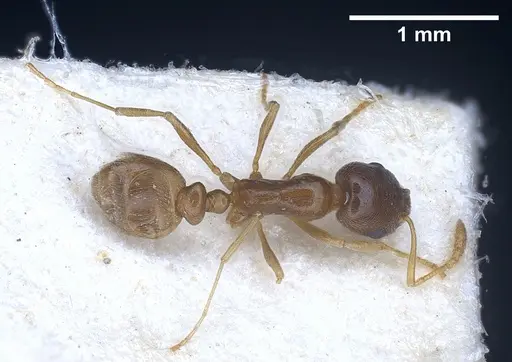
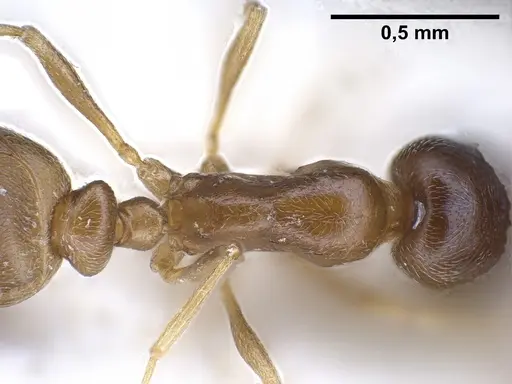
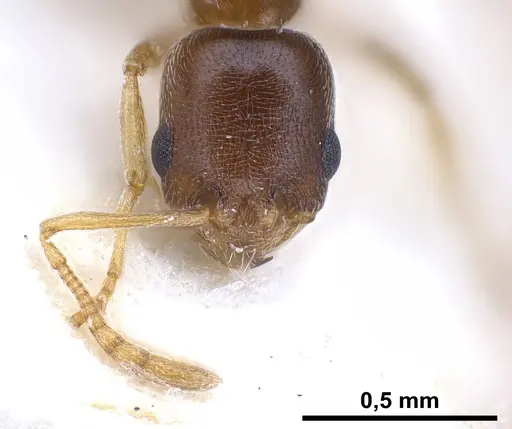
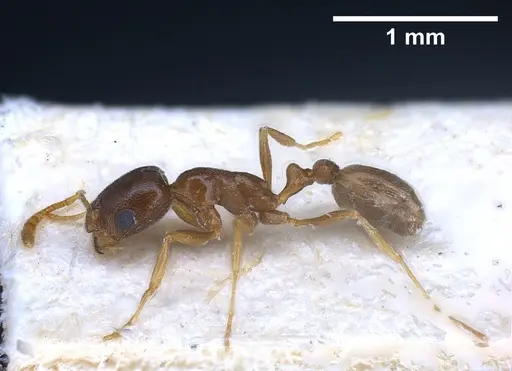
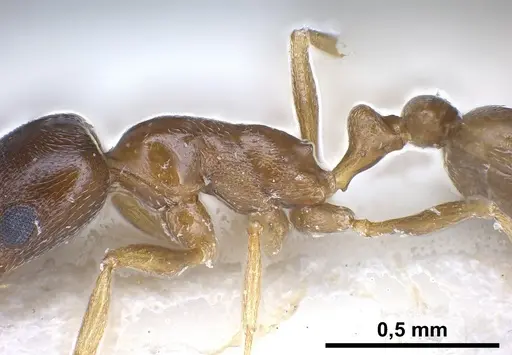
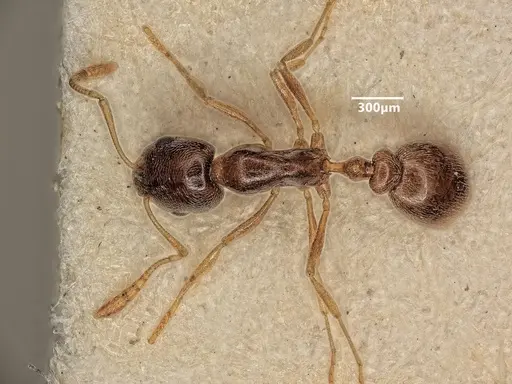
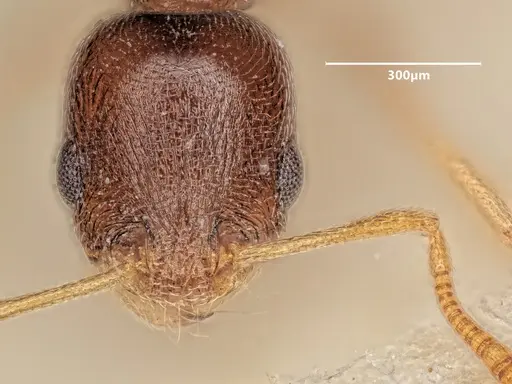
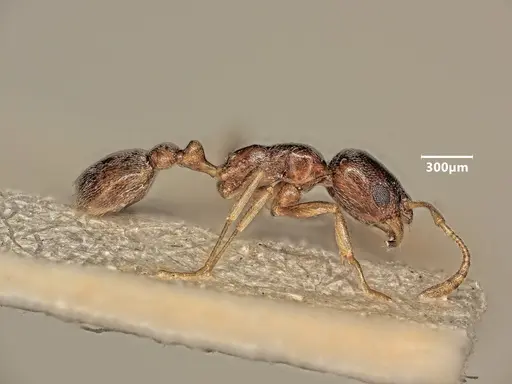
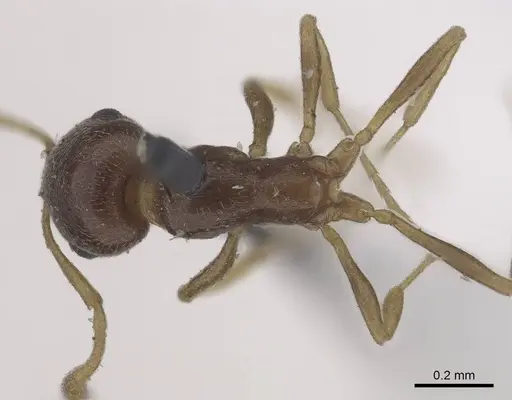
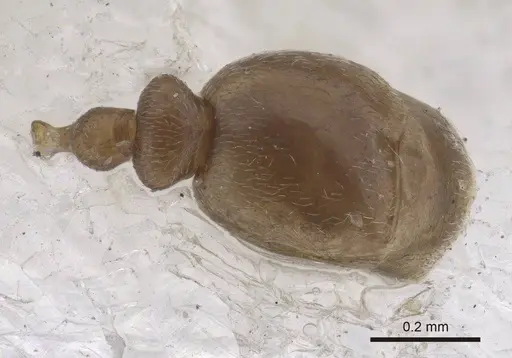
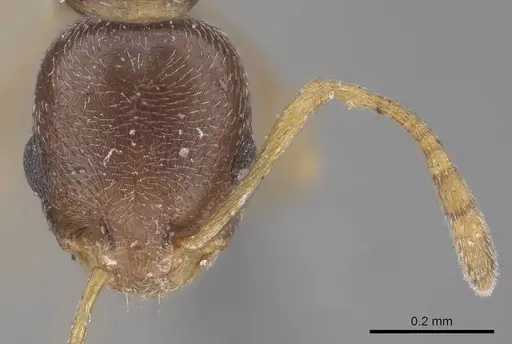
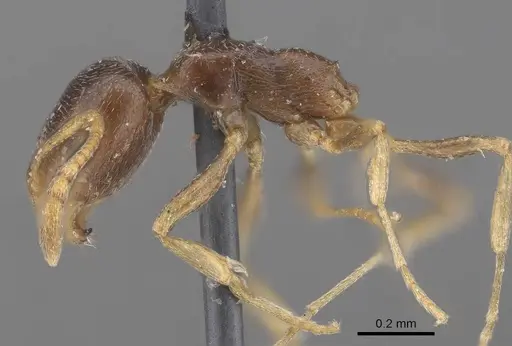
Cardiocondyla tibetana is a tiny ant species native to the Taklamakan Desert region in western China and Tibet. Workers measure approximately 1.5-2mm in total length, making them one of the smaller Cardiocondyla species . They have a distinctive appearance with a short head, relatively large eyes for their genus, and very reduced propodeal spines that appear as mere corners . The body is dark brown to blackish, with lighter yellowish appendages. This species belongs to the stambuloffii species group and was described by Seifert in 2003 . What makes C. tibetana special is its extreme habitat - these ants live in the harsh semidesert zone around the Taklamakan Desert, one of China's most arid regions. They nest in clay or loamy soil in areas occasionally flooded by the Tarim River and covered by sparse tamarisk vegetation . This is a species for experienced keepers who want a true challenge - their tiny size requires specialized equipment and careful attention to prevent escapes.
Quick Summary
- Difficulty: Expert
- Origin & Habitat: Taklamakan Desert margins in western China and Tibet. Nests found in semidesert zones with clay or loamy soil occasionally flooded by the Tarim River, covered by light tamarisk stands. Elevations 920-1366m [1].
- Colony Type: Colony structure is unconfirmed for this species.
- Size & Growth:
- Queen: Size data unavailable, no queen measurements exist in literature
- Worker: Approximately 1.5-2mm total length, inferred from Cardiocondyla genus patterns (CS 512±17 µm head measurement) [1][2]
- Colony: Unknown for this species, other Cardiocondyla species typically reach a few hundred workers
- Growth: Unknown, no direct development data exists for this species
- Development: Unconfirmed, no specific development data available for this species (Development time is unknown and cannot be reliably estimated from genus patterns alone)
- Antkeeping:
- Temperature: Keep nest at 24-28°C. These are warm-desert ants adapted to high temperatures. Provide a gentle thermal gradient so ants can self-regulate. Room temperature (20-22°C) may be too cool for optimal development.
- Humidity: Low to moderate. In nature they inhabit semiarid zones with occasional flooding. Keep nest substrate lightly moist but allow it to dry partially between waterings. Avoid constant saturation.
- Diapause: Likely required, as a temperate Palaearctic species from western China, winter diapause is probable. Reduce temperature to 10-15°C for 2-3 months during winter.
- Nesting: Y-tong (AAC) nests or small formicaria with chambers scaled to their tiny dimensions. Naturalistic setups with fine substrate also work. Avoid large, open spaces.
- Behavior: Cardiocondyla ants are generally docile and non-aggressive. Workers are small but active foragers. The main concern for keepers is their extremely small size, they can squeeze through gaps that other ants cannot. They are not known to sting and pose no danger to humans. Escape prevention is absolutely critical, use fine mesh barriers and ensure all connections are sealed.
- Common Issues: escape prevention is critical, their tiny size means they can slip through standard barrier setups, slow colony growth can frustrate keepers and lead to overfeeding or excessive disturbance, wild-caught colonies may have parasites that are difficult to detect in such small ants, test tube setups must have very small water reservoirs to prevent flooding of tiny chambers, difficulty finding appropriate prey items small enough for such minute workers
Housing and Escape Prevention
Housing Cardiocondyla tibetana presents unique challenges due to their extremely small size. Workers measure only about 1.5-2mm in total length, meaning they can escape through gaps that would hold back larger ants. Use Y-tong (AAC) nests or small formicaria with chambers scaled to their tiny dimensions. All connections must be sealed with cotton or fine mesh barriers. Fluon applied to the inner rim of the outworld is essential. Test tube setups work but require very small water reservoirs, a standard test tube can flood their tiny chambers. When setting up their outworld, ensure any gaps are smaller than 0.3mm. This species is not for beginners specifically because of the escape prevention challenge. [1]
Feeding and Diet
Like other Cardiocondyla species, C. tibetana likely has an omnivorous diet. Feed sugar water or honey water as a constant energy source. For protein, offer tiny live prey such as springtails, fruit flies, or other micro-arthropods. Their minute worker size means standard ant feeders like mealworms are too large. You may need to culture specialized feeder insects. Observe feeding behavior carefully, tiny workers may struggle with prey items larger than themselves. Feed protein 2-3 times per week and provide sugar water continuously. Remove uneaten prey within 24 hours to prevent mold.
Temperature and Seasonal Care
As inhabitants of the Taklamakan Desert region, these ants prefer warmer temperatures. Keep the nest at 24-28°C with a gentle gradient allowing workers to move between warmer and cooler areas. A small heating cable on one side of the nest can help maintain optimal temperatures. During winter, provide a diapause period of 2-3 months at 10-15°C to simulate their natural seasonal cycle. This species is adapted to harsh desert conditions with extreme temperature variations, so they are more tolerant of warmth than many other ants. However, avoid temperatures above 32°C unless you also provide high humidity. [1]
Colony Establishment
Establishing a colony of this species requires patience. If acquiring a queen, founding behavior is unconfirmed for this species. The first workers, called nanitics, will be extremely tiny. Do not disturb the founding chamber until workers have emerged and settled. Colony growth will be slow, expect several months before you have more than a dozen workers. This species is rarely available in the antkeeping hobby due to its remote distribution and difficulty in collection. If you obtain wild-caught specimens, quarantine them and watch for parasites, as tiny ants often harbor microscopic parasites that can decimate colonies. [1]
Frequently Asked Questions
How long does it take for Cardiocondyla tibetana to develop from egg to worker?
Exact development time is unconfirmed for this species. No specific development data exists in the literature.
Are Cardiocondyla tibetana ants good for beginners?
No. This is an expert-level species due to their extremely tiny size. Escape prevention is critically difficult, and standard antkeeping equipment is often inadequate. They require specialized setups and careful attention. Consider starting with larger, more forgiving species first.
What do Cardiocondyla tibetana ants eat?
They likely accept sugar sources (honey water, sugar water) and tiny protein prey like springtails, fruit flies, and other micro-arthropods. Standard feeder insects are too large for their tiny workers. Feed protein 2-3 times weekly and provide sugar water constantly.
Do Cardiocondyla tibetana ants sting?
No. Cardiocondyla ants do not have a functional stinger large enough to penetrate human skin. They are completely harmless to humans.
How big do Cardiocondyla tibetana colonies get?
Maximum colony size is unconfirmed. Based on typical Cardiocondyla genus patterns, colonies likely reach a few hundred workers at most. They are not large colony formers.
What temperature do Cardiocondyla tibetana ants need?
Keep nest temperatures at 24-28°C. These are warm-desert ants from the Taklamakan Desert region. Provide a thermal gradient so ants can self-regulate. Room temperature alone may be too cool for optimal development.
Do Cardiocondyla tibetana ants need hibernation?
Yes, likely a winter diapause of 2-3 months at 10-15°C. As a Palaearctic species from temperate western China, they likely require a seasonal temperature drop to trigger natural cycles. Reduce temperatures gradually in autumn.
Can I keep multiple Cardiocondyla tibetana queens together?
Colony structure is unconfirmed for this species. Combining unrelated queens is not recommended as it has not been documented for this specific species.
Why are my Cardiocondyla tibetana ants escaping?
Their tiny size means they can squeeze through gaps other ants cannot. Use fine mesh barriers, apply Fluon to rim edges, and check all connections for gaps smaller than 0.3mm. Standard ant keeping equipment is often inadequate for this species.
When should I move Cardiocondyla tibetana to a formicarium?
Wait until the colony has at least 50-100 workers before moving to a formicarium. Their tiny size means they do better in small, tight chambers initially. Test tube colonies can be maintained long-term. Only upgrade when the colony clearly outgrows its current setup.
Report an Issue
The current care sheet is based fully on literature. See inconsistencies, or something that's incorrect? Please , it will be resolved after review from an admin. Contributing to the blogs tab also helps providing information, to make us be able to further improve the caresheets. Thank you for your support!
References

This caresheet is licensed under CC BY-SA 4.0 .
Community Blogs
Literature
Loading distribution map...Loading products...