
Cardiocondyla sahlbergi
- Sci. Name
- Cardiocondyla sahlbergi
- Tribe
- Crematogastrini
- Subfamily
- Myrmicinae
- Author
- Forel, 1913
- Distribution
- Found in 4 countries
Introduction
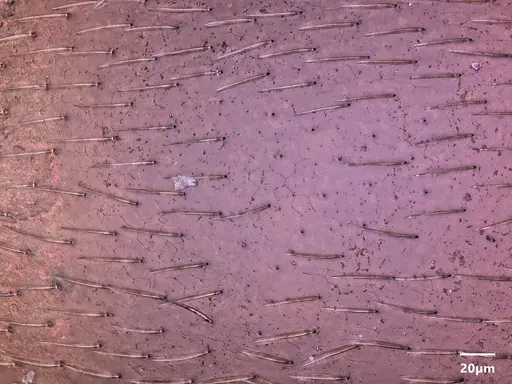
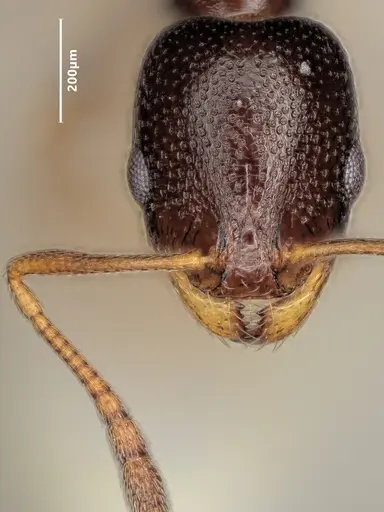
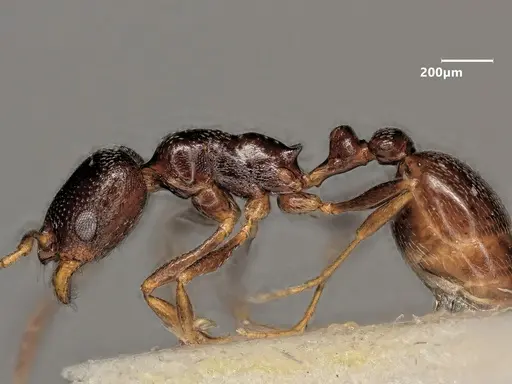
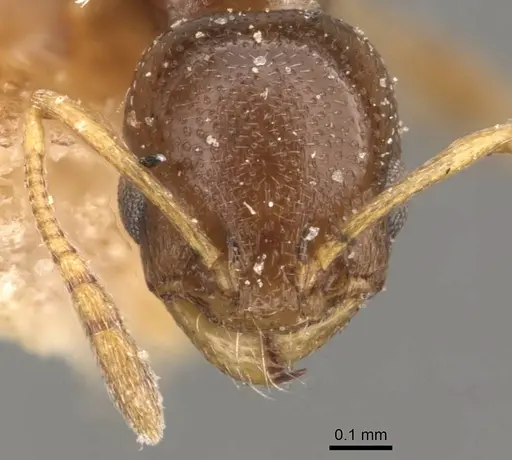
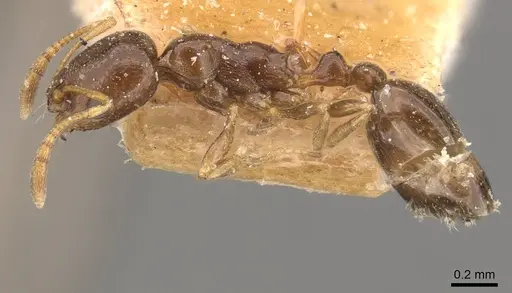
Cardiocondyla sahlbergi is a very small, dark brown ant with paler yellowish-brown mandibles, antennae, and legs . Workers have a relatively long head with shallow pits (foveolae) on the head, mesosoma, and waist . This species belongs to the Cardiocondyla bulgarica group and is part of a Palaearctic clade where males are always ergatoid (wingless) - a rare trait in ants . It is known from a broad range across the Palaearctic, from the Caucasus and Turkey through Iran to Kyrgyzstan, and from lowlands (29 m below sea level in the Caspian region) to high elevations up to 2000 m in southern Iran . Despite its wide distribution, very little is known about its biology or captive care, and most information is inferred from related species and its natural habitat.
Quick Summary
- Difficulty: Medium
- Origin & Habitat: Native to the Palaearctic region including Turkey, Caucasus (Armenia, Azerbaijan, Georgia), Iran, Israel, Afghanistan, Kazakhstan, Kyrgyzstan, and Uzbekistan [4][5][6]. Found in montane grassland edges with moderate rainfall, where workers forage on the ground [7]. Altitudinal range from -29 m (Caspian region) to 2000 m (southern Iran) [4].
- Colony Type: Queen number is not documented [2]. The genus is known for having ergatoid (wingless) replacement queens that can take over if the primary queen dies [2]. Colony structure is otherwise unconfirmed.
- Size & Growth:
- Queen: Exact body length not documented, head capsule width ~0.6 mm from morphometric data [1]. Overall very small.
- Worker: Exact body length not documented, head capsule width ~0.52 mm [4]. Very small, requiring fine mesh for escape prevention.
- Colony: Unknown, not documented. Likely under a few hundred workers based on typical Cardiocondyla genus patterns.
- Growth: Unknown, no data available.
- Development: Unknown, no documented development time for this species. (Development time has not been studied. Expect slow growth typical of small myrmicine ants.)
- Antkeeping:
- Temperature: Natural habitat spans a wide elevation range (-29 m to 2000 m), suggesting tolerance to varied temperatures [4]. Room temperature (20–24°C) is likely suitable. Provide an unobstructed temperature gradient within the nest setup.
- Humidity: Keep the nest substrate moderately moist but not waterlogged. The wild habitat includes montane grassland edges with moderate rainfall [7]. Avoid both full dryness and wet conditions.
- Diapause: Unknown, no data on overwintering requirements. Given the wide distribution, a winter cooling period may not be strictly required but could be beneficial if colony activity drops during colder months.
- Nesting: Use test tubes for founding. For established colonies, small Y-tong (AAC), plaster, or soil nests with narrow chambers are best. Avoid large open spaces. Cover all ventilation holes with fine mesh (0.2 mm or finer) to prevent escapes.
- Behavior: These ants are not aggressive and pose no danger to keepers. They use a modified stinger to smear venom (typical of the Crematogastrini tribe) rather than inject it. Workers forage individually on the ground. The genus is notable for ergatoid (wingless) males that mate inside the nest [2]. Escape risk is extreme due to their tiny size.
- Common Issues: escape prevention is critical – their tiny head size (~0.5 mm) means they can squeeze through nearly invisible gaps, use fine mesh and tight seals., limited care information means husbandry is experimental – most data is inferred from genus patterns., overfeeding can quickly lead to mold and dead prey because the colony is very small., slow colony growth may cause keeper impatience, avoid disturbing the nest frequently., tiny size makes direct observation and health checks difficult without magnification.
Housing and Nest Setup
Start a new colony in a standard test‑tube setup with a water reservoir and cotton plug. Because workers are extremely small, the cotton must be packed tightly to prevent drowning. Once the colony outgrows the test tube, move them to a Y‑tong (AAC), plaster, or soil nest with narrow chambers – avoid large, open spaces. Ventilation holes must be covered with mesh no coarser than 0.2 mm to prevent escapes. Always apply a barrier of fluon or mineral oil around the outworld edges. [4][7]
Feeding and Diet
These ants are probably omnivorous. Offer small protein sources such as fruit flies, pinhead crickets, or tiny mealworm pieces. Provide a constant sugar source (honey water or sugar water). Feed small protein portions 2–3 times per week, remove uneaten food after 24–48 h to prevent mold. Because the colony is tiny, portion sizes should be minuscule – one fruit fly or a fragment of mealworm is enough.
Temperature and Seasonal Care
Maintain room temperature (20–24 °C). Their natural elevational range from –29 m to 2000 m [4] suggests wide temperature tolerance. Provide a gentle gradient so ants can choose their preferred zone. If you attempt a winter cool‑down (optional, since diapause is undocumented), reduce to 15–18 °C for 2–3 months and only if the colony is well‑established. Avoid sudden temperature swings.
Behavior and Colony Dynamics
Cardiocondyla sahlbergi belongs to a genus where males are always ergatoid (wingless) and mate inside the nest [2]. This means no nuptial flights occur – new queens and males reproduce within the mother colony. Workers are docile and forage individually on the ground. They use a smear‑type venom (typical of Crematogastrini) but are harmless to humans. Colony structure is not well studied, but ergatoid replacement queens may be present.
Handling and Observation
Due to their minute size, handle colonies slowly and carefully. Use red light or dim conditions to minimize stress. A stereomicroscope or magnifying lens helps with observation. Their dark brown body with pale legs and antennae distinguishes them from other tiny ants. Always double‑check escape barriers after any maintenance. [1]
Frequently Asked Questions
How long does it take for Cardiocondyla sahlbergi to produce first workers?
This is not documented. Based on related Cardiocondyla species, development may take several weeks at warm temperatures, but no reliable estimate exists.
Can I keep multiple Cardiocondyla sahlbergi queens together?
Queen number is unknown [2], so combining queens is not recommended. There is no evidence that this species can found colonies together.
Do Cardiocondyla sahlbergi ants sting?
They use a modified stinger to smear venom (typical of Crematogastrini) rather than inject it. They are harmless to humans and do not cause pain.
What do I feed Cardiocondyla sahlbergi?
Offer tiny protein sources like fruit flies, pinhead crickets, or small mealworm pieces, and keep sugar water available. Remove uneaten food after 24–48 hours.
Are Cardiocondyla sahlbergi good for beginners?
They are rated Medium difficulty. Their tiny body size makes escape prevention challenging, and limited care information exists. Better suited for keepers with some experience.
Do Cardiocondyla sahlbergi need hibernation?
Diapause requirements are unconfirmed. Given their wide distribution, a winter cooling period (15–18°C for 2–3 months) may be attempted but is not strictly necessary. No harm in skipping it.
How big do Cardiocondyla sahlbergi colonies get?
Not documented. Based on genus patterns, colonies probably stay under a few hundred workers.
Why are my Cardiocondyla sahlbergi escaping?
Their tiny head width (~0.5 mm) allows them to slip through extremely small gaps. Use fine mesh (0.2 mm or finer), tight seals, and barrier treatments like fluon.
When should I move my colony to a formicarium?
Keep them in a test tube until it becomes obviously crowded (e.g., workers spilling into the outworld). They prefer cramped spaces, so delay moving as long as possible.
Report an Issue
The current care sheet is based fully on literature. See inconsistencies, or something that's incorrect? Please , it will be resolved after review from an admin. Contributing to the blogs tab also helps providing information, to make us be able to further improve the caresheets. Thank you for your support!
References

This caresheet is licensed under CC BY-SA 4.0 .
Community Blogs
ANTWEB1048534
View on AntWeb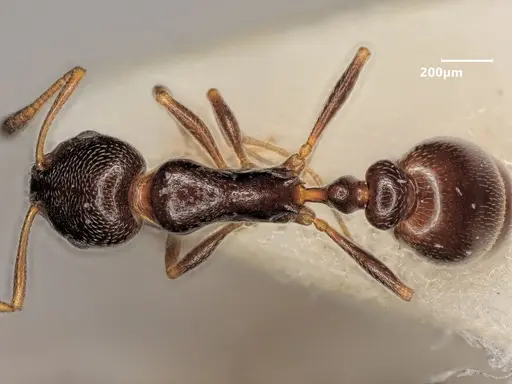
CASENT0908341
View on AntWeb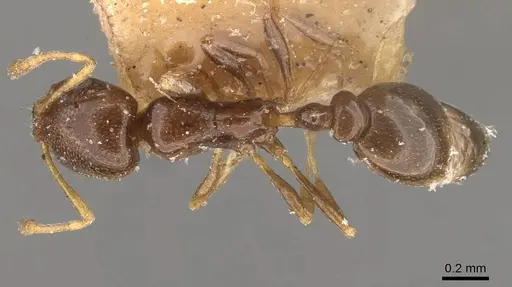
Literature
Loading distribution map...Loading products...