
Cardiocondyla goa
- Sci. Name
- Cardiocondyla goa
- Tribe
- Crematogastrini
- Subfamily
- Myrmicinae
- Author
- Seifert, 2003
- Distribution
- Found in 1 countries
Introduction
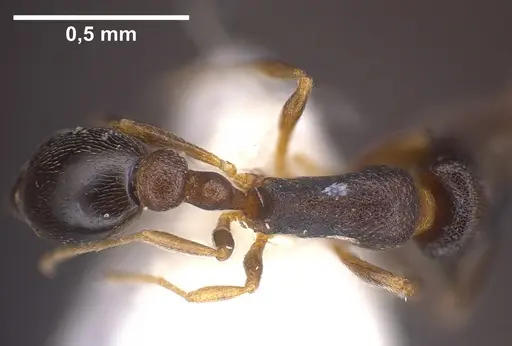
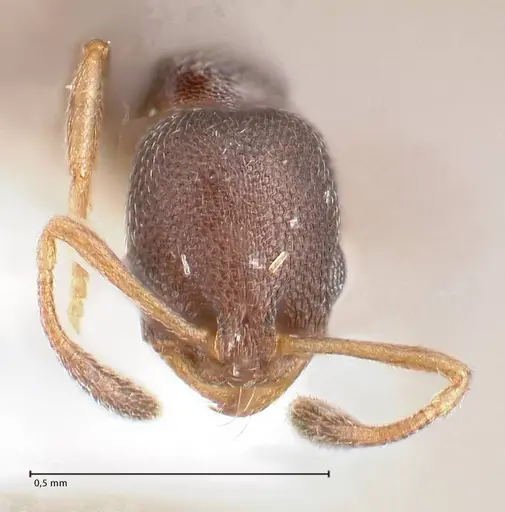
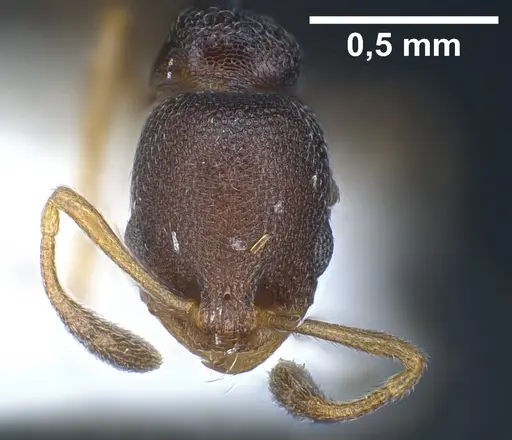
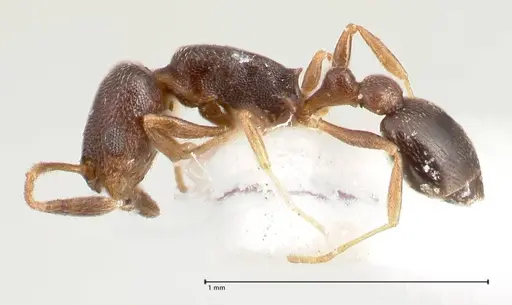
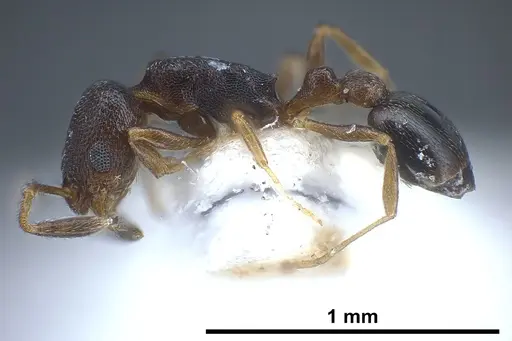
Cardiocondyla goa is a tiny ant species native to India, belonging to the Cardiocondyla minutior species group. They are one of the smallest ants, with workers about 2 mm total length (size inferred from related species; precise data unavailable). Their heads are elongated relative to width, with short antennae and small eyes . Coloration varies from dirty yellowish to dark brown, with the gaster nearly blackish brown . This species is endemic to India (Goa, Karnataka, Kerala) but also occurs in Nepal and parts of the Middle East in strictly tropical climates . What makes Cardiocondyla goa interesting is its social structure. Unlike many ants with a single queen, colonies contain multiple fertile queens (polygyne) . Also, both wingless (ergatoid) males and winged males stay in the natal nest to mate with females, avoiding nuptial flights .
Quick Summary
- Difficulty: Medium
- Origin & Habitat: Cardiocondyla goa originates from tropical India (Goa, Karnataka, Kerala) and adjacent regions, inhabiting disturbed ground near paths and gardens. Its range extends from approximately 23°S to 30°N latitude and 40°E to 97°E longitude, reaching Nepal up to 1500 m elevation [1].
- Colony Type: Multi-queen colonies (polygyne). Colonies contain several fertile queens that coexist in the same nest. Both ergatoid (wingless) and winged males stay in the natal nest to mate rather than dispersing [1].
- Size & Growth:
- Queen: Precise total length not reported, queens are slightly larger than workers, roughly 2-3 mm inferred from related Cardiocondyla species.
- Worker: Precise total length not reported, workers are tiny, roughly 2 mm inferred from related Cardiocondyla species.
- Colony: Under a few hundred workers [1].
- Growth: Moderate
- Development: Unconfirmed, based on related Cardiocondyla species, estimated 6-8 weeks at 24-28°C. (Inferred from genus patterns, no direct data for this species.)
- Antkeeping:
- Temperature: Maintain at 24-28°C, based on their strictly tropical climate [1]. Use a heating cable on the nest if room temperature drops below 22°C.
- Humidity: Moderate to high. Keep nest substrate consistently moist but not waterlogged, replicating their natural ground-nesting habitat.
- Diapause: No, strictly tropical species, no hibernation needed [1].
- Nesting: Small ground-nesting ants. Use a Y‑tong (AAC) or plaster nest with small, tight chambers scaled to their tiny size. Provide several chambers for multiple queens.
- Behavior: Generally calm and docile. Workers forage individually. Escape prevention is critical due to their tiny size, they can slip through very small gaps. Their stinger is modified for smearing venom, not piercing, so they cannot sting keepers.
- Common Issues: escape prevention is critical due to tiny size, they can slip through gaps that seem impossible., tropical temperature requirements mean a heating setup may be necessary if your room is cool., small colony size leaves less margin for keeper mistakes during development., maintaining consistent humidity without waterlogging can be tricky in small nests., multiple queens generally coexist peacefully, but provide enough space for them.
Housing and Nest Setup
Cardiocondyla goa is a tiny ground-nesting ant that needs appropriately scaled housing. A Y‑tong (AAC) nest or plaster formicarium with small, tight chambers works best. Because they are polygyne (multiple queens [1]), ensure the nest has enough chambers (e.g.,4-6 small rooms) to accommodate several queens without excessive competition. A test tube setup can work for founding colonies, but monitor humidity carefully. For the outworld, a simple plastic container with smooth walls works since they are not strong climbers. Escape prevention must be excellent, use fine mesh on ventilation holes and ensure lid seals are tight.
Feeding and Diet
Based on genus patterns, Cardiocondyla goa likely eats small insects and honeydew. Offer tiny protein sources such as fruit flies, small mealworms, or small cricket pieces, prey should be no larger than a worker's head. Provide sugar water or diluted honey as a constant energy source. Feed protein roughly twice weekly, adjusting based on consumption. Remove uneaten prey after 24-48 hours to prevent mold.
Temperature and Seasonal Care
As a strictly tropical species, Cardiocondyla goa needs warm temperatures year-round [1]. Keep the nest area at 24-28°C to support brood development and colony activity. They do not require hibernation. If your room temperature falls below 22°C, use a heating cable on top of the nest (not underneath) to create a warm gradient. Monitor that the nest does not dry out from the heat. Avoid temperature fluctuations and drafts.
Colony Structure and Multi-Queen Dynamics
Cardiocondyla goa naturally forms polygyne colonies, multiple queens live and reproduce together in the same nest [1]. In the wild, colonies contain several fertile queens. When keeping this species, you may receive a colony with multiple queens already established. Unlike many species where multiple queens fight, these queens coexist peacefully. The presence of both ergatoid (wingless) males and winged males in colonies is normal, these males stay in the nest rather than dispersing to mate [1].
Behavior and Observation
These ants are calm and not aggressive toward keepers. Workers forage individually rather than forming large trails. You may observe both winged males and wingless ergatoid males in established colonies, this is normal for Cardiocondyla and represents their unique mating system [1]. Workers can appear slow compared to faster ants. Because of their tiny size and dark coloration, they can be hard to spot in the nest. Queens are only slightly larger than workers, so distinguishing them can be challenging. Their modest activity makes them interesting observation ants, though not visually dramatic like larger species.
Frequently Asked Questions
How long does it take for Cardiocondyla goa to produce first workers?
This has not been directly studied. Based on related Cardiocondyla species, expect about 6-8 weeks from egg to worker at optimal tropical temperatures (24-28°C).
Can I keep multiple Cardiocondyla goa queens together?
Yes, this species is naturally polygyne, meaning multiple queens live together in one colony. Wild colonies contain several fertile queens [1]. You can keep them together without the aggression seen in monogyne species.
Do Cardiocondyla goa ants sting?
They do not sting in the typical sense. Their stinger is modified for smearing venom, not piercing flesh. They pose no danger to keepers.
What temperature do Cardiocondyla goa ants need?
Keep them warm at 24-28°C. As strictly tropical ants from India, they need consistent warmth year-round and do not tolerate cool temperatures. A heating cable may be needed in cooler rooms [1].
Are Cardiocondyla goa good for beginners?
They are moderate difficulty. While docile and small, their tropical temperature needs and tiny size demand careful escape prevention and heating. Not the easiest for complete beginners, but manageable with proper research.
How big do Cardiocondyla goa colonies get?
Based on their small nest size in the wild, colonies likely remain under a few hundred workers. They are not among the large colony-forming species [1].
Do Cardiocondyla goa need hibernation?
No, as a strictly tropical species from India, they do not require hibernation. Maintain warm temperatures year-round [1].
Why are there wingless males in my colony?
This is normal for Cardiocondyla. Both winged and wingless (ergatoid) males occur, and both stay in the natal nest to mate rather than dispersing. It is a unique trait of the genus [1].
What do Cardiocondyla goa eat?
Offer small protein sources like fruit flies, tiny mealworms, or small cricket pieces. Provide sugar water or diluted honey as a constant energy source. Make sure food pieces are sized appropriately for their tiny body.
How do I prevent Cardiocondyla goa from escaping?
Escape prevention is critical due to their very small size. Use fine mesh on all ventilation, ensure lids seal tightly, and check for any tiny gaps. A fluon barrier on container rims can help.
Report an Issue
The current care sheet is based fully on literature. See inconsistencies, or something that's incorrect? Please , it will be resolved after review from an admin. Contributing to the blogs tab also helps providing information, to make us be able to further improve the caresheets. Thank you for your support!
References

This caresheet is licensed under CC BY-SA 4.0 .
Community Blogs
FOCOL0733
View on AntWeb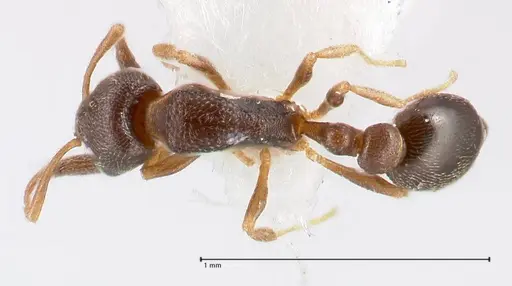
Literature
Loading distribution map...Loading products...