
Camponotus yamaokai
- Sci. Name
- Camponotus yamaokai
- Subgenus
- Myrmamblys
- Tribe
- Camponotini
- Subfamily
- Formicinae
- Author
- Terayama & Satoh, 1990
- Distribution
- Found in 2 countries
Introduction
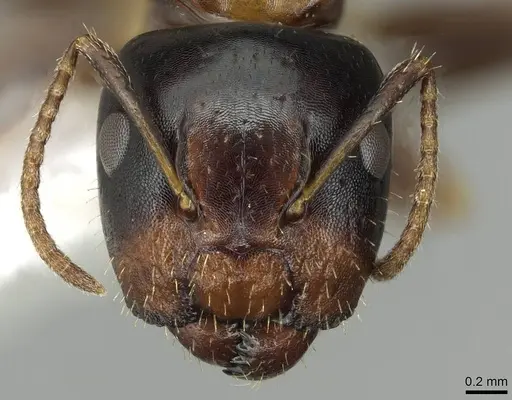
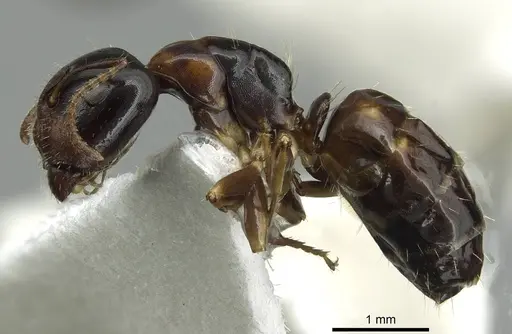
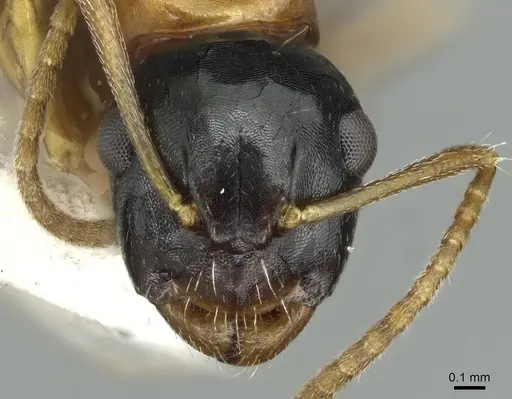
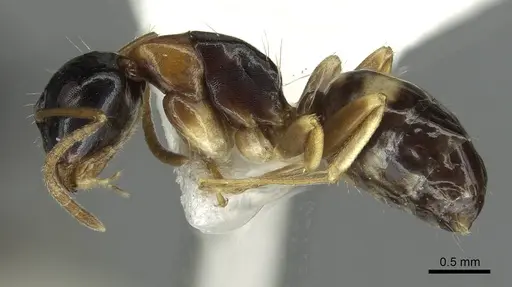
Camponotus yamaokai is a small, arboreal carpenter ant native to Japan (Honshu, Shikoku, Kyushu, Yaku Island) and southern Korea . Workers are 3.5-4.5 mm long, with a mostly black body, reddish‑brown pronotum, brown legs, and a pair of whitish spots on the first two abdominal segments (the spots vary in size) . They look very similar to Camponotus nawai, but you can tell them apart by their more prominent eyes and proportionally smaller head . What makes C. yamaokai especially interesting is its flexible social life. It is facultatively polygynous - colonies can have a single queen or up to 19 queens living together peacefully . Some populations even form supercolonies, where many nests act as one big colony and show no aggression toward each other . New queens overwinter inside the nest and leave to start new colonies during May .
Quick Summary
- Difficulty: Easy
- Origin & Habitat: Japan (Honshu, Shikoku, Kyushu, Yaku Island) and southern Korea. Found in evergreen broad‑leaved forests and deciduous broad‑leaved thickets. Nests in dead twigs on trees and inside bamboo cavities [1][2][3][4].
- Colony Type: Facultatively polygynous, single‑queen or multi‑queen colonies (1-19 queens documented) [3]. Some populations are supercolonial, where multiple nests share workers and queens with no aggression [3]. High relatedness within nests (over 0.75) due to inbreeding and queen adoption [3].
- Size & Growth:
- Queen: Estimated 6-8 mm, inferred from typical Camponotus queen sizes (not directly measured).
- Worker: 3.5-4.5 mm [1]
- Colony: Up to about 1,150 workers (983 minor + 173 major in largest wild nest) [3]
- Growth: Moderate
- Development: Inferred 6-10 weeks at 22-26°C, based on typical Camponotus development. (Direct measurements are not available for this species.)
- Antkeeping:
- Temperature: Keep at 20-26°C. Room temperature (~22°C) works well. For short periods they can handle 18-28°C. Inferred from their temperate origin, not directly tested.
- Humidity: Keep the nest on the drier side. This is an arboreal species that nests in dead twigs, so avoid soaking the nest. Provide a moisture gradient: one corner lightly damp, the rest dry. Good ventilation helps.
- Diapause: Yes, this temperate species needs winter hibernation. Queens overwinter in the nest [1]. Exact duration unknown, but a standard temperate hibernation of 2-4 months at 5-10°C (November-February) is recommended. Reduce temperature gradually.
- Nesting: Arboreal: dead twigs and bamboo cavities in the wild [1][4]. In captivity, Y‑tong (AAC), plaster, or 3D‑printed nests work well. Use narrow chambers scaled to their small size. Both horizontal and vertical orientations are accepted.
- Behavior: Calm and non‑aggressive toward keepers. Lacks a functional sting, defends by biting and spraying formic acid (subfamily Formicinae, tribe Camponotini). Workers are small (3.5-4.5 mm), so effective escape barriers are essential. They are moderate foragers, mostly active at dawn/dusk. Colonies within a supercolonial population show low aggression toward each other, this is normal, not a sign of illness [3].
- Common Issues: skipping hibernation may reduce colony health and reproduction, this temperate species needs a cold rest period., overwatering the nest can cause mold and stress, aim for drier conditions with a moisture gradient., their small size means they can slip through tiny gaps, use fine mesh or oil barriers., multi‑queen colonies can be sensitive to disturbance during founding, handle them gently during the first weeks., Camponotus yamaokai virus has been found in all castes and life stages [5], though its effect on captive colonies is unknown, it’s something to be aware of if acquiring from multiple sources.
Housing and Nest Setup
Camponotus yamaokai naturally nests in dead twigs and bamboo cavities [1][4]. In captivity, they adapt well to Y‑tong (AAC), plaster, or 3D‑printed nests with narrow chambers. Test tubes work for founding colonies, but upgrade to a nest with small chambers once the colony reaches about 50 workers. Avoid large, open spaces, these ants prefer snug, twig‑like corridors. Place the nest in a quiet, dim area away from direct sunlight and strong vibrations. Good ventilation is important to keep the nest on the drier side.
Feeding and Diet
C. yamaokai accepts a standard ant diet. Offer sugar sources (sugar water, honey, maple syrup) and protein (small insects like fruit flies, tiny crickets, mealworms, or frozen insect pieces). Feed protein 2-3 times per week and keep sugar water available constantly. Remove uneaten prey after 24-48 hours to stop mold. As a small species, cut prey into tiny pieces sized for 3.5-4.5 mm workers.
Temperature and Seasonal Care
Maintain 20-26°C for active growth. Room temperature (~22°C) is ideal. Brief excursions to 18°C or 28°C are tolerated, but avoid extended periods above 30°C or below 15°C. During winter, this temperate species needs hibernation, lower the temperature to 5-10°C for 2-4 months (typically November-February). Queens overwinter in the nest naturally [1]. Do not skip hibernation, it supports colony health and future reproduction. Adjust temperature gradually over a week or two.
Colony Structure and Multi‑Queen Care
This species is facultatively polygynous: a colony can have 1 queen or up to 19 queens, all living together peacefully [3]. Some populations form supercolonies where multiple nests share workers without aggression [3]. High relatedness within nests (over 0.75) comes from inbreeding and queens being adopted by existing colonies [3]. If you want to keep multiple queens together, let them settle during founding without disturbance. Single‑queen colonies are simpler for beginners. Note that the exact founding method is unconfirmed, do not assume claustral or semi‑claustral.
Behavior and Handling
C. yamaokai is calm and rarely bothersome to keepers. Like all Formicinae, they lack a functional sting, their main defense is biting and spraying formic acid into the bite wound. Workers are small, so secure all connections with fine mesh or oil barriers. They forage moderately, mostly at dawn or dusk. Colonies from the same supercolony show little aggression to each other, this is normal, not a sign of illness [3]. They do not need special handling, just avoid crushing them when moving nest parts.
Frequently Asked Questions
Can I keep Camponotus yamaokai in a test tube?
Yes, test tubes work well for founding colonies. Use a small diameter tube with a water reservoir at the back. When the colony reaches about 50 workers, move them to a Y‑tong or plaster nest with small chambers.
How long until first workers appear?
Based on typical Camponotus development, expect the first workers (nanitics) around 6-10 weeks after the queen lays eggs, assuming temperatures around 22-26°C. This is an estimate, direct data for this species are lacking.
Do Camponotus yamaokai need hibernation?
Yes, this temperate species needs winter hibernation. Keep them at 5-10°C for 2-4 months (November-February). This mimics the natural overwintering of queens in the nest [1] and is important for long‑term colony health.
Can I keep multiple queens together?
Yes, this species is facultatively polygynous. In the wild, nests have been found with up to 19 queens living together [3]. They usually coexist peacefully in captivity too. Single‑queen colonies are simpler, but multi‑queen colonies are possible.
How big do colonies get?
The largest wild nest recorded held about 1,150 workers (983 minors + 173 majors) [3]. In captivity, most colonies will top out at a few hundred workers, depending on how much space and food you give them.
What do Camponotus yamaokai eat?
They eat sugar sources (honey, sugar water, maple syrup) and protein (small insects like fruit flies, mealworms, or tiny cricket pieces). Offer protein 2-3 times per week and keep sugar water available always.
Are Camponotus yamaokai good for beginners?
Yes, this is an easy species. They are calm, not fussy about conditions, and their flexible social structure makes them interesting. Just remember they need hibernation and prefer a drier nest. Their small size means escape barriers are a must.
What temperature do they need?
Keep them at 20-26°C for active growth. Room temperature (~22°C) is ideal. Avoid prolonged exposure above 30°C or below 15°C during the active season.
When should I move them to a formicarium?
Move them when the test tube becomes crowded, typically around 50-100 workers. Choose a nest with chambers sized for 3.5-4.5 mm workers. Y‑tong or plaster nests work well. Provide a gradual transition by connecting the test tube to the new nest.
Report an Issue
The current care sheet is based fully on literature. See inconsistencies, or something that's incorrect? Please , it will be resolved after review from an admin. Contributing to the blogs tab also helps providing information, to make us be able to further improve the caresheets. Thank you for your support!
References

This caresheet is licensed under CC BY-SA 4.0 .
Community Blogs
CASENT0913701
View on AntWeb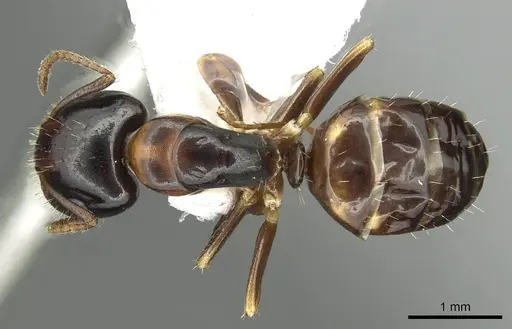
CASENT0913702
View on AntWeb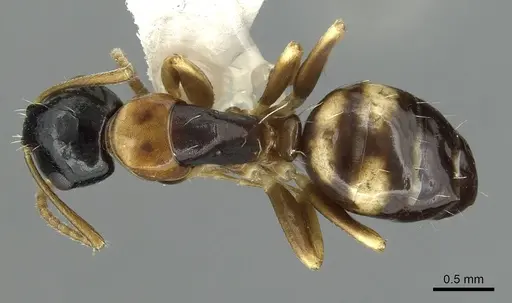
Literature
Loading distribution map...Loading products...