
Camponotus trepidulus
- Sci. Name
- Camponotus trepidulus
- Subgenus
- Myrmaphaenus
- Tribe
- Camponotini
- Subfamily
- Formicinae
- Author
- Creighton, 1965
- Distribution
- Found in 2 countries
Introduction
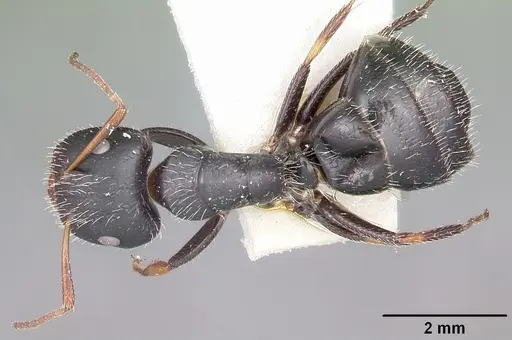
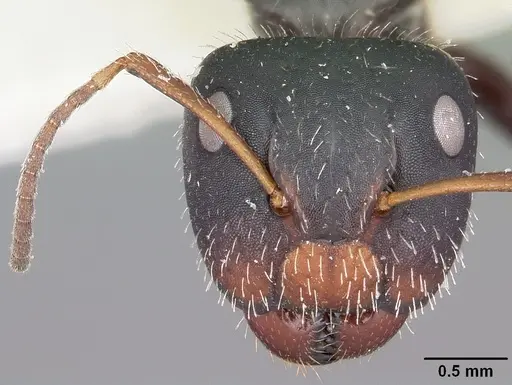
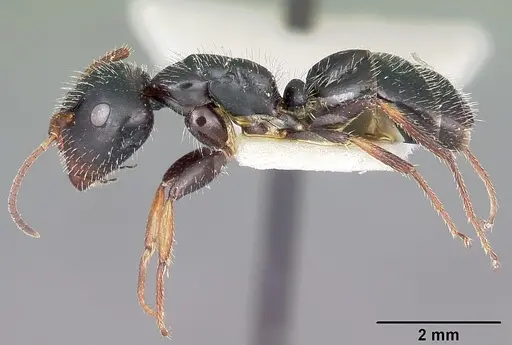
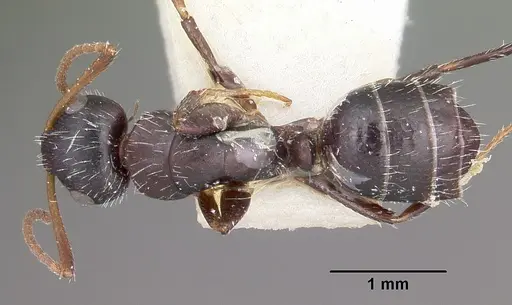
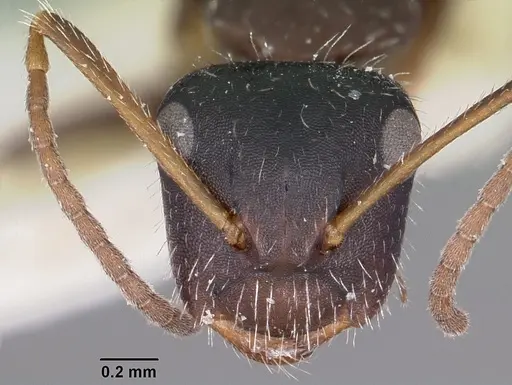
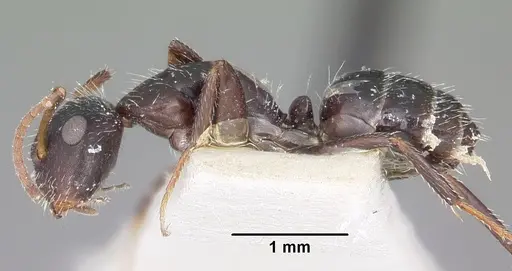
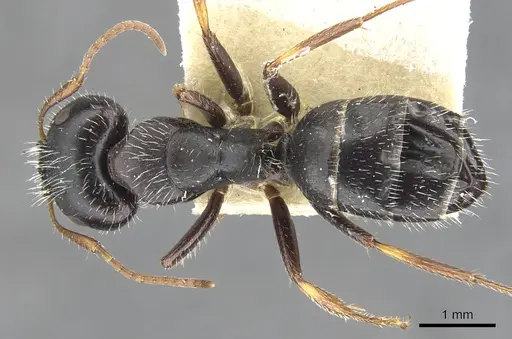
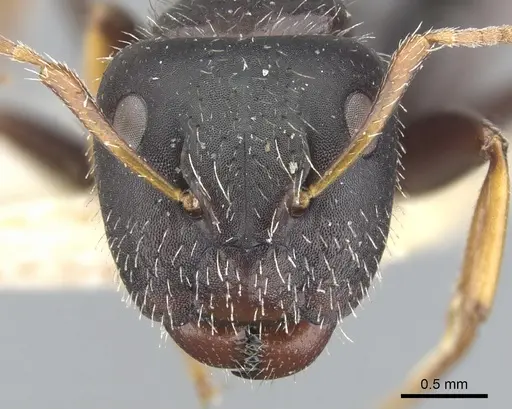
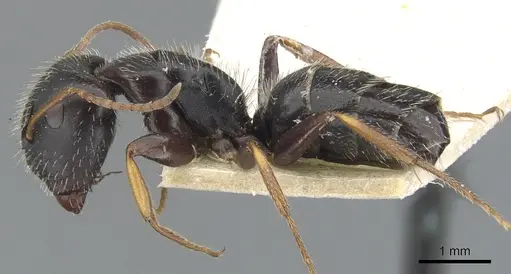
Camponotus trepidulus is a medium-sized ant from the southwestern United States and northwestern Mexico. Workers show a distinct major-minor (caste) system typical of the genus. They have a low, fully rounded propodeal angle and a rectangular petiole in profile with a flattened top . The species nests in dead limbs of oak (Quercus oblongifolia) and has also been found in tunnels of Ailanthus wood . Their range covers oak woodlands in Arizona (USA) and Baja California (Mexico), with additional records from Aguascalientes state . As a member of the subgenus Myrmobrachys, they are wood-nesting ants adapted to semi-arid habitats.
Quick Summary
- Difficulty: Medium
- Origin & Habitat: Oak woodlands of Arizona, USA and Baja California, Mexico. Also recorded in Aguascalientes, Mexico [2][3]. Nests in dead limbs of oak trees (Quercus oblongifolia) and occasionally in Ailanthus wood [1].
- Colony Type: Likely monogyne (single-queen) based on typical patterns in the genus Camponotus, but this is unconfirmed for this species. Queens likely establish nests in pre-existing wood cavities.
- Size & Growth:
- Queen: ~12-15 mm, inferred from Camponotus genus (no direct measurements available)
- Worker: ~5-10 mm (majors and minors), inferred from Camponotus genus (no direct measurements available)
- Colony: Unknown, but typical for Camponotus would suggest up to several hundred workers, unconfirmed for this species
- Growth: Moderate
- Development: Unknown. Based on typical Camponotus patterns, development may take 6-8 weeks at warm temperatures, but this is unconfirmed for Camponotus trepidulus. (No species-specific data exists. Use typical Camponotus care as a starting point and observe.)
- Antkeeping:
- Temperature: Keep at roughly 24-28°C during active season (inferred from temperate oak woodland habitat). A heating cable on one side of the nest creates a gradient so ants can choose their preferred temperature. Avoid excessive heat above 30°C.
- Humidity: Provide a moderate moisture gradient in the nest. Keep the nest substrate slightly moist in one area but allow other sections to dry out. These ants come from semi-arid oak woodlands and may not tolerate constant high humidity. Avoid waterlogging.
- Diapause: Yes, based on their temperate range (Arizona, northern Mexico), a winter rest period is likely beneficial. Provide a diapause period around 10-15°C for 2-3 months during winter (around November to February). This is inferred, not confirmed by studies.
- Nesting: Best kept in wood-based nests that mimic their natural dead-wood cavities. Options include Y-tong (AAC) nests, cork nests, or naturalistic setups with oakwood branches. They prefer pre-existing cavities and do not excavate much themselves. Avoid soil nests.
- Behavior: Temperament is not well documented, but as a Camponotus species they are generally calm and non-aggressive. They lack a sting and as Formicinae they can spray formic acid, but this is rarely used against keepers. Escape risk is moderate due to their size and typical behavior. Use standard barriers like fluon or oil.
- Common Issues: wood nests can dry out quickly in dry climates, check moisture weekly., colonies may develop slowly during founding due to long brood development, be patient., winter dormancy may be important for long-term health, but the exact need is unknown, provide a cool rest period if possible., limited species-specific knowledge means care is based on inference from related species, keep detailed observations.
Nest Preferences and Housing
Camponotus trepidulus naturally nests in dead wood, specifically dead limbs of oak (Quercus oblongifolia) and tunnels of Ailanthus wood [1]. In captivity, the best nests are those that mimic these conditions: Y-tong (AAC) nests, cork nests, or naturalistic setups with actual oak branches. Provide a pre-formed cavity or let the colony adjust to a ready-made chamber. Keep the nest mostly dry with one moist area, these are not moisture-loving ants. Avoid acrylic nests entirely.
Feeding and Diet
Like most Camponotus species, they are omnivorous. Offer sugar water or honey water twice a week and small protein prey (e.g., mealworms, crickets, fruit flies) once or twice a week. In the wild they likely forage on honeydew from aphids/scale insects and hunt small invertebrates. Remove uneaten prey after 24 hours to prevent mold. Colonies may ignore dead prey unless freshly killed. [1]
Temperature and Seasonal Care
During the active season, keep the colony at roughly 24-28°C. A heating cable on one side of the nest creates a temperature gradient. As native to Arizona and northern Mexico, these ants experience seasonal temperature shifts. From about November to February, provide a cooler period (10-15°C) to allow a dormancy rest, this likely benefits colony health, though no formal studies confirm it. Keep the nest dark and do not feed during diapause. [1]
Behavior and Temperament
Camponotus trepidulus is not well studied in captivity, but like most Camponotus they are generally calm and non-aggressive. Workers are active foragers that will explore the outworld for food. As Formicinae, they lack a sting and can spray formic acid from the acidopore as a defense, but this is rarely necessary with careful handling. Major workers may appear more formidable but are not known to be aggressive. Standard barrier fluids or talc will contain them. [1]
Colony Founding
No species-specific founding data exists. Based on typical Camponotus patterns, newly mated queens are likely claustral, they seal themselves in a pre-existing cavity (e.g., a small wood hole) and raise the first brood on stored fat reserves. This founding phase is delicate: avoid disturbing the queen with light, vibration, or temperature swings. The first workers (nanitics) are smaller than mature workers. After workers emerge, begin offering tiny amounts of sugar water and small protein prey. [1]
Frequently Asked Questions
How long does it take for Camponotus trepidulus to raise first workers?
This is unknown for this species. Based on typical Camponotus development at warm temperatures (24-28°C), it may take 6-8 weeks, but this is an unconfirmed estimate. Be patient and avoid disturbing the founding queen.
What temperature do they need?
Keep active colonies at roughly 24-28°C. A heating cable on part of the nest creates a gradient. They likely need a winter rest period at 10-15°C for 2-3 months, though this is inferred from their temperate habitat.
Can I keep multiple queens together?
Not recommended. While some Camponotus species can be pleometrotic (multiple queens founding together), this has not been documented for Camponotus trepidulus. It's safest to start with a single queen.
What do they eat?
They accept sugar sources (honey water, sugar water) and small protein prey (mealworms, crickets, fruit flies). Feed sugar twice weekly, protein 1-2 times weekly.
Are they good for beginners?
This species is not well studied, which makes care advice uncertain. If you are willing to research and adapt, it can be kept by experienced beginners, but a more documented species might be easier for a true novice. The main challenges are providing appropriate wood nesting and managing hibernation.
Do they need hibernation?
Likely yes. These ants come from a temperate area (Arizona, northern Mexico) where winters are cool. A 2-3 month rest period at 10-15°C is probably beneficial, though no specific studies exist. Provide a cool, dark place and do not feed during dormancy.
When should I move them to a formicarium?
Wait until the colony outgrows its founding setup (typically once you see around 20 workers or when the test tube becomes crowded). Moving too early can stress the queen and cause brood loss. Provide a ready-made wood nest (Y-tong, cork) when the time comes.
How big do colonies get?
The maximum colony size is unknown. Based on typical Camponotus patterns, they may reach several hundred workers, but this is an estimate with no supporting data.
What type of nest is best?
Wood-based nests work best, Y-tong (AAC) nests, cork nests, or naturalistic setups with oak branches. They naturally nest in dead wood cavities, so provide a pre-formed chamber rather than expecting excavation.
Report an Issue
The current care sheet is based fully on literature. See inconsistencies, or something that's incorrect? Please , it will be resolved after review from an admin. Contributing to the blogs tab also helps providing information, to make us be able to further improve the caresheets. Thank you for your support!
References

This caresheet is licensed under CC BY-SA 4.0 .
Community Blogs
Literature
Loading distribution map...Loading products...