
Camponotus pullatus
- Sci. Name
- Camponotus pullatus
- Subgenus
- Tanaemyrmex
- Tribe
- Camponotini
- Subfamily
- Formicinae
- Author
- Mayr, 1866
- Distribution
- Found in 1 countries
Introduction
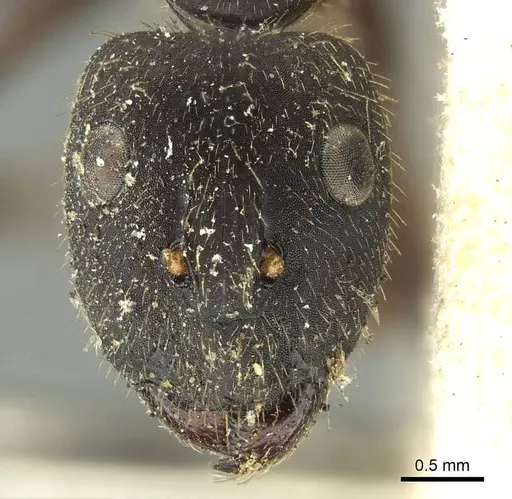
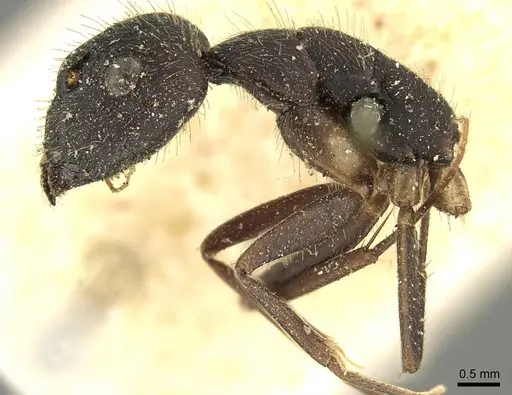
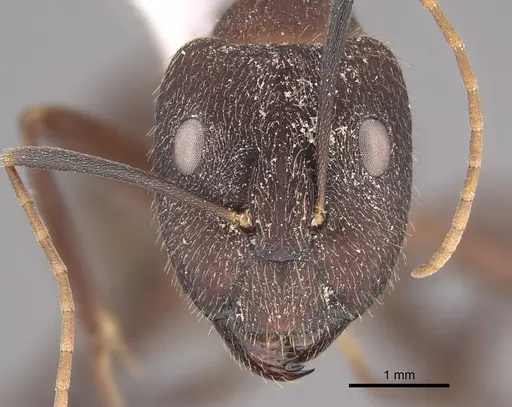
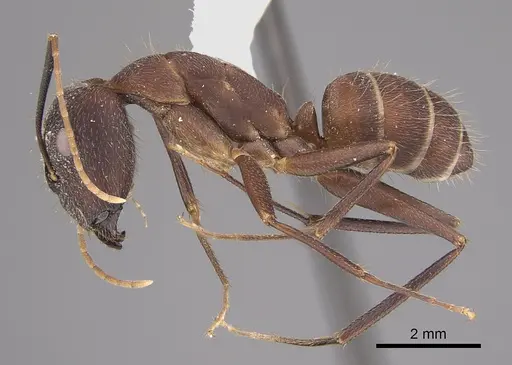
Camponotus pullatus is a carpenter ant from Mexico and Guatemala . Workers are 7.5-9mm long, with a black, opaque body, dark chestnut mandibles, brown antennae and legs, and yellowish margins on the abdominal segments . The body is covered in abundant yellowish erect hairs . It is part of the maculatus species complex and closely related to Camponotus rufipes . In the wild, it inhabits seasonally dry tropical forests and tree-studded areas .
Quick Summary
- Difficulty: Medium
- Origin & Habitat: Native to Mexico and Guatemala – recorded in Guerrero, Morelos, Sinaloa, Nuevo León, San Luis Potosí, and Veracruz states [5][1][2]. Lives in seasonally dry tropical forest, often on trees [4].
- Colony Type: Based on typical Camponotus patterns, likely single-queen colonies, but no direct evidence is available.
- Size & Growth:
- Queen: Size data unavailable – direct measurements of queens are missing from the literature.
- Worker: 7.5-9mm [3]
- Colony: Unknown – no confirmed colony size data exists for this species.
- Growth: Moderate (typical of larger Camponotus, but exact rate is unconfirmed)
- Development: 8-12 weeks at optimal temperature (estimated based on related Camponotus species, not confirmed for this species) (Development time is inferred from genus patterns – no direct measurements exist.)
- Antkeeping:
- Temperature: Keep warm year-round, roughly 22-26°C. Since the species comes from tropical Mexico, avoid extended periods below 20°C. Provide a gentle temperature gradient with a heating cable on one side.
- Humidity: Moderate – keep the nest substrate slightly moist but not waterlogged. Their natural habitat is seasonally dry, so good ventilation is important. Provide a water tube for drinking.
- Diapause: No – from tropical regions, hibernation is not required. Keep warm all year.
- Nesting: Arboreal nester – in the wild they were found in trees [4]. In captivity, Y-tong (AAC) or plaster nests with moderate chambers work well. Include climbing structures and bark pieces.
- Behavior: Typical carpenter ant disposition – generally calm, not aggressive. They bite and spray formic acid (like most Formicinae) if threatened. Workers are active foragers, likely nocturnal. Escape risk is low due to their large size, but standard barriers (Fluon) are still recommended.
- Common Issues: colonies may stall or die if kept below 20°C for extended periods – maintain warm temperatures year-round, wild-caught queens may harbor parasites that prevent colony founding, arboreal nesting means they need vertical space and climbing surfaces in the nest, large workers require appropriately sized prey, tiny insects may be ignored
Housing and Nest Setup
For Camponotus pullatus, choose a nest that offers enough space for a large colony. Y-tong (AAC) and plaster formicariums work well. Because they nest in trees in the wild [4], provide vertical space and climbing surfaces like cork bark or twigs. The chambers should be scaled to the workers’ size (7-9mm) – not too cramped, but not excessively large. Good ventilation is important since they come from seasonally dry forests [4]. Always offer a water tube in the outworld.
Feeding and Diet
Camponotus pullatus is omnivorous, like most Camponotus. Offer a constant source of sugar water or honey. For protein, provide feeder insects (mealworms, small crickets, etc.) 2-3 times per week. Remove uneaten food after a day to prevent mold. No specific dietary data exists, so these recommendations follow general Camponotus care. Observations from related species suggest they also collect honeydew [2].
Temperature and Seasonal Care
This species comes from tropical Mexico and Guatemala [1][5], so it needs warm conditions year-round. Keep the nest area at 22-26°C. Use a heating cable on one side to create a temperature gradient. Avoid temperatures below 20°C for long periods. No hibernation or winter cool-down is needed.
Colony Development
There is no published data on the founding or development of Camponotus pullatus. Based on typical Camponotus biology, the queen likely founds claustrally, sealing herself in a chamber and surviving on stored fat reserves while raising the first brood. The first workers (nanitics) emerge after 8-12 weeks under optimal conditions, but this is an estimate. Colony growth is moderate, and the maximum size is unknown. [3]
Behavior and Temperament
Camponotus pullatus is generally calm and non-aggressive, like many carpenter ants. Workers may forage actively at night. If threatened, they bite and spray formic acid (a common defense in Formicinae). Their large size (7-9mm) makes them easy to observe [3]. In the wild, they are associated with trees and forest edges [4].
Frequently Asked Questions
How long does it take for Camponotus pullatus to have first workers?
There is no direct data for this species. Based on related Camponotus, expect 8-12 weeks from egg to first worker at 22-26°C. The queen likely founds claustrally.
What temperature do Camponotus pullatus ants need?
They come from tropical Mexico and Guatemala, so keep them warm at 22-26°C year-round. They do not need hibernation [1][5].
Are Camponotus pullatus good for beginners?
They are medium difficulty. Their calm behavior and large size make them easy to observe, but their tropical requirements and unknown founding details mean some experience is helpful.
What do Camponotus pullatus eat?
They are omnivorous. Provide sugar water or honey constantly, and offer protein (mealworms, crickets) 2-3 times per week. No species-specific diet data exists.
How big do Camponotus pullatus colonies get?
The maximum colony size is unknown – no published data exists. Based on related maculatus complex species, they might reach several hundred workers, but this is speculative.
Do Camponotus pullatus need hibernation?
No. They come from tropical regions and do not require a winter diapause. Keep them warm all year round [5].
What type of nest is best for Camponotus pullatus?
Y-tong (AAC) or plaster nests work well. Since they nest in trees in the wild [4], provide vertical space and climbing structures like bark. Good ventilation is recommended.
Where is Camponotus pullatus found in the wild?
They are native to Mexico and Guatemala, in seasonally dry tropical forests. Recorded states include Guerrero, Morelos, Sinaloa, Nuevo León, San Luis Potosí, and Veracruz [1][5][2].
Can I keep multiple Camponotus pullatus queens together?
It is not recommended. While the colony structure is unconfirmed, most Camponotus are monogyne. Combining unrelated queens would likely lead to fighting.
Report an Issue
The current care sheet is based fully on literature. See inconsistencies, or something that's incorrect? Please , it will be resolved after review from an admin. Contributing to the blogs tab also helps providing information, to make us be able to further improve the caresheets. Thank you for your support!
References

This caresheet is licensed under CC BY-SA 4.0 .
Community Blogs
CASENT0915800
View on AntWeb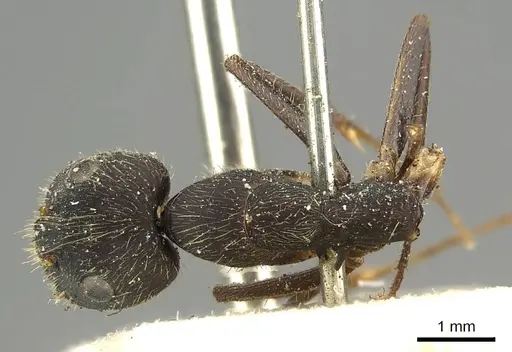
CASENT0923546
View on AntWeb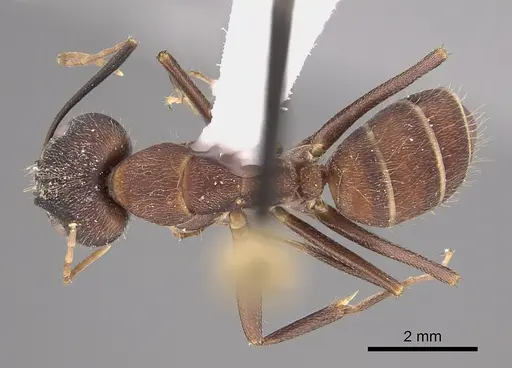
Literature
Loading distribution map...Loading products...