
Camponotus postcornutus
- Sci. Name
- Camponotus postcornutus
- Subgenus
- Tanaemyrmex
- Tribe
- Camponotini
- Subfamily
- Formicinae
- Author
- Clark, 1930
- Distribution
- Found in 1 countries
Introduction
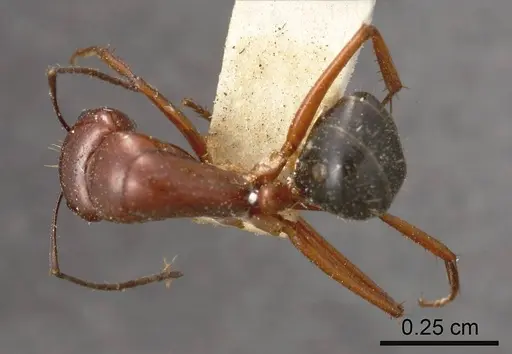
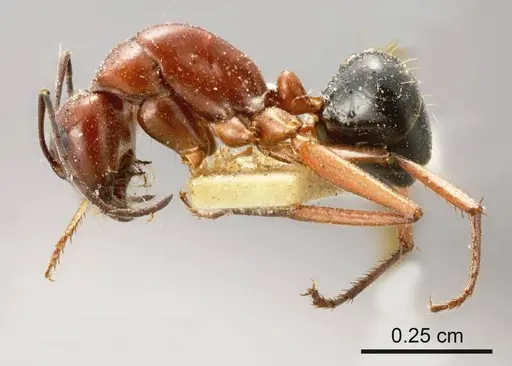
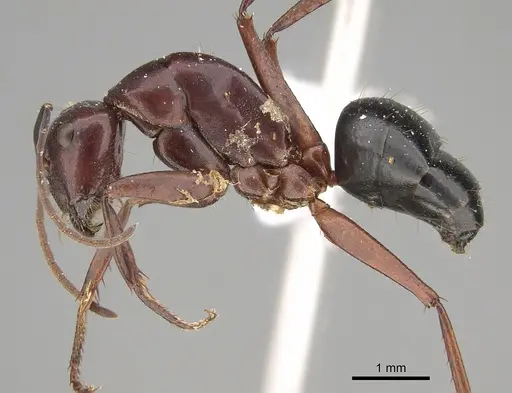
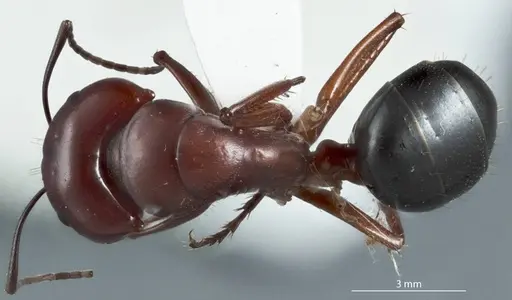
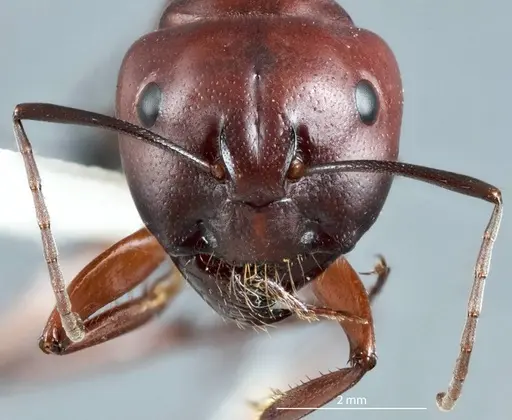
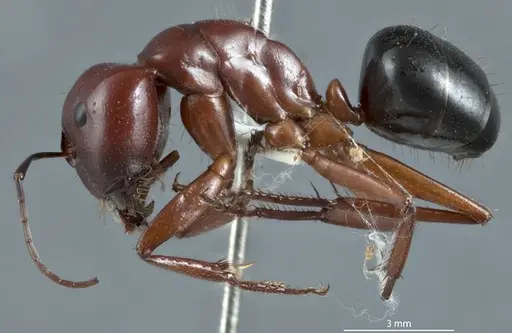
Camponotus postcornutus is a striking red-and-black ant native to southwestern Australia. Major workers reach 13-14.5mm, while minor workers are 8.5-10mm . The species gets its scientific name from the distinctive blunt horns projecting from the posterior corners of the head in major workers - a feature that helps separate it from close relatives . Both castes have sparse reddish erect hairs covering their body, and the gaster is notably darker than the reddish mesosoma and head . This is a ground-nesting species that creates simple entrance holes in dry mallee habitats. Unlike many carpenter ants that are nocturnal, C. postcornutus is a diurnal forager - you'll see both major and minor workers scurrying quickly over the ground during the day . They are described as very active and pugnacious when defending their territory or hunting for prey .
Quick Summary
- Difficulty: Medium
- Origin & Habitat: Southwestern Australia, primarily in and around the Southwest Botanical Province (SWBP) of Western Australia, with one collection from South Australia. Found in dry mallee habitats [2][1].
- Colony Type: Ground-nesting species with simple entrance hole. Colony structure is unconfirmed, typical Camponotus patterns suggest single-queen colonies but specific data is unavailable for this species.
- Size & Growth:
- Queen: Size data unavailable, queen measurements have not been documented for this species
- Worker: Major workers: 13-14.5mm. Minor workers: 8.5-10mm [1]
- Colony: Unknown for this species, no specific data available
- Growth: Moderate, typical for larger Camponotus species
- Development: Development time is unconfirmed for this species. Larger Camponotus species typically take 8-12 weeks at optimal temperature. (Development time is temperature-dependent. Larger Camponotus species typically take longer than smaller ants.)
- Antkeeping:
- Temperature: Keep around 24-28°C for optimal development. Provide a temperature gradient so ants can choose their preferred zone.
- Humidity: Low to moderate. This species inhabits dry mallee areas, keep nest substrate moderately dry, with a small water station in the outworld.
- Diapause: Yes, Australian temperate species requires a winter rest period. Reduce temperature to 15-18°C for 2-3 months during winter.
- Nesting: Ground-nesting species. Y-tong (AAC) nests or plaster nests work well. Provide a deep chamber for the colony and a simple outworld connection. Avoid overly humid conditions [1].
- Behavior: Very active and pugnacious, these ants are aggressive defenders of their territory [1]. Diurnal foragers, meaning they actively hunt during daylight hours. Both major and minor workers participate in foraging. Major workers have powerful mandibles and can deliver a painful bite. Escape risk is moderate, use standard barrier methods but they're not tiny escape artists. They hunt for prey rather than relying solely on honeydew or sugar sources.
- Common Issues: aggressive temperament means handling requires caution, they will bite if threatened, dry habitat requirements mean over-humid conditions can cause problems, slow founding phase, queens need patience during the first few months, winter diapause is essential for long-term colony health, skipping it can weaken the colony, large major workers need spacious outworlds to move around comfortably
Housing and Nest Setup
Camponotus postcornutus is a ground-nesting species that does well in Y-tong (AAC) or plaster nests. Since they come from dry mallee habitats, avoid overly humid setups, keep the nest substrate moderately dry. Provide a simple outworld connection with a test tube water station for drinking. Because major workers reach 13-14.5mm, ensure the outworld has enough space for these large ants to move around comfortably. Use a standard escape barrier like fluon on the rim of the outworld, while not tiny, they can still climb smooth surfaces effectively. [1]
Feeding and Diet
As pugnacious hunters, these ants need a protein-rich diet. Feed them small insects like fruit flies, small crickets, or mealworms. Offer sugar water or honey as a supplementary energy source, they may accept it but protein should be the primary food. Both major and minor workers forage, so provide prey items small enough for minor workers to handle. Feed every 2-3 days, removing uneaten prey to prevent mold. Fresh water should always be available.
Temperature and Seasonal Care
Keep the nest at 24-28°C for optimal brood development. This species comes from southwestern Australia, which has a temperate climate with distinct seasons. During winter (roughly May-August in the Southern Hemisphere), reduce temperatures to 15-18°C to allow a diapause period. This winter rest is essential for the colony's long-term health, skipping it can weaken the colony over time. Provide a temperature gradient so workers can regulate their own conditions by moving between warmer and cooler areas of the nest.
Behavior and Temperament
These ants are described as very active and pugnacious, they are aggressive defenders of their territory [1]. Both major and minor workers forage during the day (diurnal), which is unusual as many Camponotus species are nocturnal. Major workers have powerful mandibles and will bite if threatened or handled roughly. When caring for this species, move slowly around the colony and avoid disturbing them unnecessarily. They are not typically skittish but will stand their ground when they feel threatened.
Colony Development
Colony founding behavior is unconfirmed for this species. The first workers (nanitics) will be smaller than normal workers. Growth is moderate, larger Camponotus species typically develop more slowly than smaller ants. Be patient during the founding phase, as queens can take several months to produce their first workers.
Frequently Asked Questions
How long does it take for Camponotus postcornutus to produce first workers?
Specific development time is unconfirmed for this species. Based on typical Camponotus patterns, expect roughly 8-12 weeks from egg to first worker at optimal temperature (24-28°C). The first workers (nanitics) will be smaller than normal workers.
What temperature do Camponotus postcornutus need?
Keep the nest at 24-28°C for optimal development. Provide a temperature gradient so ants can choose their preferred zone. During winter, reduce to 15-18°C for a 2-3 month diapause period.
Can I keep multiple Camponotus postcornutus queens together?
Colony structure is unconfirmed for this species. Combining unrelated queens is not recommended as they will likely fight. In nature, most Camponotus colonies establish with one founding queen.
What do Camponotus postcornutus eat?
They are active hunters and need protein-rich food. Feed small insects like fruit flies, small crickets, or mealworms. Offer sugar water or honey as a supplement. Remove uneaten prey after 24-48 hours.
Do Camponotus postcornutus need hibernation?
Yes, they require a winter rest period. Reduce temperatures to 15-18°C for 2-3 months during winter. This diapause is essential for long-term colony health.
Are Camponotus postcornutus good for beginners?
Difficulty is medium. They are more challenging than beginner species due to their aggressive temperament, larger size requirements, and need for seasonal temperature cycling. Experienced antkeepers will find them rewarding.
How big do Camponotus postcornutus colonies get?
Colony size is not specifically documented for this species. Based on typical Camponotus patterns, expect several hundred workers at maturity. Major workers reach 13-14.5mm and minor workers are 8.5-10mm.
When should I move Camponotus postcornutus to a formicarium?
Wait until the colony has 20-30 workers before moving to a larger setup. The founding queen can stay in a test tube setup until then. Ensure the new setup provides appropriate humidity (dry) and space for the large major workers.
Why is my Camponotus postcornutus colony not growing?
Check three things: 1) Temperature, are they kept at 24-28°C? 2) Food, are they getting enough protein? 3) Diapause, did you provide a winter rest period? Also ensure humidity isn't too high, they prefer dry conditions.
Are Camponotus postcornutus escape artists?
Moderate escape risk. They're not tiny ants that squeeze through mesh, but they are active climbers. Use standard barrier methods like fluon on the outworld rim. Their large size makes them easier to spot if they do escape.
Where is Camponotus postcornutus found in the wild?
This species is native to southwestern Australia, primarily in and around the Southwest Botanical Province of Western Australia. One population has been recorded in South Australia. They live in dry mallee habitats and nest in the ground with a simple entrance hole.
Report an Issue
The current care sheet is based fully on literature. See inconsistencies, or something that's incorrect? Please , it will be resolved after review from an admin. Contributing to the blogs tab also helps providing information, to make us be able to further improve the caresheets. Thank you for your support!
References

This caresheet is licensed under CC BY-SA 4.0 .
Community Blogs
Literature
Loading distribution map...Loading products...