
Camponotus palkura
- Sci. Name
- Camponotus palkura
- Tribe
- Camponotini
- Subfamily
- Formicinae
- Author
- McArthur, 2007
- Distribution
- Found in 1 countries
Introduction
Camponotus palkura is a yellow to reddish-yellow carpenter ant native to South Australia. Workers occur in two distinct sizes: larger majors and smaller minors, with no medium-sized workers observed in collections . The species name comes from "palkura, " meaning yellowish in the Pangkala Aboriginal language of the Eyre Peninsula . This ground-nesting species inhabits coastal and inland areas of South Australia, with records from Streaky Bay to Innes National Park . Both worker castes have plentiful erect bristles on most of the body, though the front of the propodeum is nearly bare . Nothing is known about the biology of this species .
Quick Summary
- Difficulty: Unknown
- Origin & Habitat: South Australia, Eyre Peninsula region. Found in coastal areas and conservation parks. Ground-nesting species [2].
- Colony Type: Unconfirmed, based on Camponotus patterns, likely single-queen (monogyne).
- Size & Growth:
- Queen: Unknown, no measurements available.
- Worker: Unknown, no total length measurements available. Head dimensions provided in original description [1].
- Colony: Unknown.
- Growth: Unknown.
- Development: Unknown. (Development has not been studied for this species.)
- Antkeeping:
- Temperature: Unknown, based on South Australian climate, likely room temperature (20-25°C) with cooler winter period.
- Humidity: Unknown.
- Diapause: Unknown, likely required based on temperate distribution.
- Nesting: Ground-nesting species [2].
- Behavior: Unknown, based on Camponotus genus, likely moderate activity and not overly aggressive.
- Common Issues: no biological data exists, keepers must rely on genus-level assumptions., founding behavior has not been documented, success rates are unknown., growth rate and development timeline are unstudied., hibernation requirements are inferred, not confirmed., size data unavailable, nest chamber sizing must be estimated.
Appearance and Identification
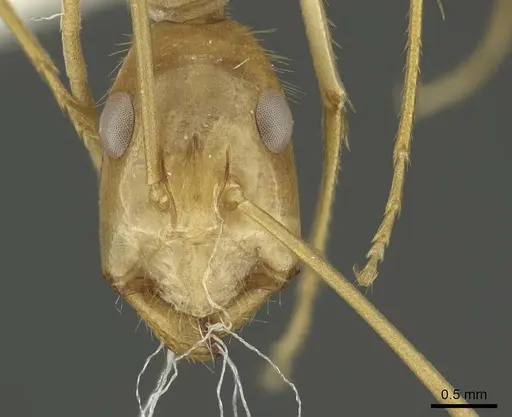
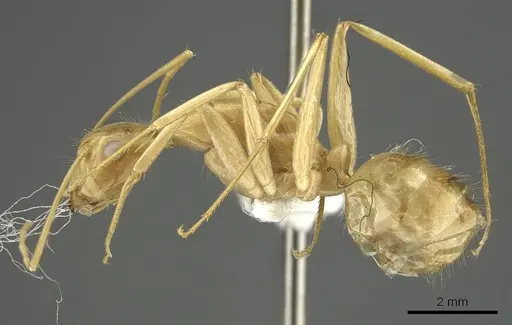
Camponotus palkura workers show distinct yellow to reddish-yellow coloration, ranging from pale yellow to orange-red [1]. The species is dimorphic, with major workers (larger) and minor workers (smaller), and no intermediate medium workers observed in collections [1]. Major workers have convex heads that taper toward the front, while minor workers have straighter, parallel-sided heads [1]. Both castes carry plentiful long erect bristles on most of the body, though the front of the propodeum is notably bare [1]. The petiole has a sharp summit with convex front and back faces [1]. You can distinguish them from the similar Camponotus tricoloratus by the latter having sparse bristles on the mesosoma [1].
Natural Distribution and Habitat
This species occurs only in South Australia, specifically the Eyre Peninsula region along the southern coast [1]. Known locations include Streaky Bay, Browns Beach, Calpatanna Waterhole Conservation Park, Ceduna 15 km east, Innes National Park, Nundroo 7 km southwest, Penong, Pinkawillinie Conservation Park, Poochera Cemetery, and Warrenben Conservation Park [2]. The region experiences a Mediterranean climate with hot, dry summers and cool, wet winters. This is a ground-nesting species, not a wood-nesting carpenter ant [2]. Collections come from multiple conservation areas, suggesting the species is established in the region but poorly documented biologically.
Nest Preferences and Housing
In the wild, Camponotus palkura nests in the ground, making them a terrestrial species rather than the wood-nesting carpenter ants many people expect [2]. For captive care, a Y-tong (AAC) nest or plaster formicarium with a soil chamber works well. Provide a water tube for humidity and allow workers access to a dry outworld for foraging. Because they are ground-nesting, a layer of substrate in the outworld can encourage natural behaviors. Use standard escape prevention (fluon on rim edges) as a precaution.
Feeding and Diet
The specific diet of Camponotus palkura has not been documented [3]. Like other Camponotus species, they likely forage for honeydew from aphids and scale insects, and hunt small invertebrates. In captivity, offer a varied diet: sugar water or honey as an energy source, and protein sources like mealworms, small crickets, or other insects. Feed protein 2-3 times per week and keep sugar water available constantly. Remove uneaten prey after 24-48 hours to prevent mold.
Temperature and Seasonal Care
Specific temperature requirements for Camponotus palkura are unstudied. They come from temperate South Australia, so they likely experience seasonal temperature changes. Keep the nest at room temperature (20-25°C) during the active season. During the Australian winter (roughly June-August in the Southern Hemisphere), you may need to reduce temperatures to simulate seasonal changes. Do not cool them below freezing. If your room temperature stays above 15°C year-round, they may not need a formal hibernation, but a slight winter slowdown is likely beneficial. [3]
Colony Development and Growth
Nothing is known about the founding behavior or development timeline of Camponotus palkura specifically [3]. Based on typical Camponotus patterns, the queen likely seals herself in a claustral chamber and raises her first workers without leaving to forage, but this is unconfirmed. Development from egg to worker has not been measured. Colonies probably grow slowly at first, then accelerate once the first major workers emerge. The maximum colony size is unknown. Be patient with this species as growth data is entirely inferred.
Frequently Asked Questions
How do I care for Camponotus palkura ants?
Since nothing is known about this species' biology, keepers should follow standard Camponotus care while monitoring closely. Keep them in a Y-tong or plaster nest at room temperature (20-25°C). Feed sugar water constantly and protein prey 2-3 times weekly. You may need to provide a winter cooling period based on their South Australian origin. This species is suitable for intermediate antkeepers comfortable with species that have limited documentation.
What do Camponotus palkura ants eat?
The specific diet is unstudied. Like other carpenter ants, they likely accept sugar sources (honey, sugar water) and protein (insects like mealworms, crickets). Feed protein 2-3 times per week and keep sugar water available at all times. Remove uneaten prey after a day or two.
How long does it take for Camponotus palkura to develop from egg to worker?
The specific timeline is unconfirmed for this species. Development has not been studied, so timelines are unknown.
Do Camponotus palkura ants need hibernation?
Hibernation requirements are unconfirmed. They come from South Australia where winters are cool but not freezing. You may need to provide 3-4 months at cooler temperatures (10-15°C) during winter months, but this is inferred from their distribution, not confirmed.
What size nest do Camponotus palkura need?
A Y-tong (AAC) nest or plaster formicarium works well. They are dimorphic with major and minor workers, so chambers should accommodate both sizes. Provide a water tube for humidity and access to a dry foraging area.
Are Camponotus palkura good for beginners?
This species is not ideal for complete beginners due to the complete lack of biological data. All care must be based on genus-level assumptions rather than species-specific research. Intermediate antkeepers who are comfortable adapting care based on colony behavior will have better success.
How big do Camponotus palkura colonies get?
Colony size is unconfirmed for this species. No wild colony data exists.
When do Camponotus palkura nuptial flights occur?
Nuptial flight timing is unconfirmed for this species. Based on the South Australian climate, flights likely occur during warmer months, but this is entirely inferred.
Can I keep multiple Camponotus palkura queens together?
Colony structure is unconfirmed. Most Camponotus are single-queen (monogyne) species. Do not combine unrelated foundress queens unless you observe them accepting each other, this has not been documented for this species.
Report an Issue
The current care sheet is based fully on literature. See inconsistencies, or something that's incorrect? Please , it will be resolved after review from an admin. Contributing to the blogs tab also helps providing information, to make us be able to further improve the caresheets. Thank you for your support!
References

This caresheet is licensed under CC BY-SA 4.0 .
Community Blogs
CASENT0915767
View on AntWeb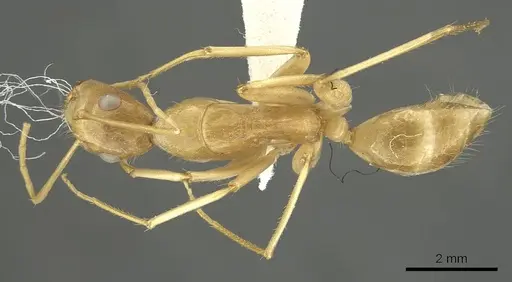
Literature
Loading distribution map...Loading products...