
Camponotus mussolinii
- Sci. Name
- Camponotus mussolinii
- Subgenus
- Myrmophyma
- Tribe
- Camponotini
- Subfamily
- Formicinae
- Author
- Donisthorpe, 1936
- Distribution
- Found in 1 countries
Introduction
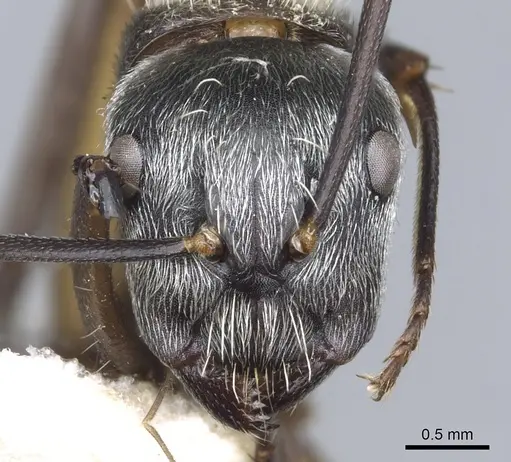
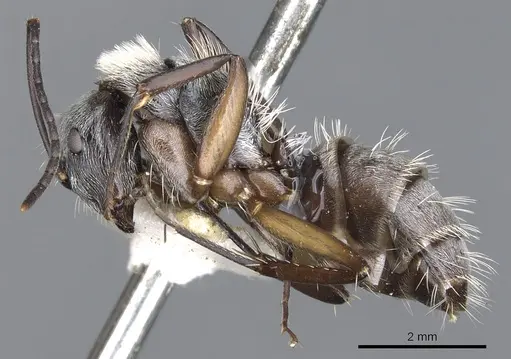
Camponotus mussolinii is a small ant species belonging to the Camponotus aureopilus species group. Minor workers have distinctive white erect hairs covering the pronotum and abundant pubescence across the body . The body is black with red-brown legs, and they have notably long antennae that extend well past the back of the head . This species is known only from Papua New Guinea, making it a geographically restricted member of the carpenter ant genus . It was originally described by Donisthorpe in 1936 and is similar to Camponotus thadeus but differs in having white rather than yellow body hairs and more abundant pubescence . This is one of the less-studied Camponotus species, with very limited collection data available. The species is part of a group characterized by enlarged hairs on the pronotum, and the white coloration of these hairs distinguishes it from related species . For antkeepers, this represents a rare opportunity to keep a species that most hobbyists will never encounter.
Quick Summary
- Difficulty: Unknown, too little data to assess
- Origin & Habitat: Papua New Guinea, specifically the Northern District areas around Kokoda and the Managalase plateau near Popondetta. All collections come from this limited geographic range in the Australasian region [1][3]. The type locality at Kokoda is at approximately 1200 feet elevation.
- Colony Type: Unknown, only minor workers have been described. No queen or major worker caste has been documented in scientific literature.
- Size & Growth:
- Queen: Size data unavailable, queen caste has not been described in scientific literature
- Worker: ~4-7 mm (inferred from Camponotus genus, minor workers only described, no total length measurement available)
- Colony: Unknown, no colony size data available
- Growth: Unknown, no development data exists
- Development: Unknown, no species-specific development data exists (No documented development timeline for this species.)
- Antkeeping:
- Temperature: Unknown for this specific species. Based on its Papua New Guinea origin (tropical), keep in the warm range of 24-28°C. Monitor colony activity and adjust as needed.
- Humidity: Unknown, no specific humidity data. As a tropical species from PNG, moderate to high humidity is likely appropriate. Keep the nest substrate consistently moist but not waterlogged.
- Diapause: Unknown, no seasonal data available. Tropical species from Papua New Guinea likely do not require diapause.
- Nesting: No specific nesting data exists. Based on typical Camponotus behavior and its tropical origin, they likely nest in rotting wood or under bark in nature. In captivity, a Y-tong (AAC) nest or plaster nest with some moisture works well for Camponotus species.
- Behavior: Not documented in available literature. As a Camponotus species, they likely have typical carpenter ant behaviors, workers are moderately active and can defend their nest if threatened. Escape risk is moderate, minor workers are small so ensure barriers are secure.
- Common Issues: this species has virtually no documented captive care history, you are pioneering its husbandry, no queen has been described scientifically, so wild-queen acquisition may be extremely difficult, colony size and growth rates are completely unknown, making it hard to plan care, tropical species may be sensitive to temperature drops, avoid cool locations, limited distribution means this species is rarely available in the antkeeping hobby
Species Identification and Distinction
Camponotus mussolinii belongs to the Camponotus aureopilus species group, a set of closely related species characterized by having enlarged hairs on the pronotum that cover the dorsal surface [2]. This species can be identified by its distinctive white erect hairs on the pronotum (rather than yellow as in C. thadeus) and the abundant pubescence covering its entire body [1]. The minor workers are small, with notably long antennae that extend roughly half their length beyond the back of the head [1]. The body is black with red-brown legs, and the petiolar node is low and rounded with a slight forward tilt [1]. This combination of features distinguishes it from similar species in the region.
Distribution and Rarity
This species is known only from Papua New Guinea, specifically from a handful of collections in the Northern District [1]. The type locality is Kokoda at approximately 1200 feet elevation, with additional specimens collected from the Managalase plateau about 30 miles south of Popondetta [3]. This extremely limited distribution makes C. mussolinii one of the rarer ant species in the hobby. All documented collections come from this small geographic area, and the species has never been recorded from any other location [3]. For antkeepers, this means the species is exceptionally rare in captivity and may not be available through commercial suppliers.
What We Do Not Know
Honesty requires acknowledging how little is documented about this species. No queen has ever been described in scientific literature, only minor workers have been documented [1]. This means we do not know the queen's size, colony structure, or founding behavior. No biology has been documented, we have no information on their diet, nesting preferences in the wild, nuptial flight timing, or development timeline. The scientific literature provides only morphological descriptions of the worker caste. Any care recommendations for this species must be based on inference from related Camponotus species and general knowledge of the genus, not on species-specific research.
Housing and Care Recommendations
Since we have no species-specific care data, recommendations must be based on what works for other Camponotus species. Provide a nest that allows for some moisture, a Y-tong (AAC) or plaster nest works well. Keep temperatures in the tropical range of 24-28°C, as this species comes from warm Papua New Guinea. Humidity should be moderate to high. Feed a typical Camponotus diet: sugar water or honey as an energy source, and protein sources like mealworms, crickets, or other insects. Since minor workers are small, ensure your escape prevention is adequate, they can slip through small gaps. Start with a test tube setup for founding colonies, then move to a proper nest once the colony reaches a moderate size.
Outlook for Keepers
Camponotus mussolinii represents both an opportunity and a challenge for antkeepers. The opportunity is keeping a species that very few people will ever have access to, a true Papua New Guinea endemic with distinctive white-haired pronotum. The challenge is that there is essentially no established husbandry knowledge for this species, so you will be learning through experimentation. If you obtain this species, careful observation and documentation of your results would be valuable for the antkeeping community. Given the extreme rarity of documented collections and the lack of queen descriptions, acquiring a founding queen may be nearly impossible through normal channels. This species is best suited for advanced antkeepers who enjoy working with poorly-documented species.
Frequently Asked Questions
How do I keep Camponotus mussolinii ants?
Since no species-specific care guide exists, treat this as a typical tropical Camponotus species. Keep nest temperatures around 24-28°C, maintain moderate humidity, and feed sugar water plus protein sources like insects. Use a Y-tong or plaster nest with some moisture. This is experimental care, monitor your colony and adjust conditions based on their behavior.
Where does Camponotus mussolinii come from?
This species is endemic to Papua New Guinea, known only from a small area in the Northern District around Kokoda and the Managalase plateau near Popondetta [1][3]. It has never been recorded from any other location.
How big do Camponotus mussolinii colonies get?
Unknown, no colony size data exists in scientific literature. Only minor workers have been described, and no one has documented how large wild colonies grow.
What does Camponotus mussolinii look like?
Minor workers are small with black bodies and red-brown legs. They have distinctive white erect hairs covering the pronotum and abundant pubescence across the entire body. Their antennae are notably long, extending well past the back of the head [1].
Are Camponotus mussolinii good for beginners?
No, this species is not recommended for beginners. It has virtually no documented captive care history, queens have never been scientifically described, and all care must be based on inference from related species. This is a species for experienced antkeepers who enjoy experimentation.
Do Camponotus mussolinii queens have wings?
Unknown, no queen caste has ever been described in scientific literature. As a Camponotus species, queens are typically winged for nuptial flights like other carpenter ants, but this is not documented for this specific species.
How long does it take for Camponotus mussolinii eggs to become workers?
Unknown, no species-specific development data exists. Development time is unconfirmed for this species.
Can I feed sugar water to Camponotus mussolinii?
Likely yes, based on typical Camponotus diet. Most carpenter ants readily accept sugar water or honey as an energy source, combined with protein from insects. However, since no specific feeding data exists for this species, offer sugar water and observe whether workers accept it.
Does Camponotus mussolinii need hibernation?
Unknown, no seasonal behavior has been documented. As a tropical species from Papua New Guinea, they likely do not require a true diapause. However, they may show reduced activity during cooler periods. Do not hibernate this species as you would temperate Camponotus.
Where can I get a Camponotus mussolinii queen?
Extremely unlikely to find commercially. This species is known from only a handful of scientific collections in Papua New Guinea and has never been recorded in the antkeeping hobby trade. If available at all, it would be from specialty dealers dealing in rare exotic species, but such sources are highly unlikely.
Report an Issue
The current care sheet is based fully on literature. See inconsistencies, or something that's incorrect? Please , it will be resolved after review from an admin. Contributing to the blogs tab also helps providing information, to make us be able to further improve the caresheets. Thank you for your support!
References

This caresheet is licensed under CC BY-SA 4.0 .
Community Blogs
CASENT0903559
View on AntWeb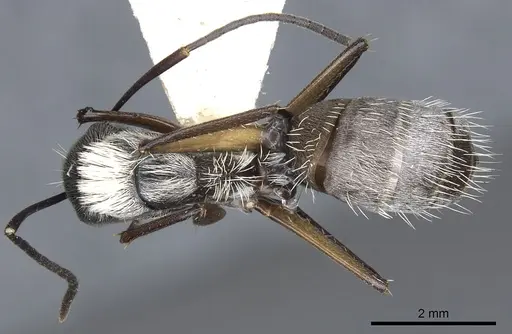
Literature
Loading distribution map...Loading products...