
Camponotus landolti
- Sci. Name
- Camponotus landolti
- Subgenus
- Tanaemyrmex
- Tribe
- Camponotini
- Subfamily
- Formicinae
- Author
- Forel, 1879
- Distribution
- Found in 1 countries
Introduction
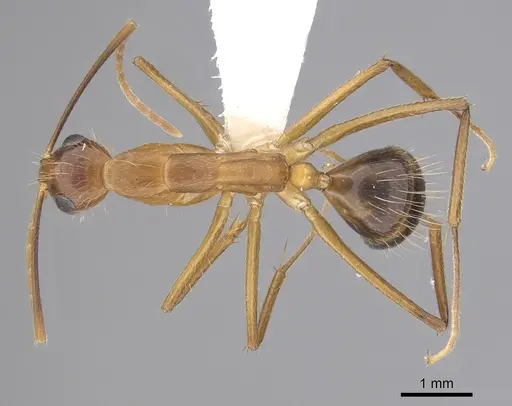
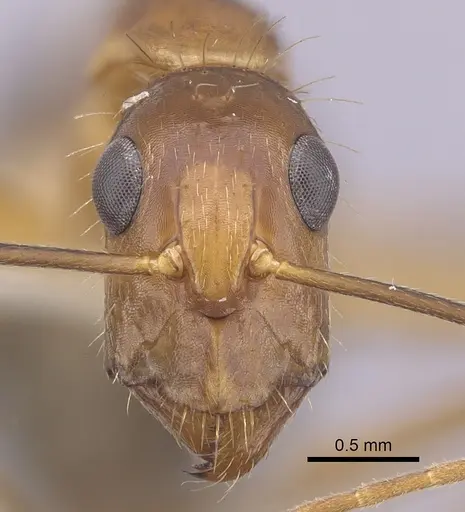
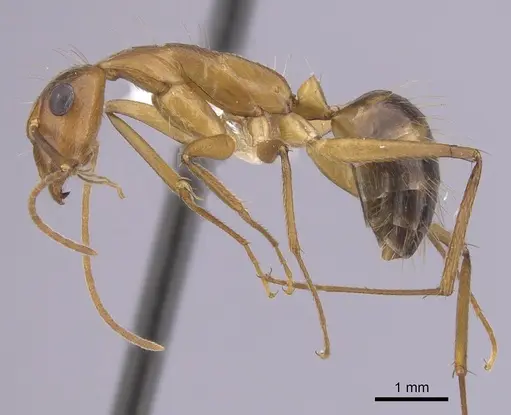
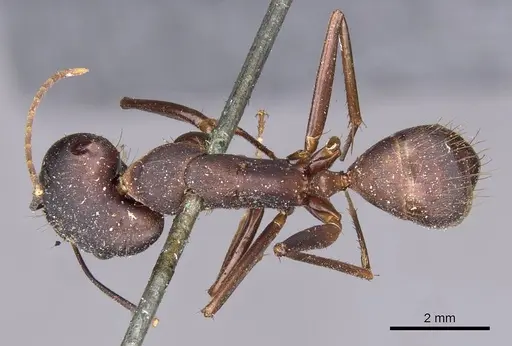
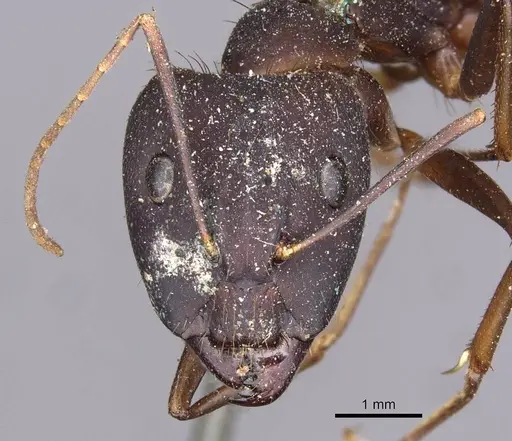
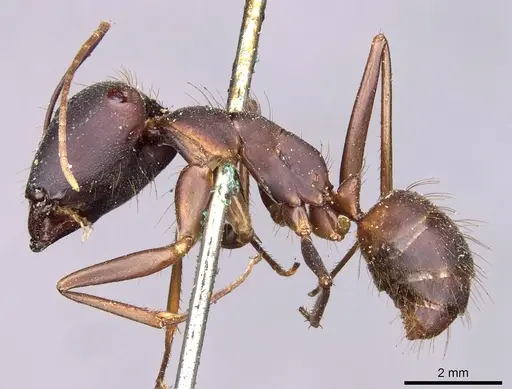
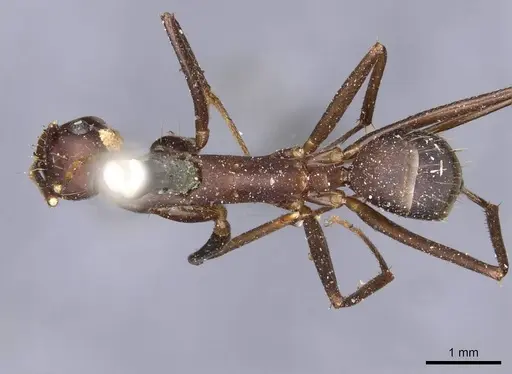
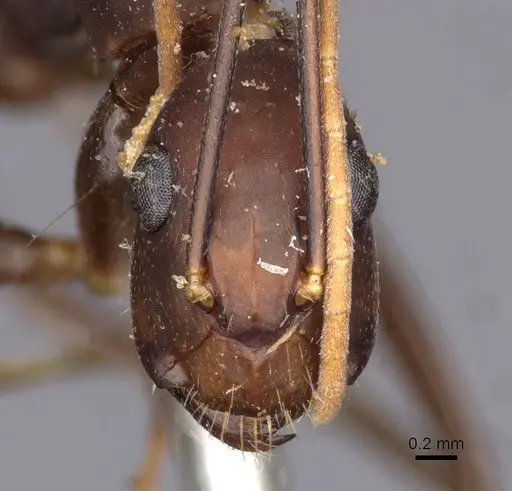
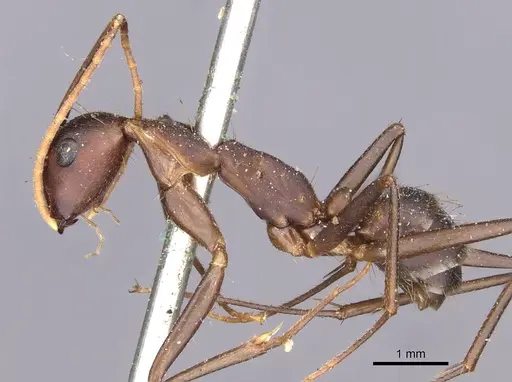
Camponotus landolti is a large Neotropical carpenter ant found from Mexico south through Central America to Colombia and Brazil. Workers are dark reddish with a distinctive elongated head that narrows toward the front, and they have very long antennae scapes . The species is not common and lives in rotten tree trunks in deep forest habitats . These ants are described as timid . As a member of the subgenus Tanaemyrmex, they belong to a group of large carpenter ants, but specific details about their biology remain largely undocumented.
Quick Summary
- Difficulty: Hard
- Origin & Habitat: Found from Mexico to Colombia and Brazil, with documented populations in the Mexican state of Guerrero and Colombian regions including La Guajira, Magdalena, Norte de Santander, and Sucre [3][4]. They inhabit rotten tree trunks in deep forest environments [2].
- Colony Type: Colony structure is unconfirmed. Based on typical Camponotus patterns, likely single-queen colonies, but no specific data exists for this species.
- Size & Growth:
- Queen: Size data unavailable, described as a large ant in general, but no specific measurements are recorded [1]
- Worker: Size data unavailable, described as a large ant, but no specific measurements are recorded [1]
- Colony: Unknown, colony size has not been documented in scientific literature
- Growth: Unknown, no growth rate data is available
- Development: Unknown, development time has not been studied (No data on development exists for this species)
- Antkeeping:
- Temperature: Not documented. As a Neotropical species from warm regions, temperatures in the low-to-mid 20s°C are likely suitable, but no specific optimized temperature range is known.
- Humidity: High humidity is likely based on their natural habitat in rotting tree trunks in deep forests. Keep the nest substrate consistently moist but not waterlogged, and ensure good ventilation to prevent mold.
- Diapause: No data available. Given the Neotropical distribution, diapause is likely not required, but this has not been confirmed.
- Nesting: In the wild, they nest in rotten tree trunks [2]. In captivity, Y-tong (AAC) nests, plaster nests, or setups with decaying wood should work well, as they provide dark, humid chambers. Avoid dry environments.
- Behavior: These ants are described as timid and not aggressive [2]. They are not common in the hobby, so direct observation data is limited. Based on related Camponotus species, they are likely slow-moving and prefer to avoid confrontation. Escape risk is moderate, standard escape prevention with fluon or a smooth barrier is recommended.
- Common Issues: high humidity requirements can lead to mold problems if ventilation is inadequate, as a timid and uncommon species, they may be outcompeted by more aggressive ants if housed in mixed setups, wild-caught colonies may arrive with parasites or diseases that can devastate captive populations, the lack of documented care guidelines means keepers must rely on trial and error, increasing the risk of mistakes, very little is known about this species, so unexpected care issues are likely
Housing and Nest Setup
Camponotus landolti lives in rotten tree trunks in deep forests [2]. In captivity, Y-tong (AAC) nests or plaster nests work well, as they can hold humidity and provide dark chambers. Plaster nests are a good option because they can be kept consistently moist. For a naturalistic setup, you can use pieces of decaying wood, but this requires more maintenance to prevent mold. Regardless of nest type, provide a dark cover to reduce stress, these forest-dwelling ants prefer dim conditions. The outworld should be simple with easy access to food and water. Because they are timid, avoid placing the setup in high-traffic areas where vibrations and disturbances are common.
Feeding and Diet
The natural diet of Camponotus landolti has not been studied. Based on typical Camponotus feeding habits, they likely accept sugar sources (honey water, sugar water) and protein (insects like mealworms, crickets). Keep sugar water available at all times and offer protein 2-3 times per week. Remove uneaten prey after 24-48 hours to prevent mold. No specific dietary preferences or requirements have been documented.
Temperature and Humidity Management
Specific temperature and humidity requirements have not been determined for this species. As a Neotropical ant from warm, humid forests, maintaining temperatures in the range of 24-28°C and high humidity is a reasonable starting point. Use a heating cable on one side of the nest to create a thermal gradient. Humidity should be kept high, aim for a consistently moist nest substrate. However, balance this with adequate ventilation to prevent mold growth, if condensation appears, improve airflow. No winter cooling is expected, but this is not confirmed. [2]
Colony Development and Growth
Colony development, growth rate, and queen founding behavior are undocumented for Camponotus landolti. No information is available on the timing of brood development or the size of mature colonies. Based on typical patterns in the genus Camponotus, a claustral founding strategy and moderate growth may be expected, but this is purely speculative. Keepers should be prepared for unexpected delays or differences.
Behavior and Temperament
Camponotus landolti is described as timid and not aggressive [2]. Workers are not known to defend their nest aggressively and will retreat from threats. This makes them an interesting species to observe but means they are not suitable for mixed-species setups where more aggressive ants would outcompete them. They are likely slow-moving and may forage primarily during darker hours, reflecting their deep forest habitat. They do not have a functional sting but rely on biting and spraying formic acid from an acidopore (typical of Formicinae). Standard escape prevention measures are sufficient.
Frequently Asked Questions
How long does it take for Camponotus landolti to produce first workers?
This is unknown. No developmental data exists for this species. Estimates from related Camponotus species vary widely (often 6-10 weeks), but should not be relied upon.
Do Camponotus landolti ants need hibernation?
No specific data is available. As a Neotropical species from regions without cold winters, they likely do not require hibernation, but this has not been confirmed.
What do Camponotus landolti eat?
Their natural diet is undocumented. Based on general Camponotus feeding, they probably accept sugar water and insects. Offer a variety of sugars and protein sources.
Are Camponotus landolti good for beginners?
No, this species is rated hard because so little is known about its care. Only experienced keepers should attempt to keep it, and even then, expect challenges from the lack of documented requirements.
How big do Camponotus landolti colonies get?
Colony size is not documented. No reliable estimates exist from scientific sources.
What is the best nest type for Camponotus landolti?
Y-tong (AAC) nests or plaster nests work well, as they hold humidity well. A setup with rotten wood pieces mimics their natural habitat. Ensure chambers are dark and humid. Avoid dry environments and bright lighting.
Can I keep multiple queens together?
This has not been documented. Based on typical Camponotus patterns, single-queen colonies are assumed, but no data exists for this species. Do not attempt pleometrosis without further research.
Why are my Camponotus landolti dying?
Because so little is known about their care, common causes may include: humidity too low, temperature too low or too high, mold from stagnant air, stress from disturbance, or unknown pathogens. Check these parameters first. Wild-caught colonies may carry parasites.
Where is Camponotus landolti found in the wild?
They range from Mexico through Costa Rica, Panama, and Colombia to Brazil [3][2][4]. They inhabit rotten tree trunks in deep forests.
Is Camponotus landolti aggressive?
No, they are described as timid and prefer to avoid confrontation [2]. This makes them peaceful but ill-suited for mixed-species setups with aggressive ants.
When should I move my colony to a formicarium?
No specific timing is documented. For most Camponotus, moving after the colony outgrows a test tube (several hundred workers) is common, but for this species, watch for overcrowding as a sign.
Report an Issue
The current care sheet is based fully on literature. See inconsistencies, or something that's incorrect? Please , it will be resolved after review from an admin. Contributing to the blogs tab also helps providing information, to make us be able to further improve the caresheets. Thank you for your support!
References

This caresheet is licensed under CC BY-SA 4.0 .
Community Blogs
Literature
Loading distribution map...Loading products...