
Camponotus hartogi
- Sci. Name
- Camponotus hartogi
- Subgenus
- Myrmophyma
- Tribe
- Camponotini
- Subfamily
- Formicinae
- Author
- Forel, 1902
- Distribution
- Found in 1 countries
Introduction
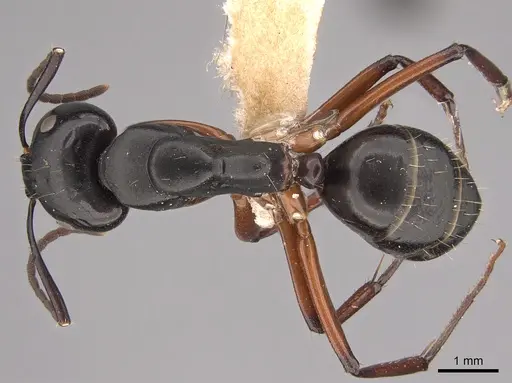
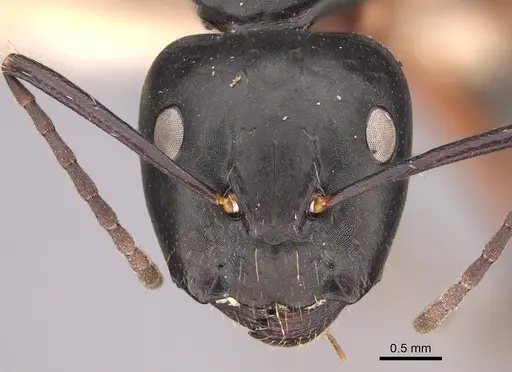
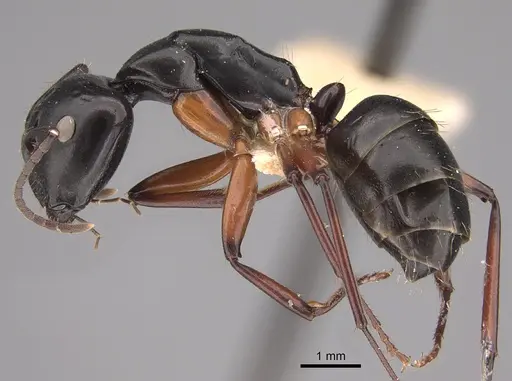
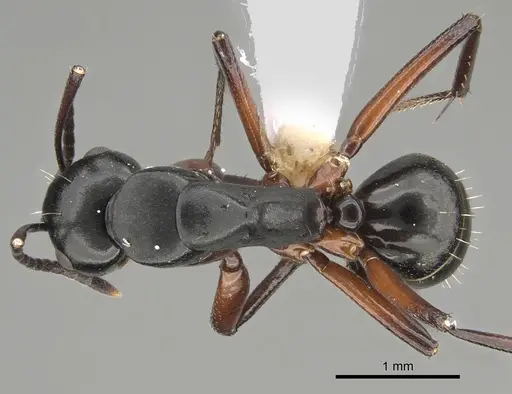
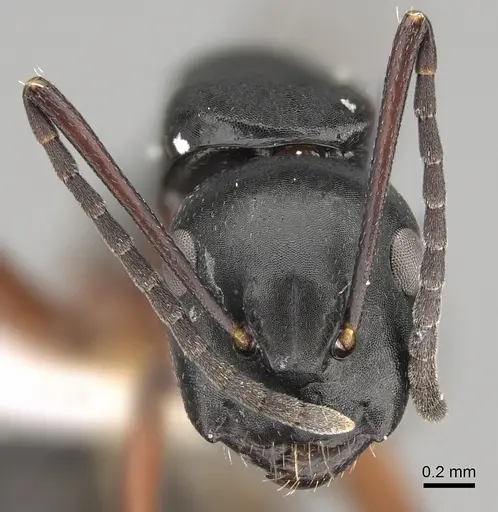
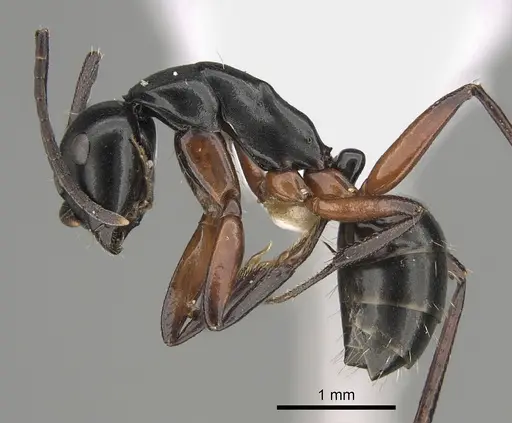
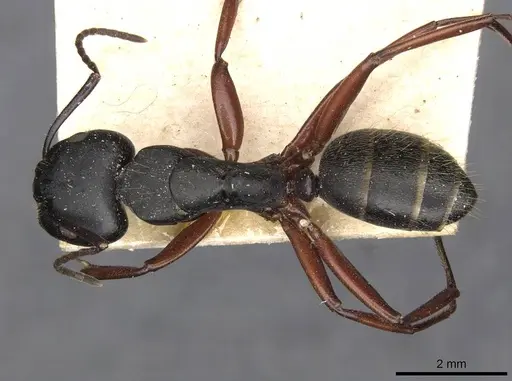
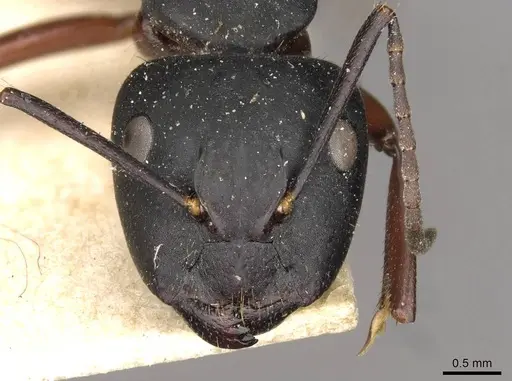
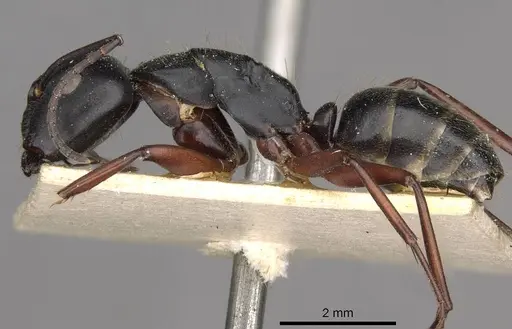
Camponotus hartogi is an Australian carpenter ant with a southern distribution across South Australia, Victoria, and Western Australia . Workers measure about 9mm in total length and have a black body with reddish limbs and yellow borders on the gastric segments. They are arboreal nesters, preferring dead branches and rotting stumps over soil . Found in sclerophyll forests, they are classified as Subordinate Camponotini, meaning they are relatively peaceful and non‑dominant in ant communities .
Quick Summary
- Difficulty: Medium
- Origin & Habitat: Southern Australia (SA, Vic, WA) in sclerophyll forest communities. Nests arboreally in dead branches and rotting stumps [3][1].
- Colony Type: Unconfirmed, but likely single-queen based on typical Camponotus patterns.
- Size & Growth:
- Queen: Size data unavailable.
- Worker: Approximately 9mm [2]
- Colony: Up to several hundred workers (estimated from genus patterns)
- Growth: Moderate
- Development: Estimated 6-10 weeks based on typical Camponotus development (Actual timing may vary with temperature and in the absence of species‑specific data.)
- Antkeeping:
- Temperature: Keep at room temperature, roughly 20-26°C. A gentle gradient to allow self‑regulation is ideal.
- Humidity: Keep the nest chamber dry, using a moisture gradient (e.g., a damp cotton plug or water tube in one corner). High humidity is not required and may even be harmful for this arboreal species.
- Diapause: Likely required, given the southern Australian distribution. Reduce temperature to 10-15°C for 2-3 months during winter. Specific requirements are unconfirmed.
- Nesting: Arboreal specialists, prefer wood‑ or cork‑based nests. Y‑tong (AAC) with wooden inserts or cork branches work well. Avoid plaster or soil setups.
- Behavior: Calm and non‑aggressive. As Subordinate Camponotini, they are not territorial. Workers are moderately active, comfortable climbing vertical surfaces. Escape risk is moderate, they are not tiny but can still squeeze through small gaps.
- Common Issues: standard test tube setups may cause stress, transition to a wood‑based nest as soon as the first workers emerge., winter diapause is likely needed but the exact duration and temperature are unconfirmed, monitor colony activity and adjust., specific humidity preferences are undocumented, start with a dry nest and watch for signs of desiccation or mold.
Housing and Nest Preferences
Camponotus hartogi is an arboreal nester that naturally lives in dead branches and rotting stumps [3]. In captivity, choose a nest that provides dry, wood‑based chambers, such as Y‑tong (AAC) with cork bark or hollow wood inserts. Avoid plaster or soil nests. The outworld should include vertical elements (cork branches, twigs) to encourage natural climbing. A water tube or damp cotton at one end of the nest gives access to moisture without making the whole chamber wet.
Feeding and Diet
Like most Camponotus, C. hartogi is omnivorous. Offer a varied diet: protein sources like small insects (fruit flies, tiny crickets, mealworms) 2-3 times per week, and a constant sugar source (honey water or sugar water). They may prefer food placed at elevated spots in the outworld. Remove uneaten prey after 24-48 hours to prevent mold.
Temperature and Seasonal Care
Keep the nest at 20-26°C, with a gentle temperature gradient. Because they originate from southern Australia, a winter rest period is likely beneficial. Lower the temperature to 10-15°C for 2-3 months during winter. Reduce feeding during diapause. Since species‑specific data are lacking, watch for reduced activity as a sign to start the cool period. [1]
Colony Establishment
A newly mated queen can be started in a standard test tube setup, but once the first workers (nanitics) appear, transfer the colony to a wood‑based nest. The founding behaviour is unconfirmed for this species, but typical Camponotus patterns suggest a claustral start (queen seals herself in and raises the first brood without foraging). Development from egg to worker takes about 6-10 weeks at optimal temperatures. Growth is moderate, colonies take several years to reach full size.
Behavior and Temperament
C. hartogi is a Subordinate Camponotini, so it is peaceful and rarely aggressive toward other ants or the keeper [4]. Workers are moderate foragers and comfortable climbing. Their defense relies on biting and spraying formic acid (typical of Formicinae). Escape risk is moderate, standard escape‑proofing (fluon, mineral oil) is sufficient.
Frequently Asked Questions
How long does it take for Camponotus hartogi to produce first workers?
Expect about 6-10 weeks from egg to first worker at temperatures around 24°C (estimated from typical Camponotus development).
What type of nest is best for Camponotus hartogi?
Use a wood‑based nest such as Y‑tong (AAC) with cork or wooden inserts. They nest naturally in dead branches and rotting stumps [3], so dry, woody chambers work best. Avoid plaster or soil.
Do Camponotus hartogi need hibernation?
A winter rest (diapause) is likely needed because they come from southern Australia. Reduce temperatures to 10-15°C for 2-3 months over winter. Exact requirements are unconfirmed, so adjust based on the colony's activity [1].
What do Camponotus hartogi eat?
They are omnivorous. Offer small insects (fruit flies, tiny crickets, mealworms) 2-3 times a week and always have sugar water or honey water available.
Are Camponotus hartogi good for beginners?
They are rated medium difficulty. Their calm temperament is good for beginners, but the need for wood‑based nesting and likely winter diapause makes them more suited to keepers with some experience.
How big do Camponotus hartogi colonies get?
Colony size is unknown in the wild. Based on related Camponotus, they probably reach a few hundred workers. Growth is moderate.
Can I keep multiple Camponotus hartogi queens together?
Colony structure is unconfirmed. Typical Camponotus are monogyne (single queen), so keeping multiple unrelated queens together is not recommended.
Why is my Camponotus hartogi colony not growing?
Check that temperatures are in the 20-26°C range, the nest is dry and wood‑based, and protein is provided regularly. Slow growth is normal for this species. Make sure they get a winter rest period.
Where is Camponotus hartogi found in the wild?
It is endemic to southern Australia: South Australia, Victoria, and Western Australia, living in sclerophyll forests and nesting arboreally in dead branches and stumps [3][1].
Report an Issue
The current care sheet is based fully on literature. See inconsistencies, or something that's incorrect? Please , it will be resolved after review from an admin. Contributing to the blogs tab also helps providing information, to make us be able to further improve the caresheets. Thank you for your support!
References

This caresheet is licensed under CC BY-SA 4.0 .
Community Blogs
Literature
Loading distribution map...Loading products...