
Camponotus ephippium
- Sci. Name
- Camponotus ephippium
- Subgenus
- Myrmophyma
- Tribe
- Camponotini
- Subfamily
- Formicinae
- Author
- Smith, 1858
- Distribution
- Found in 1 countries
Introduction
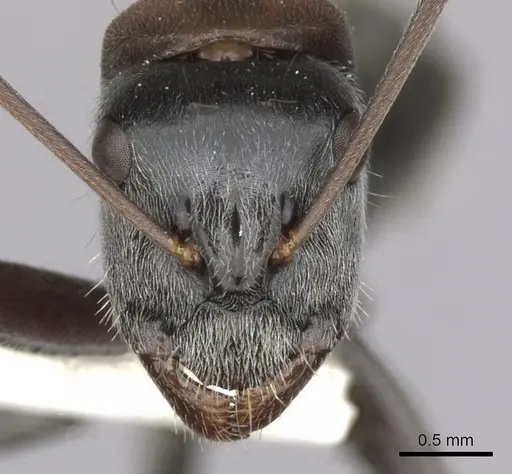
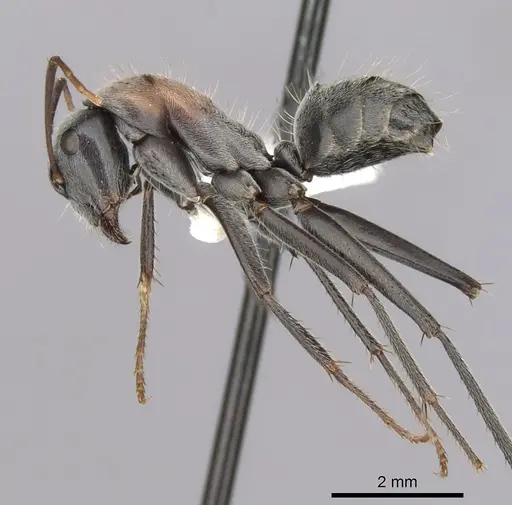
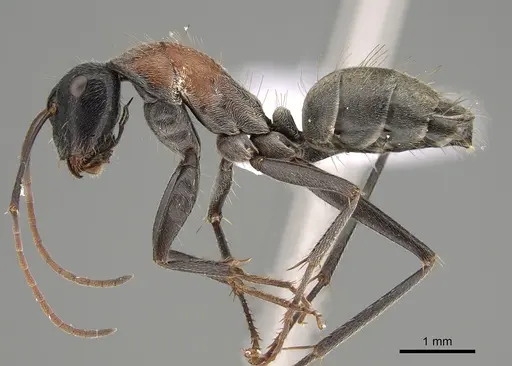
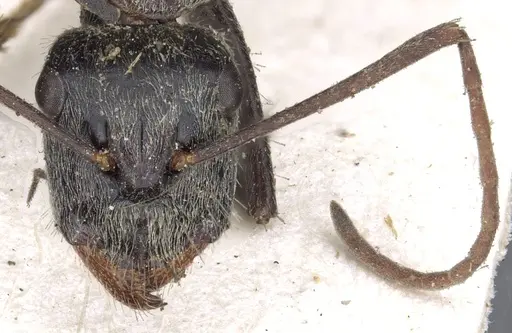
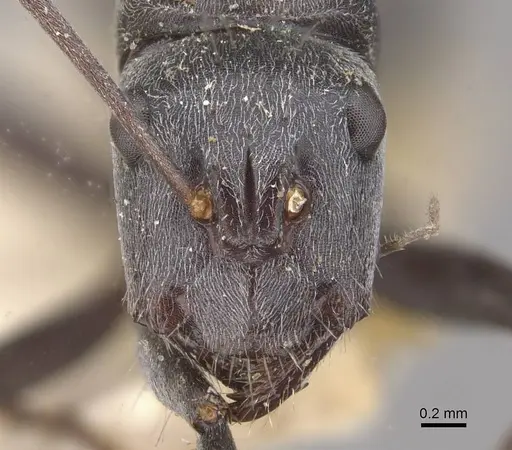
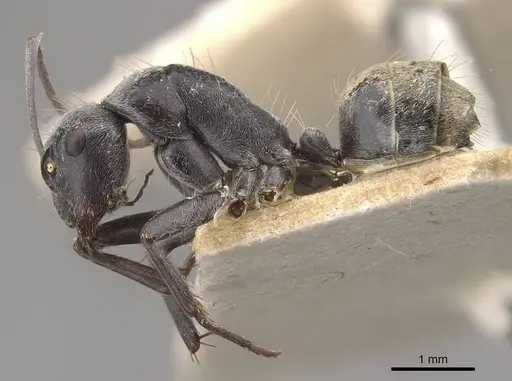
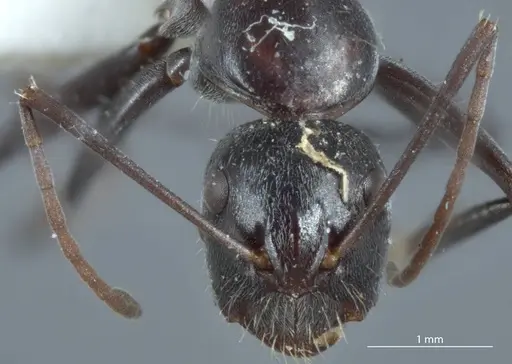
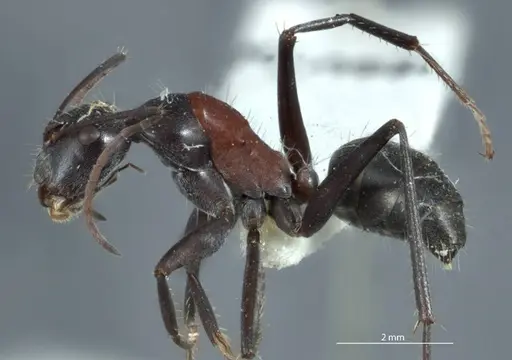
Camponotus ephippium is an Australian carpenter ant species native to the arid and semi-arid regions of eastern Australia, particularly South Australia and central Queensland. Workers measure approximately 6mm with a distinctive appearance: they are primarily black with rusty (ferruginous) markings on the thorax, antennae, mandibles, and leg tips. The abdomen has a covering of short pale yellow silky hairs. Minor workers have angular, sheep-like heads that make them visually distinctive from many other Camponotus species . This species is notable for having a cloacal gland involved in recruitment, a relatively rare trait in ants .
Quick Summary
- Difficulty: Medium
- Origin & Habitat: Eastern arid zone of Australia, from South Australia through central Queensland [4][5]. Found in dry, open habitats typical of arid Australia.
- Colony Type: Colony type is unconfirmed. The research context does not specify whether this species is monogyne or polygyne.
- Size & Growth:
- Antkeeping:
- Temperature: Keep at 22-26°C. This species tolerates warmer conditions since it's adapted to arid Australia.
- Humidity: Low to moderate. Arid-adapted species, keep nest substrate moderately dry, not waterlogged. Provide a water source but avoid excessive moisture.
- Diapause: Winter diapause is likely required based on geographic range, but specific requirements are unconfirmed for this species
- Nesting: Y-tong (AAC) nests work well, or plaster nests with moderate humidity chambers. Provide a connection to an outworld. In nature they nest in soil and decaying wood.
- Behavior: Generally calm and non-aggressive for a Camponotus species. Workers are moderately active foragers that search for honeydew and small insects. They have a cloacal gland involved in recruitment, this means they can mark trails to guide nestmates to food sources [3]. Minor workers have distinctive angular heads. Escape risk is moderate, use standard Camponotus escape prevention (fluon on container edges).
- Common Issues: colonies may fail if kept too humid, this is an arid-adapted species, winter diapause may be essential, skipping hibernation could weaken colonies over time, founding queens may need initial privacy and darkness to settle, slow initial growth during founding phase is normal, don't disturb the queen, wild-caught colonies may carry parasites that need treatment
Appearance and Identification
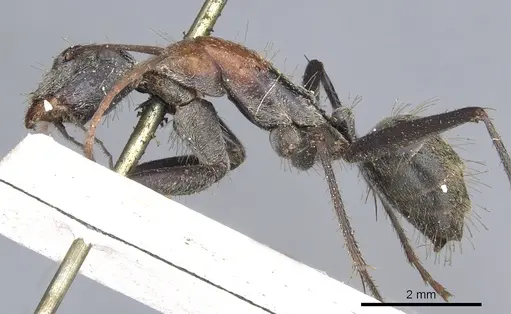
Camponotus ephippium is a medium-sized carpenter ant with workers measuring approximately 6mm. The body is primarily black with distinctive rusty or ferruginous markings on the upper thorax (pro- and mesothorax), the antennae, mandibles, and the tips of the legs. The abdomen is covered in short pale yellow silky hairs that give it a slightly fuzzy appearance. The minor workers have particularly unusual angular, sheep-like heads that set them apart from most other Camponotus species [1]. Minor workers also lack erect setae on the hind tibiae, which helps distinguish them from similar species [6]. The thorax is rounded at the front and narrowed toward the rear, and the legs are relatively elongated.
Natural History and Distribution
This species is endemic to Australia, found throughout the eastern arid zone from South Australia (including the Adelaide area where the type specimen was collected) through central Queensland [4][5]. It occupies dry, open habitats typical of arid Australia rather than wet forest environments. Genetic studies have shown that C. ephippium is genetically distinct from similar-looking species, with significant population differentiation across its range [7]. The species was first described in 1858 by Frederick Smith from Adelaide specimens [2].
Nest Preferences and Housing
In the wild, Camponotus ephippium nests in soil or decaying wood, typical of carpenter ants. For captive care, Y-tong (AAC) nests work well, as do plaster nests with moderate humidity chambers. This is an arid-adapted species, so keep the nest substrate on the drier side. Provide a temperature gradient so workers can choose their comfort zone. Connect the nest to an outworld where foragers can search for food.
Feeding and Diet
Like most Camponotus species, C. ephippium is omnivorous. They naturally forage for honeydew from sap-sucking insects and hunt small invertebrates. In captivity, offer a varied diet: sugar water or honey as a constant energy source, and protein-rich foods like mealworms, small crickets, or other insects. Feed protein roughly twice per week, and keep sugar sources available at all times. These ants are moderate foragers. The presence of a cloacal gland involved in recruitment means they can mark trails to food sources, so you may observe organized foraging trails once the colony establishes [3].
Temperature and Seasonal Care
Camponotus ephippium comes from temperate to arid regions of Australia, so they handle warmer temperatures well. Keep the nest area at 22-26°C, this supports brood development without stressing the colony. Since they're adapted to arid conditions, they don't need high humidity. The key seasonal requirement is likely winter diapause: reduce temperatures to 10-15°C for 2-3 months during winter. This rest period is likely essential for colony health.
Colony Development and Growth
Founding behavior is unconfirmed for this species, though Camponotus queens typically seal themselves into a chamber and raise the first workers alone using stored fat reserves. The first workers (nanitics) are typically smaller than normal workers but will quickly be replaced by larger workers as the colony grows. Expect slow growth initially. Be patient during the founding phase, disturbing the queen or checking too frequently can cause abandonment.
Frequently Asked Questions
How long does it take for Camponotus ephippium to get first workers?
Development time is unconfirmed for this species. Based on typical Camponotus patterns, expect several months from egg to first worker. The queen will seal herself in and raise the first brood alone. Don't disturb her during this time.
What temperature do Camponotus ephippium need?
Keep them at 22-26°C. They're adapted to arid Australian conditions and handle warmth well. A temperature gradient is ideal so workers can regulate their own temperature.
How big do Camponotus ephippium colonies get?
Colony size data is unavailable for this species. Growth is moderate, slow at first during founding, then accelerates as the colony establishes.
Do Camponotus ephippium need hibernation?
Winter diapause is likely required based on the species' geographic range in temperate Australia. Reduce temperature to 10-15°C for 2-3 months during winter. This is likely essential for colony health and proper seasonal cycles.
What do Camponotus ephippium eat?
Offer sugar water or honey constantly, plus protein foods like mealworms or small insects twice weekly. They're omnivorous foragers that naturally collect honeydew and hunt small prey.
Are Camponotus ephippium good for beginners?
They're moderate difficulty, harder than some beginner species but not as challenging as tropical or specialized ants. The main requirements are proper temperature, likely winter diapause, and avoiding excessive humidity.
Can I keep multiple Camponotus ephippium queens together?
Colony type is unconfirmed for this species. Until more is known, keep only one queen per colony.
When should I move Camponotus ephippium to a formicarium?
Wait until the colony has at least 50-100 workers and the test tube setup becomes crowded. For this species, a Y-tong or plaster nest works well since they prefer moderately dry conditions.
Why is my Camponotus ephippium colony dying?
Common causes include: too much humidity (remember they're arid-adapted), skipping winter diapause, disturbing the queen during founding, or poor nutrition. Check that humidity is low, temperatures are stable, and you're offering varied food.
Report an Issue
The current care sheet is based fully on literature. See inconsistencies, or something that's incorrect? Please , it will be resolved after review from an admin. Contributing to the blogs tab also helps providing information, to make us be able to further improve the caresheets. Thank you for your support!
References

This caresheet is licensed under CC BY-SA 4.0 .
Community Blogs
CASENT0280173
View on AntWeb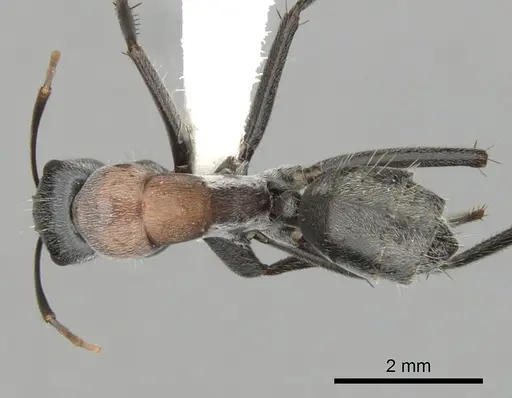
CASENT0887675
View on AntWeb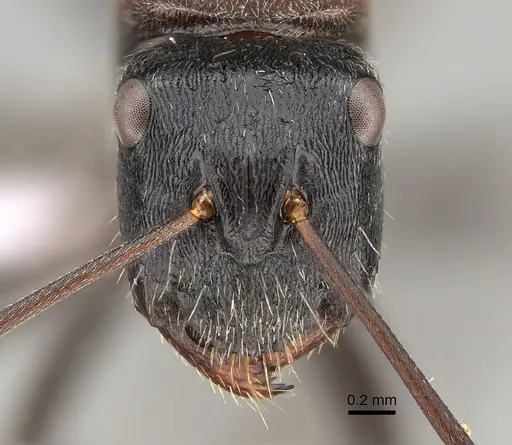
CASENT0903540
View on AntWeb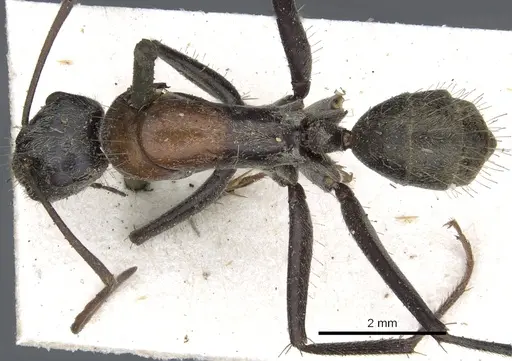
CASENT0910375
View on AntWeb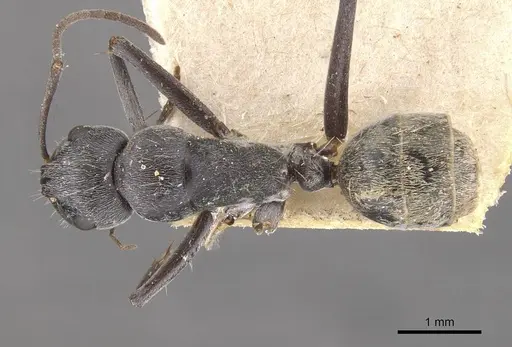
JDM32-001186
View on AntWeb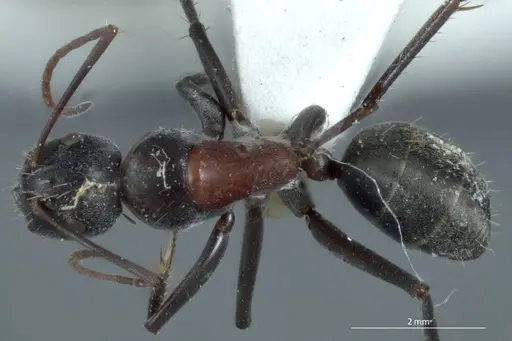
Literature
Loading distribution map...Loading products...