
Camponotus dromas
- Sci. Name
- Camponotus dromas
- Subgenus
- Myrmophyma
- Tribe
- Camponotini
- Subfamily
- Formicinae
- Author
- Santschi, 1919
- Distribution
- Found in 1 countries
Introduction
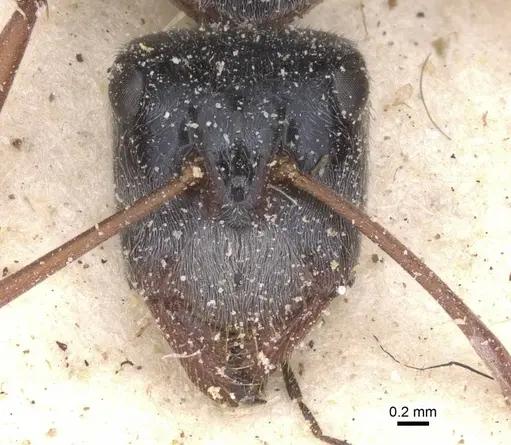
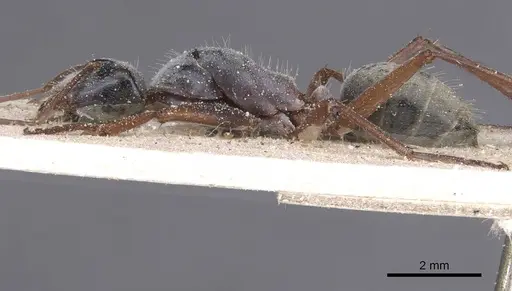
Camponotus dromas is a large carpenter ant native to northern Australia, specifically Queensland around the Townsville region. Workers measure 9-12 mm . The species is part of the Australian Gondwanan endemic fauna and is closely related to Camponotus claripes and Camponotus aeneopilosus . It is distributed throughout the semi-arid tropics and recorded in areas like Mitchell Falls on laterite and sandstone sites . This ant belongs to the Subordinate Camponotini functional group and is adapted to arid environments .
Quick Summary
- Difficulty: Medium
- Origin & Habitat: Northern Australia (Queensland), semi-arid tropics, found on laterite and sandstone sites [5][6].
- Colony Type: Based on Camponotus patterns, likely monogyne (single queen colony), but unconfirmed from specific literature.
- Size & Growth:
- Antkeeping:
- Temperature: Keep at 24-28°C during active season. Provide a temperature gradient so ants can regulate their own exposure [1].
- Humidity: Keep the nest substrate consistently moist but not waterlogged, adjusted for semi-arid habitat [5].
- Diapause: Yes, a winter rest period is recommended based on geographic range. Reduce temperature to 15-18°C for 2-3 months during winter [5][6].
- Nesting: Preferred nest types include Y-tong (AAC), plaster, or soil nests. Provide a humidity gradient with a moist area.
- Behavior: Workers are generally docile and not aggressive toward keepers. They can spray formic acid as a defense mechanism, which is mild compared to some other ants.
- Common Issues: overwatering can lead to mold problems and colony failure., slow founding phase may require patience before workers emerge., diapause management is critical, sudden temperature changes can harm the colony., large colony sizes require spacious formicariums eventually., major workers can chew through weak barriers.
Housing and Nest Setup
Camponotus dromas does well in Y-tong (AAC) nests or naturalistic setups. Because they are large ants (up to 12 mm) [1], they need appropriately sized chambers and tunnels. A test tube setup works well for founding colonies, use a water tube with a cotton plug and place it in a dark container for the outworld [1]. Once the colony reaches a certain size, transition to a formicarium. For the outworld, provide a shallow feeding dish and ensure escape prevention is in place [1]. These ants are not particularly aggressive but can be defensive when their nest is threatened. A hydration setup with a water test tube connected to the nest works best, this provides humidity without making the entire nest wet [1].
Feeding and Diet
Like most carpenter ants, Camponotus dromas is omnivorous and accepts a varied diet. Protein sources are essential for brood development, offer small insects like fruit flies, small crickets, or mealworms [1]. They also readily accept sugar water, honey, or diluted honey as an energy source [1]. During the founding stage, the queen does not eat, she relies entirely on her stored fat reserves [1]. Once workers emerge, offer protein foods 2-3 times per week and keep a sugar source available constantly. Remove uneaten prey after 24-48 hours to prevent mold [1]. These ants are foragers and will send workers out to collect food, so place offerings in an accessible location in the outworld [1].
Temperature and Seasonal Care
Maintain temperatures between 24-28°C during the active growing season. A temperature gradient is ideal, place a heating cable on one end of the nest so workers can choose their preferred temperature [1]. During summer months, room temperature is often sufficient if your home stays warm. In winter (typically June-August in Australia), reduce temperatures to 15-18°C to simulate their natural seasonal cycle [5][6]. This diapause period is important for colony health and mimics the cooler dry season they experience in their native habitat. Do not feed heavily during diapause and reduce water availability slightly. Sudden temperature changes should be avoided, always transition gradually over several days [1].
Colony Development and Growth
The founding phase for Camponotus dromas follows typical Camponotus patterns. The queen likely seals herself in a small chamber and lays eggs while surviving on her stored fat reserves [1]. This phase can last 4-8 weeks depending on temperature. The first workers (nanitics) are typically smaller than mature workers but will grow with subsequent broods [1]. Colonies grow moderately, expect several hundred workers within the first year under good conditions [1]. Major workers begin appearing as the colony matures, typically when it reaches a larger size [1]. These larger workers have specialized roles in food processing and nest defense. A mature colony can contain many workers and will produce winged reproductives annually [1].
Behavior and Temperament
Camponotus dromas is generally a docile species that is well-suited for antkeeping. Workers are not particularly aggressive and rarely sting, though they can spray formic acid as a defensive mechanism. They are primarily nocturnal or crepuscular foragers in the wild, so you may see more activity during evening hours [1]. The species shows clear caste differentiation, major workers are significantly larger and have different head shapes compared to minors [1]. Majors often remain near the nest and process food, while minors handle foraging and brood care [1]. They communicate through chemical trails and will quickly recruit workers to good food sources [1]. These ants are not known for being particularly escape-prone compared to some smaller species, but secure housing is still recommended [1].
Frequently Asked Questions
How long does it take for Camponotus dromas to produce first workers?
The first workers (nanitics) typically emerge 6-8 weeks after the queen lays eggs, assuming temperatures around 24-28°C. The exact timing depends on temperature, warmer conditions speed development while cooler temperatures slow it down [1].
Can I keep multiple Camponotus dromas queens together?
This species is likely monogyne, meaning colonies have a single queen. Combining unrelated queens is not recommended and typically results in fighting. Only keep one queen per colony, based on Camponotus patterns [1].
What temperature range is best for Camponotus dromas?
Keep them at 24-28°C during the active season. Provide a temperature gradient so workers can regulate their own temperature. During winter diapause, reduce to 15-18°C [1].
How big do Camponotus dromas colonies get?
Colony size data is unavailable from current research. Based on typical Camponotus patterns, colonies can grow large, but specific numbers are not confirmed [1].
Do Camponotus dromas need hibernation or diapause?
Yes, a winter rest period is recommended based on their geographic range in semi-arid tropics. Reduce temperatures to 15-18°C for 2-3 months, typically during winter [5][6].
What do Camponotus dromas eat?
They are omnivorous. Offer protein sources like small insects (fruit flies, mealworms) 2-3 times per week and keep sugar water or honey available constantly. Remove uneaten food after 24-48 hours [1].
When should I move my colony to a formicarium?
Move to a formicarium once the colony has established and grown, typically after the first workers emerge. A Y-tong or naturalistic setup works well. Make sure the chambers are appropriately sized for these large ants [1].
Are Camponotus dromas good for beginners?
They are intermediate in difficulty. They are more forgiving than tropical species requiring high humidity, but require more attention than some common pet ants. Their moderate growth rate and clear caste system make them interesting to observe [1].
How do I identify Camponotus dromas workers?
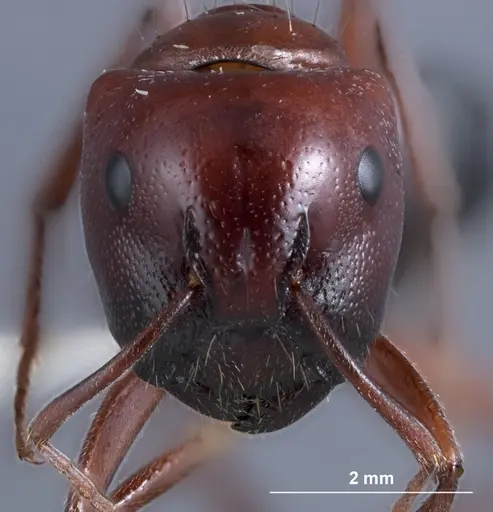
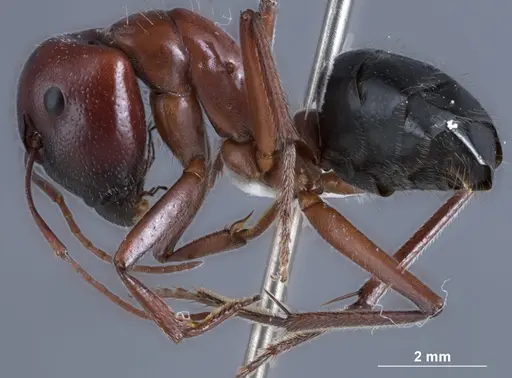
Workers are 9-12 mm with distinctive coloring. Majors have dark red heads and mandibles with black gasters. Minors are black with a steel blue sheen on the head and thorax. The square-shaped head of majors is distinctive [1].
Report an Issue
The current care sheet is based fully on literature. See inconsistencies, or something that's incorrect? Please , it will be resolved after review from an admin. Contributing to the blogs tab also helps providing information, to make us be able to further improve the caresheets. Thank you for your support!
References

This caresheet is licensed under CC BY-SA 4.0 .
Community Blogs
CASENT0887715
View on AntWeb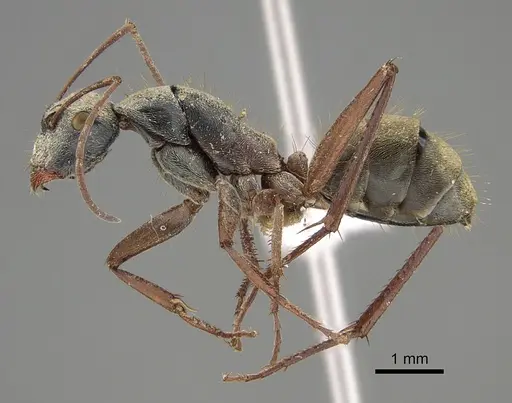
CASENT0911754
View on AntWeb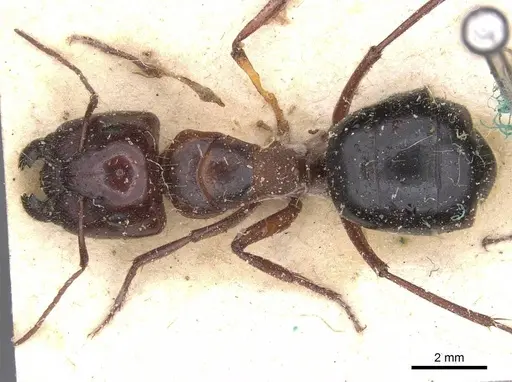
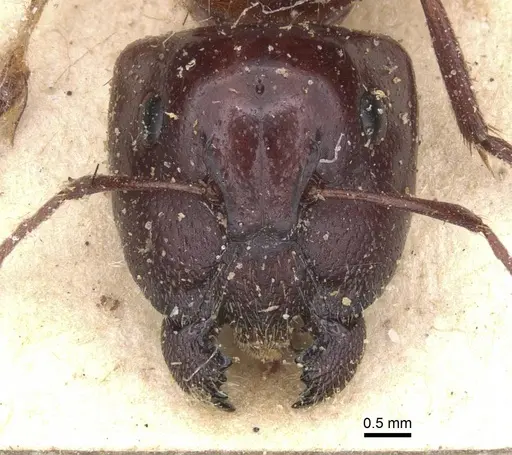
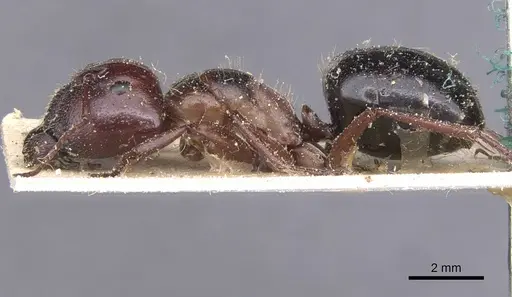
CASENT0911755
View on AntWeb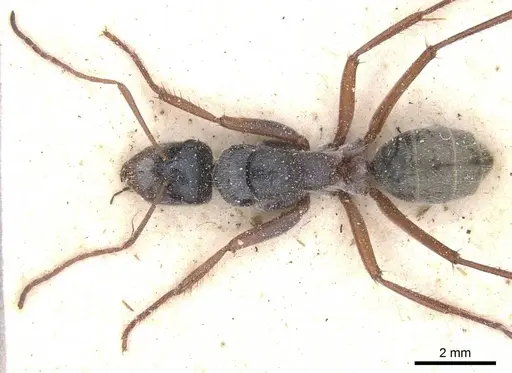
JDM32-001165
View on AntWeb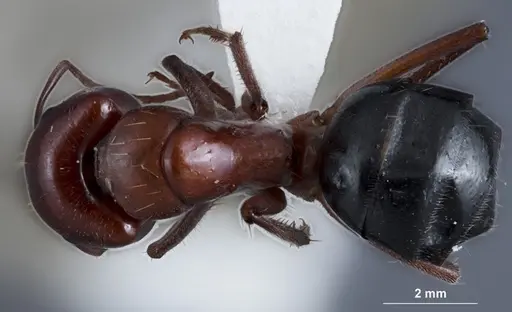
Literature
Loading distribution map...Loading products...