
Camponotus dalmaticus
- Sci. Name
- Camponotus dalmaticus
- Subgenus
- Myrmentoma
- Tribe
- Camponotini
- Subfamily
- Formicinae
- Author
- Nylander, 1849
- Distribution
- Found in 9 countries
Introduction
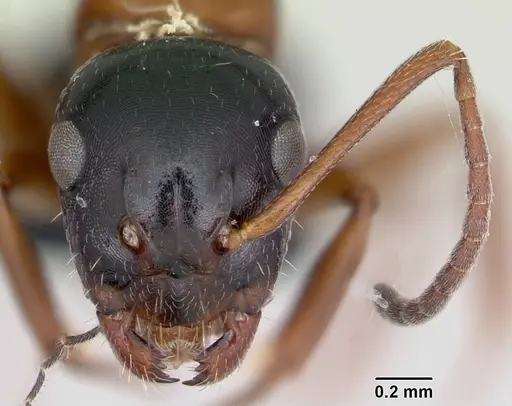
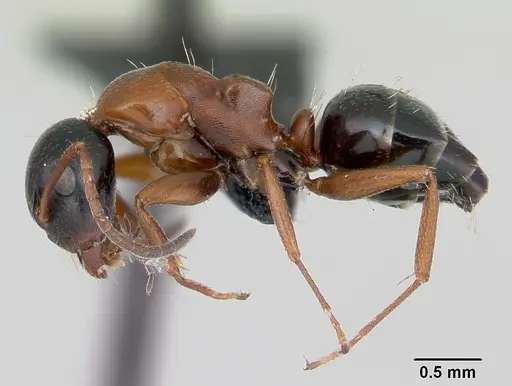
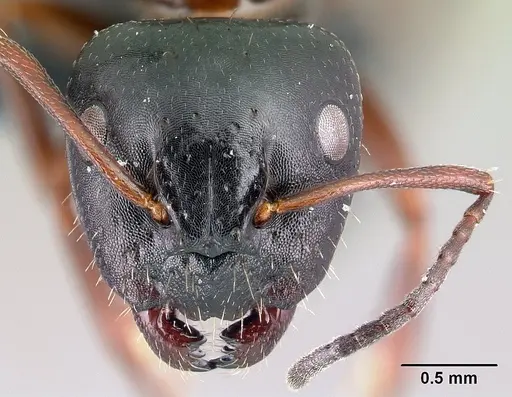
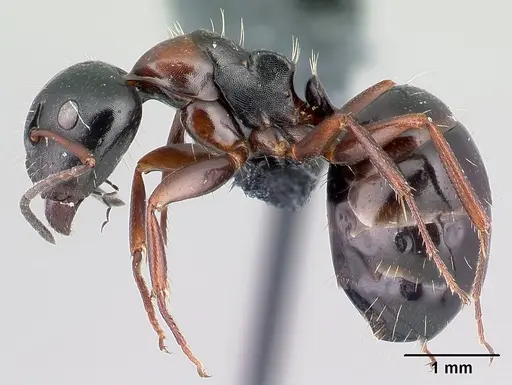
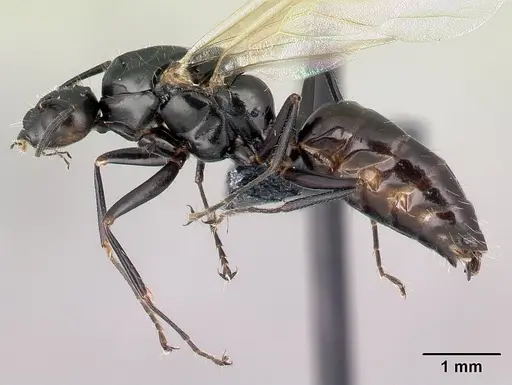
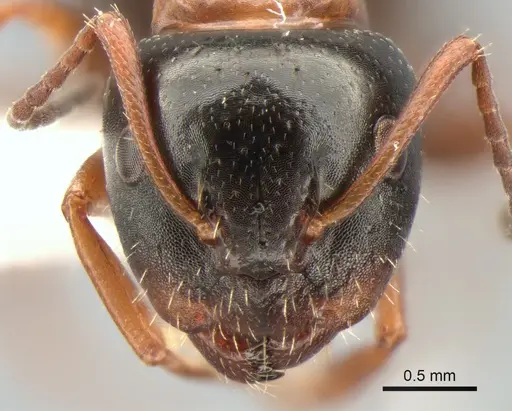
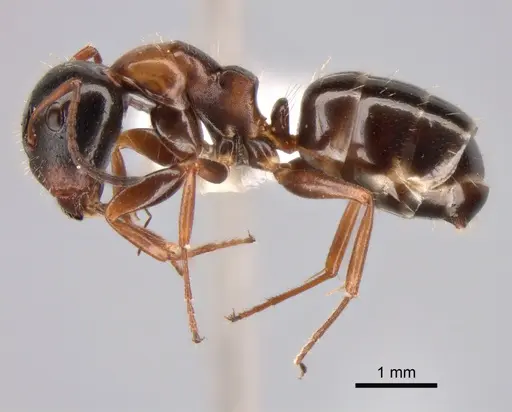
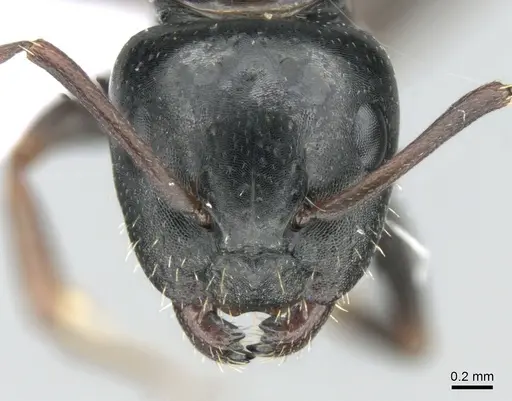
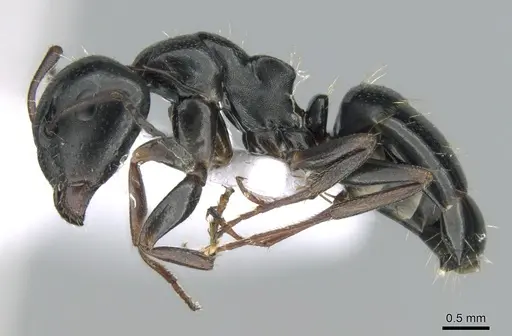
Camponotus dalmaticus is a moderately large, polymorphic ant from the Camponotus lateralis species group. Workers measure 4.3-6.1 mm in total length . They have a stout head about 1.2 times longer than wide and a trapezoidal clypeus. This species is known for its striking color variation: most colonies have a black head and gaster with a red or yellowish pronotum, but some individuals are nearly all black or all brown . Native to southern Europe and the Mediterranean basin, it is found from Switzerland and Italy east to Turkey and the Near East, preferring warm, dry habitats like forest edges, Mediterranean scrub, and roadsides . Unlike its relative Camponotus lateralis, it is non-mimetic and workers are consistently gray . They nest under stones, in rock crevices, and inside dry plant stems .
Quick Summary
- Difficulty: Easy
- Origin & Habitat: Southern Europe and Mediterranean region from Switzerland and Italy east to Turkey, Israel, Lebanon, and Syria. Prefers warm, thermophilous habitats such as deciduous and mixed forest edges, Mediterranean shrubs, roadsides, and urban parks. Nests under stones, in rock crevices, and inside dry empty stems of large herbs, at elevations mostly below 800 m but up to 1370 m in the Peloponnese [2][4][3].
- Colony Type: Colony structure is unconfirmed in the literature. Most Camponotus are monogyne (single‑queen), but this has not been studied for Camponotus dalmaticus. Based on genus patterns it is likely monogyne.
- Size & Growth:
- Queen: Direct measurements unavailable, inferred from genus Camponotus patterns (queens typically 9-12 mm)
- Worker: 4.3-6.1 mm total length (TL) [1]
- Colony: Unknown, estimated several hundred workers based on related Camponotus species
- Growth: Moderate (typical for Camponotus)
- Development: Estimated 6-10 weeks at 22-26°C (inferred from genus patterns) (As a thermophilous Mediterranean species, development likely speeds up at higher temperatures within their preferred range.)
- Antkeeping:
- Temperature: Likely 22-26°C based on its thermophilous nature [2][3]. Provide a gentle gradient with a heating cable on one side of the nest.
- Humidity: Moderate. They nest under stones in dry habitats, so keep the nest substrate lightly moist but allow some drying. Avoid waterlogging.
- Diapause: Yes, as a temperate southern European species, a winter rest at 10-15°C for 2-3 months is recommended to mimic natural seasonality.
- Nesting: Naturalistic setups with flat stones, rubble, or clay work well. Y‑tong (AAC) nests with narrow chambers or test tubes for founding. These ants nest under stones and in rock crevices [2].
- Behavior: Generally calm and not aggressive toward keepers. Workers are active foragers on vegetation and often feed on honeydew from aphids. They do not have a functional sting, they bite and spray formic acid (typical of Formicinae). Trail following is observed but less frequent than in Camponotus lateralis [5]. Escape risk is moderate, they are agile but large enough to be well contained.
- Common Issues: colonies may stagnate if kept too cold, maintain warmth year‑round except during diapause, overwatering can cause mold, keep substrate moderately dry, winter die‑offs possible if diapause conditions are not properly provided, wild‑caught colonies may carry parasites that can kill them in captivity, slow founding phase, queens may take weeks before first workers appear, patience required.
Nest Preferences
In the wild, Camponotus dalmaticus nests under stones, in rock crevices, and inside dry empty stems of large herbs [2][4]. They also use rock walls made of rubble and clay. For captive care, a Y‑tong (AAC) nest with narrow chambers works well, or a naturalistic setup with flat stones on a clay‑based substrate. Test tube setups are ideal for founding. The nest should have tight, snug chambers, these are moderately large ants but they feel secure in smaller spaces. Keep the nest relatively dry, reflecting their natural dry, warm habitats.
Feeding and Diet
Like other Camponotus, Camponotus dalmaticus is omnivorous. In the wild they forage for honeydew from aphids and scale insects, and hunt small insects. In captivity, provide sugar water or honey constantly (for energy), and protein sources such as small crickets, mealworms, or other insects 2-3 times per week. Workers also scavenge for dead insects. Major workers can handle larger prey. Place food where workers can easily find it, and remove leftovers to prevent mold. [1]
Temperature and Seasonal Care
This is a thermophilous Mediterranean species, so warmth is vital for colony health. Maintain the nest around 22-26°C, with a gentle gradient so ants can thermoregulate. A heating cable on one side helps. During winter, they benefit from a diapause period: reduce temperature to 10-15°C for 2-3 months. This mimics their natural seasonal cycle and supports queen health. Do not keep them active through winter, as it can stress the colony [2][3].
Behavior and Colony Dynamics
Colony structure is unconfirmed in the literature. Most Camponotus are monogyne (single queen), and this is likely for Camponotus dalmaticus but has not been directly studied. Workers are active foragers, often seen on bushes and low vegetation. Unlike Camponotus lateralis, this species is non‑mimetic, workers are consistently gray [5]. Trail following has been observed in about 10% of colonies, less frequent than in C. lateralis. They prefer more open, xerophilous habitats and are always found syntopic with C. lateralis [5]. Founding behavior is unconfirmed, claustral founding is typical for Camponotus but not explicitly known for this species. Be patient during founding, queens may take weeks before first workers appear.
Frequently Asked Questions
How long does it take for Camponotus dalmaticus to produce first workers?
Assuming warm temperatures (22-26°C), first workers typically emerge 6-10 weeks after eggs are laid. This estimate is based on genus patterns, as no direct development data exists for this species.
Can I keep multiple Camponotus dalmaticus queens together?
Probably not. Most Camponotus are monogyne (single queen), and this species is assumed to be the same, but it has not been confirmed. If you find multiple dealate queens, it is safest to house them separately.
What temperature range is best for Camponotus dalmaticus?
Keep the nest at 22-26°C year‑round, except during diapause when it should be lowered to 10-15°C for 2-3 months. A heating cable on one side creates a useful gradient [2].
What do Camponotus dalmaticus eat?
They are omnivores. Provide a constant supply of sugar water or honey for energy, and offer protein sources (small insects, mealworms, etc.) 2-3 times per week. They readily accept honeydew mimics.
Is Camponotus dalmaticus good for beginners?
Yes, they are forgiving of minor care mistakes, not aggressive, and their moderate size makes them easy to observe. The main challenges are providing consistent warmth and a proper winter diapause.
When should I move Camponotus dalmaticus from a test tube to a formicarium?
Wait until the colony has outgrown the test tube, which typically happens when worker numbers exceed 30-50. The founding tube should have a water reservoir that stays filled. Move them to a Y‑tong or naturalistic nest once they seem cramped.
Do Camponotus dalmaticus need hibernation?
Yes. As a temperate southern European species, they benefit from a winter diapause at 10-15°C for 2-3 months. This mimics natural conditions and helps maintain queen health. Do not skip this period.
How big do Camponotus dalmaticus colonies get?
Colony size is not well documented. Based on related Camponotus species, they likely reach several hundred workers at maturity. Growth is moderate once established.
Why are my Camponotus dalmaticus dying?
Common causes include: temperatures too cold (keep above 20°C), excessive humidity (mold), stress during founding (avoid disturbing the queen), or parasites from wild‑caught colonies. Ensure proper warmth, moderate humidity, and minimal disturbance.
Report an Issue
The current care sheet is based fully on literature. See inconsistencies, or something that's incorrect? Please , it will be resolved after review from an admin. Contributing to the blogs tab also helps providing information, to make us be able to further improve the caresheets. Thank you for your support!
References

This caresheet is licensed under CC BY-SA 4.0 .
Community Blogs
CASENT0080781
View on AntWeb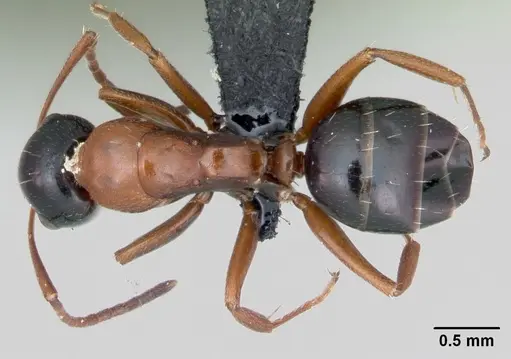
CASENT0179601
View on AntWeb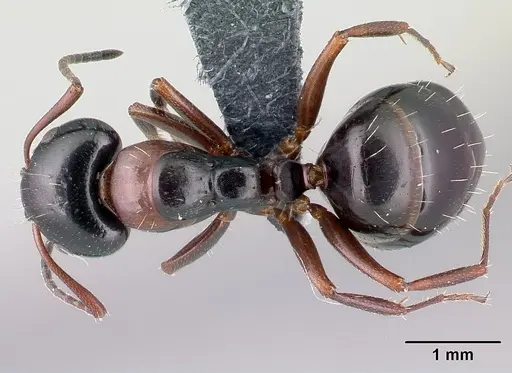
CASENT0179602
View on AntWeb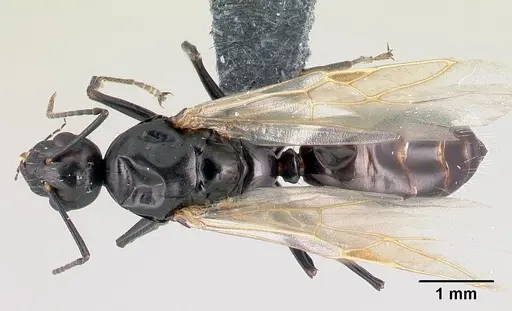
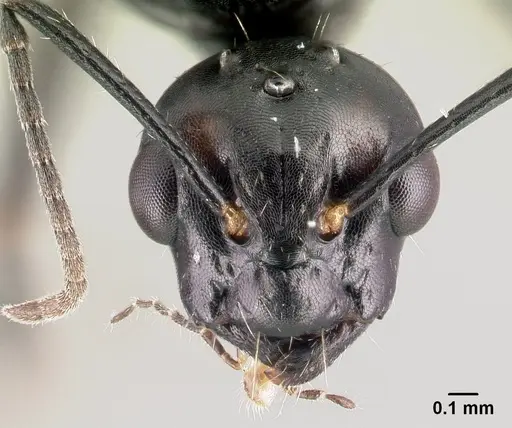
CASENT0882039
View on AntWeb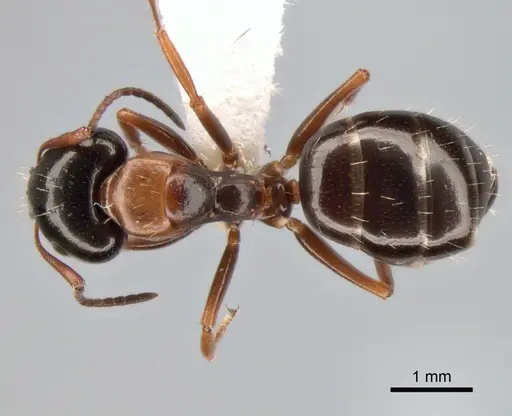
CASENT0906110
View on AntWeb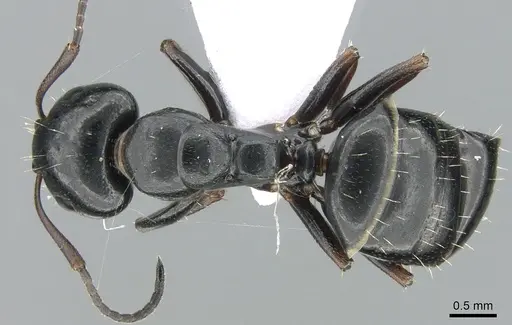
Literature
Loading distribution map...Loading products...