
Camponotus augustei
- Sci. Name
- Camponotus augustei
- Subgenus
- Myrmeurynota
- Tribe
- Camponotini
- Subfamily
- Formicinae
- Author
- Wheeler & Mann, 1914
- Distribution
- Found in 1 countries
Introduction
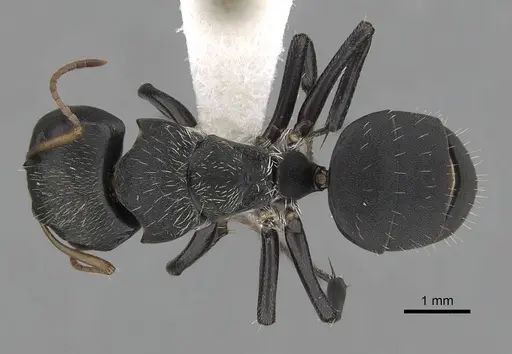
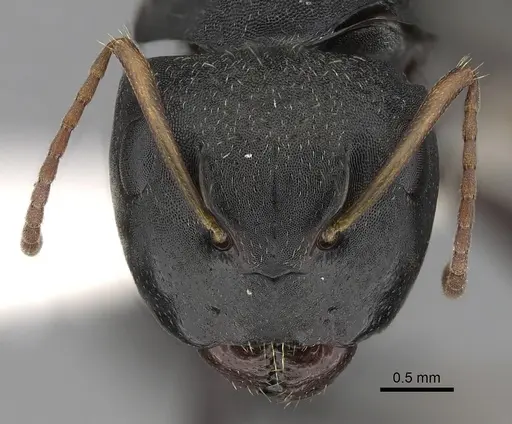
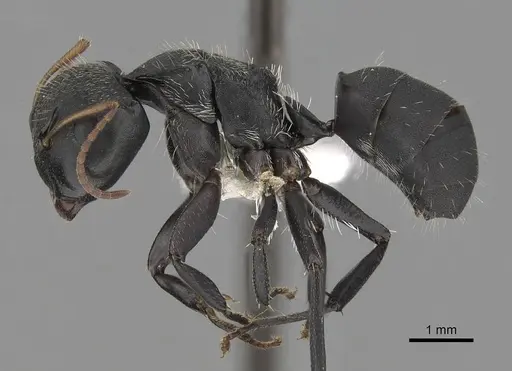
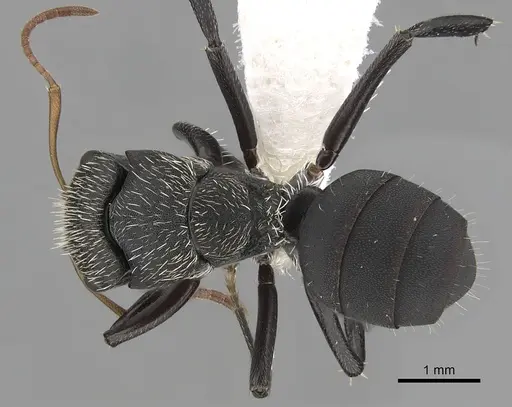
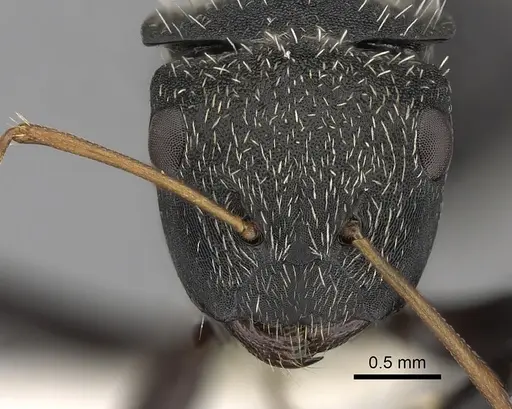
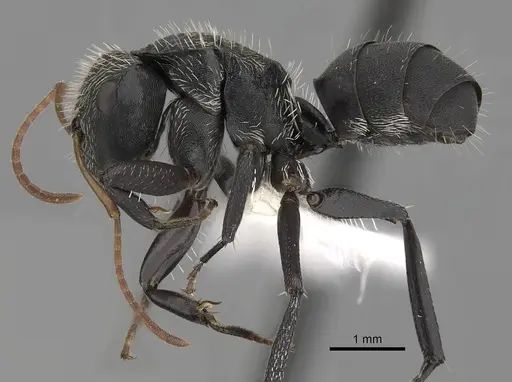
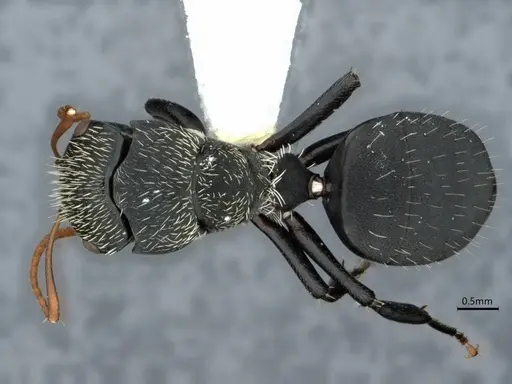
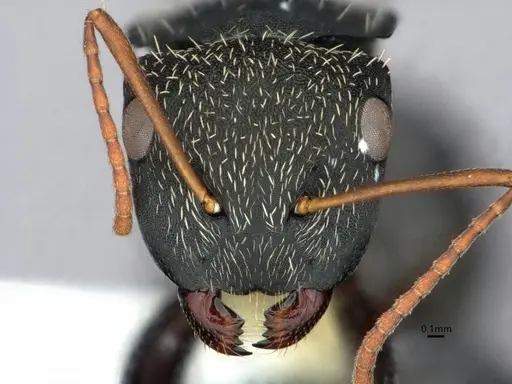
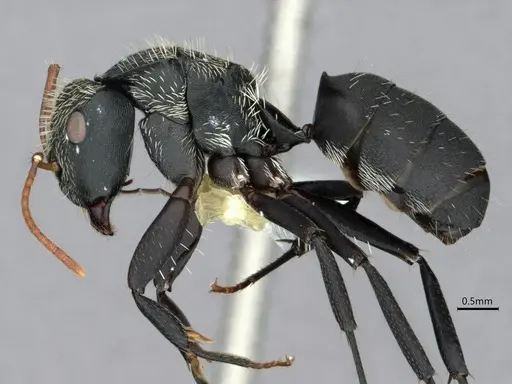
Camponotus augustei is a small to medium-sized carpenter ant endemic to the island of Hispaniola (Haiti and Dominican Republic). Major workers measure 5-6 mm while minor workers are 4.5-5.5 mm . They resemble the related Camponotus christophei but can be distinguished by their broader petiole and the complete absence of the two pale bands of pubescence on the gaster . The body is dark with sparse, short, blunt white pubescence covering the head, thorax, and gaster uniformly . This species inhabits moist forests at elevations of 700-1,190 meters . Colonies nest in rotting tree boles, within wood at the base of live trees, and in downed sticks . When disturbed, workers remain still to avoid detection, a defensive freeze response .
Quick Summary
- Difficulty: Medium
- Origin & Habitat: Endemic to Hispaniola, found in Haiti and the Dominican Republic at elevations of 700-1,190 meters in moist forests [2][3].
- Colony Type: Colony structure is unconfirmed. Based on typical Camponotus patterns, they likely form single-queen colonies, but this has not been directly studied.
- Size & Growth:
- Queen: Size data unavailable, inferred from Camponotus genus patterns as ~10-14 mm
- Worker: Major workers: 5-6 mm, Minor workers: 4.5-5.5 mm [1]
- Colony: Up to hundreds of workers based on field observations [2]
- Growth: Moderate
- Development: Estimated 6-8 weeks at optimal temperature, based on genus patterns (Development time is inferred from related species, direct measurements for this species are unavailable)
- Antkeeping:
- Temperature: Keep at 22-26°C. Based on their elevation range, they prefer moderate temperatures [2][3].
- Humidity: Keep nest substrate consistently moist but not waterlogged, as they come from moist forest habitats [2][3].
- Diapause: Unknown, as a Caribbean species, they may not require diapause, but slight cooling might be beneficial.
- Nesting: Wood-nesting species. Use Y-tong, plaster, or naturalistic setups with rotting wood [2].
- Behavior: Relatively docile. When disturbed, they freeze to avoid detection [2]. Workers are moderately active foragers. Escape risk is moderate due to small minor workers (4.5 mm).
- Common Issues: limited availability, this species is rarely available in the antkeeping hobby due to its restricted endemic range, slow colony growth, like many Camponotus, founding colonies take time to establish, humidity management, being from moist forests, they can suffer in dry conditions, very limited care information, much of captive care is inferred from genus patterns rather than species-specific research, stress response, their freeze-response to disturbance may be mistaken for death or inactivity
Nest Preferences and Housing
Camponotus augustei is a wood-nesting species. In the wild, colonies have been found in rotting downed tree boles, within wood at the base of live trees, and in downed sticks [2]. For captive care, Y-tong (AAC) nests work well because they provide darkness and humidity control. Plaster nests or naturalistic setups with corso bark and rotting wood pieces also suit them. The key is providing moist, rot-resistant nest materials that hold humidity without becoming soggy. They prefer tight chambers scaled to their body size, these ants are on the smaller side for Camponotus, so avoid overly large chambers. A water tube should always be available for drinking access.
Feeding and Diet
Like other Camponotus species, they are omnivorous with a preference for sugar sources. In the wild, workers likely tend aphids and scale insects for honeydew, and forage for small insects. In captivity, offer sugar water or honey regularly, and provide protein sources like small crickets, mealworms, or other insects weekly. Prey items should be small enough to handle. Remove uneaten prey after 24-48 hours to prevent mold. [1]
Temperature and Seasonal Care
Based on their elevation range of 700-1,190 meters in the Caribbean, these ants prefer moderate temperatures in the low-to-mid 20s Celsius. A room-temperature setup around 22-26°C is ideal. They come from a subtropical climate without harsh winters, so they likely do not require a true diapause. However, slight seasonal cooling during winter months may help maintain natural cycles. Avoid temperatures below 15°C or above 30°C for extended periods. [2][3]
Behavior and Temperament
When researchers exposed nest chambers in rotting wood, the ants remained completely still, a freeze response that appears designed to avoid detection [2]. This makes them a relatively calm species to work with, though it also means they may seem inactive when their nest is first opened. They are not particularly aggressive and lack a painful sting. Workers are moderately active foragers. Escape prevention should be standard, while not the smallest ants, minor workers at 4.5 mm can still slip through loose gaps.
Colony Establishment and Growth
Establishing a colony takes patience. Like other Camponotus, the queen is likely claustrally founding, she seals herself in a chamber and raises her first workers on stored body fat. The founding chamber should be kept dark and undisturbed. First workers typically emerge in 6-8 weeks under optimal conditions. Initial colony growth is slow as the queen lays only a small batch of eggs. Once nanitics mature, the colony enters a growth phase with worker numbers increasing more steadily. A mature colony may contain hundreds of workers, as observed in the wild [2].
Frequently Asked Questions
How long does it take for Camponotus augustei to produce first workers?
Expect 6-8 weeks from egg to first worker at optimal temperature (around 24°C). This is typical for smaller Camponotus species, though exact development time has not been documented for this species specifically.
What do Camponotus augustei eat?
They are omnivorous like most carpenter ants. Offer sugar water or honey regularly, and protein sources like small insects (crickets, mealworms) weekly.
What temperature do Camponotus augustei need?
Keep them at 22-26°C. They come from moderate elevations (700-1,190 m) in the Caribbean, so they prefer temperatures warmer than temperate ants but not as hot as lowland tropical species.
Are Camponotus augustei good for beginners?
They are rated Medium difficulty. While not aggressive and relatively hardy once established, the main challenge is their rarity in the antkeeping hobby and the limited species-specific care information available.
How big do Camponotus augustei colonies get?
Based on field observations, colonies can reach up to hundreds of workers [2].
What type of nest is best for Camponotus augustei?
Y-tong (AAC) nests, plaster nests, or naturalistic setups with rotting wood work well. They need moisture-retaining nest materials and prefer tight chambers scaled to their small size.
Do Camponotus augustei need hibernation?
Diapause is unknown, as a Caribbean species, they may not require it, but slight cooling might be beneficial.
Why do my Camponotus augustei stay still when I open their nest?
This is normal behavior! When their nest is disturbed, these ants have a freeze response, they stay completely still to avoid detection. This is a documented defensive behavior in wild colonies [2].
Where is Camponotus augustei found in the wild?
They are endemic to Hispaniola, meaning they are found nowhere else on Earth. Their range includes Haiti and the Dominican Republic at elevations of 700-1,190 meters in moist forest areas [2][3].
Report an Issue
The current care sheet is based fully on literature. See inconsistencies, or something that's incorrect? Please , it will be resolved after review from an admin. Contributing to the blogs tab also helps providing information, to make us be able to further improve the caresheets. Thank you for your support!
References

This caresheet is licensed under CC BY-SA 4.0 .
Community Blogs
Literature
Loading distribution map...Loading products...