
Calyptomyrmex danum
- Sci. Name
- Calyptomyrmex danum
- Tribe
- Crematogastrini
- Subfamily
- Myrmicinae
- Author
- Shattuck, 2011
- Distribution
- Found in 1 countries
Introduction
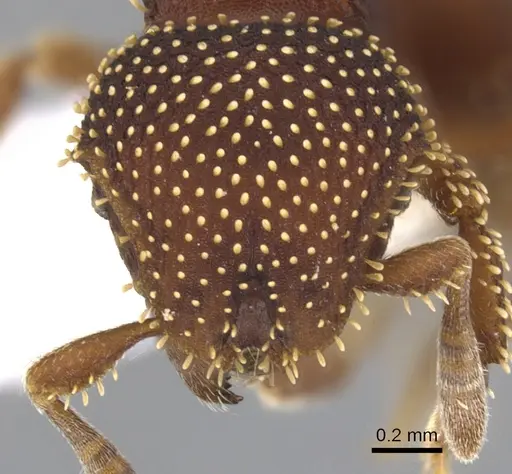
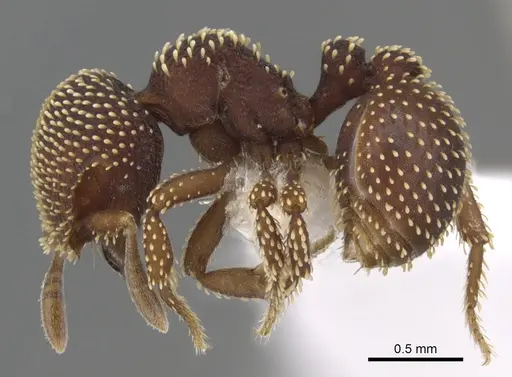
Calyptomyrmex danum is a tiny rainforest ant found only in the Danum Valley, eastern Sabah, Malaysia . Workers have a dull red-brown color and their body is covered in spatulate (spoon-shaped) hairs that help hold soil particles for camouflage . They nest in rotten wood or directly in soil, and workers forage singly or in small numbers . This species was only described in 2011,so very little is known about its wild biology or captive care . The limited collection data comes from a single site, making it a rare and specialized ant. For antkeepers, it is an experimental species with no established husbandry.
Quick Summary
- Difficulty: Expert, this is a rarely kept species with no established care guidelines.
- Origin & Habitat: Danum Valley, eastern Sabah, Malaysia (Borneo). Collected from a single rainforest site. Nests in rotten wood or in soil [1][3][2].
- Colony Type: Unconfirmed. Only a small number of specimens have been collected, and colony structure has not been studied.
- Size & Growth:
- Queen: Unknown, a single queen was collected but measurements were not published separately [1].
- Worker: Head width about 1mm, total body length has not been documented [1]. The species is very small.
- Colony: Unknown, no data on wild colony sizes exists [3].
- Growth: Unknown
- Development: Unknown, no development studies exist. By inference from similar small Myrmicinae, possibly 6-10 weeks at optimal temperature, but this is unconfirmed. (No direct data on development time exists for this species.)
- Antkeeping:
- Temperature: Tropical rainforest ant: keep at 24-28°C. Avoid below 22°C. No specific data, inferred from habitat [3].
- Humidity: High humidity essential. Keep nest substrate consistently moist but not waterlogged. Rainforest species need around 70-85% humidity.
- Diapause: No, as a tropical species from Borneo, diapause is not required. Maintain stable conditions year-round.
- Nesting: Natural nests are in rotten wood or soil [3]. Use a naturalistic setup with moist substrate, such as a dirt-filled formicarium or test tube with soil. Ensure chambers are small due to their tiny size.
- Behavior: Workers forage singly or in small numbers rather than in large trails [3]. They rely on camouflage, often covering themselves with soil [3]. They are likely non-aggressive and cryptic. Being very small, escape prevention is critical, use fine mesh barriers. Like other Crematogastrini, they have a modified stinger for smearing venom rather than typical stinging (general knowledge).
- Common Issues: tiny size makes escapes likely without fine mesh barriers and careful sealing., no established care guidelines, you will need to experiment with conditions., high humidity requirements can lead to mold if ventilation is inadequate., limited availability and unknown colony growth may lead to frustration., very little is known about their diet, feeding may be trial-and-error.
Appearance and Identification
Calyptomyrmex danum workers are very small ants with a dull red-brown color. Their most notable feature is the spatulate hairs, these are hairs narrower near the body and expanded with a rounded tip [1]. These hairs help them collect and hold soil particles for camouflage [3]. The propodeum has short angular teeth, and the petiole is slightly broader than long and oval-shaped when viewed from above [1]. The gaster is smooth to shallowly punctate [1]. These features separate them from other Calyptomyrmex species.
Natural History and Habitat
This species is known only from the Danum Valley in eastern Sabah, Malaysia (Borneo). It was collected several times at a single rainforest site between July and November 1999,and was described in 2011 [1]. It nests in rotten wood or directly in soil [3]. Workers often have a layer of soil stuck to their spatulate hairs, which acts as camouflage [3]. They forage singly or in small numbers through the leaf litter [3].
Housing and Nesting
Mimic their natural rainforest floor habitat. Use a formicarium with moist soil substrate or a test tube setup containing soil. Nests must be kept consistently moist but not waterlogged [3]. Because of their tiny size, all connections must be sealed with fine mesh, these ants can squeeze through very small gaps. A small outworld is enough since they forage singly or in small groups. Provide a water source (e.g., a test tube with a cotton plug) for drinking. Keep the setup dark and stable, away from vibrations.
Feeding and Diet
No direct feeding observations exist for this species. Based on related Calyptomyrmex and their small size, they likely take tiny arthropods, honeydew, and other small organic matter. Offer small protein sources like fruit flies, pinhead crickets, and other tiny insects. Try diluted honey or sugar water. Feed small amounts first and see what they accept. Remove uneaten food after 24-48 hours to prevent mold in the humid environment.
Temperature and Humidity Requirements
Calyptomyrmex danum is a tropical rainforest species from Borneo, so keep conditions warm and humid. Aim for 24-28°C. Avoid temperatures below 22°C. Using a gentle heating cable on one side can create a gradient, but make sure the nest doesn't dry out. Humidity needs to be high, the substrate should feel consistently moist. Good ventilation is necessary to prevent mold, but airflow should not dry out the nest.
Challenges and Considerations
This is an experimental species with no established care guidelines. You will be pioneering husbandry methods. Expect slow progress, small colonies of cryptic ants often grow slowly. Their tiny size makes them vulnerable to drowning in water tubes and escaping through small gaps. If you get a colony, keep careful notes for the community. This species is best for experienced keepers who enjoy the challenge and can provide stable, humid conditions.
Frequently Asked Questions
How long does it take for Calyptomyrmex danum to produce first workers?
The egg-to-worker timeline is unknown, no development studies exist for this species. Based on similar small Myrmicinae, estimate 6-10 weeks at optimal temperature, but this is purely speculative.
What do Calyptomyrmex danum ants eat?
Feeding is not documented for this species. Based on related species and their small size, they likely accept small live prey (fruit flies, pinhead crickets) and may drink sugar water or honey water. Start with tiny protein sources and observe what they accept.
Are Calyptomyrmex danum ants good for beginners?
No. This is an extremely rarely kept species with no established care guidelines. They require high humidity and have very small size that makes them prone to escape. This species is best suited for experienced keepers interested in pioneering care for rare species.
Do Calyptomyrmex danum ants sting?
Stinging behavior is not documented for this species, but as a member of Crematogastrini, they likely have a modified stinger used to smear venom rather than pierce. Given their tiny size, any venom use would be negligible for humans. They are non-aggressive and rely on camouflage.
How big do Calyptomyrmex danum colonies get?
Colony size is unknown, no wild colony size data exists for this species. Only a small number of specimens have ever been collected.
What temperature do Calyptomyrmex danum ants need?
As a tropical rainforest species, aim for 24-28°C. Avoid temperatures below 22°C. A gentle heat gradient allows workers to regulate their exposure.
Do Calyptomyrmex danum ants need hibernation?
Diapause is not required. As a tropical rainforest species from Borneo, they likely do not need hibernation. Maintain stable conditions year-round.
Can I keep multiple Calyptomyrmex danum queens together?
Colony structure is unconfirmed. No data exists on whether this species is monogyne (single queen) or polygyne (multiple queens). Combining unrelated queens is not recommended given the lack of data.
What type of nest is best for Calyptomyrmex danum?
A naturalistic setup with moist soil substrate works best, this mimics their natural habitat of nesting in rotten wood or soil. A dirt-filled formicarium or test tube with soil is appropriate. Ensure chambers are small-scale to match their tiny size.
Where is Calyptomyrmex danum found in the wild?
This species is known only from Danum Valley in eastern Sabah, Malaysia (Borneo). It has only been collected at a single rainforest site.
Report an Issue
The current care sheet is based fully on literature. See inconsistencies, or something that's incorrect? Please , it will be resolved after review from an admin. Contributing to the blogs tab also helps providing information, to make us be able to further improve the caresheets. Thank you for your support!
References

This caresheet is licensed under CC BY-SA 4.0 .
Community Blogs
CASENT0900995
View on AntWeb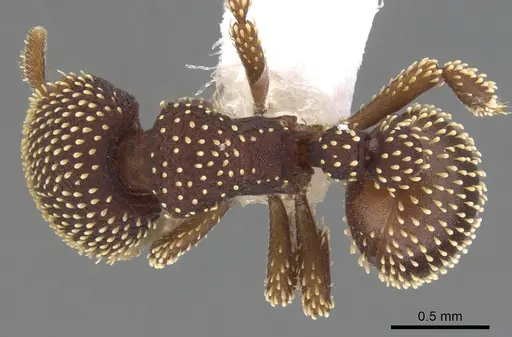
Literature
Loading distribution map...Loading products...