
Basiceros conjugans
- Sci. Name
- Basiceros conjugans
- Tribe
- Attini
- Subfamily
- Myrmicinae
- Author
- Brown, 1974
- Distribution
- Found in 6 countries
Introduction
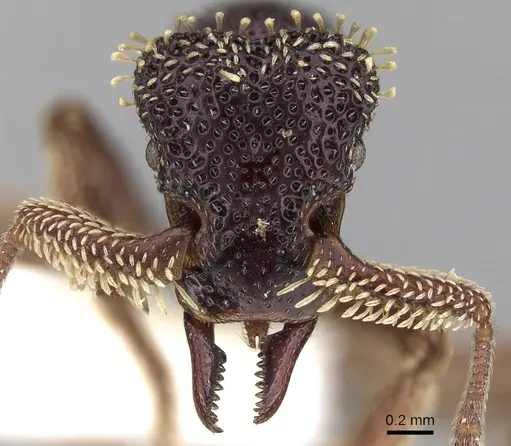
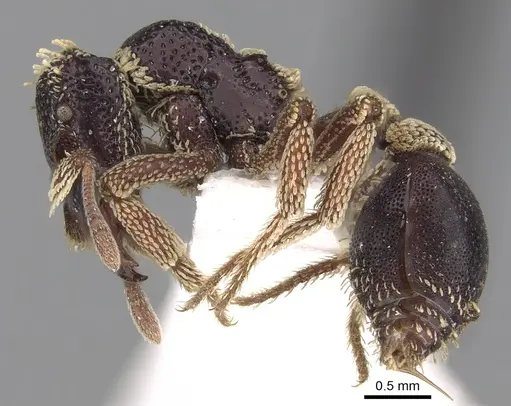
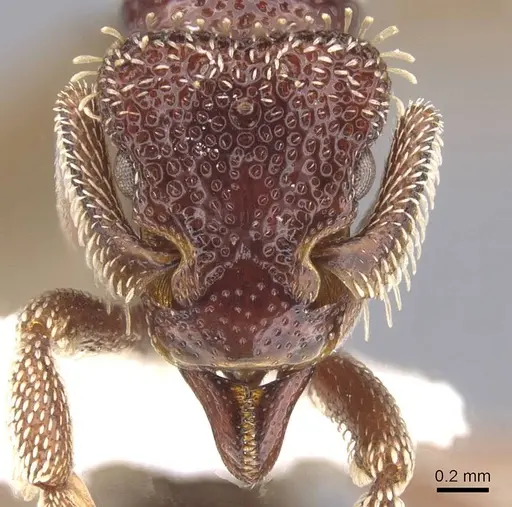
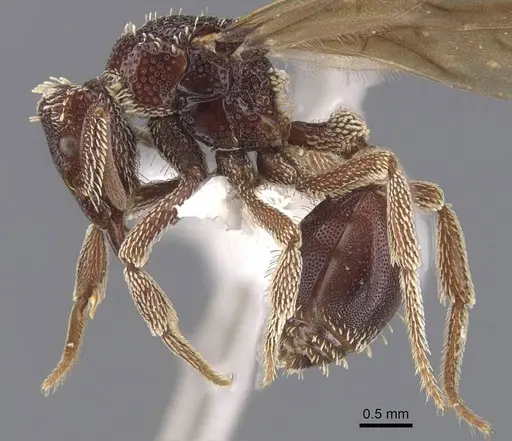
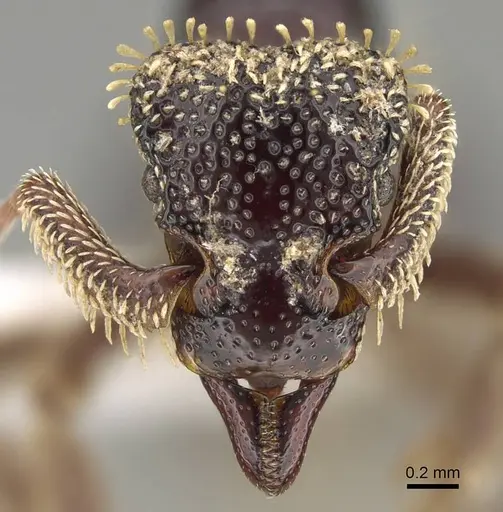
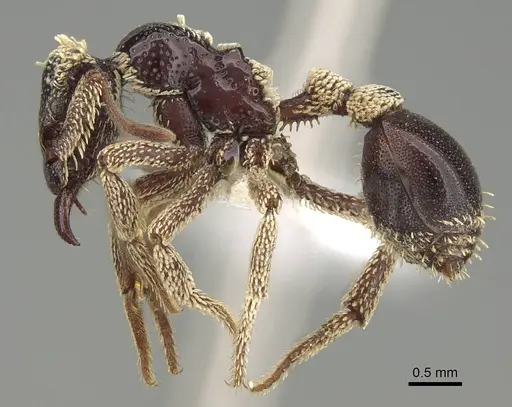
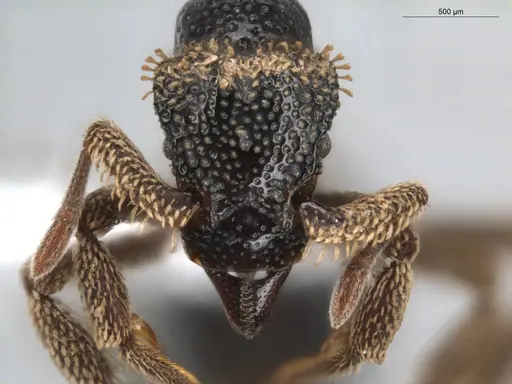
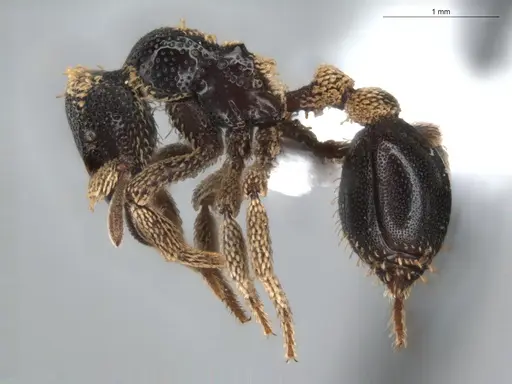
Basiceros conjugans is a medium-sized ant from the Amazon basin, with workers measuring about 6.6 mm in total length. They are dark amber to black, with a heavily pitted (punctuate-foveate) surface and specialized hairs that collect soil and litter particles, giving them a camouflaged 'dirt-covered' look - that's why they're called dirt ants. Their petiolar and postpetiolar nodes are densely covered with scale-like (squamiform) hairs, and the space between the clypeus and mandibles is very narrow. This species belongs to the disciger species-group and shows intermediate morphology between Basiceros disciger and Basiceros militaris . They live in eastern Amazonian rainforests across Brazil, Peru, Colombia, Ecuador, Guyana, and Trinidad .
Quick Summary
- Difficulty: Medium
- Origin & Habitat: Eastern Amazonian rainforests in South America, Brazil, Peru, Colombia, Ecuador, Guyana, and Trinidad, plus secondary forests in Trinidad. They live in wet tropical forests, nesting in rotten logs, leaf litter, and soil cavities [4][1].
- Colony Type: Unknown colony structure, the literature doesn't confirm whether colonies are single-queen or multi-queen. Collected nests only contained a few workers, so colony size appears small.
- Size & Growth:
- Queen: 6.91-7.30 mm [1]
- Worker: 6.58-6.61 mm [1]
- Colony: Small, only a few workers found in wild colonies [1]
- Growth: Unknown, likely slow based on small colony size
- Development: No published data, a rough estimate of several weeks to months based on related Basiceros species (Development time has not been studied. This guess may be inaccurate.)
- Antkeeping:
- Temperature: Keep warm year-round, roughly 24-26°C, matching their wet tropical forest home. Use a gentle heat gradient [4].
- Humidity: High moisture. Keep the nest substrate consistently moist but not waterlogged. Mist the outworld occasionally. Avoid dry conditions [1].
- Diapause: No, tropical species does not need hibernation. Maintain stable warm conditions year-round.
- Nesting: In the wild these ants don't dig their own nests, they use pre-existing cavities in rotten logs, leaf litter, or soil [2]. In captivity, provide tight, pre-made chambers in plaster, Y-tong (AAC), or 3D-printed nests. Avoid tall, open spaces, these ants prefer confined chambers.
- Behavior: Cryptic, slow-moving ants that rely on camouflage. They have specialized hairs that trap soil particles, blending into their environment [2]. They are not aggressive and prefer to hide. They have a functional sting (up to 0.6 mm long) but are unlikely to use it unless directly handled [4]. Escape risk is moderate due to small size, but they are not strong climbers of smooth surfaces.
- Common Issues: small colony size makes them sensitive to disturbance, handle transfers gently and infrequently., high humidity needs can lead to mold if ventilation is poor, provide air holes and avoid stagnant moisture., limited natural history data means their exact dietary needs are uncertain, try a variety of small prey., tropical species will decline if temperatures drop below 22°C for extended periods., cryptic appearance makes them hard to spot, use a light-colored outworld background and check carefully.
Appearance and Identification
Workers of Basiceros conjugans are about 6.6 mm long [1]. Their color ranges from yellowish-amber to dark brown, with lighter legs and antennae. The body surface is heavily pitted (punctuate-foveate). The most distinctive feature is the dense covering of squamiform (scale-like) hairs on the petiole and postpetiole, which hold dirt and leaf litter for camouflage [2]. The head has a narrow space between the clypeus and mandibles, and the back of the head (vertex) has a shallow groove that separates a pair of rounded bumps. Queens are slightly larger (6.9-7.3 mm) and males smaller (5.0-5.4 mm) [1]. The subpetiolar process (a structure under the petiole) is highly variable among individuals, it may have spines, lamellae, or fused processes [1][5].
Natural History and Distribution
This species is known from the eastern Amazon rainforest in Brazil, Peru, Colombia, Ecuador, Guyana, and Trinidad [1][3]. Most specimens have been collected from leaf litter using Winkler extractors, which sift tiny arthropods out of soil and debris. A partial colony was found nesting in a rotten trunk in Madre de Dios, Peru, in 2012, it contained a few workers, larvae, and a pupa. Near the nest were a gastropod shell, the remains of a turtle ant (Cephalotes sp.), and head capsules of a trap-jaw ant (Odontomachus sp.) and a termite (Uncitermes teevani). This suggests Basiceros conjugans is a scavenger that also preys on termites, similar to other Basiceros species [1][6].
Nest Preferences and Housing
Basiceros conjugans does not dig its own nests. Instead, it uses ready-made cavities in rotten logs, leaf litter, or soil [2]. For captive care, provide a nest with tight, pre-made chambers, plaster, Y-tong (AAC), or 3D-printed nests work well. The chambers should be snug but not cramped. Keep the nest substrate moist but not waterlogged. Use a water tube or hydration system to maintain humidity. Because these ants are small and camouflaged, a light-colored outworld background helps you spot them. Avoid tall, open spaces they might wander into and lose their moisture [2].
Feeding and Diet
Based on nest contents found in the wild, Basiceros conjugans is a scavenger and likely preys on termites and other soft-bodied arthropods [1][6]. In captivity, offer small live prey like fruit flies, small crickets, termites (if available), and micro-arthropods. They may also accept freshly killed insects. Sugar is not well documented, you can try small drops of honey or sugar water, but don't rely on it as a primary food. Provide protein 2-3 times a week and remove any uneaten prey within 24 hours to prevent mold [1].
Temperature and Seasonal Care
These are tropical rainforest ants that need warmth year-round. Keep the nest at 24-26°C. Use a heat cable on one side to create a gentle gradient, place the cable on top of the nest to avoid drying out the substrate. Because there is no winter in their native habitat, they do not require hibernation. Avoid temperature drops below 22°C for long periods, as that can be fatal [4].
Behavior and Temperament
Basiceros conjugans is a slow, secretive ant that spends most of its time hidden in leaf litter and rotting wood. Its dirt-collecting hairs give it excellent camouflage, this cryptobiotic lifestyle helps it avoid predators and ambush prey [2]. They are not aggressive and will retreat rather than fight. They do have a functional sting (nearly 0.6 mm in workers), but it is only used if the ant is directly handled or threatened [4]. In captivity they are not strong climbers of smooth surfaces, but their small size means they can squeeze through tiny gaps, use standard barriers like fluon or oil. Their slow movement and cryptic nature make them easy to lose sight of, but regular checks will help you keep track of them.
Frequently Asked Questions
How long does it take for Basiceros conjugans to develop from egg to worker?
No published data exists for this species. Based on related Basiceros species and general Attini biology, development likely takes several weeks to months at optimal temperatures (24-26°C). This is a rough estimate, actual time may differ.
What do Basiceros conjugans eat?
Wild nests contained remains of other ants, termites, and a snail shell, so these ants are scavengers that may also hunt termites [1]. In captivity, offer small live prey like fruit flies, small crickets, and micro-arthropods. Freshly killed insects may also be accepted. Sugar is uncertain, try occasional honey or sugar water but don't rely on it.
Are Basiceros conjugans good for beginners?
They are rated medium difficulty. While not the hardest, there is limited data on their specific care. They need high humidity and stable warm temperatures. Their small colonies and cryptic behavior may not be as rewarding for beginners who want to watch active, visible colonies. If you have experience with tropical ants and are comfortable with some uncertainty, they are a fascinating species to keep.
What size nest do Basiceros conjugans need?
Provide a nest with tight, pre-made chambers in plaster, Y-tong (AAC), or 3D-printed nests. They do not dig their own tunnels, so all chambers must be ready-made [2]. Keep chambers small and snug, these ants prefer confined spaces.
Do Basiceros conjugans need hibernation?
No. They are tropical ants and require warm conditions year-round. Maintain 24-26°C and avoid temperatures below 22°C for extended periods.
How big do Basiceros conjugans colonies get?
Based on wild collections, colonies appear very small, only a few workers have been found [1]. The maximum colony size is not documented, but they are not known to reach large numbers. Even in captivity, expect a modest colony.
Can I keep multiple queens together?
The colony structure (monogyne vs polygyne) has not been studied. Without data, it is risky to combine unrelated queens. If you get a colony, keep the queen alone unless you see clear signs of multi-queen tolerance.
Why are my Basiceros conjugans disappearing into the background?
This is totally normal. They are cryptobiotic ants, their specialized hairs collect dirt and litter particles, making them blend into their surroundings [2]. It's a survival strategy, not a problem. Use a light-colored outworld floor and look carefully to spot them.
What temperature should I keep Basiceros conjugans at?
Keep the nest at 24-26°C year-round. Use a heat cable on one side to create a gradient (place it on top to avoid drying the nest). Room temperature within this range is fine, but monitor during winter if your home gets cooler.
Report an Issue
The current care sheet is based fully on literature. See inconsistencies, or something that's incorrect? Please , it will be resolved after review from an admin. Contributing to the blogs tab also helps providing information, to make us be able to further improve the caresheets. Thank you for your support!
References

This caresheet is licensed under CC BY-SA 4.0 .
Community Blogs
CASENT0280779
View on AntWeb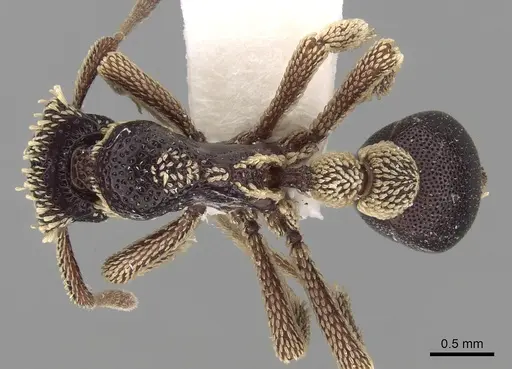
CASENT0912535
View on AntWeb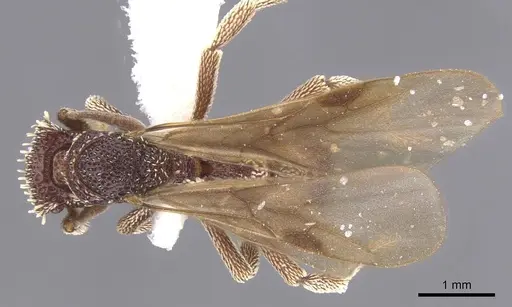
CASENT0914886
View on AntWeb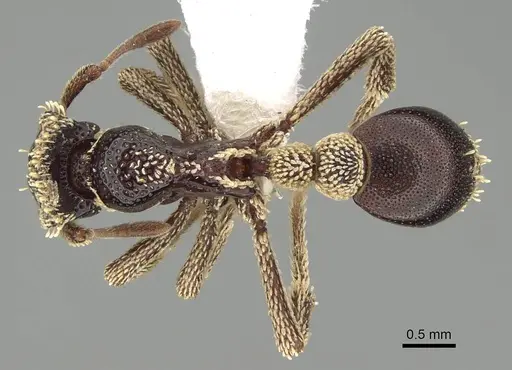
ECOFOG-GRS21-0187-02
View on AntWeb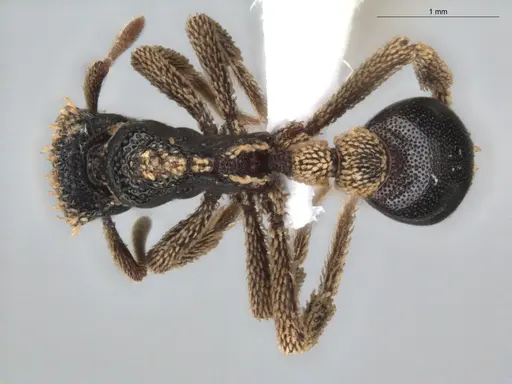
Literature
Loading distribution map...Loading products...