
Azteca oecocordia
- Sci. Name
- Azteca oecocordia
- Tribe
- Leptomyrmecini
- Subfamily
- Dolichoderinae
- Author
- Longino, 2007
- Distribution
- Found in 2 countries
Introduction
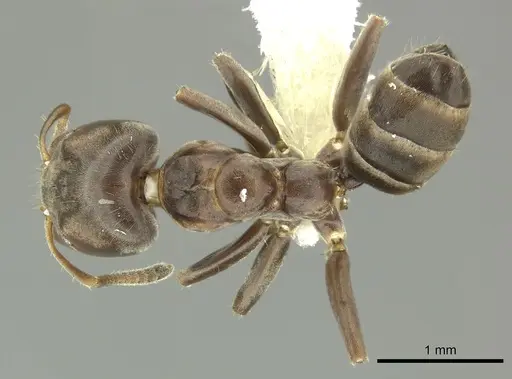
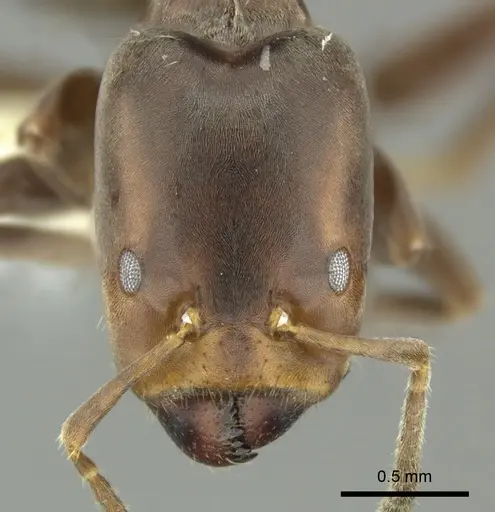
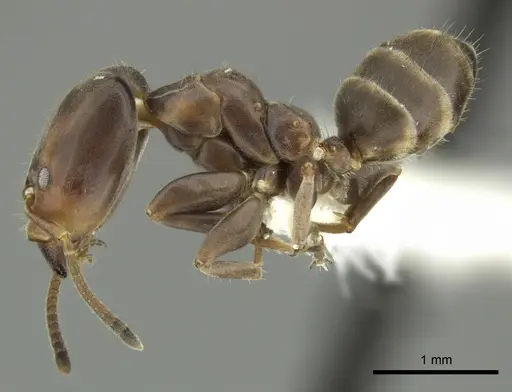
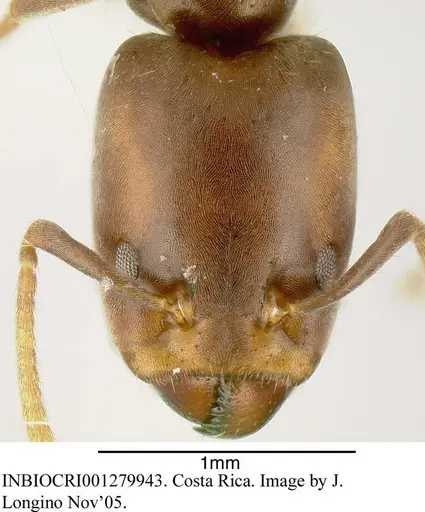
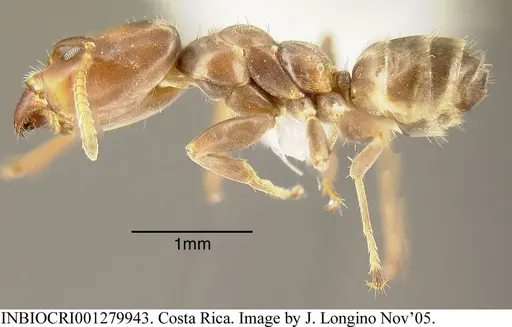
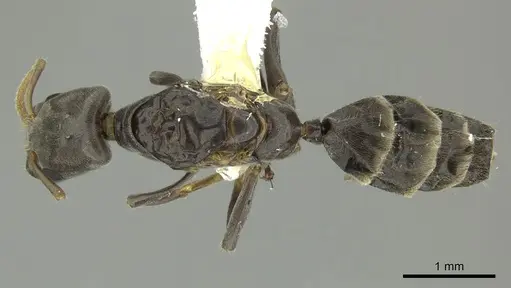
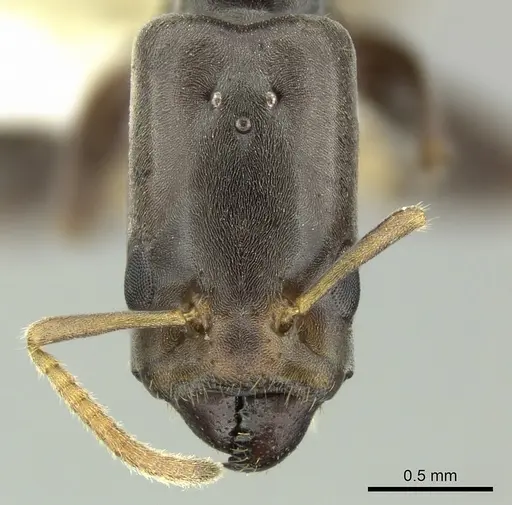
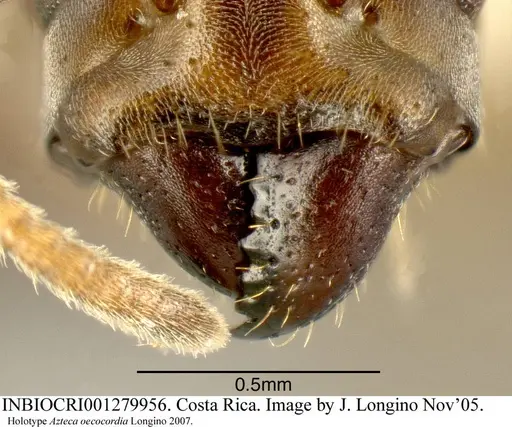
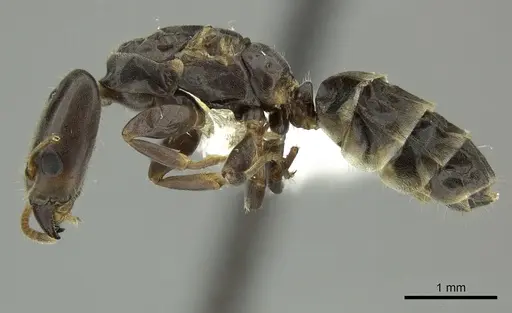
Azteca oecocordia is a small brown arboreal ant that was formally described in 2007. It lacks a functional sting and instead uses chemical secretions as its main defense (smear defense, common to its subfamily). The species was first discovered in the Monteverde region of Costa Rica, where all early collections came from the hollow nodes of Cordia alliodora trees - a relationship so tight that its name means 'house in Cordia' . In 2012,similar-looking ants were found in Brazil living inside branches of Anadenanthera falcata, suggesting the species may be more widespread or hide cryptic relatives . Workers and queens are small, but total body length has not been published (head length measurements are available). The ants build small carton partitions inside tree cavities and tend scale insects for honeydew .
Quick Summary
- Difficulty: Expert
- Origin & Habitat: Originally from the Monteverde cloud forest of Costa Rica (400-500m elevation), exclusively in Cordia alliodora trees [1]. Later discovered in Brazil in Anadenanthera falcata branches in Cerrado habitat [2]. The species requires arboreal, cavity-based nesting sites.
- Colony Type: Unknown colony structure. Founding queens colonize empty plant nodes, but whether mature colonies are monogyne, polygyne, or oligogyne has not been documented [1].
- Size & Growth:
- Queen: Size data unavailable (head length measurements exist but total body length has not been reported).
- Worker: Size data unavailable (head length measurements exist but total body length has not been reported).
- Colony: Unknown. In the wild, colonies can occupy multiple nodes of a tree, but maximum worker count has not been recorded [1].
- Growth: Unknown, no captive breeding data exists.
- Development: Unknown. Based on related Azteca species, expect 6-10 weeks at warm temperatures, but this is a rough estimate. (No captive development data exists. Colonies in the hobby are wild-caught, and development has not been observed under controlled conditions.)
- Antkeeping:
- Temperature: Keep at 22-26°C. As a tropical cloud forest species from moderate elevation, they prefer warm stable conditions without extremes [1].
- Humidity: High humidity is essential (70-85% in the nest area). The Monteverde cloud forest is consistently humid. Keep the nest substrate moist but not waterlogged, with good ventilation to prevent mold.
- Diapause: Unknown. As a tropical species, they likely do not require hibernation, but seasonal activity changes may occur.
- Nesting: This is an arboreal species that naturally nests inside hollow plant stems and nodes. In captivity, use a vertical or diagonal setup with narrow chambers that hold moisture well. Y-tong (AAC) or plaster nests work. Provide access to live scale insects (see feeding notes).
- Behavior: These ants are aggressive when their scale insect partners are disturbed [2]. They are arboreal and active foragers within the nest structure. Standard escape prevention is needed, they are small but not tiny. They build carton partitions, indicating they modify their environment. Defense is chemical (smear), not a sting.
- Common Issues: requires live scale insects (coccoid Hemiptera) as a primary food source, without them, the colony will not survive long-term, no captive breeding data exists, all colonies in the hobby are wild-caught, making them very rare, the Brazil record suggests possible cryptic species, ants from different populations may have different care needs, wild-caught colonies may harbor parasites or struggle to adapt to captive conditions, the natural range is extremely restricted, and removing wild colonies is discouraged
Natural History and Distribution
Azteca oecocordia was scientifically described in 2007 by John T. Longino based on specimens from Costa Rica [1]. All Costa Rican collections came from a tiny area around Monteverde Cloud Forest, inside the hollow nodes of a single tree species: Cordia alliodora [1][3]. The ants build small carton partitions inside these nodes and tend coccoid scale insects on the inner walls. Founding queens are found alone in Cordia nodes, and mature colonies can occupy most nodes of a single tree [1]. Remarkably, they can share a tree with the unrelated ant Cephalotes setulifer, suggesting some level of spatial or temporal segregation [1]. In 2012,a study found very similar ants in Brazil, living inside hollow branches of Anadenanthera falcata in Cerrado vegetation [2]. The Brazilian workers were identified as A. oecocordia, but the authors suggested that further phylogenetic work is needed to rule out cryptic species [2]. This means that the species may have a wider range than originally thought, or a closely related look-alike exists. For now, confirmed populations are limited to Monteverde, Costa Rica [1] and the São Carlos region of Brazil [2]. Like other Azteca species, they are strictly arboreal and typically found in cavities formed by plants or wood-boring insects [4].
Housing and Nesting
Replicating the natural nesting habitat is critical for this species. In the wild, they live inside plant stems and nodes, hollow chambers with narrow entrances. For a captive nest, use a vertical or diagonal formicarium that mimics this structure. Y-tong (AAC) and plaster nests work well because they hold moisture and can be shaped into narrow tunnels and chambers. The nest should maintain high humidity (target 70-85%) while allowing some air circulation to prevent mold. Since the ants naturally build carton partitions, they will rearrange loose material or debris in the nest [1]. Provide a water source such as a test tube plugged with cotton, or a moisture gradient in the substrate. Ensure the outworld has a secure lid and smooth barriers, these ants are small enough to squeeze through tiny gaps.
Trophobiotic Relationships and Feeding
Azteca oecocordia has a symbiotic relationship with scale insects (coccoid Hemiptera). In the wild, they farm these insects inside plant cavities and feed on the honeydew they produce [1][2]. This relationship is not optional, the ants cannot survive long-term on standard ant feeds alone. To keep this species, you must establish and maintain a culture of suitable scale insects or mealybugs within the enclosure. These insects feed on plant sap, so you will need to provide a suitable host plant or artificial diet. The ants will tend the scale insects and protect them aggressively. When the coccoids are threatened, the ants become highly defensive [2]. Beyond honeydew, you can supplement with small live prey such as fruit flies or pinhead crickets, but the scale insects are the primary food source. Without them, the colony will gradually weaken and die.
Temperature and Seasonal Care
Azteca oecocordia inhabits cloud forest and tropical lowlands, so it prefers warm conditions. Keep the nest at 22-26°C year-round. Avoid sudden temperature drops below 18°C. Since there is no evidence of diapause, likely no winter cooling period is needed [1]. However, the Brazilian population might experience seasonal dry periods, observe your colony for any behavioral changes. Use a heating cable on one side of the nest (on top to avoid drying out the substrate) if your room temperature is often below 22°C. Maintain the humidity gradient consistently.
Frequently Asked Questions
Is Azteca oecocordia available for purchase?
This species is extremely rare in the antkeeping hobby. It was only described in 2007 and has a very restricted natural range. You are unlikely to find captive-bred colonies for sale. Any available colonies would be wild-caught, which presents significant ethical and practical challenges [1][3].
How do I feed Azteca oecocordia in captivity?
This is the critical challenge. Azteca oecocordia farms scale insects (coccoid Hemiptera) for honeydew. You must culture appropriate scale insects and introduce them to your colony. Without this symbiont relationship, the colony cannot survive long-term. Standard ant feeds alone will not sustain them [1][2].
What kind of nest does Azteca oecocordia need?
Use a vertical or diagonal nest setup that mimics their natural arboreal nesting in tree nodes. A Y-tong (AAC) nest or plaster formicarium with narrow, moist chambers works well. The nest must hold high humidity while providing good ventilation to prevent mold [1].
Are Azteca oecocordia ants aggressive?
They are generally calm but become highly aggressive when their scale insect partners are threatened [2]. They do not have a sting, their main defense is chemical secretions (smear). Handle the outworld with care if you need to manipulate the scale insects.
How big do Azteca oecocordia colonies get?
Colony size data is not available. In the wild, mature colonies can dominate most nodes of a single tree [1]. Related Azteca species form moderate-sized colonies (up to a few thousand workers), but this is unconfirmed for A. oecocordia.
Do Azteca oecocordia need hibernation?
As a tropical species from the Monteverde cloud forest and Brazilian Cerrado, they likely do not require hibernation. Maintain warm temperatures year-round (22-26°C). No diapause has been observed or studied [1].
Can I keep multiple Azteca oecocordia queens together?
The colony structure of this species has not been documented. Founding queens are found alone in Cordia nodes [1], suggesting single-queen founding. Combining unrelated queens has not been studied and is not recommended.
Is Azteca oecocordia suitable for beginners?
No. This species is rated Expert difficulty due to its highly specialized dietary requirements (requires live scale insects), rarity, and lack of captive breeding data. It is not suitable for beginners. Only experienced keepers with access to scale insect cultures should attempt to keep this species [1][2].
Report an Issue
The current care sheet is based fully on literature. See inconsistencies, or something that's incorrect? Please , it will be resolved after review from an admin. Contributing to the blogs tab also helps providing information, to make us be able to further improve the caresheets. Thank you for your support!
References

This caresheet is licensed under CC BY-SA 4.0 .
Community Blogs
Literature
Loading distribution map...Loading products...