
Axinidris gabonica
- Sci. Name
- Axinidris gabonica
- Tribe
- Tapinomini
- Subfamily
- Dolichoderinae
- Author
- Snelling, 2007
- Distribution
- Found in 2 countries
Introduction
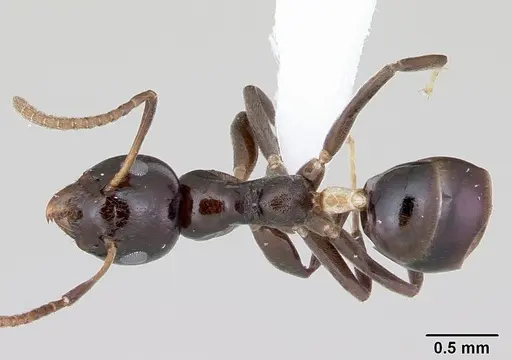
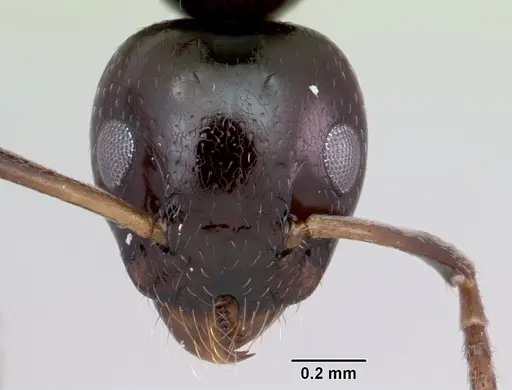
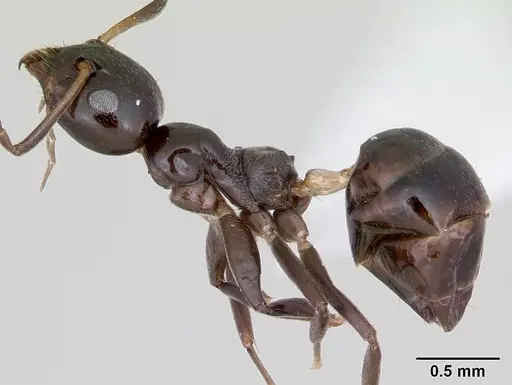
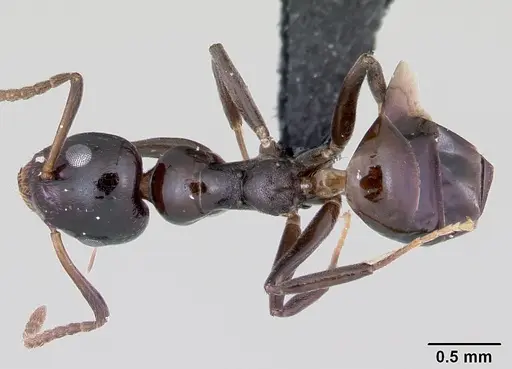
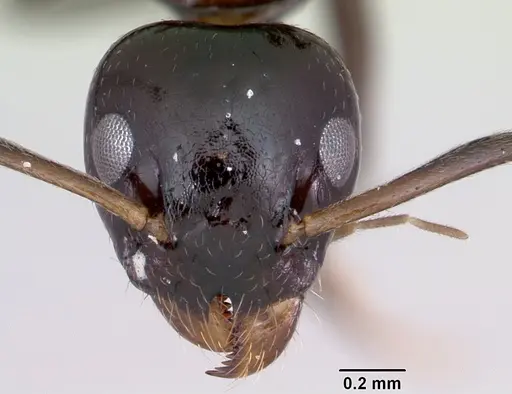
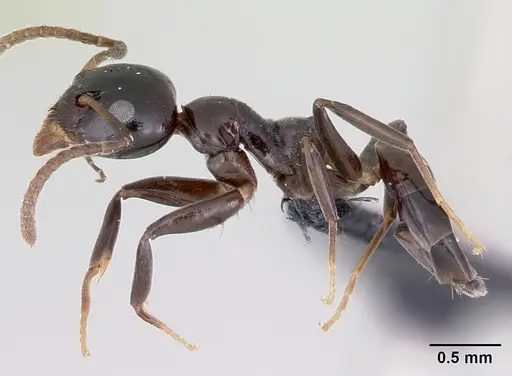
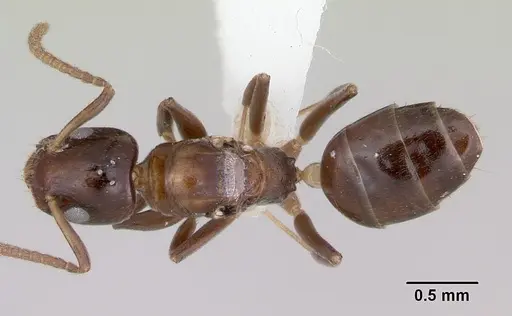
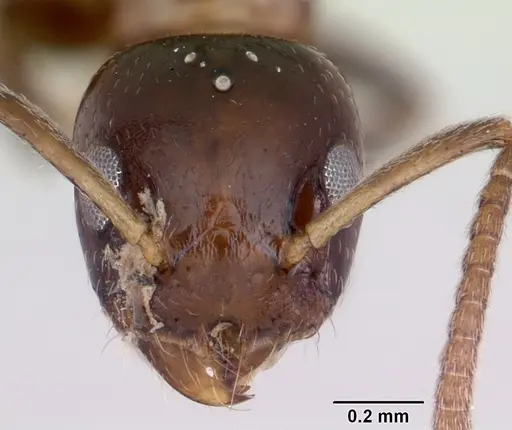
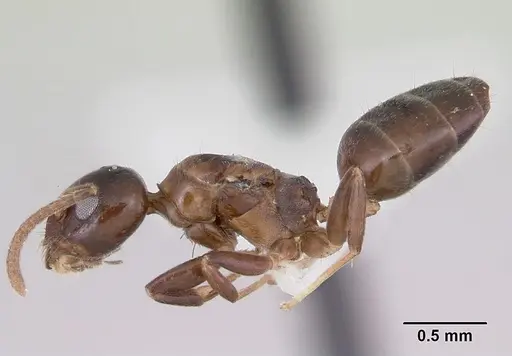
Axinidris gabonica is a tree-dwelling ant from Gabon's coastal rainforests. It has a shiny blackish head, dark brown body, and a distinctive pale whitish waist segment . The species was discovered in 2000 by sweeping vegetation in lowland rainforest at 660m elevation in the Réserve des Monts Doudou . This species is extremely rare, with only five specimens known from scientific collections, and queens remain undescribed . Its unknown biology and small size make it unsuitable for casual keeping, but it offers a case study for specialists focused on understudied tropical ants.
Quick Summary
- Difficulty: Expert
- Origin & Habitat: Gabon, coastal lowland rainforest at 660m elevation [1][2]
- Colony Type: Unknown, queens are undescribed and founding behavior is unconfirmed [1]
- Size & Growth:
- Antkeeping:
- Temperature: Warm conditions, approximately 24-28°C, inferred from coastal rainforest habitat [1]
- Humidity: High humidity required, maintain damp substrate but avoid waterlogging, inferred from rainforest conditions [1]
- Diapause: No, tropical species from equatorial Gabon likely active year-round
- Nesting: Arboreal, provide small twigs, rotting wood, or cork bark with tiny chambers, inferred from genus habits [2]
- Behavior: As members of Dolichoderinae, they lack a sting and use chemical defenses by exuding sticky, foul-smelling substances from an anal gland to deter predators. Temperament is unknown, but they are likely fast-moving and tree-dwelling. Extreme escape risk due to very small size.
- Common Issues: escape prevention is critical, very small ants can pass through standard mesh and tiny gaps., desiccation risk, tiny workers lose moisture rapidly without constant high humidity., founding behavior completely unknown, no queen description or colony data exists to guide captive rearing., extreme rarity makes ethical collection questionable, only five specimens known to science.
Natural History and Extreme Rarity
Axinidris gabonica is known from exactly five specimens collected in March 2000 at a single location in Gabon's Réserve des Monts Doudou [1]. These were collected by sweeping vegetation in coastal lowland rainforest at 660m elevation, indicating a tree-dwelling lifestyle [1]. The genus Axinidris is considered arboreal throughout its range [2]. Beyond this location data, virtually nothing is known about their biology, colony size, social structure, and reproductive behavior remain complete mysteries. One paratype specimen is reportedly a queen, but it remains undescribed in the scientific literature [2]. For keepers, this means attempting to maintain this species requires pioneering completely new ground with no established protocols.
Housing for Miniature Arboreal Ants
Workers are very small, requiring exceptionally small living spaces. Standard ant farms with large chambers will stress these ants. Instead, provide naturalistic arboreal setups with small-diameter twigs, rotting wood with pre-existing beetle galleries, or cork bark crevices [1]. The nest must have extremely fine barriers, standard steel mesh is too large. You will need fine nylon mesh of at least 200 microns or smaller, or complete sealing with tight-fitting lids. Vertical orientation suits their tree-dwelling habits, with branches and twigs providing foraging pathways. Keep the setup in a sealed container with excellent humidity control, as their small size makes them vulnerable to desiccation.
Temperature and Humidity
Based on their collection in coastal Gabonese rainforest, maintain warm stable temperatures between 24-28°C [1]. Avoid temperature drops below 20°C. Humidity should remain high, aim for damp substrate that feels wet to the touch but not waterlogged, with air humidity likely 70-80%. However, ensure good ventilation to prevent mold growth in the warm, wet conditions. A heating cable placed on one side of the enclosure helps create a gentle gradient they can choose from.
Feeding and Diet
The natural diet of Axinidris gabonica is unknown. Related Dolichoderinae ants are typically generalist foragers, collecting honeydew from sap-sucking insects and scavenging small prey [2]. In captivity, offer tiny prey items appropriate for very small ants, springtails, minute soil mites, or fruit fly larvae. Provide sugar sources like diluted honey or sugar water on small cotton pads. Because they are arboreal, place food on elevated platforms or branches rather than the substrate. Remove uneaten protein within 24 hours to prevent mold in the humid enclosure.
Conservation and Ethical Considerations
This species presents unique ethical challenges. With only five specimens documented and their rainforest habitat under pressure from logging and human activity, removing colonies from the wild could represent a significant impact on the species [1]. Additionally, the lack of described queens means any captive colony would likely require collecting an entire wild colony, which is not recommended for such a rare species. This ant is best suited for observation and study by researchers working within Gabon, rather than export for the pet trade. If you encounter this species, documentation and preservation of habitat are more valuable than collection.
Frequently Asked Questions
Can I keep Axinidris gabonica in a test tube?
While test tubes are standard for founding ants, the founding behavior of Axinidris gabonica is completely unknown. Queens have never been described, so we do not know if they found colonies alone or require specific conditions. Additionally, their extreme rarity means they are effectively unavailable in the pet trade.
How big are Axinidris gabonica workers?
Workers are very small, but exact total length is not documented in the research. Size data is unavailable [1].
Where do Axinidris gabonica live?
They are known only from coastal lowland rainforest in Gabon, specifically the Réserve des Monts Doudou at 660m elevation. They appear to be tree-dwelling (arboreal) ants.
How long until Axinidris gabonica get their first workers?
Unknown. No developmental data exists for this species [1].
Can I keep multiple Axinidris gabonica queens together?
Not recommended. Whether this species accepts multiple queens is unknown. Given that only five specimens exist in collections, attempting multi-queen setups would be experimental and potentially wasteful of rare material.
Do Axinidris gabonica need hibernation?
No. As a tropical species from equatorial Gabon, they likely remain active year-round and do not require a winter rest period.
Are Axinidris gabonica good for beginners?
No. They are suitable only for expert keepers due to their extreme rarity, unknown biology, tiny size requiring specialized containment, and ethical concerns regarding collection.
What do Axinidris gabonica eat?
Their diet is unknown. Based on related Dolichoderinae ants, they likely feed on honeydew from sap-sucking insects and tiny prey. In captivity, you could try springtails, fruit fly larvae, and sugar water.
Report an Issue
The current care sheet is based fully on literature. See inconsistencies, or something that's incorrect? Please , it will be resolved after review from an admin. Contributing to the blogs tab also helps providing information, to make us be able to further improve the caresheets. Thank you for your support!
References

This caresheet is licensed under CC BY-SA 4.0 .
Community Blogs
Literature
Loading distribution map...Loading products...