
Apterostigma mexicanum
- Sci. Name
- Apterostigma mexicanum
- Tribe
- Attini
- Subfamily
- Myrmicinae
- Author
- Lattke, 1997
- Distribution
- Found in 1 countries
Introduction
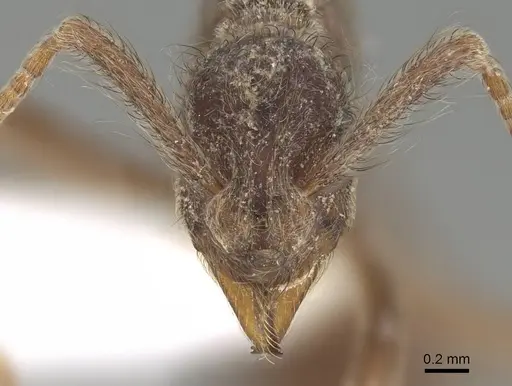
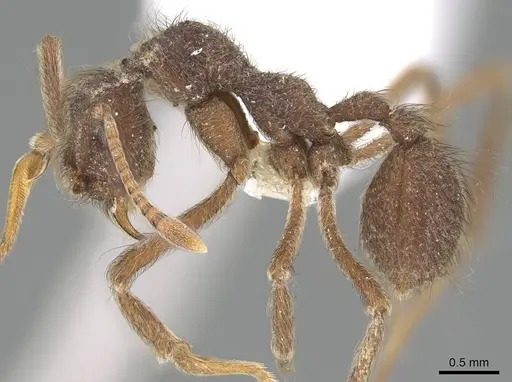
Apterostigma mexicanum is a rare fungus-growing ant endemic to eastern Mexico. Workers are small ants with dark coloration, though exact size measurements are unavailable in scientific literature . They inhabit medium-tall rainforest and cloud forest transition zones at elevations between 980 and 1600 meters in Veracruz, Querétaro, and San Luis Potosí states . This species is notable for its extreme rarity in both natural populations and scientific collections. When described in 1997,only five specimens existed in museums worldwide, all collected from tropical forests near Córdoba, Veracruz . Recent surveys have documented additional workers in San Luis Potosí and a single individual in urban green space in Coatepec, but they remain one of the least-studied fungus-growing ants globally . In their natural habitat, they nest in soil clearings within rainforest, often near specific tree species including strangler figs (Ficus cotinifolia) and gumbo-limbo (Bursera simaruba) .
Quick Summary
- Difficulty: Expert
- Origin & Habitat: Eastern Mexico (Veracruz, Querétaro, San Luis Potosí) in medium-tall rainforest and cloud forest transition zones at 980-1600m elevation [1][2].
- Colony Type: Unconfirmed, colony structure data is unavailable for this species.
- Size & Growth:
- Queen: Size data unavailable, no measurements exist in scientific literature.
- Worker: Size data unavailable, no measurements exist in scientific literature.
- Colony: Unknown, no colony size data exists for this species.
- Growth: Unknown
- Development: Unknown, development timeline has not been studied for this species. (Fungus-growing ants typically have slower development than many other ant species.)
- Antkeeping:
- Temperature: Keep cool and stable at 20-24°C (68-75°F) based on their cloud forest elevation habitat. Avoid temperatures above 26°C [1].
- Humidity: High humidity essential, maintain damp substrate and air moisture around 70-80%, matching their rainforest conditions [1].
- Diapause: Unlikely required given their tropical distribution, but a cooler rest period around 18-20°C may be beneficial.
- Nesting: Requires a naturalistic setup with a dedicated fungus garden chamber. Use small nests with controlled humidity.
- Behavior: Behavior is poorly documented. As fungus-growing ants, workers forage for insect frass and plant debris to cultivate their symbiotic fungus garden. Their small size requires excellent escape prevention.
- Common Issues: fungus garden collapse from incorrect substrate or contamination., desiccation, cloud forest species need constant high humidity., overheating, elevation habitat suggests intolerance to temperatures above 26°C., extreme rarity makes obtaining colonies nearly impossible., lack of available care information makes successful keeping very difficult.
Extreme Rarity and Natural History
This species represents one of the rarest ants in the world. When Lattke described them in 1997,only five specimens existed in museum collections worldwide, all from tropical forests near Córdoba, Veracruz [1]. In 2008,researchers collected additional workers in San Luis Potosí at 980 meters elevation in a rainforest clearing near the Sótano de las Golondrinas (Pit of Swallows) [1]. A single individual was recorded in urban green space sampling in Coatepec in 2019 [3]. This extreme scarcity means you will likely never encounter this species in the ant trade. If you do obtain a colony, treat it as irreplaceable.
The species inhabits soil in clearings within medium-tall rainforest, often near specific trees like strangler figs (Ficus cotinifolia) and gumbo-limbo (Bursera simaruba) [1]. Their presence in cloud forest transition zones at up to 1600 meters suggests they need cooler conditions than lowland tropical ants [1]. You must replicate these cool, humid conditions exactly.
Fungus Garden Care
As members of the Attini tribe (fungus-growing ants), Apterostigma mexicanum cultivate a symbiotic fungus garden that serves as their primary food source. Unlike leafcutter ants, Apterostigma species typically use insect frass (waste), dead insects, and plant debris as substrate for their fungus. You must provide a dedicated humid chamber for the fungus garden. Use a small container with ventilation holes covered with fine mesh. Maintain the fungus substrate at high humidity (damp but not waterlogged) and around 22-24°C. Contamination is the biggest risk, mold outbreaks can destroy the garden quickly. Remove any moldy substrate immediately. The ants will trim the fungus and feed it to larvae. Without a healthy fungus garden, the colony will starve.
Temperature and Humidity Management
Their natural habitat at 980-1600 meters elevation in Mexican cloud forest transition zones indicates they need cooler, stable temperatures than lowland tropical ants [1]. Keep your colony between 20-24°C (68-75°F). Avoid temperatures above 26°C as they likely cannot tolerate heat typical of lower elevations. Provide a gentle heating gradient if needed, but keep the nest area cool. Humidity must remain high, 70-80% relative humidity, matching their rainforest origins [1]. Use a water tower or moistened plaster nest to maintain damp conditions. Watch for condensation on nest walls, which indicates adequate humidity. If the fungus garden dries out, it will die.
Feeding and Nutrition
Do not feed them leaves, they are not leafcutters. Based on typical Apterostigma patterns, offer small amounts of insect frass, dead fruit flies, or tiny pieces of plant debris. They will process this material to feed their fungus garden. You can also offer tiny amounts of fresh vegetation or flower petals, but protein sources like dead insects are likely more important. Provide a sugar source like honey water or sugar water in a test tube setup for energy, but the fungus garden provides their main nutrition. Feed sparingly, fungus-growing ants are sensitive to overfeeding and contamination. Remove any food that shows mold within 24 hours.
Frequently Asked Questions
Can I keep Apterostigma mexicanum as a beginner?
No. This is an expert-level species requiring specialized fungus garden care and specific temperature and humidity conditions. Combined with their extreme rarity, they are unsuitable for beginners.
What do Apterostigma mexicanum eat?
They eat fungus grown on insect frass and organic debris. You must maintain a living fungus garden. Supplement with sugar water for energy.
How long until Apterostigma mexicanum get their first workers?
Unknown. Development timeline has not been studied for this species.
What temperature do Apterostigma mexicanum need?
Keep them cool at 20-24°C (68-75°F) based on their cloud forest habitat at 980-1600m elevation [1].
Do Apterostigma mexicanum need hibernation?
Unlikely required given their tropical distribution, but a cooler rest period around 18-20°C may be beneficial.
How big do Apterostigma mexicanum colonies get?
Unknown. No colony size data exists for this species.
Where can I buy Apterostigma mexicanum?
You likely cannot. Only a handful of specimens have ever been collected scientifically [1]. They are not available in the ant trade.
Can I keep multiple Apterostigma mexicanum queens together?
Unknown and not recommended. Combining unrelated queens has not been documented and likely leads to fighting.
Report an Issue
The current care sheet is based fully on literature. See inconsistencies, or something that's incorrect? Please , it will be resolved after review from an admin. Contributing to the blogs tab also helps providing information, to make us be able to further improve the caresheets. Thank you for your support!
References

This caresheet is licensed under CC BY-SA 4.0 .
Community Blogs
CASENT0922045
View on AntWeb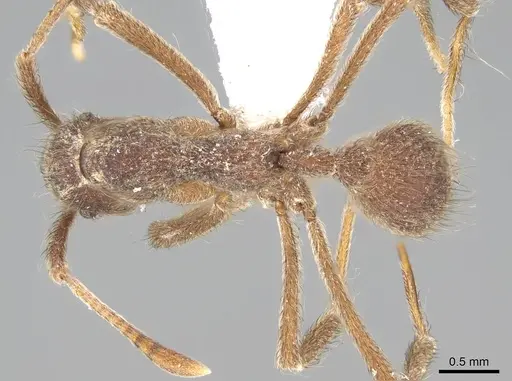
Literature
Loading distribution map...Loading products...