
Aphaenogaster schmitzi
- Sci. Name
- Aphaenogaster schmitzi
- Tribe
- Stenammini
- Subfamily
- Myrmicinae
- Author
- Forel, 1910
- Distribution
- Found in 2 countries
Introduction
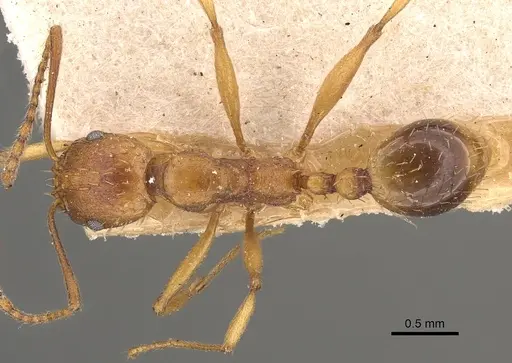
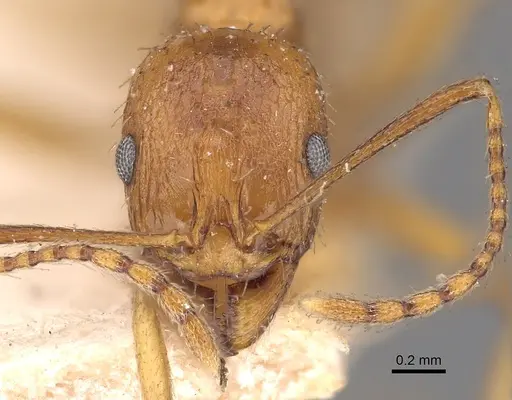
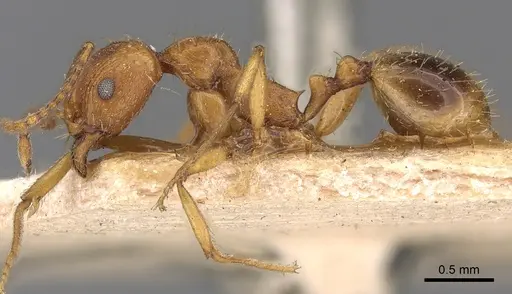
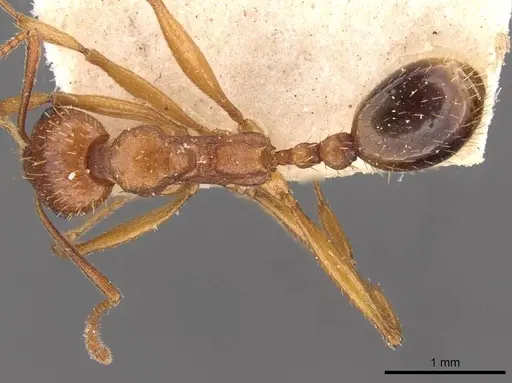
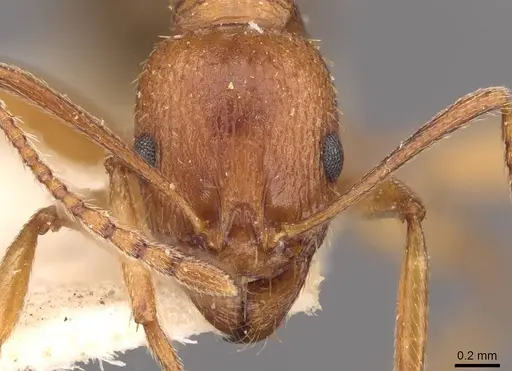
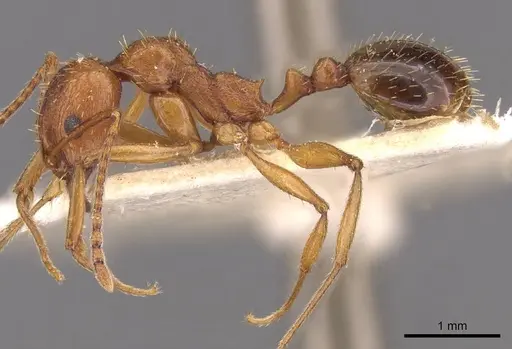
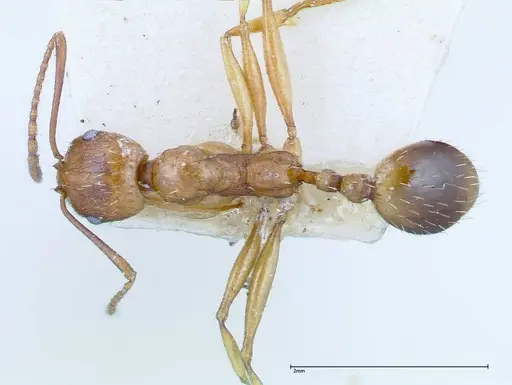
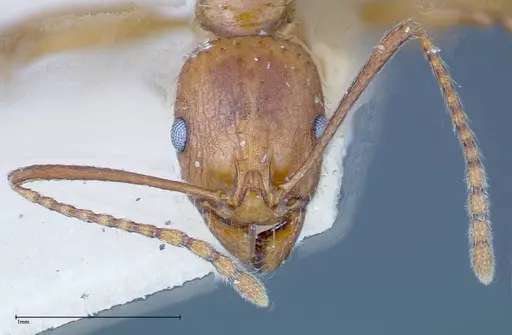
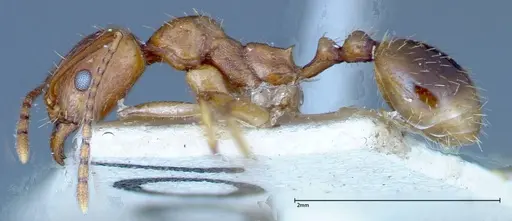
Aphaenogaster schmitzi is a small yellowish ant native to the Middle East. Workers display a distinctive rusty-yellow color across the head, mesosoma, and gaster, with a brown band across the rear of the gaster . They inhabit mountain forests and springs across Israel, Jordan, Syria and Turkey, with records from elevations ranging from 249m to 855m . This species was only recently elevated from a subspecies of Aphaenogaster syriaca to full species status based on subtle differences in body proportions and sculpture . Most collections come from surprising locations: syntype specimens were found inside a house in Jerusalem, while other workers have been collected under stones in mountain forests . This suggests they are adaptable nesters comfortable in both natural and human-modified environments.
Quick Summary
- Difficulty: Medium
- Origin & Habitat: Mountain springs and forests of Israel, Jordan, Syria and Turkey [6][2][1]
- Colony Type: Unconfirmed, likely monogyne based on typical Aphaenogaster patterns
- Size & Growth:
- Queen: ~6-7mm, inferred from Aphaenogaster genus
- Worker: ~4-5mm, inferred from Aphaenogaster genus
- Colony: Unknown, likely several hundred workers based on related species
- Growth: Unknown, likely moderate
- Development: Unconfirmed, estimate 8-12 weeks based on related Aphaenogaster species (Timing is temperature dependent and unconfirmed for this species)
- Antkeeping:
- Temperature: Keep at 20-25°C with a gentle gradient
- Humidity: Moderate to high, damp substrate mimicking forest floor conditions
- Diapause: Likely required given temperate distribution, but unconfirmed for this species
- Nesting: Under flat stones or in soil, narrow chambers preferred
- Behavior: Moderate activity levels, foragers that likely scavenge and collect seeds, not particularly aggressive. Small size requires excellent escape prevention.
- Common Issues: limited scientific data makes troubleshooting difficult., small size requires excellent escape prevention., hibernation requirements unconfirmed, observe colony for reduced activity in autumn., slow growth requires patience.
Nest Preferences
Naturalists find Aphaenogaster schmitzi under stones in mountain forests and occasionally inside houses [5][1]. This suggests they prefer enclosed, dark spaces with access to moisture. In captivity, provide a nest with flat stones or a Y-tong (autoclaved aerated concrete) setup with narrow chambers that mimic the tight spaces under rocks. A soil-based naturalistic setup also works well. Keep the nest area shaded and maintain humidity by dampening the substrate regularly.
Temperature and Seasonal Care
Coming from temperate mountain habitats in Israel, Jordan and Turkey, these ants likely experience seasonal temperature shifts. Keep the colony at 20-25°C during the active season, with a gentle heat gradient so workers can self-regulate. Given their collection in spring (May) and distribution across regions with cool winters, they probably require a winter rest period at 10-15°C for 2-3 months, though this is unconfirmed. Watch for reduced activity in autumn as a cue to begin cooling.
Feeding and Diet
While specific dietary studies are lacking, Aphaenogaster species are generally omnivorous. Offer a mix of protein sources like small insects or mealworms, and carbohydrate sources like sugar water or honey. Many Aphaenogaster species collect seeds, so providing small seeds may be appreciated. Feed small amounts twice weekly and remove uneaten food to prevent mold.
Behavior and Temperament
These ants are moderate in activity level and not particularly aggressive compared to larger species. Workers probably forage individually rather than in trails. Their small size means they can squeeze through tiny gaps, so use fine mesh and Fluon or PTFE barriers on outworld rims. They are unlikely to sting.
Frequently Asked Questions
Can I keep Aphaenogaster schmitzi in a test tube?
Yes, a standard test tube setup works for founding colonies, but ensure the water reservoir is not too large to prevent flooding. Move them to a proper nest once they reach 20-30 workers.
How long does Aphaenogaster schmitzi take from egg to worker?
The timeline is unconfirmed. Based on related Aphaenogaster species, expect roughly 8-12 weeks at 25°C, but this is an estimate.
Do Aphaenogaster schmitzi need hibernation?
Likely yes, given their temperate Middle Eastern distribution and collection in spring. Cool them to 10-15°C for 2-3 months in winter, but observe your colony for reduced activity cues as specific requirements are unconfirmed.
What do Aphaenogaster schmitzi eat?
They are likely omnivorous. Offer small insects for protein, sugar water or honey for carbohydrates, and possibly small seeds. Remove uneaten food promptly.
Are Aphaenogaster schmitzi good for beginners?
They are medium difficulty. While not aggressive, the lack of specific care data means you must observe your colony closely and adjust based on their behavior. They are better for keepers with some experience.
How big do Aphaenogaster schmitzi colonies get?
Unknown. Related Aphaenogaster species typically reach several hundred to a thousand workers, but this species may differ.
Can I keep multiple Aphaenogaster schmitzi queens together?
Not recommended. While unconfirmed for this species, most Aphaenogaster are single-queen. Combining queens will likely result in fighting.
What temperature do Aphaenogaster schmitzi need?
Keep them at 20-25°C with a gentle gradient. They can likely tolerate cooler temperatures given their mountain habitat, but avoid overheating.
Report an Issue
The current care sheet is based fully on literature. See inconsistencies, or something that's incorrect? Please , it will be resolved after review from an admin. Contributing to the blogs tab also helps providing information, to make us be able to further improve the caresheets. Thank you for your support!
References

This caresheet is licensed under CC BY-SA 4.0 .
Community Blogs
Literature
Loading distribution map...Loading products...