
Aphaenogaster rugosoferruginea
- Sci. Name
- Aphaenogaster rugosoferruginea
- Tribe
- Stenammini
- Subfamily
- Myrmicinae
- Author
- Forel, 1889
- Distribution
- Found in 1 countries
Introduction
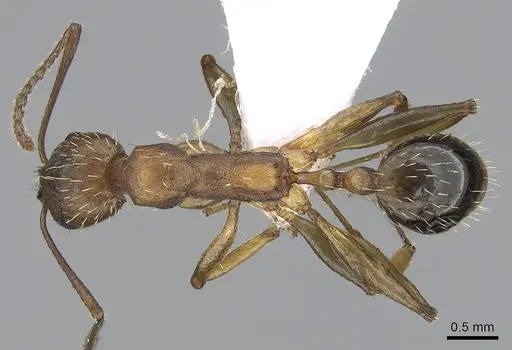
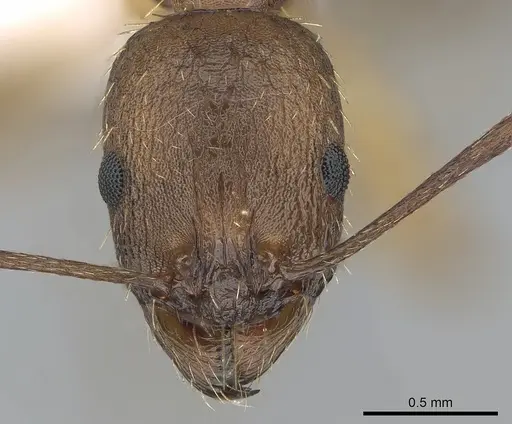
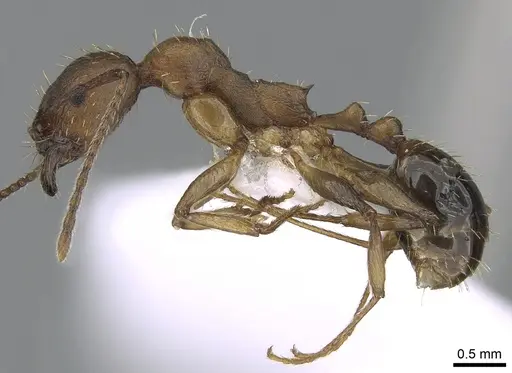
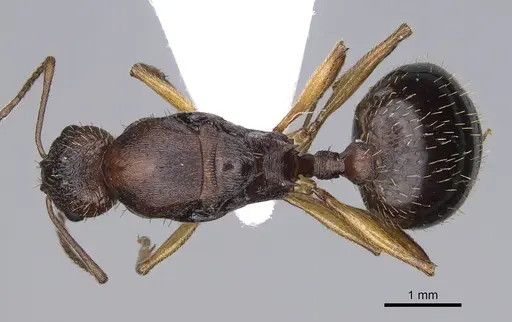
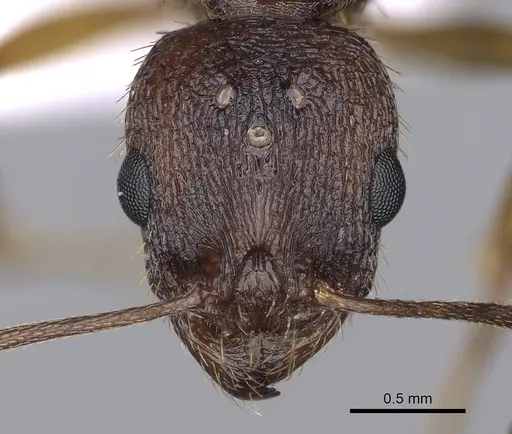
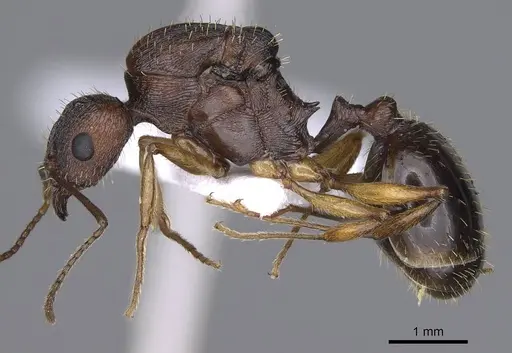
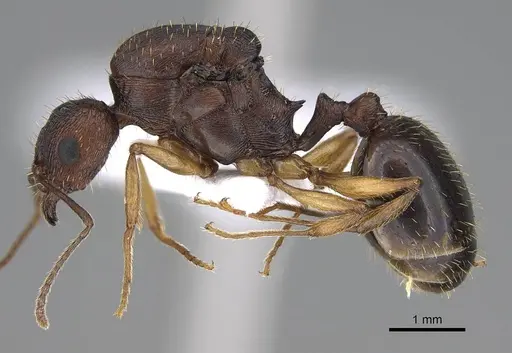
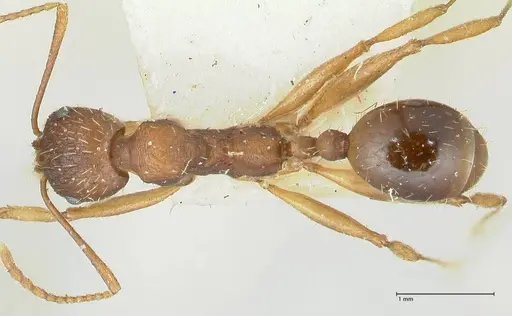
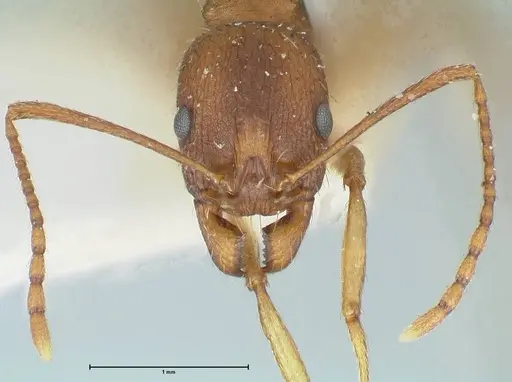
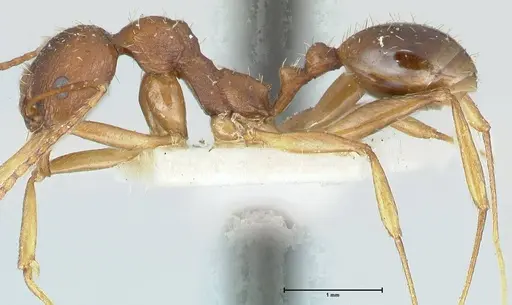
Aphaenogaster rugosoferruginea is a small ant species endemic only to Crete, Greece. Workers measure approximately 4-5mm with a distinctive rusty-yellow to rusty-brown head and thorax, contrasting against a darker brown abdomen . The head has a dull, heavily textured appearance with longitudinal ridges, clearly distinguishing them from the shinier, paler Aphaenogaster splendida . This species inhabits deciduous forests and limestone gorges, nesting exclusively under large stones in shaded locations . What makes this species unusual is its tiny colony size. While most Aphaenogaster species form colonies of hundreds or thousands, A. rugosoferruginea colonies rarely exceed 40 workers and contain just a single queen . They are diurnal foragers, sending workers to hunt on stones and rocks during the day, and retreating under stones during hot weather . This combination of small colony size and specific stone-nesting behavior makes them a unique choice for keepers who appreciate observing complete colony dynamics in miniature.
Quick Summary
- Difficulty: Medium
- Origin & Habitat: Found only on Crete, Greece. Inhabits deciduous forests (especially oak) and limestone gorges, nesting under large stones at altitudes of 15-1130m (mostly below 500m) [2][3][4].
- Colony Type: Strictly monogynous (single-queen colonies) [2][3].
- Size & Growth:
- Queen: Approximately 6-7mm (inferred from genus patterns).
- Worker: Approximately 4-5mm (inferred from genus patterns).
- Colony: Maximum 40 workers observed [2][3][4].
- Growth: Slow (limited by small maximum colony size).
- Development: Not directly measured, based on typical Aphaenogaster patterns, expect approximately 8-12 weeks at 22-25°C. (Development time is inferred from related species, temperature affects speed significantly.)
- Antkeeping:
- Temperature: Room temperature (20-25°C) during activity season, provide winter cooling at 10-15°C for 3-4 months.
- Humidity: Moderate to high. Keep nest material damp but not waterlogged, mimicking conditions under forest stones [1].
- Diapause: Yes, required for this temperate Mediterranean species.
- Nesting: Flat stone nests or tight cavities with low clearance, they prefer spaces under stones rather than tall chambers [1][3].
- Behavior: Diurnal and active on stones and rocks. Moderately shy with small colony size. Small workers require excellent escape prevention [2].
- Common Issues: colonies remain very small (under 40 workers), requiring patience and careful feeding to avoid mold., found only on Crete, releasing elsewhere poses ecological risks and violates responsible keeping practices., stone-dwelling habits mean they prefer tight, flat spaces, open nests may cause stress., slow growth makes colonies vulnerable to overfeeding and contamination.
Nest Preferences and Setup
In nature, Aphaenogaster rugosoferruginea nests exclusively under large stones in soil, occasionally utilizing porous limestone boulders, but never inhabiting caves, rock crevices, or stone culverts [1][3]. They prefer the humid, stable microclimate found beneath stones in deciduous forests. In captivity, replicate this with a naturalistic setup featuring flat stones on a thin layer of soil or sand, or use a Y-tong nest with very flat, low chambers and narrow passages [1]. Avoid tall, open spaces, these ants prefer tight clearance where they can press against the stone surface above them.
Temperature and Seasonal Care
This species inhabits Mediterranean forests on Crete, experiencing hot summers and mild, wet winters [2][4]. Keep active colonies at room temperature (20-25°C). During hot weather, wild workers retreat under stones, so ensure your setup has a cool retreat area [2]. For winter care, provide a diapause (winter rest) period at 10-15°C for 3-4 months to simulate natural seasonal cycles.
Feeding and Diet
While specific dietary studies are lacking, Aphaenogaster species are generally omnivorous scavengers. Offer small live prey appropriate for their size, such as fruit flies, springtails, or tiny pieces of mealworms, plus sugar sources like honey water or sugar water. Given their small colony size (maximum 40 workers), feed small amounts frequently rather than large quantities to prevent mold and contamination [2].
Behavior and Activity Patterns
These ants are strictly diurnal, foraging on stones and rocks during the day [2][4]. Workers are often seen individually on stones within forests or on gorge walls. During particularly hot days, single workers retreat under stones, suggesting they prefer moderate temperatures and shaded foraging routes [2]. They are not aggressive given their small colony size, but workers will defend the nest if disturbed.
Conservation and Legal Considerations
Aphaenogaster rugosoferruginea is found only on Crete, meaning it occurs nowhere else in the world [2][5]. You must never release captive colonies outside Crete, as they could introduce diseases to local ant populations or disrupt ecosystems. Additionally, collecting wild colonies may impact this restricted population, so captive breeding and responsible sourcing are essential [2].
Frequently Asked Questions
Can I keep Aphaenogaster rugosoferruginea in a test tube?
Yes, a standard test tube setup works for founding queens, though they prefer flat spaces. Once workers arrive, move them to a flat stone or low-chamber nest to better mimic their natural stone-under nesting habits [1][3].
How big do Aphaenogaster rugosoferruginea colonies get?
Colonies remain very small, rarely exceeding 40 workers [2][4]. This is one of the smallest colony sizes in the genus Aphaenogaster.
Do Aphaenogaster rugosoferruginea need hibernation?
Yes, as a temperate Mediterranean species from Crete, they require a winter rest (diapause) at 10-15°C for approximately 3-4 months.
What do Aphaenogaster rugosoferruginea eat?
They are generalist scavengers. Feed small insects like fruit flies, springtails, or tiny pieces of mealworms, plus sugar water or honey.
How long until first workers for Aphaenogaster rugosoferruginea?
Development time is not directly documented. Based on related Aphaenogaster species, expect roughly 8-12 weeks from egg to first worker at 22-25°C.
Are Aphaenogaster rugosoferruginea good for beginners?
They are manageable but require patience due to slow growth and small colony size. Their specific nesting preferences (flat stones) and restricted range also require extra care [2].
Can I keep multiple Aphaenogaster rugosoferruginea queens together?
No. This species is strictly monogynous (single-queen), with only one queen per nest in the wild [2][3]. Multiple queens will likely fight.
Why is my Aphaenogaster rugosoferruginea colony so small?
This is normal. Wild colonies rarely exceed 40 workers [2][4]. They are naturally a small-colony species, not a growing colony that has stalled.
Do Aphaenogaster rugosoferruginea sting?
They lack a functional sting for defense against humans. They may bite if handled, but their small size makes them harmless.
Report an Issue
The current care sheet is based fully on literature. See inconsistencies, or something that's incorrect? Please , it will be resolved after review from an admin. Contributing to the blogs tab also helps providing information, to make us be able to further improve the caresheets. Thank you for your support!
References

This caresheet is licensed under CC BY-SA 4.0 .
Community Blogs
Literature
Loading distribution map...Loading products...