
Florida Collared Ant
Aphaenogaster floridana
- Sci. Name
- Aphaenogaster floridana
- Tribe
- Stenammini
- Subfamily
- Myrmicinae
- Author
- Smith, 1941
- Common Name
- Florida Collared Ant
- Distribution
- Found in 1 countries
Introduction
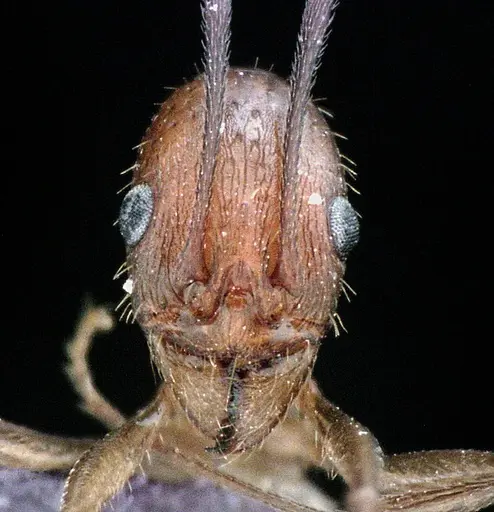
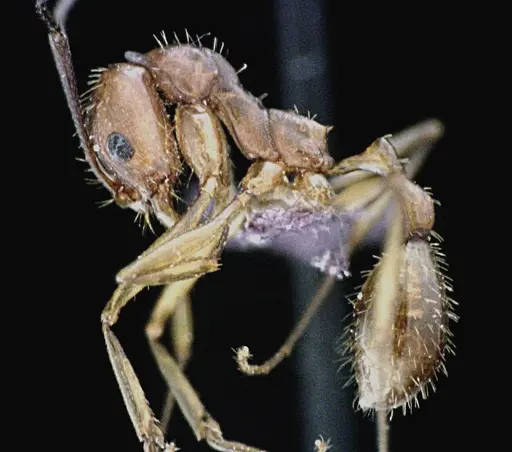
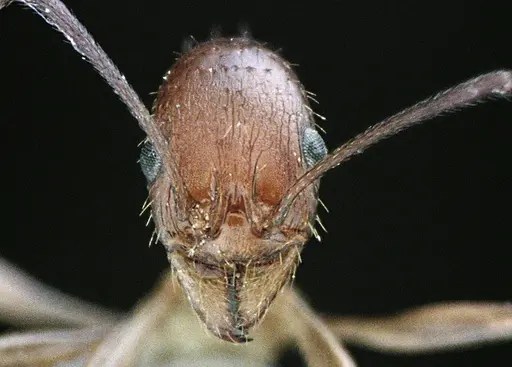
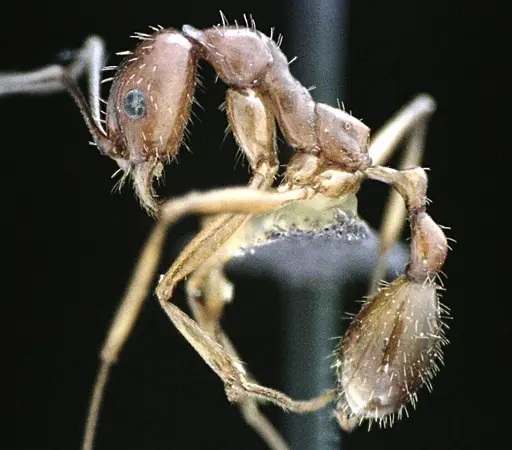
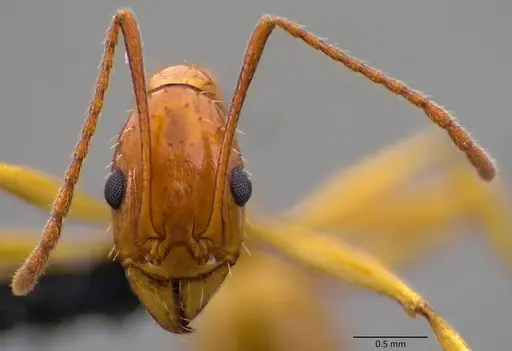
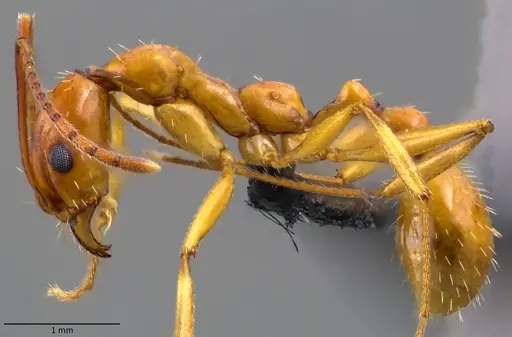
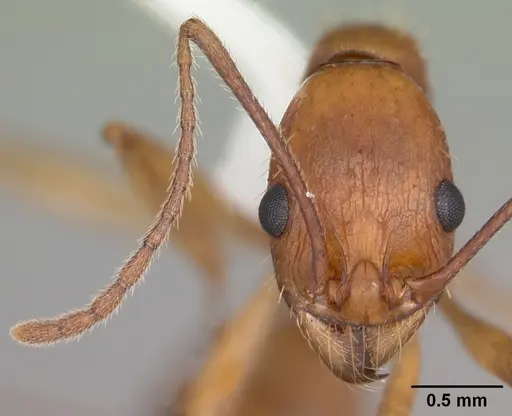
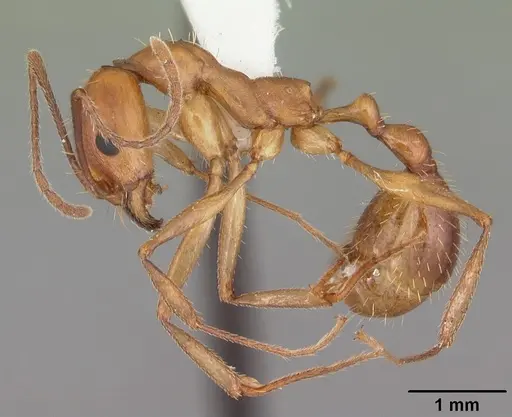
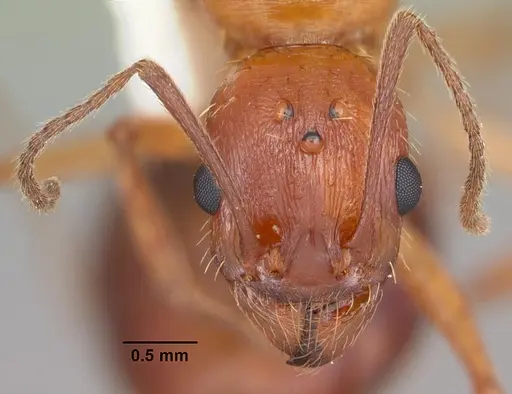
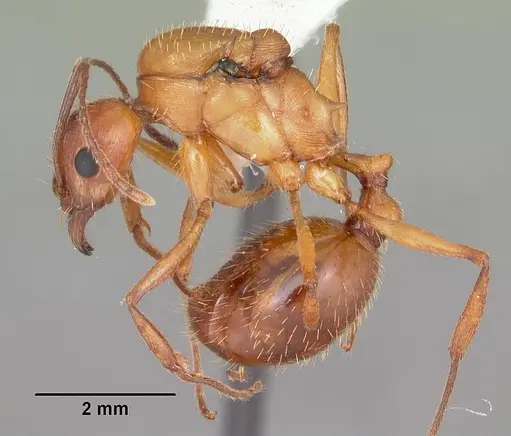
Aphaenogaster floridana is a yellow ant found in sandy habitats across the southeastern United States, from North Carolina through Florida and west to Alabama . Workers are easy to identify because they completely lack spines on the back of the thorax (propodeum), unlike all other Florida Aphaenogaster species, and they have a distinctive arrowhead-shaped base on their antennae . They nest in deep sandy soils, building tunnels that can reach 1.3 meters deep with entrances often hidden under plant debris or small turrets . These ants are nocturnal and crepuscular - they forage at dusk and during the night, especially in warm weather . They collect seeds and hunt small arthropods including other ant species . Colonies typically have fewer than 50 workers, though the largest recorded colonies reach around 200 workers, and they usually have a single queen . You will find them in open sandhills, pine scrub, turkey oak forests, and mixed hardwood forests where the soil drains well .
Quick Summary
- Difficulty: Medium
- Origin & Habitat: Southeastern United States (North Carolina to Florida, west to Alabama) in sandy pine scrub, sandhills, turkey oak forests, and mixed hardwood forests [1][2][6].
- Colony Type: Single-queen (monogyne) colonies, the AntWiki data indicates apparently a single queen per colony [3].
- Size & Growth:
- Queen: Size data unavailable, no specific measurements exist for this species [3].
- Worker: Size data unavailable, no specific measurements exist for this species [3].
- Colony: Up to 200 workers, typically fewer than 50 [3].
- Growth: Moderate.
- Development: Unknown, no specific development data exists for this species. (Development timeline unconfirmed. Related Aphaenogaster species typically take 6-10 weeks at warm temperatures.)
- Antkeeping:
- Temperature: Keep at 24-28°C during active season. They require winter hibernation at 10-15°C for 3-4 months based on their temperate range and climate data showing winter lows around 5.8°C [7].
- Humidity: Moderate humidity with well-drained sandy substrate. The nest material should feel damp but never waterlogged, sandy soils drain quickly [3].
- Diapause: Yes. Required based on their temperate range (North Carolina to Florida) and climate data showing significant winter cooling down to 5.8°C [7].
- Nesting: Deep sandy substrate, at least 15-20 cm deep, though they naturally dig to 1.3 meters. Provide a naturalistic setup with sand/loam mix. They may build debris turrets at entrances and change the main entrance every few days or weeks [3][4].
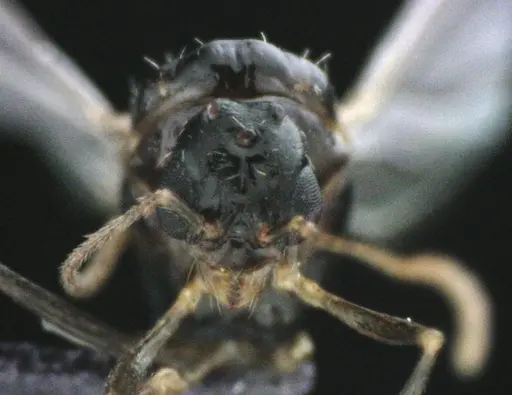
- Behavior: Nocturnal and crepuscular (active at dawn/dusk), ground-foraging, seed-collecting, and generalist predatory [3][5]. They are timid and rely on speed and chemical defenses rather than aggression. Workers lack propodeal spines, queens and males have small spines, suggesting the worker spine loss is a recent evolutionary event [3]. Small size requires excellent escape prevention with fine mesh [3].
- Common Issues: small size means escapes are likely without fine mesh barriers and tight-fitting lids., deep nesting instinct means they need substantial substrate depth, shallow nests cause stress., nocturnal activity means less daytime viewing, which disappoints keepers expecting constant activity., colonies grow slowly and stay relatively small, expect patience., sandy substrate can collapse if too dry or flood if over-watered, maintain damp but not wet conditions.
Nest Preferences and Substrate
Deep sandy nests are the hallmark of this species. In nature, they dig down to 1.3 meters in well-drained sandy soil, much deeper than other Florida Aphaenogaster [3]. Nests typically have one or two entrances, sometimes with a short turret made of plant debris and arthropod remains. They may move their main entrance every few days or weeks [3]. In captivity, you must provide significant depth, at least 15-20 cm of sandy substrate, or they will stress trying to dig deeper. A naturalistic setup with a deep sand container works better than standard formicaria. The substrate should be sandy but able to hold tunnels, a mix of sand and loam works well.
Feeding and Diet
These ants are generalist scavengers and predators with a notable taste for seeds. They collect seeds from plants like Seymeria pectinata and will transport pieces of Russula mushrooms back to the nest [3]. They also hunt small arthropods, including other ant species like Pheidole morrisiii and alate reproductive fire ants (Solenopsis invicta and Solenopsis geminata) [3]. In captivity, offer a variety of small live prey like fruit flies, springtails, and tiny mealworms, plus seeds such as chia, canary grass, or dandelion seeds. They accept both protein and sugar sources, though their seed-collecting behavior makes them fun to watch with seed baits.
Temperature and Seasonal Care
Based on climate data from their Florida habitat, these ants experience winter lows around 5.8°C and summer highs of 32.7°C [7]. Keep them at 24-28°C during the active season. They definitely need a winter hibernation period, cool them down to 10-15°C for 3-4 months when they slow down in late fall. This mimics the natural cycle of their North Carolina and northern Florida range. Alates (reproductives) are produced in the nest from late June and early July and may be seen at nest entrances in late August and early September [3].
Behavior and Activity Patterns
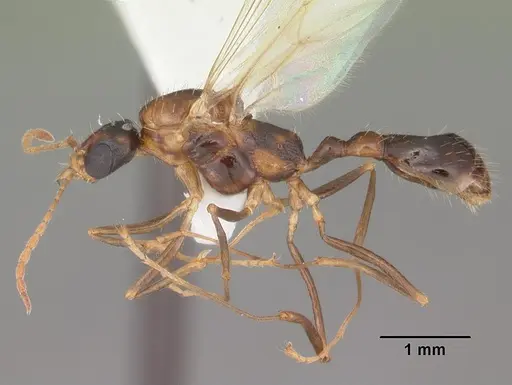
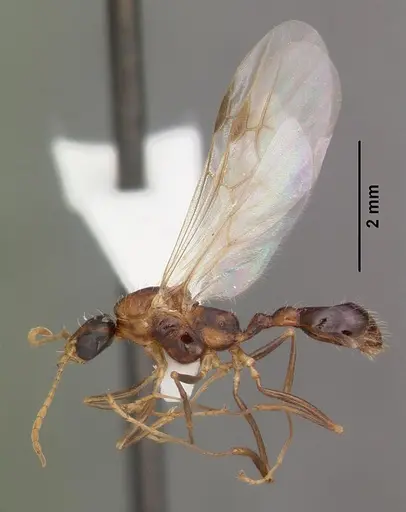
Do not expect daytime activity. Aphaenogaster floridana forages at dusk and during the night, especially in warm weather [3]. They are ground-dwelling hunters that move slowly and deliberately. They are not aggressive defenders and lack the stinging propodeal spines that many relatives use, instead, they may rely on chemical defenses. The lack of spines in workers is unusual, queens and males actually do have small spines, suggesting the worker spine loss is a recent evolutionary event [3]. Because of their small size and nocturnal habits, they are escape artists, use fine mesh (under 1mm) and barriers like Fluon.
Identification Tips
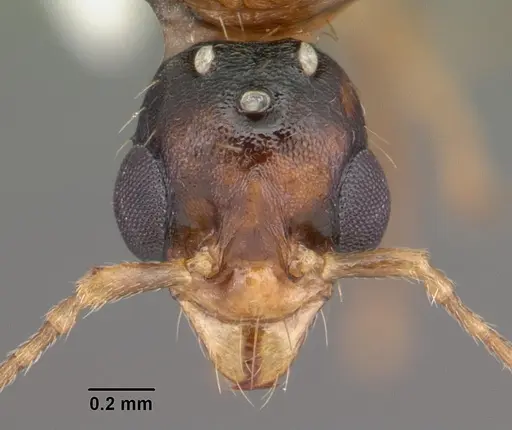
The lack of spines on the worker thorax makes this species unique among southeastern Aphaenogaster [3]. Look for the yellow coloration and the arrowhead-shaped base of the antennae (scape). Queens and males actually do have small spines, so only workers show this spineless trait [3]. The gaster is not significantly darker than the head and mesosoma, which helps distinguish them from similar species like Aphaenogaster boulderensis [3].
Frequently Asked Questions
Do Aphaenogaster floridana need hibernation?
Yes. They come from regions with cool winters (down to 5.8°C) and require a diapause period of 3-4 months at 10-15°C [7].
How deep should the nest be for Aphaenogaster floridana?
Very deep. They naturally dig to 1.3 meters. Provide at least 15-20 cm of substrate in captivity, preferably more [3].
Can I keep multiple Aphaenogaster floridana queens together?
Not recommended. Colonies are typically single-queen (monogyne), and combining queens would likely result in fighting [3].
What do Aphaenogaster floridana eat?
They eat seeds (especially small ones like Seymeria pectinata), small insects, and even pieces of Russula mushroom. Offer a mix of protein and seeds [3][5].
Are Aphaenogaster floridana good for beginners?
Moderate difficulty. They are small (escape risk), need deep nesting substrate, and are nocturnal, but their care is straightforward if you meet these needs.
How can I tell Aphaenogaster floridana from other Aphaenogaster?
Workers lack spines on the back of the thorax (all other Florida Aphaenogaster have them) and have an arrowhead-shaped base on the antennae [3].
Do Aphaenogaster floridana sting?
They have a stinger but are not aggressive toward humans. They are timid ants that prefer to run away or use chemical defenses rather than sting [3].
Why are my Aphaenogaster floridana not active during the day?
They are naturally nocturnal and crepuscular (active at dawn/dusk). This is normal behavior for the species [3].
How long until first workers for Aphaenogaster floridana?
Founding behavior is unconfirmed for this species. Related Aphaenogaster species typically take 6-10 weeks at warm temperatures if semi-claustral, or longer if claustral.
Report an Issue
The current care sheet is based fully on literature. See inconsistencies, or something that's incorrect? Please , it will be resolved after review from an admin. Contributing to the blogs tab also helps providing information, to make us be able to further improve the caresheets. Thank you for your support!
References

This caresheet is licensed under CC BY-SA 4.0 .
Community Blogs
ANTWEB1041500
View on AntWeb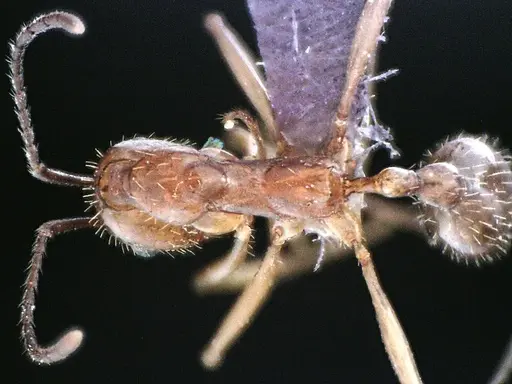
ANTWEB1041501
View on AntWeb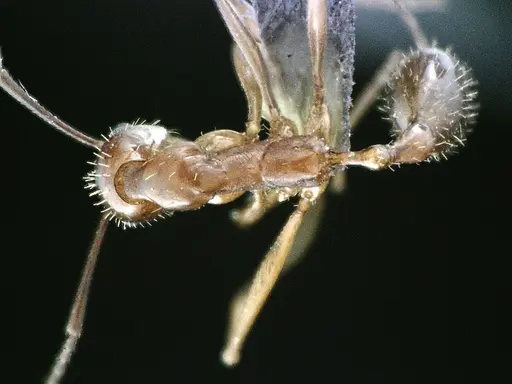
ANTWEB1041502
View on AntWeb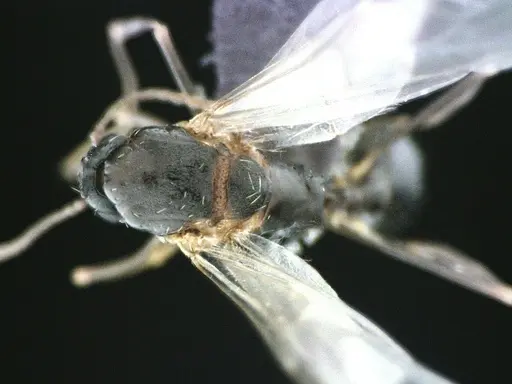
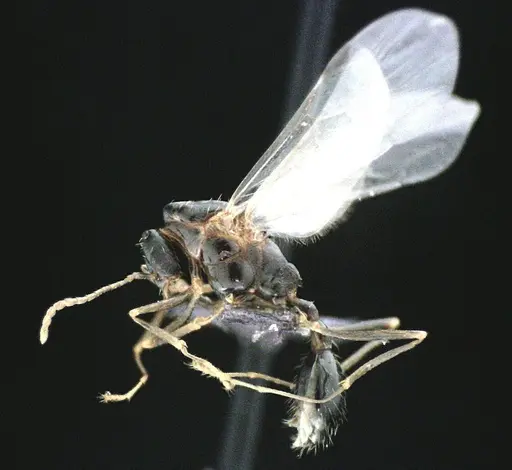
ANTWEB1041503
View on AntWeb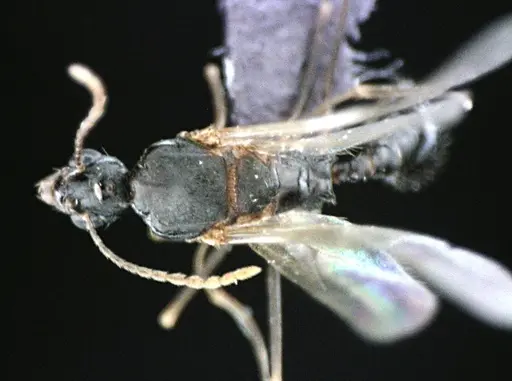
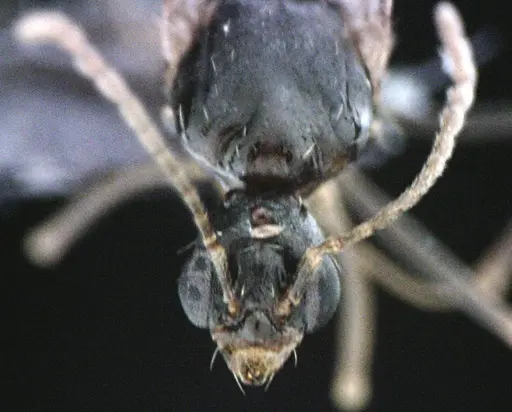
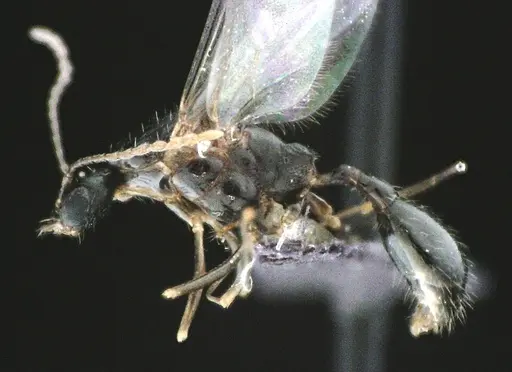
ANTWEB1060078
View on AntWeb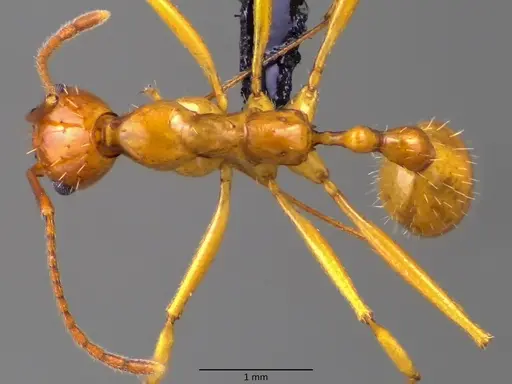
CASENT0103580
View on AntWeb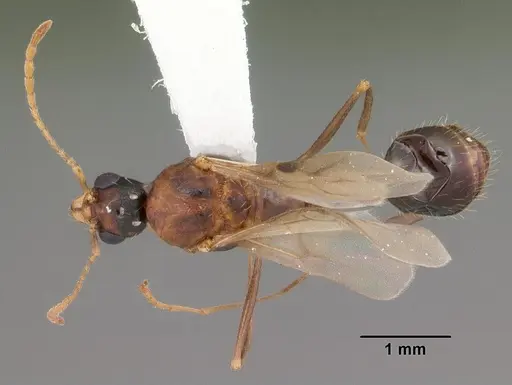
CASENT0103583
View on AntWeb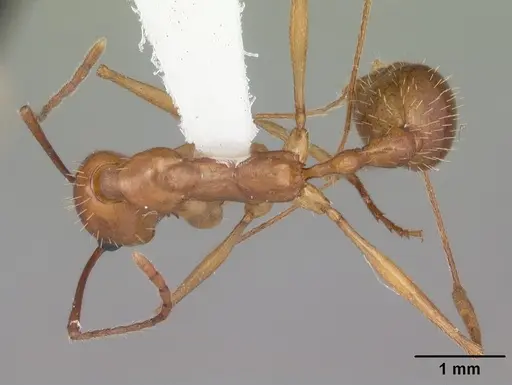
CASENT0103584
View on AntWeb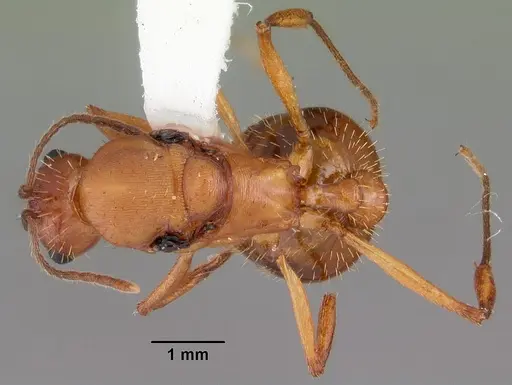
Literature
Loading distribution map...Loading products...