
Anochetus variegatus
- Sci. Name
- Anochetus variegatus
- Tribe
- Ponerini
- Subfamily
- Ponerinae
- Author
- Donisthorpe, 1938
- Distribution
- Found in 2 countries
Introduction
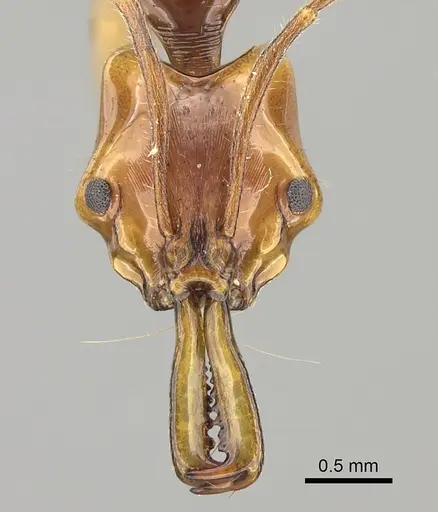
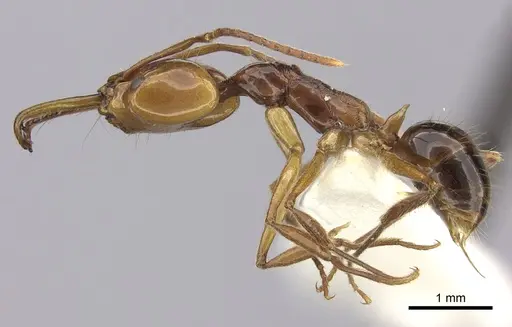
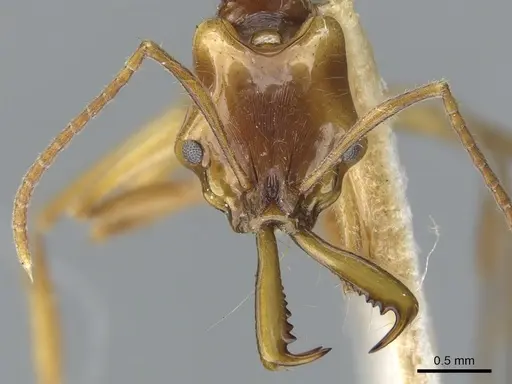
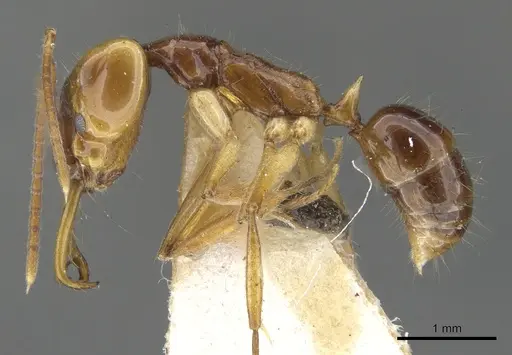
Anochetus variegatus is a trap-jaw ant from New Guinea. Type specimens were collected at Mount Nomo south of Mount Bougainville at elevations between 600 and 1500 feet . Phylogenetic analysis places this species in the gladiator species group, which includes relatively large-bodied species compared to other Anochetus . The gladiator group is highly derived within the genus and forms a sister group to the africanus species group alongside Anochetus ghilianii . As with other members of the genus, they possess spring-loaded mandibles. Their specific biology remains poorly documented.
Quick Summary
- Difficulty: Medium
- Origin & Habitat: New Guinea (Indonesia), specifically the Mount Nomo area at 600-1500 ft elevation in tropical lowland forests [1]
- Colony Type: Unknown
- Size & Growth:
- Queen: Size data unavailable, described as relatively large for the genus [2]
- Worker: Size data unavailable
- Colony: Unknown
- Growth: Unknown
- Development: Unknown (Development timeline is unstudied for this species)
- Antkeeping:
- Temperature: Keep warm and stable, roughly 24-28°C (inferred from tropical New Guinea location)
- Humidity: High humidity with consistently moist substrate (inferred from tropical forest habitat)
- Diapause: No, tropical species do not require hibernation [1]
- Nesting: Small chambers in soil or rotting wood with humid conditions (inferred from genus patterns)
- Behavior: Fast-moving with trap-jaw mandibles. They can jump using their mandibles for defense. Escape risk is high due to small size.
- Common Issues: workers can escape through tiny gaps in mesh or loose-fitting lids., colonies die if the nest substrate dries out completely., workers may reject dead prey in favor of live prey., fast movements increase the risk of accidental escapes during maintenance.
Distribution and Phylogenetic Position
Anochetus variegatus is endemic to New Guinea, with type specimens collected from Mount Nomo south of Mount Bougainville [1]. Phylogenetically, they belong to the gladiator species group alongside Anochetus ghilianii, which together form the sister group to the africanus species group [2]. This placement indicates they are highly derived within the genus rather than an early-diverging lineage [2]. Their relatively large body size for the genus suggests they may prey on slightly larger food items than typical small Anochetus species.
Trap-Jaw Hunting Behavior
Anochetus variegatus possesses trap-jaw mandibles characteristic of the genus Anochetus. These spring-loaded mandibles snap shut rapidly to capture small prey. They use this ability both for hunting and for defensive jumping (called the escape jump) where they strike the substrate to propel themselves backward away from threats.
Nest Preferences and Setup
Based on their tropical New Guinea origin, Anochetus variegatus requires consistently warm and humid conditions [1]. In nature, Anochetus species typically nest in soil, rotting wood, or leaf litter. For captive colonies, use a naturalistic setup with a mix of soil and rotting wood, or a small plaster nest with tight chambers. The nest area should stay moist but not flooded. Provide a temperature gradient by heating one side of the nest, allowing the ants to thermoregulate by moving brood.
Feeding and Diet
Anochetus variegatus are specialized predators that hunt small live arthropods. In captivity, offer small live prey such as springtails, fruit flies, or tiny crickets. Live food triggers the trap-jaw response more reliably than dead prey. They may also accept sugar water, though protein should form the bulk of their diet. Feed small amounts frequently rather than large prey items that could mold in the humid nest environment.
Temperature and Environmental Care
As a tropical species from New Guinea, Anochetus variegatus does not require diapause and should be kept warm year-round [1]. Maintain temperatures between 24-28°C with a slight gradient. Humidity is critical, the substrate should never be allowed to dry out completely. Use a water tower or moistened cotton in test tube setups, and mist naturalistic enclosures when the surface begins to dry. Ventilation should be adequate to prevent mold but not so strong that it dries the nest.
Frequently Asked Questions
Can I keep Anochetus variegatus in a test tube?
Yes, but you must use a small test tube (10-12mm diameter) with a very tight cotton or foam plug, as their small size allows escape through standard gaps. Keep the water reservoir small to prevent flooding, and maintain high humidity by checking the cotton regularly.
How long until first workers for Anochetus variegatus?
The egg-to-worker timeline is unknown for this species.
Do Anochetus variegatus need hibernation?
No. They are a tropical species from New Guinea and do not require diapause. Keep them warm year-round at roughly 24-28°C [1].
What do Anochetus variegatus eat?
They are specialized predators that hunt small live prey. Offer springtails, fruit flies, or tiny crickets. They use their trap-jaw mandibles to capture prey, so live food is usually more readily accepted than dead items.
Are Anochetus variegatus good for beginners?
They are medium difficulty. While they do not have complex hibernation requirements, their small size makes escape prevention challenging, and their specialized diet may be difficult to maintain.
Can I keep multiple Anochetus variegatus queens together?
Not recommended. While their exact colony structure is unknown, most Anochetus species are monogyne (single-queen). Combining queens will likely result in fighting and mortality.
How big do Anochetus variegatus colonies get?
Maximum colony size is unknown for this species.
Report an Issue
The current care sheet is based fully on literature. See inconsistencies, or something that's incorrect? Please , it will be resolved after review from an admin. Contributing to the blogs tab also helps providing information, to make us be able to further improve the caresheets. Thank you for your support!
References

This caresheet is licensed under CC BY-SA 4.0 .
Community Blogs
CASENT0260511
View on AntWeb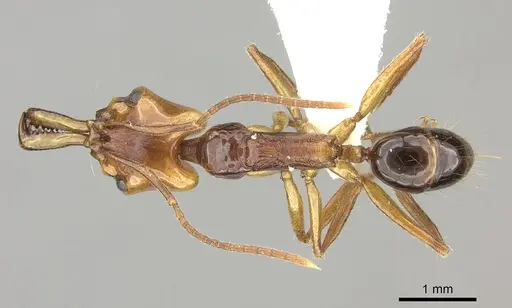
CASENT0902437
View on AntWeb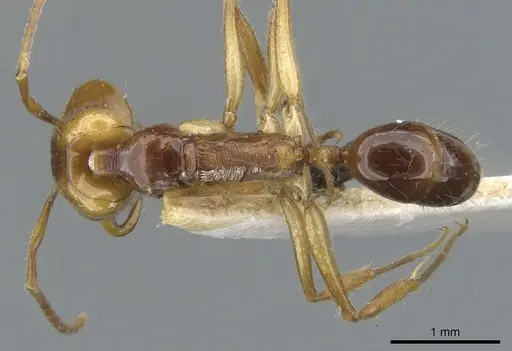
Literature
Loading distribution map...Loading products...