
Anochetus validus
- Sci. Name
- Anochetus validus
- Tribe
- Ponerini
- Subfamily
- Ponerinae
- Author
- Bharti & Wachkoo, 2013
- Distribution
- Found in 1 countries
Introduction
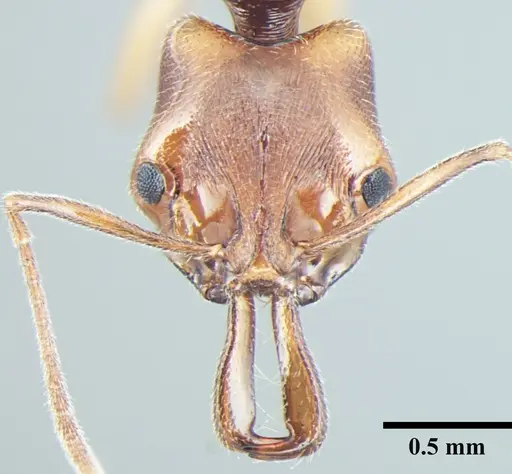
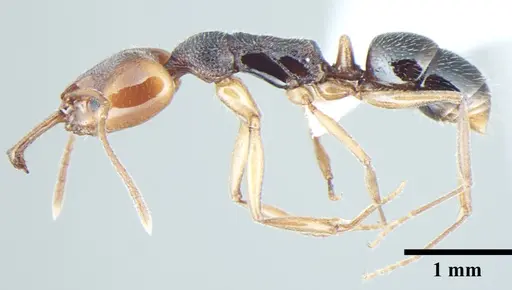
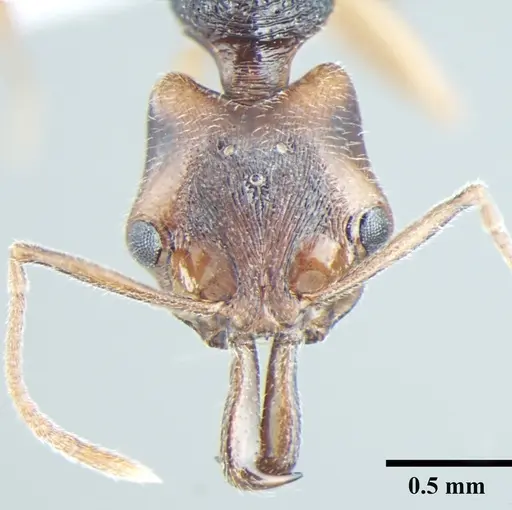
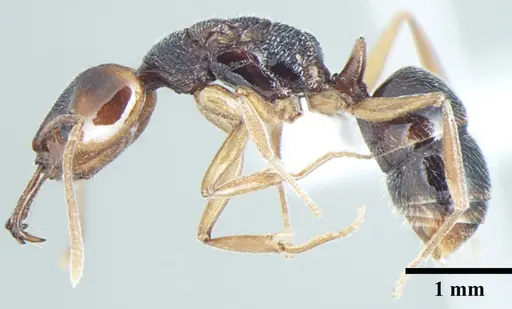
Anochetus validus is a trap-jaw ant species from the Himalayan foothills, with workers measuring 5.5-5.7 mm in total length . They have a distinctive color pattern: head, petiole, and appendages are reddish-brown, while the mesosoma and gaster are blackish-brown . This species is endemic to the Jammu region of Northwest India, specifically the Shivalik range, where it lives at elevations between 310 and 840 meters . First described in 2013,Anochetus validus remains uncommon in scientific collections . They inhabit moist soil under small stones in the Himalayan foothills, with workers occasionally foraging on grass during evening hours . Their restricted range and specific habitat requirements make them a challenging species for captive care.
Quick Summary
- Difficulty: Expert
- Origin & Habitat: Endemic to the Shivalik range in Northwest Himalaya, India (Jammu and Kashmir region), at elevations of 310-840 meters, also recorded from Himachal Pradesh and Bhutan [1][3][4]. They nest under small stones in moist soil [1].
- Colony Type: Unconfirmed, colony structure is unknown for this species
- Size & Growth:
- Antkeeping:
- Temperature: Unconfirmed, based on Himalayan foothill climate, moderate temperatures around 20-25°C are likely appropriate
- Humidity: Moist substrate required, keep nest material damp but not waterlogged, matching their natural habitat under stones in moist soil [1]
- Diapause: Unconfirmed, likely experiences seasonal temperature variations given Himalayan origin, but specific requirements are unknown
- Nesting: Naturalistic setup with flat stones and moist substrate preferred, these ants naturally nest under stones in soil [1]
- Behavior: Trap-jaw predator using rapid mandible strikes to hunt small prey. Workers have been observed foraging during evening hours, suggesting crepuscular activity patterns [1]. At 5.5-5.7mm, they require escape prevention including fine mesh barriers and tight-fitting lids.
- Common Issues: extreme rarity makes obtaining colonies difficult or impossible., unknown founding requirements create high risk of queen failure without established protocols., specific humidity and substrate needs may be hard to maintain in standard setups., lack of captive care data means troubleshooting relies on guesswork and genus-level inferences.
Natural History and Distribution
Anochetus validus is restricted to the Shivalik range in the Northwest Himalaya, specifically the Jammu region of India [1]. They have been found at elevations ranging from 310 meters to 840 meters, living under small stones and in moist soil [1][2]. A single worker has also been collected in Bhutan, suggesting a slightly wider range in the Himalayan foothills [4].
The species belongs to the graeffei group within the genus Anochetus [1][5]. They appear to be uncommon even in their native range, with most records coming from targeted collecting efforts under stones and soil sieving [1]. Workers have been observed foraging on grass during evening hours [1].
Housing and Nest Setup
In captivity, replicate their natural stone-dwelling habitat. A naturalistic setup with flat stones over moist substrate works best [1]. You can also use a plaster or Y-tong nest with tight chambers, but ensure the substrate stays consistently moist.
Because workers are 5.5mm long, they can squeeze through small gaps. Use fine mesh for ventilation and apply Fluon or baby powder barriers to the upper walls of the outworld. Keep the lid tight-fitting with no gaps.
Provide a moisture gradient: one side damp, one side slightly drier, so the colony can choose their preferred microclimate. Avoid tall, open spaces, these ants prefer tight spaces under stones.
Temperature and Seasonal Care
Specific temperature requirements are unconfirmed for this species. Based on their Himalayan foothill origin at moderate elevations (310-840m), they likely experience warm summers and cool winters [1]. Start with temperatures around 22-24°C and observe colony activity.
If the colony appears sluggish at room temperature (20-21°C), provide a gentle heat gradient using a heating cable on one side of the nest, keeping the top of the nest warmest to avoid condensation issues. Do not exceed 28°C unless you observe the colony thriving at higher temperatures.
Given their seasonal habitat, they may benefit from a winter cooling period, but this is unconfirmed. If you attempt this, ensure the substrate remains slightly moist and do not feed during the cool period.
Feeding and Trap-Jaw Hunting
Like all Anochetus, they are trap-jaw predators equipped with spring-loaded mandibles that snap shut to capture prey [6]. They require live prey. Offer small insects appropriate to their size: springtails, fruit flies, small crickets, or termites.
The prey should be small enough for a 5.5mm worker to handle. Pre-killed insects are usually ignored unless the colony is very large. You can offer sugar water or honey as a supplement, but protein is essential for brood development.
Feed small amounts frequently rather than large amounts rarely. Remove uneaten prey within 24 hours to prevent mold in the moist nest environment.
Colony Founding and Development
Founding behavior is completely unconfirmed for Anochetus validus. In many Anochetus species, queens are semi-claustral, meaning they must leave the nest to forage during the founding stage rather than sealing themselves in and living on fat reserves. However, this varies by species, and you should not assume this applies to A. validus.
If you obtain a queen, provide her with a small, dark chamber with moist substrate and offer tiny live prey regularly (every 2-3 days). Do not disturb her frequently. If she seals herself in and refuses food, she may be claustral (living on stored reserves), but be prepared to offer food if she appears active or attempts to leave the chamber.
Development time from egg to worker is unconfirmed. First workers (nanitics) may be smaller than typical workers.
Rarity and Conservation Considerations
Anochetus validus is endemic to a small region of the Himalayas and was only described in 2013 [1]. It remains uncommon in scientific collections, and virtually no captive colonies exist. If you obtain specimens, prioritize their survival and consider documenting your observations to contribute to the limited knowledge about this species.
Do not release any captive specimens outside their native range. While they are unlikely to become invasive due to their specific habitat requirements, releasing non-native ants is always poor practice and potentially ecologically harmful.
Frequently Asked Questions
Can I keep Anochetus validus in a test tube?
Yes, but provide moist substrate and darkness. However, a naturalistic setup with stones and soil better matches their wild nesting habits under stones [1].
How long does Anochetus validus take from egg to worker?
Unconfirmed. Development time is unknown for this species.
Do Anochetus validus need hibernation?
Unconfirmed. Given their Himalayan origin with seasonal climate, a winter cooling period may be beneficial, but this is not confirmed.
What do Anochetus validus eat?
Small live insects such as springtails, fruit flies, and tiny crickets. As trap-jaw ants, they are specialized predators that hunt with fast mandible strikes [6].
Are Anochetus validus good for beginners?
No. They are extremely rare, poorly documented, likely have specific care requirements, and should only be attempted by experienced antkeepers.
Can I keep multiple Anochetus validus queens together?
Not recommended. Combining unrelated queens has not been documented and will likely result in fighting.
Do Anochetus validus ants sting?
Yes, they can sting. As members of the Ponerinae subfamily, they have a functional stinger [6].
Why are Anochetus validus so rare in captivity?
They are endemic to a small region in Northwest India, were only described in 2013,and are uncommon even in the wild [1].
What is the ideal temperature for Anochetus validus?
Start at 22-24°C. Specific requirements are unconfirmed, but their Himalayan foothill origin suggests moderate temperatures around 20-25°C are likely appropriate [1].
How big do Anochetus validus colonies get?
Unknown. No data is available on maximum colony size for this species.
Report an Issue
The current care sheet is based fully on literature. See inconsistencies, or something that's incorrect? Please , it will be resolved after review from an admin. Contributing to the blogs tab also helps providing information, to make us be able to further improve the caresheets. Thank you for your support!
References

This caresheet is licensed under CC BY-SA 4.0 .
Community Blogs
ANTWEB1008023
View on AntWeb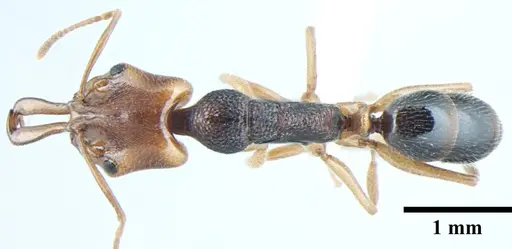
ANTWEB1008024
View on AntWeb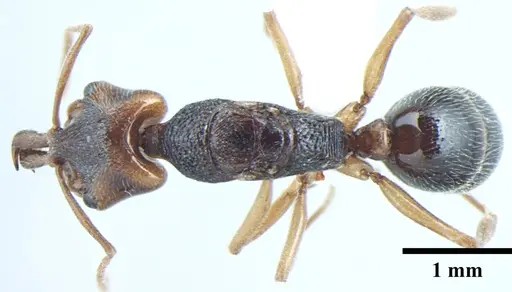
Literature
Loading distribution map...Loading products...