
Anochetus kanariensis
- Sci. Name
- Anochetus kanariensis
- Tribe
- Ponerini
- Subfamily
- Ponerinae
- Author
- Forel, 1900
- Distribution
- Found in 1 countries
Introduction
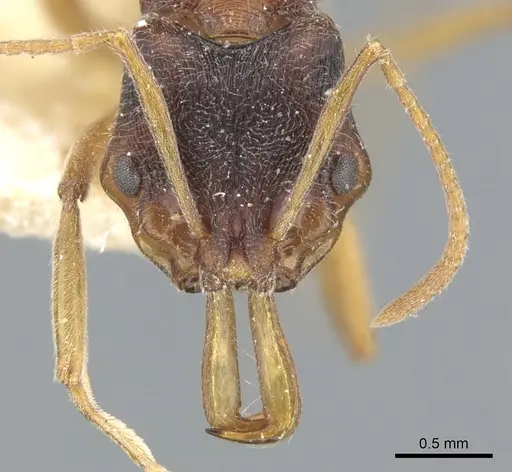
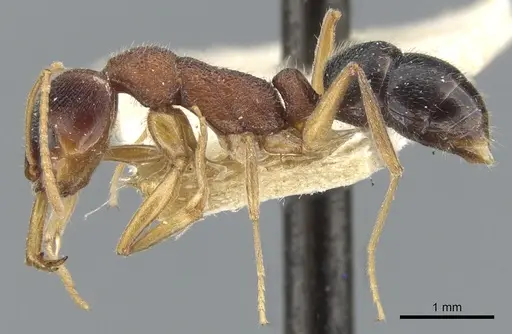
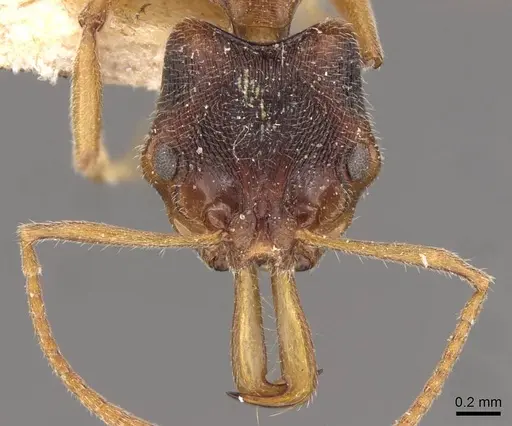
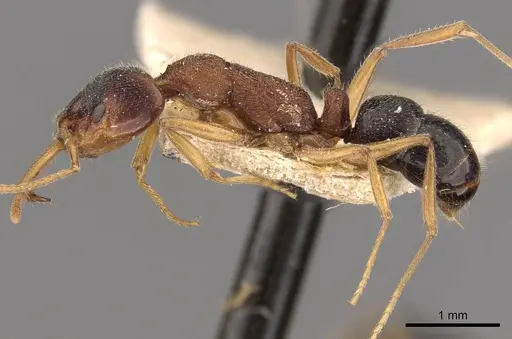
Anochetus kanariensis is a trap-jaw ant endemic to India. Workers measure approximately 7 mm in total length and display a striking red-and-black color pattern: the mesosoma is bright red while the first gastral tergum is black or dark brown with coarse ridges and punctures . The anterodorsal margin of the petiolar node is slightly produced anteriorly, overhanging the front slope which tends to be concave . This species has been recorded from the Indian states of Karnataka, Kerala, Tamil Nadu, and West Bengal . Like all Anochetus species, they possess specialized trap-jaw mandibles that can snap shut at high speed to capture prey. However, almost nothing is known about their biology in the wild - researchers have not documented colony size, founding behavior, queen number, or specific dietary preferences . This makes them a challenging species for antkeepers, as care recommendations must be inferred from related species rather than direct observation.
Quick Summary
- Difficulty: Expert
- Origin & Habitat: Endemic to India, recorded from Karnataka, Kerala, Tamil Nadu, and West Bengal [4]. Likely inhabits forest floor and leaf litter based on genus patterns, but specific habitat preferences are unconfirmed.
- Colony Type: Unknown, likely single-queen based on typical Anochetus patterns, but unconfirmed.
- Size & Growth:
- Queen: Size data unavailable, no documented measurements for queens.
- Worker: Approximately 7 mm total length [1].
- Colony: Unknown, likely small based on genus patterns.
- Growth: Unknown
- Development: Unconfirmed, estimated 10-14 weeks based on related tropical Anochetus species. (This is an estimate, actual timing for this species has not been documented.)
- Antkeeping:
- Temperature: Warm and stable, approximately 24-28°C. As a tropical species from India, they likely prefer consistent warmth, but exact requirements are unconfirmed.
- Humidity: Moderate to high humidity. Keep the nest substrate consistently moist but not waterlogged.
- Diapause: Unknown, tropical species from India likely do not require winter diapause, but this is unconfirmed.
- Nesting: Likely prefers enclosed, humid chambers similar to soil or rotting wood cavities in nature. A naturalistic setup with soil or a plaster nest with small chambers would be appropriate.
- Behavior: Trap-jaw predators that hunt small live prey using their spring-loaded mandibles. They possess a stinger as members of the subfamily Ponerinae, but primarily rely on their mandibles for defense and hunting. Workers are not aggressive toward humans but may bite if handled. Their small size means they can squeeze through tiny gaps.
- Common Issues: care requirements are largely unknown due to lack of research, making captive husbandry experimental., trap-jaw ants require live prey which can be difficult to culture and maintain., small colony size makes them vulnerable to overfeeding or disturbance., escape prevention is critical as 7 mm workers can squeeze through tiny gaps.
The Trap-Jaw Mechanism
Anochetus kanariensis belongs to the trap-jaw ant group, named for their specialized hunting equipment. These ants have long, slender mandibles that can open wide and snap shut with incredible speed when triggered by sensory hairs on the inner surface. This mechanism allows them to strike prey before it can react, stunning or killing small arthropods instantly. In captivity, you may observe workers holding their mandibles open while hunting, ready to snap shut on contact. While fascinating to watch, this hunting style means they require appropriate live prey, they cannot subsist on dead insects or sugar water alone. [1]
Nest Preferences and Housing
In nature, Anochetus species typically nest in soil, leaf litter, or rotting wood on the forest floor. For Anochetus kanariensis, we can infer they prefer dark, humid cavities based on their tropical origins and genus patterns. In captivity, provide a nest with small, tight chambers rather than open spaces. A naturalistic setup with soil and leaf litter works well, or a plaster nest with narrow passages. Keep the substrate moist but not soggy, think damp forest floor, not swamp. Ensure good ventilation while maintaining humidity to prevent mold growth. [1]
Feeding Requirements
As specialized predators, Anochetus kanariensis likely requires small live prey. Based on related trap-jaw ants, suitable food includes springtails, termites, small flies, and tiny crickets. The prey must be small enough for the trap-jaw mechanism to handle effectively. Offer prey items that are approximately the same size or smaller than the workers. While they may accept sugar water or honeydew in captivity, protein from live prey is likely essential for brood development. Feed small amounts frequently rather than large boluses, as small colonies cannot process much food at once. [1]
Temperature and Climate
Coming from tropical India, Anochetus kanariensis likely needs warm, stable conditions year-round. Aim for roughly 24-28°C with minimal fluctuation. You can create a gentle heat gradient by placing a heating cable on one side of the nest, allowing the ants to choose their preferred temperature. Watch the colony's behavior, if workers cluster near the heat source, they want more warmth, if they avoid it, reduce the temperature. Humidity should remain moderate to high, rehydrate the nest when the surface begins to dry rather than on a fixed schedule. [1]
Why So Little Is Known
AntWiki explicitly states that nothing is known about the biology of Anochetus kanariensis. This means scientists have not documented basic life history traits like colony size, queen number, founding behavior, or diet preferences. The species was described in 1900 by Forel based on preserved specimens, and subsequent research has focused on classification rather than behavior [5]. For antkeepers, this means all care advice is educated guesswork based on related Anochetus species. You should document your observations carefully, you may be the first person to record basic biological data for this species in captivity.
Frequently Asked Questions
Can I keep Anochetus kanariensis in a test tube?
Likely yes for founding queens, but this is unconfirmed. Test tubes provide the dark, humid conditions that trap-jaw ants typically prefer. Use a standard test tube setup with water reservoir and cotton plug, but ensure the cotton is secured well as these ants can squeeze through small gaps.
How long until first workers for Anochetus kanariensis?
Unconfirmed. Based on related tropical Anochetus species, expect approximately 10-14 weeks from egg to worker at 25-28°C, but this is an estimate. The actual timeline could be shorter or longer depending on temperature and care conditions.
What do Anochetus kanariensis eat?
They likely require small live prey such as springtails, termites, or tiny insects that they can capture with their trap-jaw mechanism. While they may accept sugar water, protein from live prey is probably essential for colony growth.
Do Anochetus kanariensis need hibernation?
Unknown. As a tropical species from India, they likely do not require winter diapause and remain active year-round at stable warm temperatures. However, this has not been confirmed through research.
Are Anochetus kanariensis good for beginners?
No. They are poorly studied, likely have specialized dietary needs requiring live prey, and their care requirements are largely unknown. They are best suited for experienced keepers willing to experiment and document their findings.
How big do Anochetus kanariensis colonies get?
Unknown. Based on related trap-jaw ants, colonies likely remain small, possibly reaching a few hundred workers at most, but this is speculation.
Report an Issue
The current care sheet is based fully on literature. See inconsistencies, or something that's incorrect? Please , it will be resolved after review from an admin. Contributing to the blogs tab also helps providing information, to make us be able to further improve the caresheets. Thank you for your support!
References

This caresheet is licensed under CC BY-SA 4.0 .
Community Blogs
CASENT0902448
View on AntWeb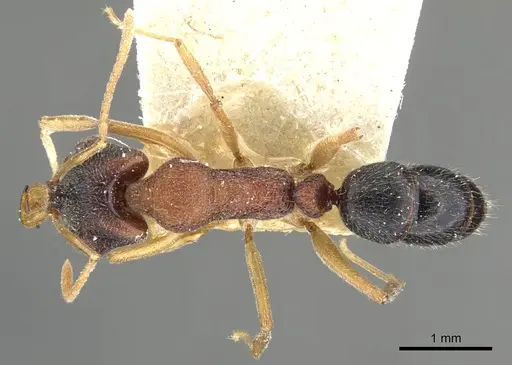
CASENT0907406
View on AntWeb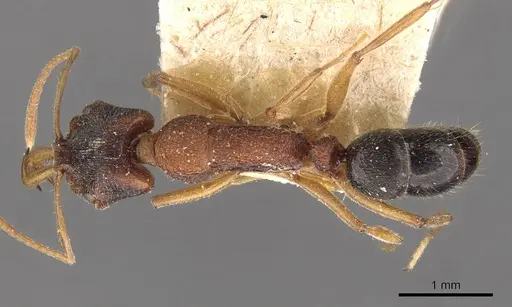
Literature
Loading distribution map...Loading products...