
Anochetus bispinosus
- Sci. Name
- Anochetus bispinosus
- Tribe
- Ponerini
- Subfamily
- Ponerinae
- Author
- Smith, 1858
- Distribution
- Found in 8 countries
Introduction
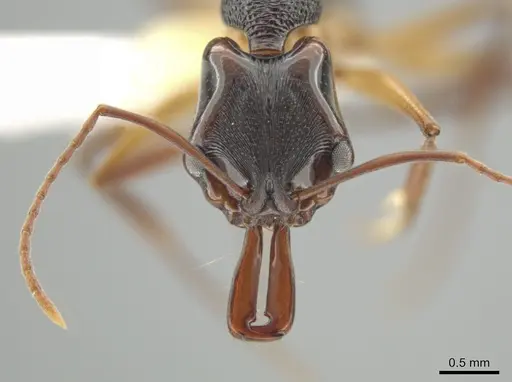
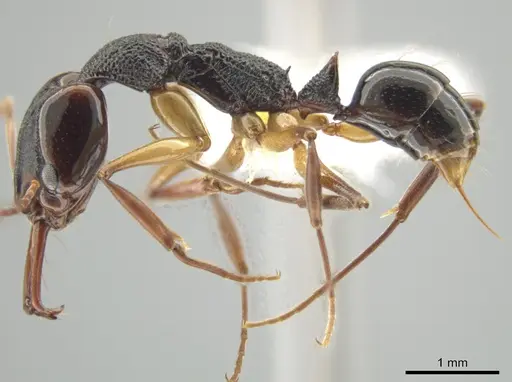
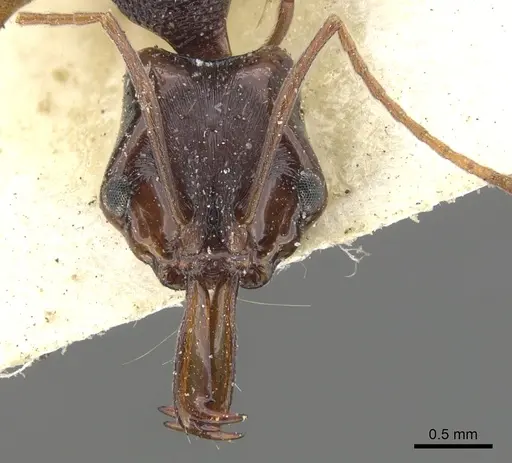
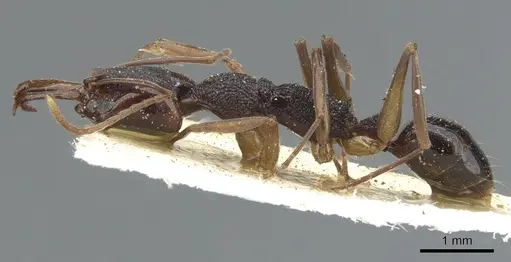
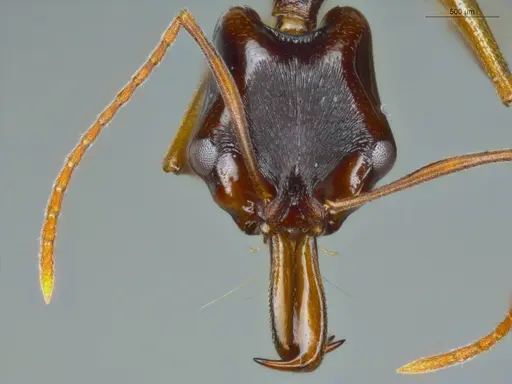
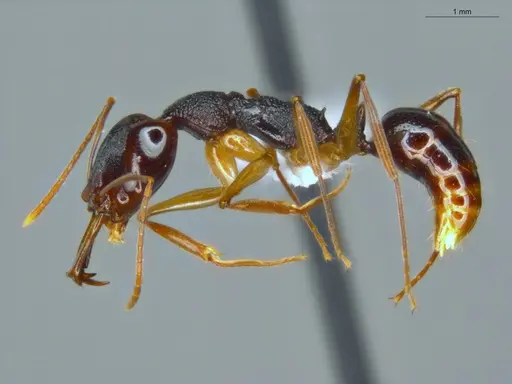
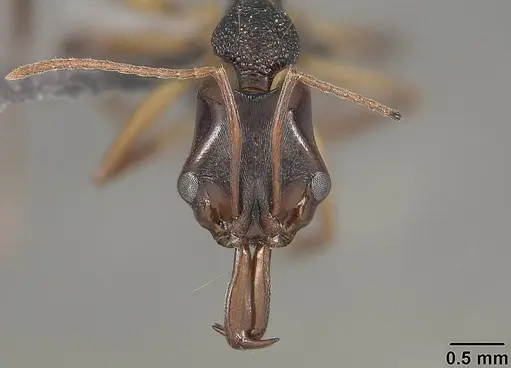
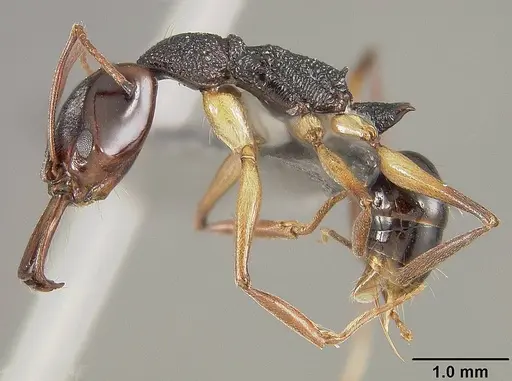
Anochetus bispinosus is a trap-jaw ant from the Neotropical region, recognizable by the rough, wrinkled texture on their body and a pair of sharp, spreading teeth on their narrow waist . They have well-developed spines on their rear section and lack prominent teeth on the inner edge of their jaws before the tip . These ants live across the Amazon basin and Central America, found from Costa Rica and Colombia through Brazil to Bolivia and the Guianas . They forage on the forest floor and in leaf litter, where they face danger from army ants - they are documented prey of Eciton hamatum . This species belongs to the bispinosus species group and is phylogenetically distinct from related trap-jaw ants .
Quick Summary
- Difficulty: Medium to Hard
- Origin & Habitat: Neotropical rainforests and seasonal forests across Costa Rica, Colombia, Brazil, Bolivia, Ecuador, and the Guianas [2]. Found in leaf litter and soil of primary forests, cocoa plantations, and recovering forest fragments [6][7].
- Colony Type: Colony structure is unconfirmed for this species.
- Size & Growth:
- Queen: ~6-8 mm, inferred from Anochetus genus patterns [8].
- Worker: ~4-6 mm, inferred from Anochetus genus patterns [8].
- Colony: Maximum colony size is unknown.
- Growth: Moderate
- Development: Development timeline is unconfirmed for this species. (Based on typical tropical Ponerinae patterns, development likely takes several months at warm temperatures.)
- Antkeeping:
- Temperature: Keep warm and stable around 24-28°C year-round. Use a heating cable on one side of the nest to create a gentle gradient [8].
- Humidity: High humidity required. Keep the nest substrate damp but not waterlogged, it should feel moist to the touch with some slightly drier areas available [8].
- Diapause: No, this is a tropical species that remains active year-round.
- Nesting: Naturalistic setups with leaf litter and soil work best. Provide small cavities and tight spaces appropriate to their size [7].
- Behavior: Predatory trap-jaw ants that hunt small invertebrates using their fast-snapping mandibles. They forage solitarily and are primarily ground-dwelling [9]. They can sting but are generally not aggressive toward humans. Their small size means escape prevention must be excellent [8].
- Common Issues: small size means escapes are likely without fine mesh barriers and tight-fitting lids., require consistent supply of small live prey such as fruit flies or springtails, they will not accept dead insects or sugar sources reliably., need stable warm temperatures year-round, exposure to cool conditions below 20°C can stress or kill the colony., vulnerable to desiccation if humidity drops too low.
Natural History and Distribution
Anochetus bispinosus ranges widely across the Neotropics, documented in Costa Rica, Colombia, Brazil, Bolivia, Ecuador, and the Guianas [2]. They inhabit forest floor leaf litter and soil, collected via Winkler extractors in pristine rainforests [9] and found in both cocoa plantations and native forest fragments in the eastern Amazon [6]. A recent record from Paraná state in southern Brazil represents the southernmost known limit of their range, found in a recovering semidecidual seasonal forest fragment [7]. Their presence in Mexico (Tabasco) is noted as a possible new record [10].
Morphology and Identification
Workers are medium-sized for the genus with distinctive sculpturing, the front and middle sections of the body have an irregularly rough, wrinkled texture [1]. The rear section (propodeum) bears well-developed spines [1]. Their waist segment (petiole) has a distinctly concave top margin with two sharp, spreading teeth [1]. The inner edges of their mandibles lack prominent teeth before the preapical angle, which helps distinguish them from similar species [1].
Nest Preferences
In nature, these ants nest in soil and leaf litter on the forest floor [7]. For captive colonies, recreate this with a naturalistic setup containing a mix of soil, sand, and leaf litter. Provide small cavities or chambers appropriate to their size, they prefer tight spaces over large open chambers. A test tube setup works well for founding colonies, transitioning to a small naturalistic formicarium or Y-tong nest as the colony grows. Ensure the substrate remains moist but not soggy.
Feeding and Diet
Anochetus bispinosus are specialized predators. In nature, they have been found with Histeridae beetles (clown beetles) in their nests, though the relationship is unclear, these may be prey items, scavengers, or symbiotic associates [11][12]. They are also documented as prey for the army ant Eciton hamatum [3]. In captivity, feed small live prey appropriate to their size: fruit flies (Drosophila), springtails, termites, and tiny crickets or cockroach nymphs. They require live prey to trigger their trap-jaw hunting response and typically will not accept dead insects or sugar solutions.
Temperature and Care
As a tropical species from the Amazon basin and Central America, they require warm conditions year-round. Maintain the nest area between 24-28°C with a slight gradient. Avoid temperatures below 20°C. High humidity is essential, keep the substrate damp but provide some slightly drier areas so workers can choose their preferred microclimate. No diapause or winter rest is needed, they remain active throughout the year. [8]
Behavior and Temperament
Like all trap-jaw ants, Anochetus bispinosus possess mandibles that can snap shut with incredible speed to capture prey or defend themselves. They are solitary hunters that forage individually rather than in trails. While they possess a sting typical of the subfamily Ponerinae, their small size means they pose little threat to humans, though they may sting if handled carelessly. Their diminutive size makes them excellent escape artists, you must use fine mesh ventilation and excellent barrier systems like Fluon. [8]
Frequently Asked Questions
Can I keep Anochetus bispinosus in a test tube?
Yes, test tubes work well for founding colonies and small colonies. Use a standard setup with water reservoir and cotton plug, ensuring the tube is not too large for the queen. Move them to a small formicarium or naturalistic setup once they have 20-30 workers.
How long until Anochetus bispinosus get their first workers?
Development timeline is unconfirmed for this species. Based on typical tropical Ponerinae patterns, expect several months from egg to first worker at warm temperatures (24-28°C).
Do Anochetus bispinosus need hibernation or diapause?
No. They are a tropical species and remain active year-round. Keep them warm consistently, do not cool them for winter.
What do Anochetus bispinosus eat?
They are specialized predators requiring small live prey. Feed fruit flies, springtails, termites, or tiny cricket nymphs. They generally will not accept dead insects or sugar water.
Do Anochetus bispinosus ants sting?
Yes, they can sting like most ponerine ants, but their small size means they rarely penetrate human skin. Handle with care to avoid accidental stings.
Can I keep multiple Anochetus bispinosus queens together?
Not recommended. While the exact colony structure is unconfirmed for this species, most Anochetus are single-queen species and unrelated queens will likely fight.
How big do Anochetus bispinosus colonies get?
The maximum colony size is unknown. Based on related Anochetus species, colonies likely remain relatively small.
Are Anochetus bispinosus good for beginners?
They are best suited for intermediate keepers. While their care is straightforward, they require consistent live food, excellent escape prevention due to their small size, and stable tropical temperatures.
What is the best nest type for Anochetus bispinosus?
Naturalistic setups with soil and leaf litter work best, though small Y-tong or plaster nests with tight chambers are also suitable. Avoid large acrylic nests with tall chambers, they prefer small, enclosed spaces.
Why are my Anochetus bispinosus dying?
Common causes include: temperatures too low (below 20°C), lack of live prey (they cannot survive on sugar water alone), or desiccation from insufficient humidity. Check that your escape prevention is working, if workers are escaping, they may be dying from exposure.
Report an Issue
The current care sheet is based fully on literature. See inconsistencies, or something that's incorrect? Please , it will be resolved after review from an admin. Contributing to the blogs tab also helps providing information, to make us be able to further improve the caresheets. Thank you for your support!
References

This caresheet is licensed under CC BY-SA 4.0 .
Community Blogs
CASENT0646026
View on AntWeb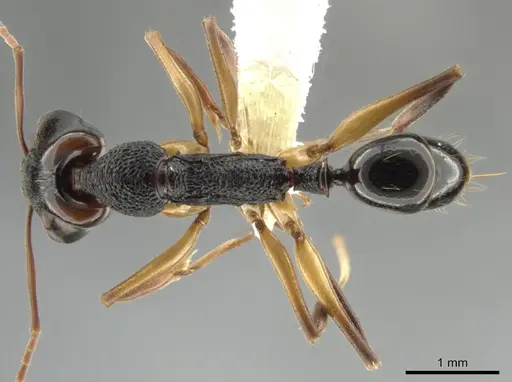
CASENT0902432
View on AntWeb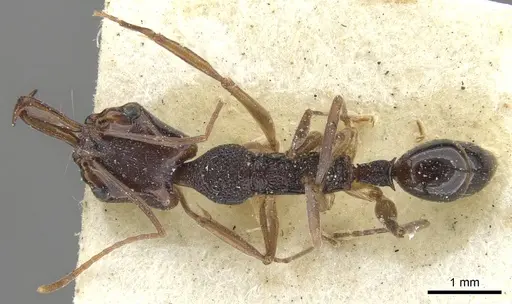
ECOFOG-LA15-0289-16
View on AntWeb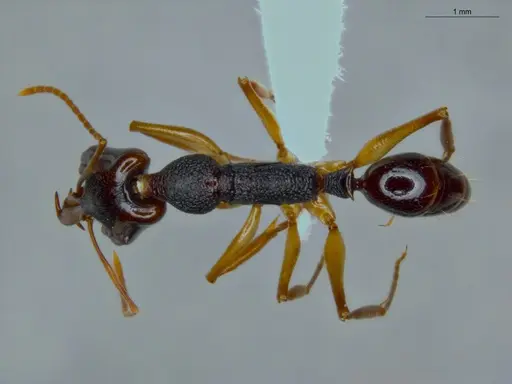
USNMENT01124207
View on AntWeb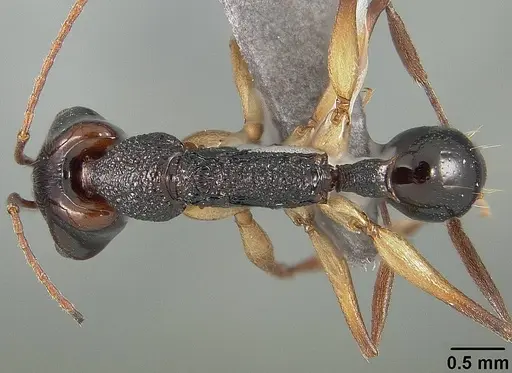
Literature
Loading distribution map...Loading products...