
Ancyridris polyrhachioides
- Sci. Name
- Ancyridris polyrhachioides
- Tribe
- Crematogastrini
- Subfamily
- Myrmicinae
- Author
- Wheeler, 1935
- Distribution
- Found in 1 countries
Introduction
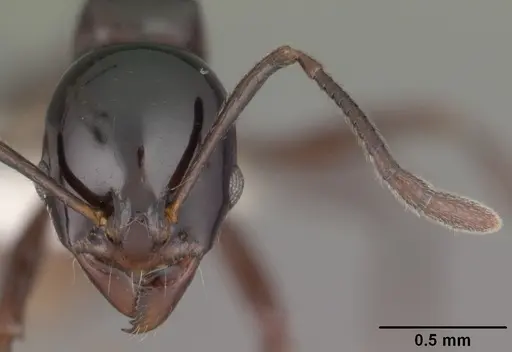
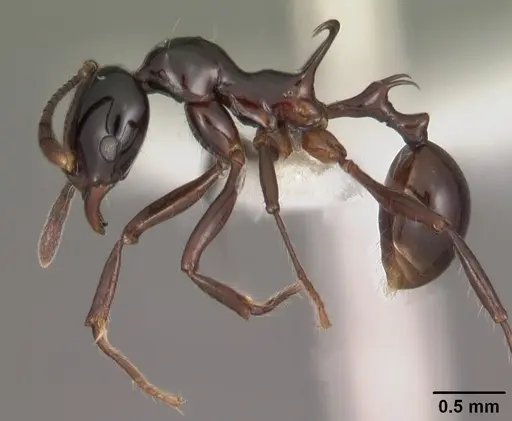
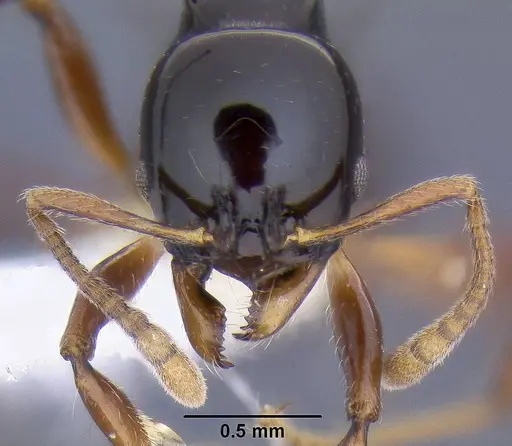
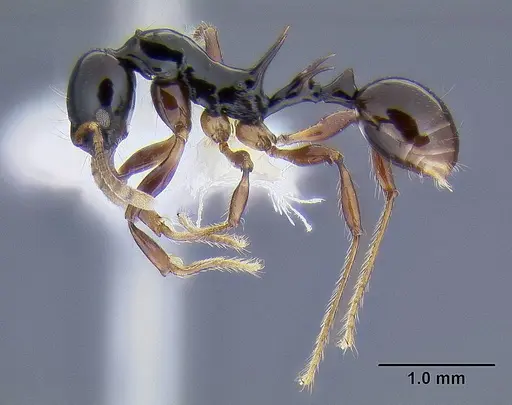
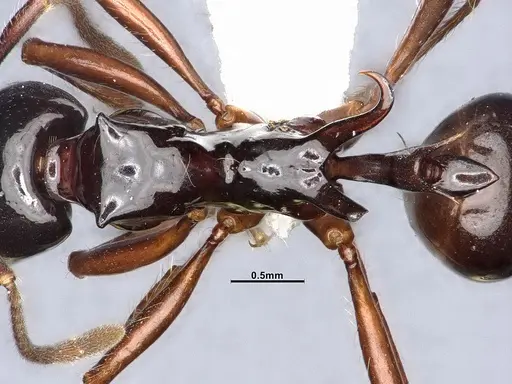
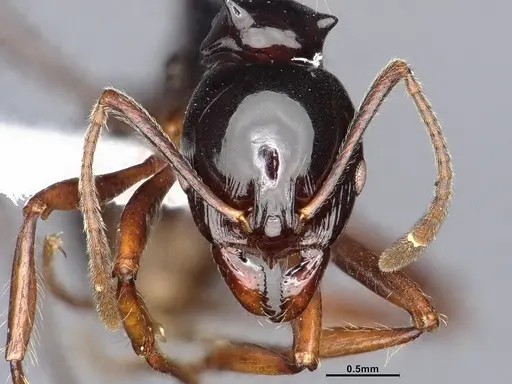
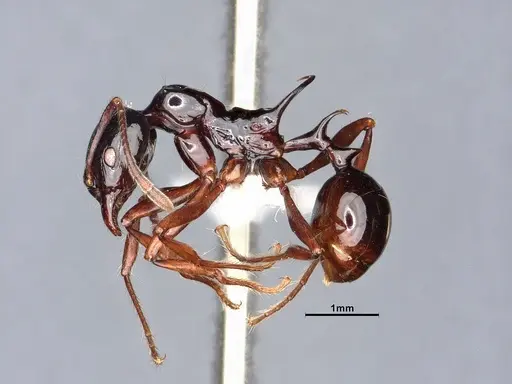
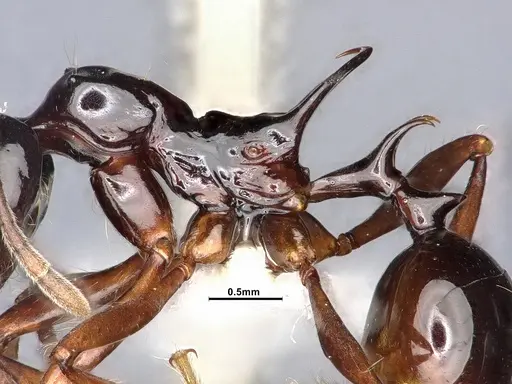
Ancyridris polyrhachioides are large, spiny black ants from the mountains of Papua New Guinea. Workers reach nearly 6 mm in length and carry distinctive hooked spines on their thorax and waist . They live in montane forests above 1,500 meters elevation in the New Guinean cordillera . Science has only ever documented workers - no queens or males have ever been found . The first specimens were discovered in 1932 inside the stomach of a flycatcher bird collected on Mount Misim . Additional workers have been found visiting honey baits and foraging on vegetation in forest habitats . Their unusual body plan - including 12-segmented antennae and reduced frontal carinae - places them in a rare genus that forms a distinct evolutionary group with Lordomyrma and Propodilobus .
Quick Summary
- Difficulty: Expert
- Origin & Habitat: Montane forests of Papua New Guinea, above 1,500m elevation [2]
- Colony Type: Unknown, only worker caste documented [1]
- Size & Growth:
- Antkeeping:
- Temperature: Cool conditions, roughly 18-22°C, estimated based on montane elevation above 1,500m [2]
- Humidity: Keep substrate consistently moist but not waterlogged, inferred from montane cloud forest habitat
- Diapause: Unknown
- Nesting: Likely in rotting wood or soil in montane forests, use moist wood or plaster nests with good humidity retention
- Behavior: Unknown temperament, 6mm size requires standard escape prevention with sealed gaps and fine mesh
- Common Issues: only workers have ever been documented, making colony founding impossible with current knowledge, unknown temperature requirements risk colony failure if attempted, extreme rarity and limited distribution make obtaining specimens nearly impossible, lack of knowledge about diet and social structure prevents proper care
Natural History and Distribution
These ants come from the mountains of Papua New Guinea. Researchers have collected them at elevations above 1,500 meters in the New Guinean cordillera [2]. The type specimens came from Mount Misim in the Morobe District, where they were found inside a flycatcher's stomach in 1932 [1]. This suggests they forage where birds hunt, likely in the forest canopy or understory. Workers have also been observed at honey baits and foraging on vegetation in forest habitats [1]. The genus Ancyridris contains at least six undescribed species in addition to this one, often with up to four species living in the same area [2].
Housing and Environment
Since no queens have ever been found, standard colony founding is impossible. If you somehow obtained workers, house them in conditions matching their montane forest home. Keep temperatures cool, roughly 18-22°C, based on their collection elevation above 1,500 meters [2]. Maintain high humidity similar to cloud forest conditions. Use a nest with moist rotting wood or plaster that stays damp but not wet. Workers are nearly 6 mm long [1], so use standard fine mesh for ventilation and ensure all gaps are sealed.
Feeding
Workers have been observed visiting honey baits in the field [1], so they likely accept sugar water or diluted honey. They forage on vegetation, probably hunting small insects and other arthropods. Offer small live prey like fruit flies or tiny crickets. However, workers alone cannot start a colony, without a queen, they will eventually die off.
The Missing Reproductives
Science has never documented a queen or male of this species [1]. This could mean queens are extremely rare, live underground, or that the species reproduces in an unusual way not yet observed. Until someone discovers how these ants found colonies, keeping them is not feasible.
Frequently Asked Questions
Can I keep Ancyridris polyrhachioides in a test tube?
No, only workers have ever been found, so you cannot start a colony. Workers found alone will eventually die without a queen.
How long until Ancyridris polyrhachioides get their first workers?
Unknown, founding behavior has never been observed.
What is the egg to worker timeline for Ancyridris polyrhachioides?
Unknown, no brood has ever been documented.
Can I keep multiple Ancyridris polyrhachioides queens together?
Unknown, no queens have ever been documented.
Do Ancyridris polyrhachioides ants sting?
Members of the Crematogastrini tribe typically smear venom onto enemies rather than sting, this species' specific defense mechanism is unstudied.
What temperature do Ancyridris polyrhachioides need?
Keep them cool, roughly 18-22°C, estimated from their collection at elevations above 1,500 meters [2].
Where do Ancyridris polyrhachioides nest?
Likely in rotting wood or soil in montane forests, based on their habitat.
Why are only workers known for Ancyridris polyrhachioides?
Unknown, queens may be extremely rare, subterranean, or undiscovered by researchers.
Report an Issue
The current care sheet is based fully on literature. See inconsistencies, or something that's incorrect? Please , it will be resolved after review from an admin. Contributing to the blogs tab also helps providing information, to make us be able to further improve the caresheets. Thank you for your support!
References

This caresheet is licensed under CC BY-SA 4.0 .
Community Blogs
CASENT0102469
View on AntWeb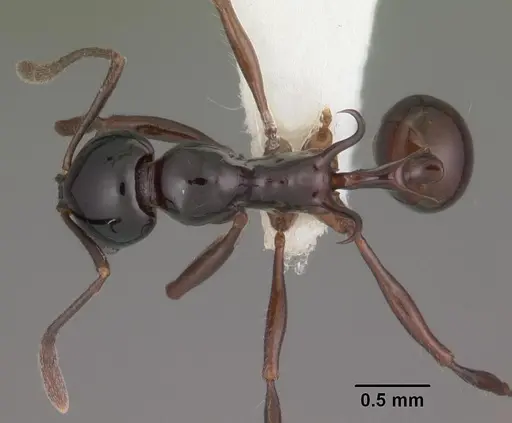
CASENT0106303
View on AntWeb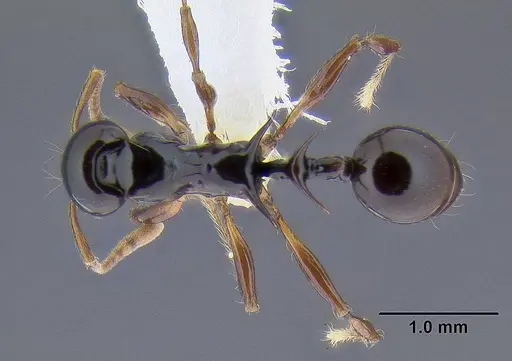
CASENT0172485
View on AntWeb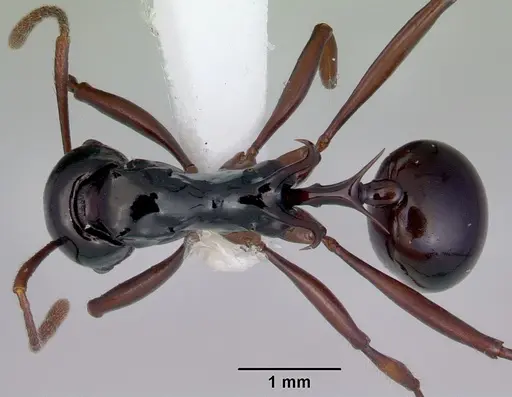
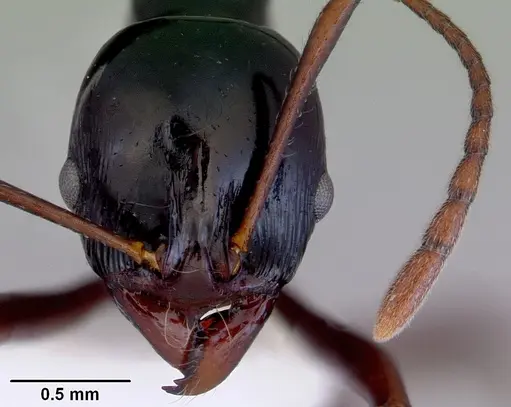
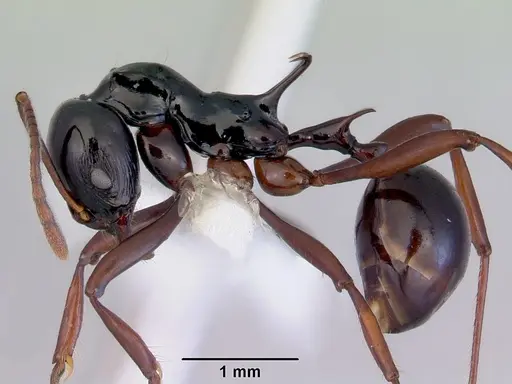
CASENT0434565
View on AntWeb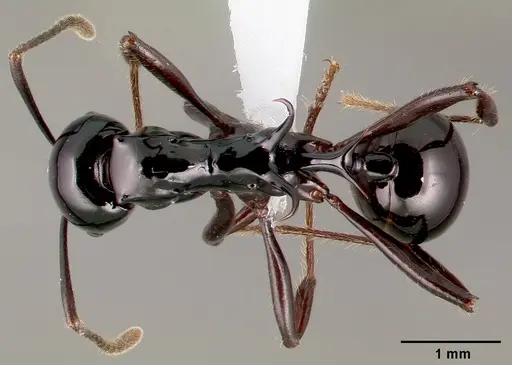
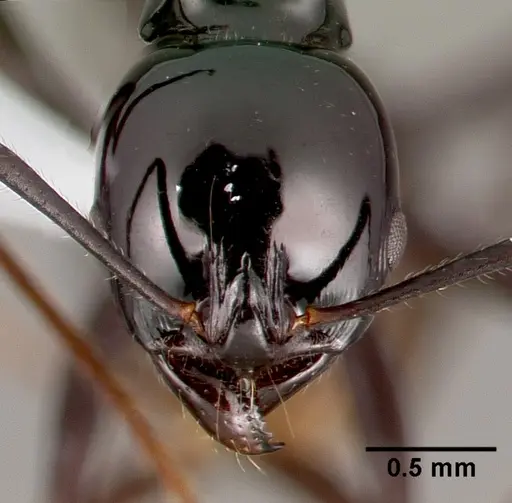
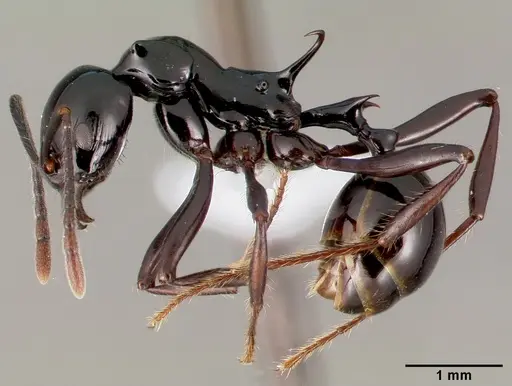
CASENT4032452
View on AntWeb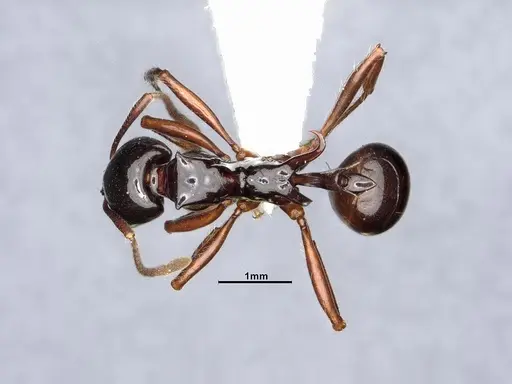
Literature
Loading distribution map...Loading products...