
Aenictus rabori
- Sci. Name
- Aenictus rabori
- Subfamily
- Dorylinae
- Author
- Chapman, 1963
- Distribution
- Found in 1 countries
Introduction
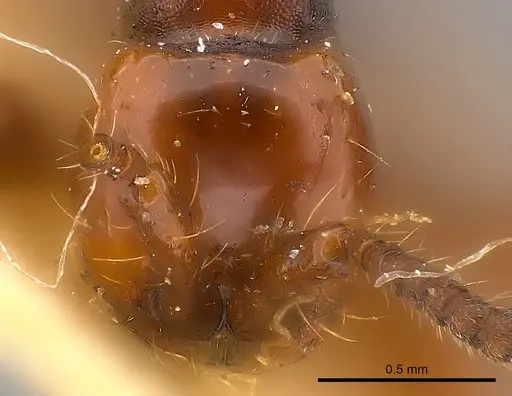
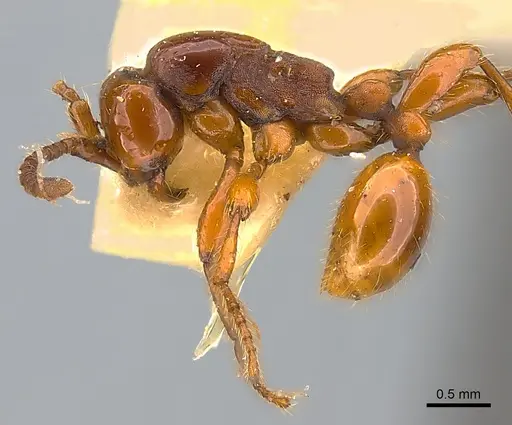
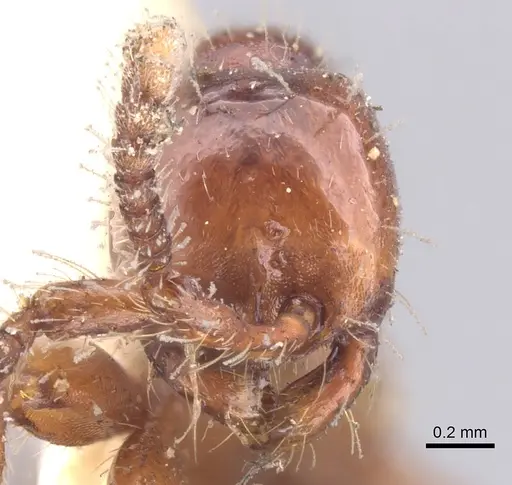
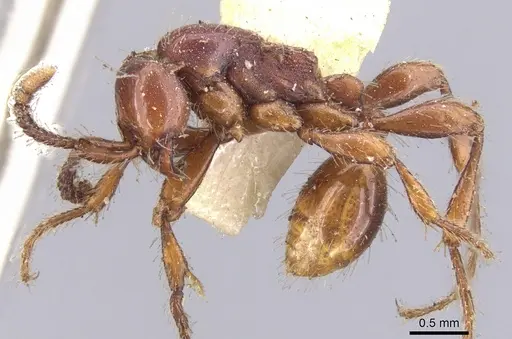
Aenictus rabori is an army ant known only from nine worker specimens collected in 1943 on Negros Island, Philippines [AntWiki]. Workers measure 4.35-4.50 mm in length . The head, antennae, legs, and gaster are yellowish brown, while the mandibles, mesosoma, petiole, and postpetiole are reddish brown . You can identify this species by the protruding lobe at the back corner of the head and the distinct ridge between the middle section of the thorax and the side plates . The original colony was found foraging in a garden at 1,080 meters elevation on Cuernos de Negros . No living colonies have been observed since 1943. Only the worker caste is known, and no queens have ever been collected [AntWiki]. Any care information below is inferred from related Aenictus species and remains theoretical for this specific species.
Quick Summary
- Difficulty: Expert/Impossible, This species exists only as nine museum specimens collected in 1943. No living colonies have been documented in the wild or captivity.
- Origin & Habitat: Negros Island, Philippines. The type series was collected at 1,080m elevation in a garden [1][2].
- Colony Type: Unknown, only worker specimens exist. Based on Aenictus genus patterns, colonies likely contain a single wingless queen, but this is unconfirmed for Aenictus rabori.
- Size & Growth:
- Antkeeping:
- Temperature: Unknown, based on tropical Philippine origin, keep warm and stable (likely mid-20s°C), but specific requirements are unstudied.
- Humidity: Unknown, the type locality was a garden at 1,080m elevation. Provide moderate humidity with good ventilation.
- Diapause: Unknown, likely not required given tropical origin, but unconfirmed.
- Nesting: Army ants do not build permanent nests. They form temporary bivouacs made of worker bodies. In theory, they would need a large foraging area and a dark retreat.
- Behavior: Aenictus rabori workers likely forage in columns like other Aenictus species, but specific behavior is unobserved. Based on subfamily Dorylinae traits, they probably possess stings. They are small and active, presenting high escape risk if kept in standard enclosures.
- Common Issues: this species exists only as nine museum specimens collected in 1943, living colonies are unavailable., no data exists on colony foundation, development, or queen behavior., army ants require constant protein and large foraging spaces to survive., small worker size creates high escape risk in standard enclosures.
Rarity and Type Specimens
Aenictus rabori is one of the rarest ants in the world. Only nine workers exist, collected from a single garden on Negros Island in 1943 [1][2][3]. No one has found this species since. The specimens reside in the Museum of Comparative Zoology at Harvard University [3]. Because only workers are known, no one has observed queens, males, or colony behavior [3].
Morphology and Identification
Workers measure 4.35-4.50 mm in length [1][2]. They have a distinctive protruding lobe at the back corner of the head [1][2][4]. A ridge separates the middle section of the thorax from the side plates, a feature shared only with Aenictus philippinensis and Aenictus pangantihoni in the Philippines [1][4]. The femora are distinctly swollen compared to related species [4].
Army Ant Biology
While specific behavior of Aenictus rabori is unknown, Aenictus species are Old World army ants. They are nomadic predators that form temporary bivouacs instead of permanent nests [3]. Colonies likely contain a single wingless queen that lays eggs continuously [3]. Workers forage in columns to overwhelm prey [3].
Frequently Asked Questions
Can I keep Aenictus rabori in captivity?
No. Aenictus rabori is only known from nine museum specimens collected in 1943. No living colonies exist in captivity or have been observed in the wild since discovery [3].
What do Aenictus rabori eat?
Unknown for this species. Related Aenictus species are strict predators that hunt arthropods in columns [3].
Do Aenictus rabori ants sting?
Probably. As members of subfamily Dorylinae, they likely possess functional stings, though this is unconfirmed for this specific species.
Where are Aenictus rabori from?
Negros Island, Philippines, specifically Cuernos de Negros at 1,080m elevation [1][2].
How many specimens of Aenictus rabori exist?
Only nine worker specimens exist, collected in 1943. They are housed at the Museum of Comparative Zoology [1][3].
Are Aenictus rabori good for beginners?
No. This species is unavailable to keepers and exists only as museum specimens. Even if available, army ants require expert-level care [3].
Do Aenictus rabori need hibernation?
Unknown. As a tropical Philippine species, they likely do not require hibernation, but this is unconfirmed [1][2].
What makes Aenictus rabori different from other army ants?
They have a protruding lobe at the back corner of the head and a distinct ridge on the thorax that separates them from similar species like Aenictus pangantihoni [1][2][4].
Has anyone ever kept Aenictus rabori?
No. No living colonies have ever been documented since the original collection in 1943 [3].
Report an Issue
The current care sheet is based fully on literature. See inconsistencies, or something that's incorrect? Please , it will be resolved after review from an admin. Contributing to the blogs tab also helps providing information, to make us be able to further improve the caresheets. Thank you for your support!
References

This caresheet is licensed under CC BY-SA 4.0 .
Community Blogs
CASENT0217384
View on AntWeb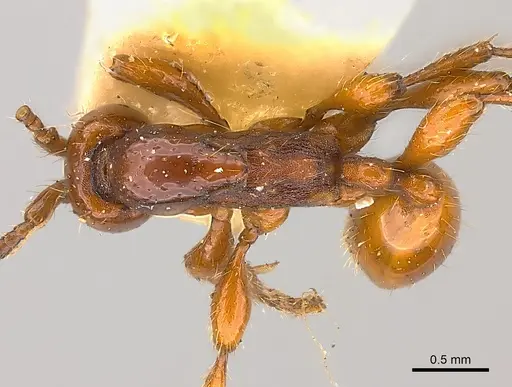
CASENT0902680
View on AntWeb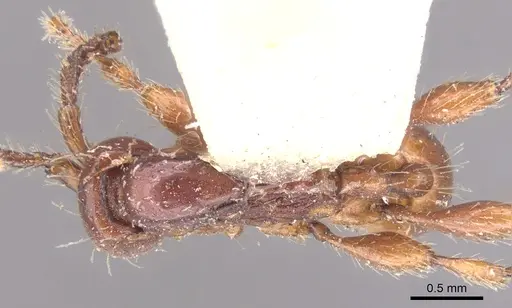
Literature
Loading distribution map...Loading products...